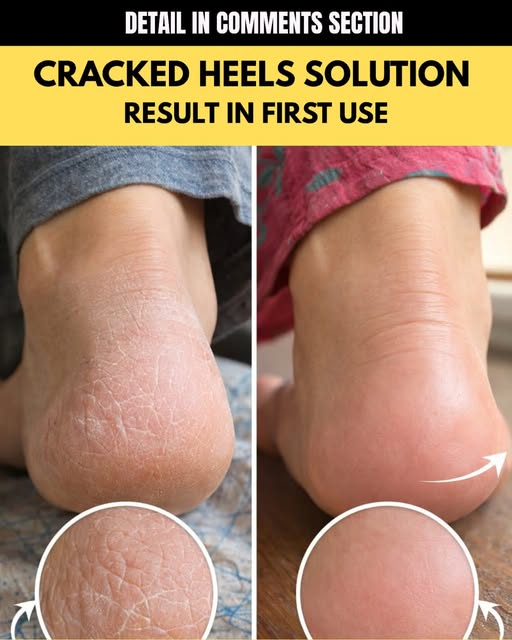
The image clearly shows dry, rough, and cracked heels, a common condition caused by lack of moisture, pressure on the feet, prolonged standing, or inadequate foot care. Cracked heels not only affect appearance but can also lead to discomfort and pain if left untreated. Fortunately, simple home-based remedies using natural ingredients can provide immediate hydration, repair damaged skin, and visibly improve heel texture even after the first application.
Below are two highly effective remedies suitable for all skin types, designed to deeply nourish, heal, and restore smoothness to cracked heels.
Specific Remedies
Remedy 1: Deep Moisture Repair Therapy
Ingredients:
- 2 tablespoons coconut oil
- 1 tablespoon petroleum jelly
- 1 teaspoon glycerin
- 1 teaspoon aloe vera gel
- 1 teaspoon honey
The Science Behind It
Coconut oil is rich in medium-chain fatty acids that penetrate deep into the skin layers, restoring lost moisture and improving elasticity. Petroleum jelly forms a protective barrier over the skin, preventing water loss and allowing healing to occur. Glycerin acts as a humectant, attracting moisture from the environment into the skin. Aloe vera contains polysaccharides that accelerate skin repair and soothe inflammation. Honey has natural antibacterial and healing properties, which help prevent infection in cracked areas while promoting tissue regeneration.
Procedure:
Mix all ingredients in a bowl until a smooth blend is formed. Wash your feet with lukewarm water and pat dry. Apply the mixture generously to the heels, focusing on cracked areas. Massage gently for 5–7 minutes. Leave it overnight and cover with cotton socks.
How Often to Apply:
Apply daily at night for 7–10 days.
Initial Results:
After the first use, heels feel noticeably softer, hydrated, and less rough. Visible cracks begin to appear less deep.
Remedy 2: Natural Exfoliation and Healing Pack
Ingredients:
- 2 tablespoons rice flour
- 1 tablespoon yogurt
- 1 teaspoon lemon juice
- 1 teaspoon olive oil
- 1 teaspoon honey
The Science Behind It
Rice flour acts as a natural exfoliant, removing dead skin cells and promoting new cell growth. Yogurt contains lactic acid, which gently dissolves dead skin and improves texture. Lemon juice provides citric acid that helps lighten dark patches and supports skin renewal. Olive oil delivers essential fatty acids that nourish and repair damaged skin. Honey hydrates and has antimicrobial properties that assist in healing cracked skin.
Procedure:
Combine all ingredients into a thick paste. Soak your feet in warm water for 10 minutes to soften the skin. Apply the paste and gently scrub the heels in circular motions for 5 minutes. Leave it on for another 15 minutes, then rinse with lukewarm water and pat dry. Apply a light moisturizer afterward.
How Often to Apply:
Use on alternate days for 10–14 days.
Initial Results:
After the first application, dead skin is visibly reduced, and heels feel smoother and cleaner.
Targeted Exercise Routine
Cracked heels are often worsened by poor circulation in the feet. Simple exercises can improve blood flow and support faster healing.
1. Heel Raises
- Stand straight and slowly lift your heels off the ground
- Hold for 5 seconds and lower down
- Perform 3 sets of 15 repetitions
2. Ankle Rotations
- Rotate each ankle clockwise and counterclockwise
- Perform 10 rotations in each direction, 3 sets
3. Toe Stretching
- Sit and stretch your toes backward gently
- Hold for 10 seconds
- Repeat 10 times
Mechanism:
These exercises improve blood circulation, ensuring that oxygen and nutrients reach damaged skin tissues, accelerating repair and preventing further dryness.
Targeted Diet Plan for Healing
Vegetarian Diet Plan
- Spinach and leafy greens for iron and skin repair
- Carrots for vitamin A
- Nuts and seeds for healthy fats
- Whole grains like oats for hydration support
- Coconut water for electrolyte balance
- Fruits like oranges for vitamin C
Non-Vegetarian Diet Plan
- Eggs for protein and biotin
- Fish like salmon for omega-3 fatty acids
- Chicken for collagen support
- Bone broth for skin repair nutrients
- Yogurt for probiotics
- Tuna for improved skin elasticity
Diabetic-Friendly Diet Plan
- Low GI vegetables like cucumber and broccoli
- Whole grains such as quinoa
- Nuts like almonds and walnuts
- Berries in limited portions
- Lentils for protein
- Unsweetened yogurt
Heart Patient-Friendly Diet Plan
- Oats for cholesterol control
- Olive oil for healthy fats
- Leafy greens for antioxidants
- Avocados for nutrient support
- Beans for fiber
- Fatty fish in moderation
Final Tips & Conclusion
Keep your feet clean and moisturized daily. Avoid walking barefoot on hard surfaces, as it increases pressure on heels. Always wear comfortable footwear with proper cushioning. Stay hydrated and avoid harsh soaps that strip natural oils from the skin. Regular exfoliation combined with deep moisturization is key to preventing recurrence.
Summary:
Using a combination of deep hydration and gentle exfoliation remedies, along with improved circulation and a nutrient-rich diet, can significantly heal cracked heels and restore smooth skin.
Timeline:
Noticeable improvement can be seen after the first use, with significant healing within 7–14 days of consistent care.
Medical Disclaimer:
If the problem persists after this period, you must see a certified doctor or healthcare professional.