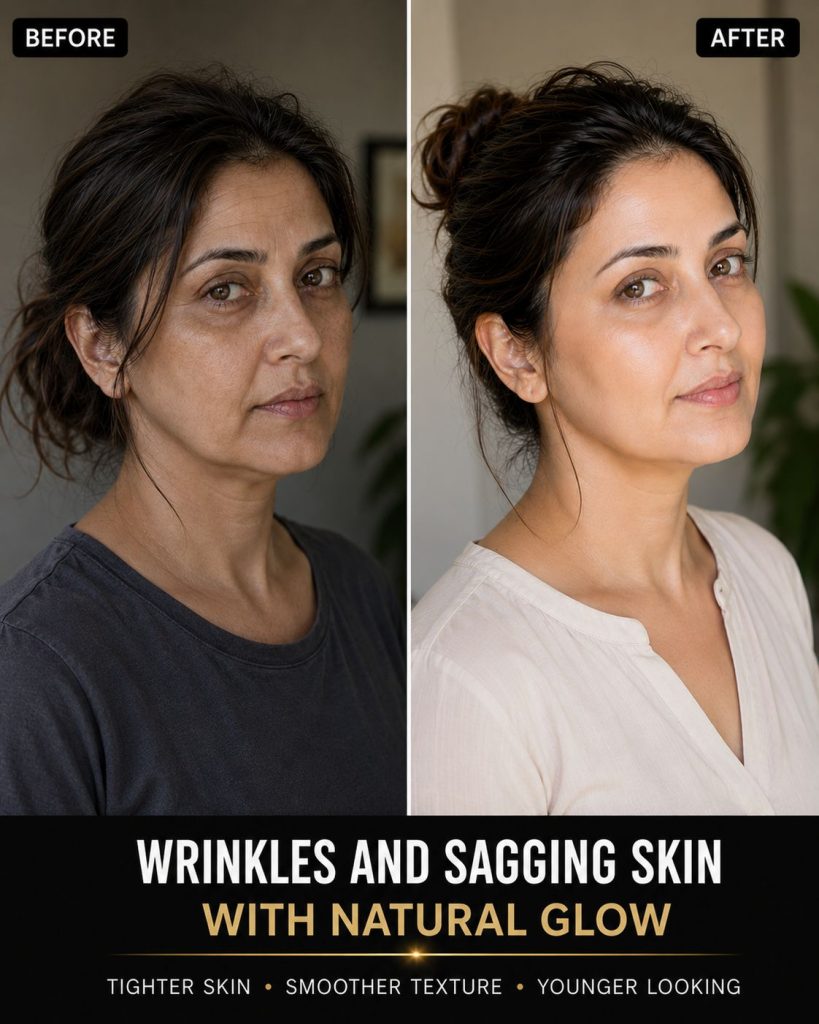
Fine lines, loose skin, dullness, and early wrinkles often appear because of collagen loss, dehydration, stress, sun exposure, and aging. As skin loses elasticity, the face may start looking tired and uneven. Natural remedies made with antioxidant-rich and nutrient-dense ingredients can help improve skin texture, support collagen production, and restore a healthier glow naturally. Different skin types react differently to ingredients, so choosing remedies according to your skin type can improve results while reducing irritation.
These remedies use simple kitchen ingredients supported by scientific studies for improving skin hydration, elasticity, antioxidant protection, and skin repair.
Remedy 1: For Normal Skin
Ingredients
- 1 tablespoon yogurt
- Contains lactic acid that gently exfoliates dead skin cells and improves smoothness.
- 1 teaspoon honey
- Rich in humectants that attract moisture and improve skin softness.
- 1 teaspoon aloe vera gel
- Helps soothe inflammation and supports collagen activity.
- 1 teaspoon rice flour
- Contains antioxidants and helps tighten the skin temporarily.
- 4 drops almond oil
- Rich in vitamin E that protects against oxidative damage.
- 1 teaspoon mashed banana
- Provides potassium and silica that support hydration.
- A pinch of turmeric
- Contains curcumin which helps reduce oxidative stress.
Scientific Reason Why This Remedy Works
Yogurt contains lactic acid that removes dull surface cells without harsh abrasion. Honey and aloe vera help improve moisture retention, which makes skin appear fuller and less saggy. Turmeric and almond oil contain antioxidants that help reduce collagen breakdown caused by free radicals. Banana supplies natural sugars and minerals that temporarily plump the skin.
Procedure
- Mix all ingredients in a clean bowl until creamy.
- Apply evenly over the face and neck.
- Leave for 20 minutes.
- Massage gently with wet fingers for one minute.
- Wash with lukewarm water and pat dry.
How Often to Apply
Apply once daily for 5 days.
Initial Results
Within 2–3 days, the skin may look smoother, more hydrated, and naturally brighter. Fine dryness lines may appear softer.
Remedy 2: For Combination Skin
Ingredients
- 1 tablespoon oatmeal powder
- Helps absorb excess oil while calming dry areas.
- 1 teaspoon cucumber juice
- Hydrates and cools stressed skin.
- 1 teaspoon rose water
- Helps balance skin pH.
- 1 teaspoon honey
- Prevents moisture loss.
- 1 teaspoon papaya pulp
- Contains papain enzyme that improves dull texture.
- 3 drops olive oil
- Supplies healthy fatty acids for elasticity.
- A pinch of turmeric
Scientific Reason Why This Remedy Works
Combination skin needs balanced hydration without clogging pores. Oatmeal contains beta-glucans that strengthen the skin barrier. Papaya enzymes remove rough surface buildup while cucumber and rose water calm inflammation. Olive oil provides antioxidants that support skin elasticity and help reduce dryness around wrinkle-prone areas.
Procedure
- Combine oatmeal and papaya pulp first.
- Add cucumber juice, honey, rose water, turmeric, and olive oil.
- Mix into a soft paste.
- Apply mainly on sagging areas and cheeks.
- Leave for 15–20 minutes before rinsing.
How Often to Apply
Use on alternate days for one week.
Initial Results
Skin may start feeling softer and more balanced within 3 days. The face may appear fresher with improved texture.
Remedy 3: For Oily Skin
Ingredients
- 1 tablespoon multani mitti (Fuller’s earth)
- Absorbs excess oil and tightens pores.
- 1 teaspoon tomato pulp
- Contains lycopene that helps fight oxidative stress.
- 1 teaspoon aloe vera gel
- Soothes skin without making it greasy.
- 1 teaspoon green tea water
- Rich in catechins that reduce skin damage.
- 1 teaspoon yogurt
- Gently exfoliates oily buildup.
- 2 drops tea tree oil
- Helps control acne-causing bacteria.
- A pinch of turmeric
Scientific Reason Why This Remedy Works
Oily skin often experiences collagen damage due to inflammation and clogged pores. Green tea and tomato contain antioxidants that help reduce free radical damage. Multani mitti removes excess oil while yogurt exfoliates dull layers. Aloe vera helps maintain hydration so the skin does not become tight or irritated.
Procedure
- Mix multani mitti with green tea water.
- Add tomato pulp, yogurt, turmeric, and aloe vera.
- Add tea tree oil last.
- Apply a thin layer evenly.
- Leave for 15 minutes only.
- Rinse gently with cool water.
How Often to Apply
Use 3 times weekly for 2 weeks.
Initial Results
Oiliness may reduce within 2–3 days. Skin can start appearing tighter, fresher, and less dull.
Remedy 4: For Dry Skin
Ingredients
- 1 tablespoon mashed avocado
- Rich in healthy fats that nourish dry skin.
- 1 teaspoon milk cream
- Deeply moisturizes and softens rough texture.
- 1 teaspoon honey
- Prevents water loss from the skin.
- 1 teaspoon flaxseed gel
- Contains omega-3 fatty acids that support elasticity.
- 1 teaspoon mashed ripe banana
- Hydrates and softens skin.
- 4 drops coconut oil
- Helps strengthen the skin barrier.
- A pinch of turmeric
Scientific Reason Why This Remedy Works
Dry skin loses elasticity faster because of poor moisture retention. Avocado and flaxseed contain fatty acids that support the skin barrier and reduce roughness. Milk cream and honey deeply hydrate the skin, helping wrinkles appear less visible. Coconut oil helps reduce transepidermal water loss and improves softness.
Procedure
- Mash avocado and banana until smooth.
- Add milk cream, honey, and flaxseed gel.
- Mix in coconut oil and turmeric.
- Apply a thick layer on dry areas.
- Leave for 25 minutes.
- Wash gently using lukewarm water.
How Often to Apply
Apply daily for 5–7 days.
Initial Results
The skin may feel deeply moisturized after the first use. Fine lines caused by dryness may look softer within a few days.
Remedy 5: For Sensitive Skin
Ingredients
- 1 tablespoon cucumber paste
- Helps calm redness and irritation.
- 1 teaspoon aloe vera gel
- Reduces inflammation and supports healing.
- 1 teaspoon chamomile tea
- Contains soothing antioxidants.
- 1 teaspoon honey
- Helps maintain hydration.
- 1 teaspoon rice water
- Contains amino acids beneficial for the skin barrier.
- 1 teaspoon oat powder
- Calms itching and irritation.
- A very small pinch of turmeric
Scientific Reason Why This Remedy Works
Sensitive skin requires gentle anti-inflammatory ingredients. Oats and chamomile help calm irritation and reduce redness. Aloe vera supports wound healing and improves hydration. Rice water contains antioxidants and amino acids that support smoother skin texture without causing harsh reactions.
Procedure
- Mix cucumber paste and aloe vera first.
- Add oat powder and honey.
- Slowly mix in rice water and chamomile tea.
- Apply gently without rubbing.
- Leave for 15 minutes.
- Rinse with cool water.
How Often to Apply
Use once daily for 4–5 days.
Initial Results
Skin may feel calmer and softer within 2 days. Mild redness and roughness may gradually reduce.
Final Tips
- Drink enough water throughout the day to maintain skin hydration.
- Sleep at least 7–8 hours daily because collagen repair mainly occurs during sleep.
- Avoid smoking and excessive sugar intake because both increase collagen breakdown.
- Always wash makeup brushes and towels regularly.
- Perform a patch test before using any new remedy.
- Avoid harsh soaps and alcohol-based skincare products.
- Protect your skin from direct sunlight by using hats or staying in shaded areas.
- Gentle face massage for 3–5 minutes daily may improve circulation temporarily.
Visible improvements usually begin within 2–3 days, while smoother texture and better firmness may continue developing over several weeks with consistency.
Diet Plan for Wrinkles and Sagging Skin
Morning
- Warm water with lemon
- 5 soaked almonds
- 1 boiled egg or bowl of sprouts
Breakfast
- Oatmeal with chia seeds and banana
- Green tea without excess sugar
Mid-Morning
- Cucumber, carrot, or papaya slices
- Coconut water
Lunch
- Grilled fish or lentils
- Brown rice or whole wheat roti
- Salad with cucumber, tomato, and beetroot
Evening Snack
- Handful of walnuts or pumpkin seeds
- Herbal tea
Dinner
- Vegetable soup with spinach and carrots
- Light protein such as chicken, tofu, or beans
Foods Helpful for Skin Tightening
- Vitamin C foods: oranges, guava, lemon
- Omega-3 sources: flaxseed, walnuts, fish
- Protein-rich foods: eggs, lentils, yogurt
- Antioxidant foods: berries, green tea, spinach
Continue these remedies and diet habits for at least 3–4 weeks for noticeable long-term improvement. If severe wrinkles, rapid sagging, allergies, or persistent skin problems continue, consult a qualified dermatologist or doctor.
References for the above remedy
- Aloe vera and skin healing benefits
URL: https://www.ncbi.nlm.nih.gov/pmc/articles/PMC2763764/ - Honey in dermatology and skin repair
URL: https://www.ncbi.nlm.nih.gov/pmc/articles/PMC5661189/ - Green tea polyphenols and skin protection
URL: https://www.ncbi.nlm.nih.gov/pmc/articles/PMC5384166/ - Oatmeal benefits for skin barrier and inflammation
URL: https://www.ncbi.nlm.nih.gov/pmc/articles/PMC3431893/ - Turmeric and curcumin antioxidant properties
URL: https://www.ncbi.nlm.nih.gov/pmc/articles/PMC5664031/ - Yogurt and lactic acid effects on skin texture
URL: https://www.health.harvard.edu/staying-healthy/lactic-acid-and-skin-care - Avocado nutrients and skin health
URL: https://www.ncbi.nlm.nih.gov/pmc/articles/PMC6335543/ - Tea tree oil and antimicrobial skin benefits
URL: https://www.ncbi.nlm.nih.gov/pmc/articles/PMC1360273/ - Rice-derived compounds in skincare
URL: https://www.ncbi.nlm.nih.gov/pmc/articles/PMC6261188/ - Chamomile antioxidant and anti-inflammatory effects
URL: https://www.ncbi.nlm.nih.gov/pmc/articles/PMC2995283/