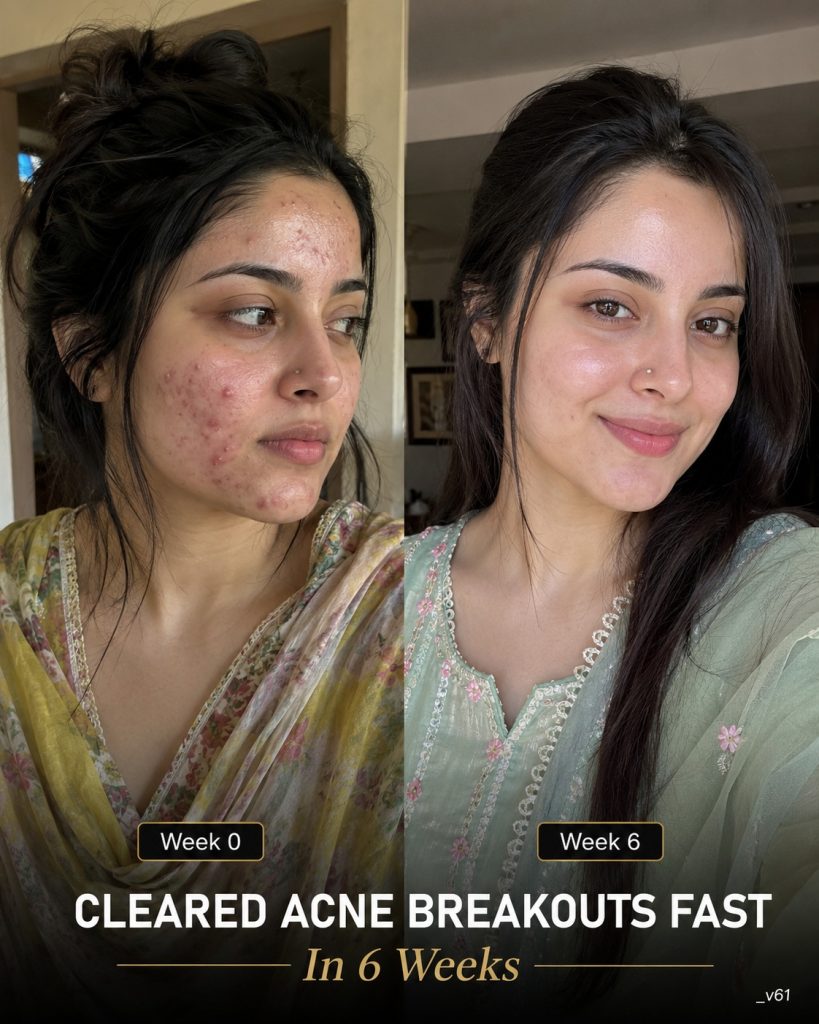
Acne breakouts can affect confidence, skin texture, and overall appearance. Pimples, redness, clogged pores, and post-acne marks often develop because of excess oil production, hormonal imbalance, bacteria buildup, inflammation, stress, and poor skincare habits. Natural remedies containing antibacterial, anti-inflammatory, and antioxidant-rich ingredients may help calm active breakouts and support skin healing. Since every skin type reacts differently, selecting remedies according to skin condition is important for safer and better results.

Remedy 1: For Normal Skin
Ingredients
- 1 tablespoon fresh aloe vera gel
Helps soothe inflammation and hydrate skin. - 1 teaspoon raw honey
Contains antibacterial and healing properties. - 1 teaspoon neem powder
Traditionally used to reduce acne-causing bacteria. - 1 teaspoon yogurt
Contains lactic acid for gentle exfoliation. - 1 teaspoon cucumber juice
Helps cool irritated skin. - 2 drops tea tree oil
Supports antibacterial action naturally.
Scientific Working of This Remedy
Aloe vera contains anti-inflammatory compounds that help calm redness and support wound healing. Honey has antibacterial activity against acne-related bacteria and supports moisture balance. Neem contains flavonoids and antimicrobial compounds that may help reduce bacterial growth. Tea tree oil contains terpinen-4-ol, which has been studied for reducing inflammatory acne lesions. Yogurt gently exfoliates dead skin cells and helps prevent clogged pores.
Procedure
- Mix all ingredients into a smooth paste.
- Wash the face with lukewarm water.
- Apply evenly over acne-prone areas.
- Leave for 20 minutes.
- Rinse with cool water and pat dry.
How Often to Apply
Use 4 times weekly for 6 weeks.
Initial Results
Skin may feel calmer within 2–3 days. Redness and oiliness may gradually reduce during the first week.
Remedy 2: For Combination Skin
Ingredients
- 1 tablespoon multani mitti
Helps absorb excess oil. - 1 teaspoon rose water
Refreshes and tones skin. - 1 teaspoon honey
Prevents over-drying. - 1 teaspoon green tea extract
Rich in antioxidants. - 1 teaspoon tomato pulp
Contains lycopene and mild acids. - Half teaspoon oatmeal powder
Helps soothe irritation.
Scientific Working of This Remedy
Green tea contains catechins that help reduce inflammation and sebum production. Multani mitti removes excess oil and impurities from pores. Oatmeal contains beta-glucans that support skin barrier repair and calm irritation. Tomato contains antioxidants and mild natural acids that may improve acne marks and dullness.
Procedure
- Combine ingredients thoroughly.
- Apply a thin layer over the face.
- Avoid the eye area.
- Leave until slightly dry.
- Wash gently using cool water.
How Often to Apply
Apply every alternate day for 5–6 weeks.
Initial Results
The skin may look cleaner within 3 days. Oil control and smoother texture may appear within 1–2 weeks.
Remedy 3: For Oily Skin
Ingredients
- 1 tablespoon aloe vera gel
Hydrates without clogging pores. - 1 teaspoon lemon juice
Rich in vitamin C. - 1 teaspoon turmeric powder
Traditionally used for inflammation. - 1 teaspoon cucumber juice
Helps cool and tighten pores. - 1 teaspoon green tea powder
Supports antioxidant protection. - 1 teaspoon bentonite clay
Helps draw out impurities.
Scientific Working of This Remedy
Turmeric contains curcumin, which has anti-inflammatory and antimicrobial effects. Bentonite clay helps absorb excess sebum and impurities from pores. Lemon contains vitamin C that supports healing and skin brightness. Green tea helps reduce oxidative stress and may decrease oil production.
Procedure
- Mix ingredients into a smooth consistency.
- Apply on oily and acne-prone areas.
- Leave for 15 minutes only.
- Wash with cool water.
- Apply a light moisturizer afterward.
How Often to Apply
Use 3 times weekly.
Initial Results
Oiliness may reduce within a few days. Active pimples may start drying gradually within 1 week.
Remedy 4: For Dry Skin
Ingredients
- 1 tablespoon mashed avocado
Rich in healthy fats and vitamin E. - 1 teaspoon honey
Helps maintain moisture. - 1 teaspoon aloe vera gel
Supports healing and hydration. - 1 teaspoon chamomile tea
Helps calm redness. - 1 teaspoon mashed papaya
Contains natural enzymes. - 3 drops jojoba oil
Supports skin barrier balance.
Scientific Working of This Remedy
Avocado contains essential fatty acids that help repair dry skin barriers. Papaya contains papain enzyme that gently removes dead skin cells without harshness. Chamomile contains flavonoids that may reduce irritation and inflammation. Jojoba oil closely resembles natural skin oils and helps maintain hydration while avoiding pore blockage.
Procedure
- Blend all ingredients smoothly.
- Apply gently across the face.
- Leave for 20–25 minutes.
- Wash using lukewarm water.
How Often to Apply
Use 4 times weekly for 6 weeks.
Initial Results
Dryness and irritation may begin improving within 3 days. Skin may appear softer and healthier after consistent use.
Remedy 5: For Sensitive Skin
Ingredients
- 1 tablespoon aloe vera gel
Soothes irritated skin naturally. - 1 teaspoon rice flour
Helps gently smooth skin. - 1 teaspoon cucumber paste
Provides cooling hydration. - 1 teaspoon raw honey
Supports healing. - 1 teaspoon chamomile tea
Helps reduce redness. - 2 drops calendula oil
Traditionally used for calming skin.
Scientific Working of This Remedy
Calendula contains anti-inflammatory compounds that may support wound healing and reduce irritation. Aloe vera supports hydration and skin repair. Honey helps reduce bacterial growth while protecting the skin barrier. Rice flour provides mild exfoliation without excessive irritation.
Procedure
- Mix ingredients carefully.
- Apply softly without scrubbing.
- Leave for 15–20 minutes.
- Rinse gently with cool water.
How Often to Apply
Use 3 times weekly.
Initial Results
Redness and discomfort may begin reducing within 2–4 days. Skin may gradually appear calmer and smoother.
Natural Acne Healing Drink
Ingredients
- 1 glass warm water
- 1 teaspoon chia seeds
- Half teaspoon turmeric
- Half lemon juice
- 5 mint leaves
- 1 teaspoon honey
Why This Drink Helps
Turmeric contains curcumin that helps reduce inflammation. Lemon provides vitamin C that supports healing and collagen production. Chia seeds contain omega-3 fatty acids that support skin hydration and inflammation control. Mint may help cool the body and reduce oiliness.
How to Use
Drink every morning on an empty stomach for 6 weeks.
Weekly Diet Plan for Clear Skin
Morning
- Warm lemon water
- 4 soaked almonds
- 1 walnut
Breakfast
- Oatmeal or boiled eggs
- Papaya or apple
- Green tea
Lunch
- Grilled chicken, fish, or lentils
- Brown rice or whole wheat roti
- Cucumber and carrot salad
Evening Snack
- Coconut water
- Pumpkin seeds or sunflower seeds
Dinner
- Vegetable soup
- Steamed vegetables
- Yogurt
Foods Helpful for Acne Reduction
- Spinach
- Tomatoes
- Berries
- Green tea
- Yogurt
- Cucumbers
- Pumpkin seeds
Foods to Avoid
- Excess sugar
- Fried foods
- Soft drinks
- Excess dairy
- Processed snacks
Continue the diet consistently for at least 6 weeks. If acne becomes painful, severe, or continues spreading, consult a dermatologist or healthcare professional.
Final Tips
- Wash pillow covers regularly.
- Avoid touching the face repeatedly.
- Keep makeup brushes clean.
- Stay hydrated daily.
- Sleep 7–8 hours regularly.
- Avoid harsh scrubs and strong chemicals.
- Always perform a patch test before applying remedies.
- Use sunscreen when going outdoors.
Visible improvements may begin within 2–3 days, while clearer and healthier skin usually develops gradually over 4–6 weeks with consistency.
References for the above remedy
- Tea tree oil for acne treatment
URL: https://www.ncbi.nlm.nih.gov/pmc/articles/PMC1360273/ - Aloe vera and wound healing properties
URL: https://www.ncbi.nlm.nih.gov/pmc/articles/PMC2763764/ - Honey and antimicrobial skin benefits
URL: https://www.ncbi.nlm.nih.gov/pmc/articles/PMC5661189/ - Green tea and acne reduction research
URL: https://www.ncbi.nlm.nih.gov/pmc/articles/PMC5384166/ - Turmeric and anti-inflammatory effects
URL: https://www.ncbi.nlm.nih.gov/pmc/articles/PMC5664031/ - Oatmeal and skin barrier support
URL: https://www.ncbi.nlm.nih.gov/pmc/articles/PMC3276971/ - Jojoba oil and skin repair properties
URL: https://www.ncbi.nlm.nih.gov/pmc/articles/PMC8197201/ - Chamomile and skin inflammation research
URL: https://www.ncbi.nlm.nih.gov/pmc/articles/PMC2995283/ - Neem medicinal and antimicrobial properties
URL: https://www.ncbi.nlm.nih.gov/pmc/articles/PMC4791507/ - Bentonite clay and dermatological uses
URL: https://www.ncbi.nlm.nih.gov/pmc/articles/PMC5632318/