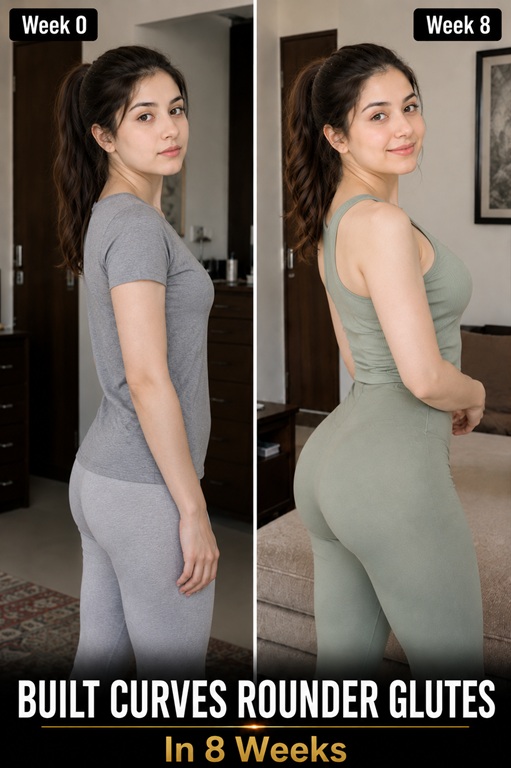
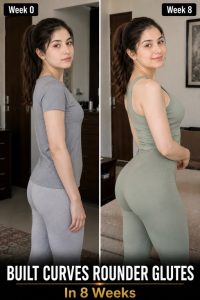
Many women want fuller, rounder glutes not only for appearance but also for better posture, hip stability, lower-back support, and overall body balance. While social media often promises instant transformations, real and lasting changes come from a combination of progressive exercise, proper nutrition, adequate recovery, and healthy skin-care habits.
The good news is that beginners can often notice improvements in muscle tone, posture, and body shape within 6–8 weeks when they follow a consistent plan. Scientific studies have shown that resistance training, especially hip-extension exercises such as hip thrusts, effectively activates the glute muscles and supports muscle growth. (PubMed)
Understanding the Glute Muscles
Your glutes consist of three major muscles:
- Gluteus Maximus – Creates the majority of glute size and shape.
- Gluteus Medius – Adds side-roundness and improves hip stability.
- Gluteus Minimus – Supports movement and balance.
A well-designed program trains all three muscles rather than focusing on only one exercise.
Scientifically Proven Home Exercises for Rounder Glutes
Exercise 1: Hip Thrust
Why It Works Scientifically
Research has shown that hip thrusts produce very high gluteus maximus activation and may activate the glutes more than traditional squats under certain conditions. (PubMed)
How to Perform
- Sit on the floor with your upper back against a sofa or bench.
- Bend knees at 90 degrees.
- Push through your heels.
- Lift hips upward.
- Squeeze glutes for 2 seconds.
- Lower slowly.
Sets and Reps
- Week 1–2: 3 sets × 12 reps
- Week 3–4: 4 sets × 12 reps
- Week 5–8: 4 sets × 15 reps
Exercise 2: Bulgarian Split Squats
Why It Works Scientifically
This exercise places significant tension on the glutes while also improving balance and hip stability. (GQ)
How to Perform
- Place one foot behind on a chair.
- Lower your body slowly.
- Keep chest upright.
- Push through front heel.
Sets and Reps
- 3–4 sets
- 10–12 repetitions per leg
Exercise 3: Glute Bridges
Scientific Benefit
Glute bridges directly target hip extension, one of the primary functions of the gluteus maximus. (PMC)
Sets and Reps
- 4 sets × 15 reps
Exercise 4: Step-Ups
Scientific Benefit
Step-ups require stabilization and activate multiple glute fibers while improving lower-body strength. (GQ)
Sets and Reps
- 3 sets × 12 reps per leg
Exercise 5: Donkey Kicks
Scientific Benefit
Targets upper and lower glute fibers and improves mind-muscle connection.
Sets and Reps
- 3 sets × 20 reps per side
Exercise 6: Fire Hydrants
Scientific Benefit
Primarily targets the gluteus medius, helping create side-roundness.
Sets and Reps
- 3 sets × 15 reps per side
Weekly Glute Training Schedule
Monday
- Hip Thrusts
- Bulgarian Split Squats
- Fire Hydrants
Tuesday
- 30-minute brisk walk
Wednesday
- Glute Bridges
- Step-Ups
- Donkey Kicks
Thursday
- Recovery and stretching
Friday
- Hip Thrusts
- Bulgarian Split Squats
- Fire Hydrants
Saturday
- Walking or cycling
Sunday
- Complete rest
Vegetarian Muscle-Building Diet Plan
Muscles cannot grow effectively without enough protein and calories.
Research suggests active individuals aiming to build muscle often benefit from approximately 1.2–2.0 grams of protein per kilogram of body weight daily. (Health)
Early Morning
- 2 glasses water
- 5 soaked almonds
- 2 walnuts
Breakfast
- Oats with milk
- 2 tablespoons chia seeds
- Banana
- Greek yogurt
Protein: 20–25g
Mid-Morning
- Apple
- Roasted chickpeas
Protein: 8–10g
Lunch
- Lentils
- Brown rice
- Mixed vegetables
- Salad
Protein: 20g+
Evening Snack
- Paneer cubes
- Green tea
Protein: 15–20g
Dinner
- Tofu curry
- Whole wheat chapati
- Vegetables
Protein: 20–25g
Before Bed
- Glass of milk
Protein: 8g
Non-Vegetarian Muscle-Building Diet Plan
Early Morning
- Water
- Almonds
- Walnuts
Breakfast
- 3 eggs
- Whole grain toast
- Fruit
Protein: 20–25g
Mid-Morning
- Greek yogurt
- Fruit
Protein: 15g
Lunch
- Chicken breast or fish
- Brown rice
- Vegetables
Protein: 30–40g
Evening Snack
- Boiled eggs
- Nuts
Protein: 15–20g
Dinner
- Fish, chicken, or lean meat
- Salad
- Vegetables
Protein: 30–40g
Before Bed
- Milk or yogurt
Protein: 10–15g
Foods That Support Both Skin and Curves
Eggs
Contain high-quality protein for muscle repair.
Fish
Rich in omega-3 fatty acids that support skin health.
Greek Yogurt
Supports muscle recovery and gut health.
Lentils
Excellent plant-based protein source.
Berries
Rich in antioxidants that protect skin.
Citrus Fruits
Contain vitamin C, important for collagen formation.
Nuts and Seeds
Provide healthy fats for hormone balance and skin moisture.
Daily Beauty Routine for Glowing Skin and a Toned Body
Morning
Step 1
Wash face with a gentle cleanser.
Step 2
Apply vitamin C serum.
Step 3
Use moisturizer.
Step 4
Apply sunscreen SPF 30 or higher.
Afternoon
- Drink water regularly.
- Eat fresh fruit.
Evening
Step 1
Cleanse face.
Step 2
Apply aloe vera gel.
Step 3
Use moisturizer.
Night
- Sleep 7–9 hours.
- Avoid excessive screen exposure before bed.
Scientific studies show poor sleep is associated with increased skin aging, reduced skin barrier function, and decreased collagen production. (PubMed)
Additional Habits for Faster Results
Hydration
Drink:
- 2.5–3 liters daily
Benefits:
- Better skin hydration
- Improved exercise performance
- Enhanced recovery
Daily Walking
Walk:
- 8,000–10,000 steps
Benefits:
- Improved circulation
- Better recovery
- Increased calorie expenditure
Resistance Training
Research shows regular resistance training improves body composition and may also positively influence skin structure and elasticity. (PMC)
Expected Timeline
Week 1–2
- Better posture
- Increased muscle activation
- Improved energy
Week 3–4
- Firmer glutes
- Better lower-body strength
- Healthier skin appearance
Week 5–6
- Noticeable muscle growth
- Improved waist-to-hip ratio
Week 7–8
- Rounder glutes
- Better body shape
- Enhanced confidence
- Improved skin quality
Results vary depending on genetics, age, nutrition, training intensity, and consistency.
Final Recommendations
For the best chance of developing fuller, rounder glutes in 8 weeks:
- Train glutes 3 times weekly.
- Consume adequate protein daily.
- Stay hydrated.
- Sleep 7–9 hours every night.
- Walk regularly.
- Avoid smoking.
- Manage stress.
- Use sunscreen daily.
- Remain consistent for at least 8–12 weeks.
If you have joint problems, hormonal disorders, significant weight loss, or medical concerns, consult a physician or qualified fitness professional before beginning any new exercise or nutrition program.
References
- Barbell Hip Thrust vs Back Squat Study (PubMed): https://pubmed.ncbi.nlm.nih.gov/26214739/
- ACSM Resistance Training Position Stand: https://acsm.org/science-spotlight-acsm-releases-new-position-stand-on-resistance-training/
- Gluteus Maximus Activation Review: https://pmc.ncbi.nlm.nih.gov/articles/PMC7039033/
- Bodyweight Glute Exercise Review: https://pmc.ncbi.nlm.nih.gov/articles/PMC6350668/
- Effects of Resistance Training on Skin Aging: https://pmc.ncbi.nlm.nih.gov/articles/PMC10290068/
- Exercise and Skin Function Review: https://pmc.ncbi.nlm.nih.gov/articles/PMC10979338/
- Poor Sleep and Skin Aging Study: https://pubmed.ncbi.nlm.nih.gov/25266053/
- Sleep–Skin Axis Review: https://www.mdpi.com/2673-6179/5/3/13
- Protein Timing and Muscle Hypertrophy Review: https://pmc.ncbi.nlm.nih.gov/articles/PMC3529694/
- Protein Intake in Sports Position Paper: https://www.germanjournalsportsmedicine.com/archive/archive-2020/issue-7-8-9/protein-intake-in-sports-position-of-the-working-group-sports-nutrition-of-the-german-nutrition-society-dge/