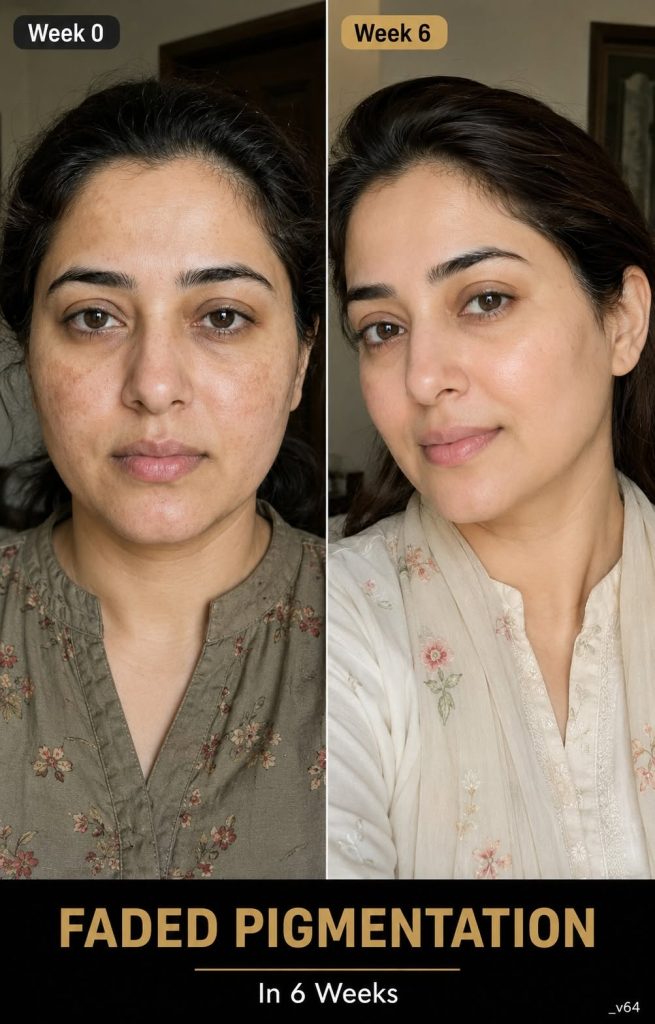
Pigmentation, dark spots, uneven skin tone, and post-acne marks can make the skin appear dull and tired. These issues often develop due to sun exposure, hormonal changes, acne, inflammation, or aging. While pigmentation usually takes several weeks to improve, consistent use of scientifically supported natural ingredients may help brighten the skin and reduce excess melanin production. The remedies below are tailored for different skin types and focus on ingredients that have been studied for their skin-brightening, anti-inflammatory, and antioxidant properties.
Remedy 1: For Normal Skin
Scientific Working of the Ingredients
Aloe vera contains aloesin, which has been shown to inhibit tyrosinase, an enzyme involved in melanin production. Yogurt provides lactic acid that gently exfoliates pigmented surface cells. Honey offers antioxidant and moisturizing effects. Cucumber supplies hydration and soothing compounds. Green tea contains polyphenols that help reduce oxidative stress associated with pigmentation. (PMC)
Ingredients
- Fresh aloe vera gel – 2 tablespoons
- Plain yogurt – 1 tablespoon
- Raw honey – 1 teaspoon
- Cucumber juice – 1 tablespoon
- Brewed green tea (cooled) – 1 teaspoon
- Rice flour – 1 teaspoon
Procedure
- Mix all ingredients into a smooth paste.
- Wash the face with lukewarm water.
- Apply the mixture evenly on pigmented areas.
- Leave for 20 minutes.
- Rinse gently and pat dry.
- Apply a light moisturizer.
How Often to Apply
Apply once daily in the evening for 5 to 6 days per week.
Initial Results
Within 1 to 2 weeks, skin may feel smoother and appear brighter. More noticeable fading of mild pigmentation may begin after 4 to 6 weeks with consistent use.
Remedy 2: For Combination Skin
Scientific Working of the Ingredients
Tomato contains lycopene, a powerful antioxidant that helps protect the skin from oxidative damage. Oatmeal provides gentle exfoliation and skin-soothing compounds. Aloe vera helps calm inflammation. Honey supports skin repair, while green tea assists in reducing free-radical damage associated with discoloration. (PMC)
Ingredients
- Fresh tomato pulp – 2 tablespoons
- Finely ground oats – 1 tablespoon
- Aloe vera gel – 1 tablespoon
- Honey – 1 teaspoon
- Green tea – 1 teaspoon
- Rose water – 1 teaspoon
Procedure
- Combine all ingredients thoroughly.
- Apply a thin layer across the face.
- Focus on darker patches and uneven areas.
- Leave for 15 to 20 minutes.
- Rinse with cool water.
How Often to Apply
Use on alternate days for at least 6 weeks.
Initial Results
Skin may appear fresher and less dull within the first week. Pigmentation typically requires several weeks of regular application to improve.
Remedy 3: For Oily Skin
Scientific Working of the Ingredients
Niacinamide-rich foods and topical vitamin B3 sources are associated with improvement in hyperpigmentation. Studies have shown niacinamide can reduce melanosome transfer and improve skin lightness. Lemon is often used traditionally for brightening but should be diluted due to irritation risk. Green tea helps reduce inflammation, while multani mitti absorbs excess oil. (PubMed)
Ingredients
- Multani mitti (Fuller’s earth) – 1 tablespoon
- Aloe vera gel – 1 tablespoon
- Green tea – 1 tablespoon
- Honey – 1 teaspoon
- Cucumber juice – 1 teaspoon
- Very dilute lemon juice – 3 to 4 drops
Procedure
- Mix ingredients to form a smooth paste.
- Apply evenly on oily areas and dark spots.
- Leave for 15 minutes.
- Wash off before the mask completely hardens.
How Often to Apply
Use 3 times per week.
Initial Results
Oiliness may reduce within a few days. Gradual improvement in post-acne marks and pigmentation may be seen over 4 to 6 weeks.
Remedy 4: For Dry Skin
Scientific Working of the Ingredients
Milk contains lactic acid, which helps remove dead pigmented cells. Almonds provide vitamin E and antioxidants that support skin repair. Honey improves moisture retention. Aloe vera supplies soothing compounds, while turmeric contains curcumin, known for antioxidant and anti-inflammatory properties.
Ingredients
- Milk cream – 1 tablespoon
- Aloe vera gel – 1 tablespoon
- Honey – 1 teaspoon
- Finely ground almonds – 1 teaspoon
- Turmeric powder – ¼ teaspoon
- Rose water – 1 teaspoon
Procedure
- Blend all ingredients into a creamy mixture.
- Apply over the face and neck.
- Leave for 20 minutes.
- Rinse with lukewarm water.
How Often to Apply
Use daily or every other day.
Initial Results
Improved softness and hydration can be noticed within a few days. Pigmentation reduction generally requires several weeks of regular use.
Remedy 5: For Sensitive Skin
Scientific Working of the Ingredients
Sensitive skin benefits from calming ingredients rather than aggressive exfoliants. Aloe vera helps soothe irritation while supporting pigmentation management through aloesin. Oats contain avenanthramides, which reduce skin irritation. Cucumber provides hydration, and honey supports skin barrier recovery. (PMC)
Ingredients
- Aloe vera gel – 2 tablespoons
- Finely ground oats – 1 tablespoon
- Cucumber juice – 1 tablespoon
- Honey – 1 teaspoon
- Chamomile tea – 1 tablespoon
- Rice flour – 1 teaspoon
Procedure
- Mix ingredients into a smooth paste.
- Apply gently without rubbing.
- Leave for 15 minutes.
- Wash with cool water.
How Often to Apply
Apply 3 to 4 times weekly.
Initial Results
Redness and irritation may decrease within several days. Consistent use may gradually improve uneven tone and mild pigmentation.
Important Scientific Factors That Help Fade Pigmentation
Sun Protection Is Essential
Even the best home remedy may fail if skin is repeatedly exposed to sunlight. UV exposure stimulates melanin production and can worsen dark spots. Wearing sunscreen daily and avoiding excessive sun exposure are among the most important steps in pigmentation management.
Why Aloe Vera Is Repeatedly Used
Research suggests that aloesin from aloe vera can interfere with melanin production pathways and may help reduce hyperpigmentation when used consistently. (PMC)
Why Niacinamide Is Popular for Pigmentation
Clinical studies have shown niacinamide can reduce hyperpigmentation by limiting the transfer of melanin-containing structures to skin cells, leading to a brighter and more even complexion over time. (PubMed)
Final Tips
- Drink at least 8 to 10 glasses of water daily.
- Wear sunscreen every day.
- Avoid picking acne or scratching the skin.
- Get 7 to 8 hours of quality sleep.
- Perform a patch test before trying any remedy.
- Clean makeup brushes and skincare tools regularly.
- Avoid harsh scrubs that may worsen pigmentation.
- Stay consistent for at least 6 weeks.
Visible improvement often starts gradually, while more noticeable fading of pigmentation generally requires several weeks of continuous care.
Diet Plan for Pigmentation Reduction
Morning
- 1 glass warm water with lemon
- 5 soaked almonds
- 1 fruit rich in vitamin C (orange, guava, or kiwi)
Breakfast
- Oatmeal with berries
- Unsweetened yogurt
Mid-Morning
- Green tea
- Cucumber slices
Lunch
- Mixed vegetable salad
- Lentils or lean protein
- Whole grains
Evening
- Green tea
- Handful of walnuts
Dinner
- Grilled fish or beans
- Steamed vegetables
- Salad
Before Bed
- Warm turmeric milk or chamomile tea
Continue the remedies and healthy diet for at least 6 weeks. If pigmentation persists, worsens, spreads rapidly, or is associated with hormonal or medical conditions, consult a dermatologist for proper evaluation and treatment.
References for the above remedy
- Hollinger JC et al. Natural Ingredients in Hyperpigmentation Management. URL: https://pmc.ncbi.nlm.nih.gov/articles/PMC5843359/
- Choi S et al. Aloesin Inhibits Hyperpigmentation Induced by UV Radiation. URL: https://www.researchgate.net/publication/11087906_Aloesin_inhibits_hyperpigmentation_induced_by_UV_radiation
- Navarrete-Solís J et al. A Double-Blind Randomized Clinical Trial of Niacinamide 4% for Melasma. URL: https://pmc.ncbi.nlm.nih.gov/articles/PMC3142702/
- Hakozaki T et al. Effect of Niacinamide on Reducing Cutaneous Pigmentation. URL: https://pubmed.ncbi.nlm.nih.gov/12100180/
- Boo YC. Mechanistic Basis and Clinical Evidence for Applications of Nicotinamide in Dermatology. URL: https://pmc.ncbi.nlm.nih.gov/articles/PMC8389214/
- Ghafarzadeh M et al. Clinical Efficacy of Liposome-Encapsulated Aloe Vera on Melasma. URL: https://pubmed.ncbi.nlm.nih.gov/28139161/
- Jeon G et al. Enhancement of Melanogenic Inhibitory Effects of Aloe Vera Extract. URL: https://www.mdpi.com/2311-5637/8/11/580
- Marques C et al. Mechanistic Insights into the Multiple Functions of Niacinamide. URL: https://www.mdpi.com/2076-3921/13/4/425
- Ali SA et al. Novel Action of Aloe Vera Leaf Extract on Skin Lightening. URL: https://pubmed.ncbi.nlm.nih.gov/22495441/
- Journal of the American Academy of Dermatology. Reversibility of Reduction of Facial Hyperpigmented Spots. URL: https://www.jaad.org/article/S0190-9622%2804%2903457-7/fulltext