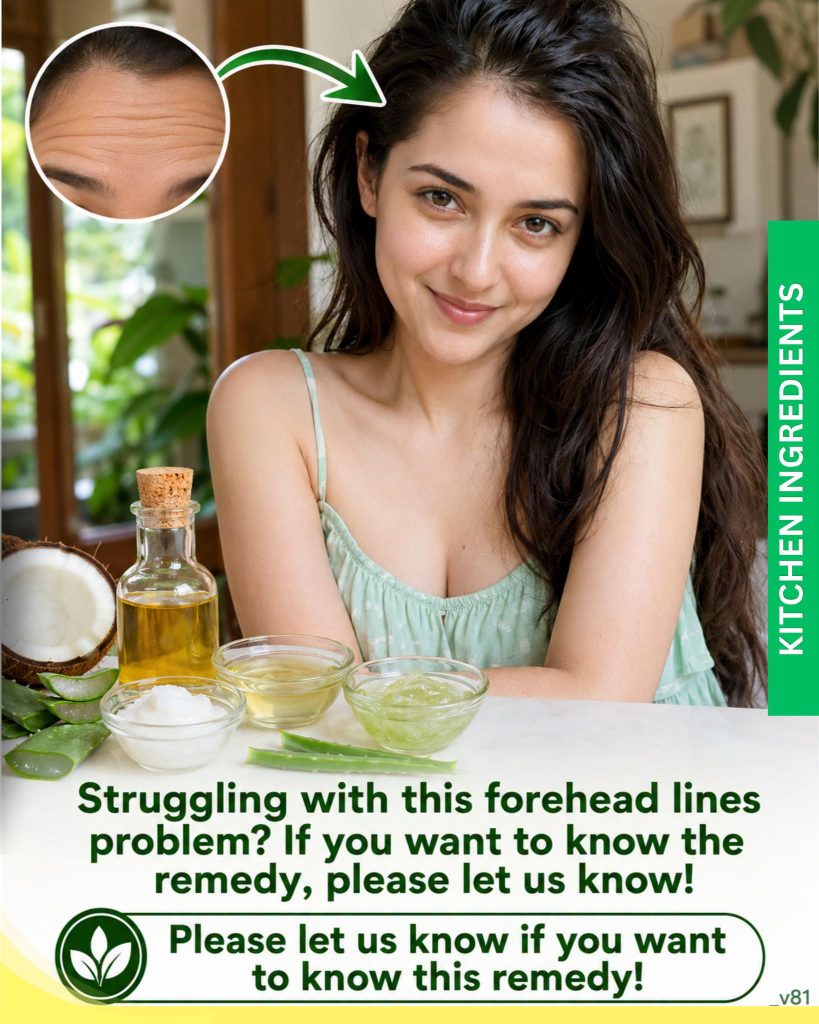
Forehead lines are among the earliest signs of skin aging. Repeated facial expressions, loss of collagen, dehydration, sun exposure, and oxidative stress gradually make fine lines more noticeable. While natural remedies cannot erase wrinkles completely, certain ingredients rich in antioxidants, fatty acids, and skin-soothing compounds may improve hydration and temporarily reduce the appearance of fine lines. Inspired by the ingredients shown in the image above, this nourishing mask is especially helpful for mature and dry skin.

Why These Ingredients Work Scientifically
Aloe Vera Supports Collagen and Hydration
Aloe vera contains polysaccharides, amino acids, and vitamins A, C, and E. These compounds help retain moisture and support skin elasticity, making fine lines appear softer.
Coconut Oil Helps Restore the Skin Barrier
Virgin coconut oil contains medium-chain fatty acids that reduce water loss from the skin and improve smoothness.
Honey Provides Natural Moisture
Honey acts as a humectant, attracting water to the outer layers of the skin. It also supplies antioxidants that help combat free-radical damage.
Egg White Contains Proteins That Tighten Skin
Egg white contains albumin proteins that create a temporary tightening effect, giving the skin a firmer appearance.
Rice Cream Provides Gentle Exfoliation
Rice compounds contain antioxidants and starches that help improve skin texture and softness.
Cucumber Juice Refreshes Tired Skin
Cucumber is rich in water, silica, and vitamin C, which help soothe and hydrate aging skin.
Remedy 1: For Normal Skin
Ingredients
- 1 tablespoon fresh aloe vera gel
- 1 teaspoon organic honey
- 1 teaspoon coconut oil
- 1 teaspoon cucumber juice
- 1 teaspoon rice flour
- ½ egg white
Scientific Benefits
- Aloe vera improves hydration and elasticity.
- Honey provides antioxidants and moisture.
- Coconut oil supports the skin barrier.
- Cucumber juice reduces dryness and refreshes skin.
- Rice flour gently removes dead cells.
- Egg white temporarily tightens skin.
Procedure
- Mix all ingredients in a bowl.
- Stir until a creamy consistency forms.
- Apply evenly over the forehead and entire face.
- Leave for 20 minutes.
- Wash with lukewarm water.
How Often to Apply
Apply 3 times weekly for 2–4 weeks.
Initial Results
Within 2–3 days, the skin may feel smoother and softer with improved hydration.
Remedy 2: For Combination Skin
Ingredients
- 1 tablespoon aloe vera gel
- 1 teaspoon honey
- 1 teaspoon yogurt
- 1 teaspoon cucumber juice
- 1 teaspoon oat flour
- ½ teaspoon flaxseed gel
Scientific Working of Ingredients
Yogurt contains lactic acid that gently exfoliates, while flaxseed gel supplies omega-3 fatty acids and antioxidants that support skin moisture and elasticity.
Procedure
Combine ingredients into a smooth paste and apply for 15–20 minutes.
How Often to Apply
Use every alternate day for one week.
Initial Results
Skin texture becomes smoother and dry areas appear less rough.
Remedy 3: For Oily Skin
Ingredients
- 1 tablespoon aloe vera gel
- 1 teaspoon cucumber juice
- 1 teaspoon green tea extract
- 1 teaspoon rice flour
- 1 teaspoon honey
- ½ teaspoon lemon juice
Scientific Working of Ingredients
Green tea contains catechins that protect skin from oxidative damage, while rice flour gently absorbs excess oil.
Procedure
Mix ingredients thoroughly and apply for 15 minutes.
How Often to Apply
Three times per week.
Initial Results
Skin appears refreshed and less greasy within a few days.
Remedy 4: For Dry Skin
Ingredients
- 1 tablespoon aloe vera gel
- 1 teaspoon coconut oil
- 1 teaspoon honey
- 1 teaspoon mashed avocado
- 1 teaspoon milk cream
- 1 teaspoon rice flour
Scientific Working of Ingredients
Avocado contains vitamin E and healthy fats that nourish dry skin. Milk cream supplies lipids that help soften rough areas.
Procedure
Prepare a creamy mixture and apply for 20 minutes before rinsing.
How Often to Apply
Four times weekly.
Initial Results
Skin becomes softer and forehead lines caused by dryness appear less prominent.
Remedy 5: For Sensitive Skin
Ingredients
- 1 tablespoon aloe vera gel
- 1 teaspoon honey
- 1 teaspoon cucumber juice
- 1 teaspoon oatmeal powder
- 1 teaspoon chamomile tea
- ½ teaspoon flaxseed gel
Scientific Working of Ingredients
Oatmeal contains beta-glucans and anti-inflammatory compounds that soothe sensitive skin, while chamomile contains antioxidants that calm irritation.
Procedure
Mix all ingredients gently and apply for 15 minutes.
How Often to Apply
Three times weekly after performing a patch test.
Initial Results
Skin feels calm, hydrated, and more comfortable within several days.
Diet Plan for Healthy and Youthful Skin
Early Morning
- One glass of warm water
- 4 almonds and 2 walnuts
Breakfast
- Oatmeal with yogurt
- Boiled egg or sprouts
- One orange or kiwi
Lunch
- Fish, chicken, or lentils
- Green vegetables
- Brown rice or chapati
- Salad
Evening Snack
- Green tea
- Pumpkin seeds or sunflower seeds
Dinner
- Vegetable soup
- Grilled chicken or beans
- Cucumber and tomatoes
Daily Hydration
Drink 8–10 glasses of water throughout the day.
Final Tips
- Wear sunscreen every day.
- Sleep 7–8 hours every night.
- Avoid smoking and excessive sugar intake.
- Manage stress with regular exercise.
- Keep makeup brushes clean.
- Always perform a patch test before using any home remedy.
- Visible improvement usually begins after 2–4 weeks of consistent care.
Home remedies mainly improve hydration and skin texture. Deep wrinkles or rapidly worsening skin changes should be evaluated by a dermatologist. Continue these remedies for 4–6 weeks. If forehead lines persist or are associated with other skin problems, consult a skin specialist.
References for the above remedy
- Aloe vera in dermatology: an overview. National Center for Biotechnology Information.
URL: https://pmc.ncbi.nlm.nih.gov/articles/PMC2763764/ - Honey in dermatology and skin care. National Center for Biotechnology Information.
URL: https://pmc.ncbi.nlm.nih.gov/articles/PMC5661189/ - Virgin coconut oil for skin barrier and moisturization. National Center for Biotechnology Information.
URL: https://pmc.ncbi.nlm.nih.gov/articles/PMC6335493/ - Oatmeal and skin barrier protection. National Center for Biotechnology Information.
URL: https://pmc.ncbi.nlm.nih.gov/articles/PMC5796020/ - Antioxidants and skin aging. National Center for Biotechnology Information.
URL: https://pmc.ncbi.nlm.nih.gov/articles/PMC3583891/ - Nutrition and skin aging. National Center for Biotechnology Information.
URL: https://pmc.ncbi.nlm.nih.gov/articles/PMC7146365/ - American Academy of Dermatology: Anti-aging skin care recommendations.
URL: https://www.aad.org/public/everyday-care/skin-care-secrets/anti-aging/reduce-premature-aging-skin - Mayo Clinic: Skin care and healthy aging.
URL: https://www.mayoclinic.org/healthy-lifestyle/adult-health/in-depth/skin-care/art-20048237 - Harvard T.H. Chan School of Public Health: Healthy Eating Plate.
URL: https://nutritionsource.hsph.harvard.edu/healthy-eating-plate/ - Oxidative stress and skin aging. National Center for Biotechnology Information.
URL: https://pmc.ncbi.nlm.nih.gov/articles/PMC5514576/