Premature white hair is becoming increasingly common due to genetics, oxidative stress, nutritional deficiencies, thyroid disorders, smoking, pollution, and chronic stress. While no natural remedy can instantly turn already white hair permanently black, certain botanicals have been shown to protect melanocytes (pigment-producing cells), reduce oxidative damage, nourish hair follicles, and support the production of naturally pigmented new hair over time. Consistency is the key. The following remedy combines traditional Ayurvedic ingredients with scientific evidence supporting their role in maintaining healthy hair pigmentation and scalp health.
Important: This remedy supports healthy hair growth and may help delay or reduce premature greying. Existing white hair generally cannot be permanently repigmented naturally. New hair growth may appear healthier and retain natural pigmentation when underlying causes are addressed.
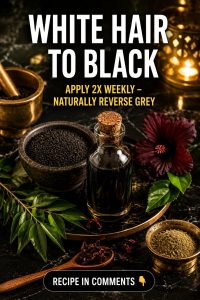
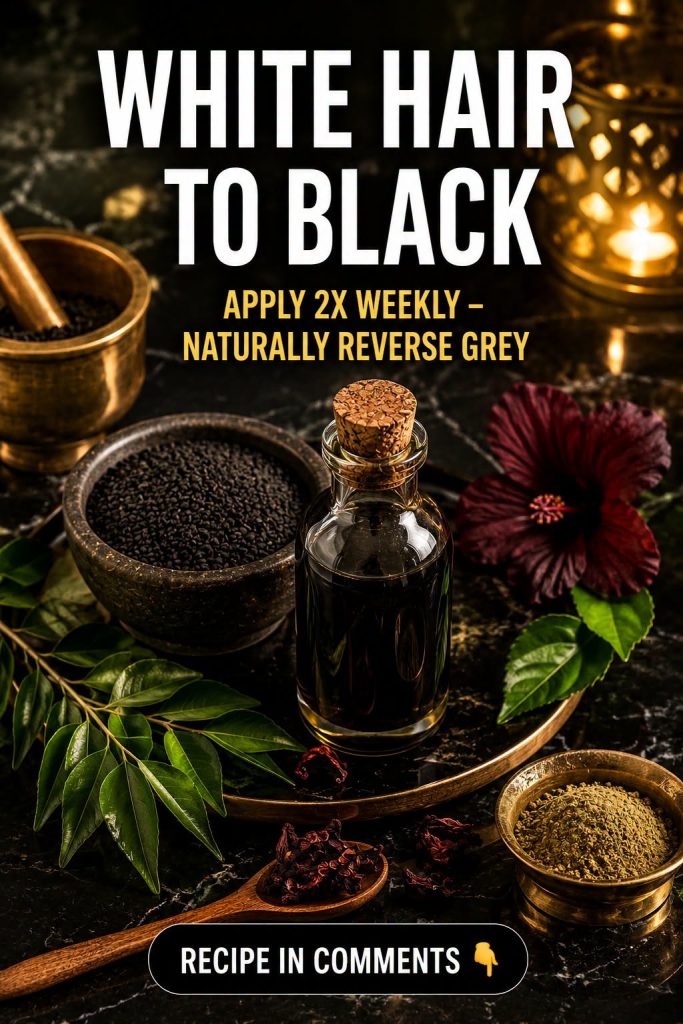
Natural Herbal Oil for Premature Grey Hair
Ingredients
- Black sesame seeds – 2 tablespoons
- Fresh curry leaves – 1 cup
- Dried hibiscus flowers – 5–6 flowers
- Bhringraj powder – 2 tablespoons
- Amla powder – 2 tablespoons
- Cold-pressed coconut oil – 250 ml
- Castor oil – 2 tablespoons
Scientific Benefits of Each Ingredient
Black Sesame Seeds
Black sesame seeds are naturally rich in copper, zinc, vitamin E, calcium, and powerful lignans such as sesamin. Copper is an essential mineral required for tyrosinase, the enzyme involved in melanin production. Their antioxidant compounds also help protect hair follicles from oxidative stress.
Curry Leaves
Curry leaves contain carbazole alkaloids, beta-carotene, iron, vitamin C, amino acids, and antioxidants. Laboratory studies suggest curry leaf extracts may stimulate tyrosinase activity while reducing oxidative damage that contributes to premature greying.
Hibiscus Flowers
Hibiscus is rich in flavonoids, anthocyanins, amino acids, and natural antioxidants. These compounds help nourish hair follicles, improve scalp circulation, reduce breakage, and maintain healthier hair.
Bhringraj
Bhringraj (Eclipta alba) has long been used in Ayurvedic medicine for hair health. Experimental studies indicate that its active compounds may support healthy hair follicle function, reduce inflammation, and encourage stronger hair growth.
Amla
Amla contains abundant vitamin C, tannins, gallic acid, ellagic acid, and polyphenols. These antioxidants help protect melanocytes from oxidative stress while improving overall scalp health.
Coconut Oil
Coconut oil contains lauric acid, which penetrates the hair shaft more effectively than many other oils. It reduces protein loss, moisturizes the scalp, and serves as an excellent carrier oil for herbal extracts.
Castor Oil
Castor oil is rich in ricinoleic acid and omega fatty acids that improve scalp hydration, support healthy circulation, and help reduce hair dryness.
Preparation
- Heat the coconut oil over very low heat.
- Add the black sesame seeds and cook gently for about 5 minutes.
- Add curry leaves and continue heating until they become crisp.
- Add hibiscus flowers.
- Stir in bhringraj powder and amla powder.
- Simmer on the lowest heat for another 10–15 minutes without burning the herbs.
- Turn off the heat and allow the oil to cool completely.
- Add castor oil and mix thoroughly.
- Strain the oil using a fine cloth.
- Store in a dark glass bottle.
How to Apply
- Warm 2–3 tablespoons of the oil slightly.
- Apply directly to the scalp.
- Massage gently using circular movements for 8–10 minutes.
- Leave overnight or at least 2–3 hours.
- Wash with a mild sulfate-free shampoo.
Frequency
Apply twice weekly for at least 3–6 months for the best opportunity to support healthy new hair growth.
Expected Results
Within 2–4 Weeks
- Better scalp hydration
- Softer hair texture
- Reduced dryness
- Improved shine
Within 2–3 Months
- Stronger hair roots
- Reduced hair breakage
- Healthier new hair growth
After 3–6 Months
With consistent use and if nutritional deficiencies or medical causes are corrected, some people may notice healthier, darker-looking new hair growth. Existing white hair generally remains white unless colored with natural or cosmetic dyes.
Additional Tips
- Eat foods rich in copper, iron, zinc, vitamin B12, folate, and protein.
- Include black sesame seeds, nuts, legumes, leafy vegetables, eggs, dairy, and fruits in your diet.
- Manage stress through exercise, meditation, or adequate sleep.
- Avoid smoking.
- Protect hair from excessive sun exposure.
- Avoid frequent chemical coloring and harsh heat styling.
- Patch test the oil before first use.
Diet Plan for Healthy Hair Pigmentation
Morning
- Warm water
- Handful of soaked black sesame seeds
- One seasonal fruit
Breakfast
- Eggs or sprouts
- Whole-grain bread or oats
- Milk or yogurt
Lunch
- Brown rice or whole wheat chapati
- Lentils
- Green vegetables
- Salad
Evening Snack
- Mixed nuts
- Pumpkin seeds
- Green tea
Dinner
- Fish, chicken, lentils, or beans
- Mixed vegetables
- Whole grains
Drink 2–3 liters of water daily.
When to Consult a Doctor
If premature greying continues despite consistent care or is associated with rapid hair loss, fatigue, thyroid symptoms, anemia, or vitamin deficiencies, consult a dermatologist or physician. They may recommend evaluation for vitamin B12 deficiency, iron deficiency, thyroid disorders, or other medical conditions contributing to premature grey hair.
References for the above remedy
- Shi Y, et al. Premature Graying as a Consequence of Compromised Antioxidant Activity in Hair Bulb Melanocytes. PLOS ONE (2014).
https://journals.plos.org/plosone/article?id=10.1371/journal.pone.0093514 - NIH – Natural Products and Their Derivatives as Candidate Treatments for Hair Greying.
https://pmc.ncbi.nlm.nih.gov/articles/PMC12866018/ - NIH – A Review of Hair Health and Common Hair Problems.
https://pmc.ncbi.nlm.nih.gov/articles/PMC5315033/ - International Journal of Pharmaceutical Research and Applications – Study the Premature Greying of Hairs (2024).
https://ijprajournal.com/issue_dcp/Study%20the%20Premature%20Greying%20of%20Hairs.pdf - Food Chemistry – Antioxidant and Free Radical Scavenging Activities of Curry Leaf Extracts.
https://doi.org/10.1016/j.foodchem.2007.07.013 - NIH – Coconut Oil Reduces Protein Loss in Hair.
https://pmc.ncbi.nlm.nih.gov/articles/PMC4387693/ - International Journal of Dermatology – Premature Hair Graying: A Multifaceted Phenomenon (Review).
https://onlinelibrary.wiley.com/doi/10.1111/ijd.17306 - NIH – Role of Oxidative Stress in Hair Pigmentation and Hair Aging.
https://pmc.ncbi.nlm.nih.gov/articles/PMC6369637/