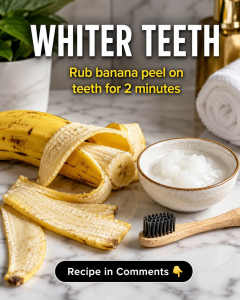
A bright, white smile is often associated with confidence and good oral hygiene. Teeth can become stained over time due to coffee, tea, red wine, smoking, certain medications, and the natural aging process. While many natural remedies are popular online, scientific evidence shows that only a few ingredients can safely help remove surface stains. It is important to understand that banana peels have not been scientifically proven to whiten teeth, despite their popularity on social media. Instead, the following remedies focus on ingredients that have some scientific support for improving oral hygiene and reducing superficial staining while protecting tooth enamel.
Remedy 1: For Healthy Teeth with Mild Surface Stains
Ingredients
- 1 teaspoon virgin coconut oil
- ½ teaspoon food-grade baking soda
- 1 teaspoon aloe vera gel (food-grade)
- 1 drop peppermint essential oil (optional)
- Soft-bristled toothbrush
Scientific Working of the Ingredients
Coconut oil contains lauric acid, which has antimicrobial activity against oral bacteria associated with plaque formation. Baking soda is a mild abrasive that helps remove surface stains without excessive enamel wear when used occasionally. Aloe vera contains antimicrobial compounds that may reduce plaque and support healthier gums. Peppermint provides freshness and has mild antibacterial properties.
Procedure
- Mix the coconut oil, baking soda, and aloe vera.
- Brush gently for one minute.
- Rinse thoroughly with water.
- Brush afterward with fluoride toothpaste.
How Often to Apply
Use 2–3 times per week.
Initial Results
Teeth usually feel cleaner immediately. Surface stain reduction may become noticeable after 2–4 weeks with consistent oral hygiene.
Remedy 2: For Sensitive Teeth
Ingredients
- 2 tablespoons plain yogurt
- ½ teaspoon xylitol powder
- 1 teaspoon aloe vera gel
- Soft toothbrush
- Fluoride toothpaste
Scientific Working of the Ingredients
Yogurt provides calcium and phosphate that help support enamel remineralization. Xylitol reduces the growth of cavity-causing bacteria and promotes saliva production. Aloe vera helps soothe irritated gums without increasing tooth sensitivity.
Procedure
- Mix yogurt, xylitol, and aloe vera.
- Massage gently over teeth and gums.
- Leave for 2 minutes.
- Rinse and brush normally.
How Often to Apply
Use every other day.
Initial Results
The mouth feels fresher within a few uses, while healthier gums and cleaner teeth may become noticeable over several weeks.
Remedy 3: For Coffee and Tea Stains
Ingredients
- ½ teaspoon baking soda
- 2 teaspoons water
- 1 teaspoon coconut oil
- Fluoride toothpaste
Scientific Working of the Ingredients
Baking soda has been extensively studied as a gentle polishing agent that removes extrinsic stains from tea and coffee. Coconut oil helps reduce bacterial buildup that contributes to plaque accumulation.
Procedure
- Prepare a smooth paste.
- Brush gently for one minute.
- Rinse thoroughly.
- Finish by brushing with regular toothpaste.
How Often to Apply
Use twice weekly only.
Initial Results
Surface stains may gradually reduce within 3–4 weeks.
Remedy 4: For Smokers with Surface Discoloration
Ingredients
- 1 teaspoon coconut oil
- ½ teaspoon baking soda
- ½ teaspoon activated charcoal (food-grade, optional and used sparingly)
- Fluoride toothpaste
Scientific Working of the Ingredients
Oil pulling with coconut oil may help reduce oral bacteria. Baking soda removes superficial stains. Activated charcoal is widely marketed for whitening, but scientific evidence supporting its effectiveness is limited, and frequent use may be abrasive. Therefore, it should only be used occasionally.
Procedure
- Mix the ingredients.
- Brush gently for no longer than one minute.
- Rinse thoroughly.
- Brush with fluoride toothpaste.
How Often to Apply
Once weekly if using activated charcoal.
Initial Results
The teeth may appear cleaner after several uses, although deeper tobacco stains usually require professional dental cleaning.
Remedy 5: For Overall Oral Health
Ingredients
- 1 tablespoon coconut oil
- Warm water
- Fluoride toothpaste
- Dental floss
- Tongue scraper
Scientific Working of the Ingredients
Oil pulling may reduce plaque-causing bacteria and improve gum health. Daily brushing with fluoride toothpaste remains the gold standard for preventing cavities and maintaining enamel strength. Floss removes plaque between teeth that brushing cannot reach.
Procedure
- Swish coconut oil for 10–15 minutes.
- Spit into a trash bin.
- Rinse with warm water.
- Brush and floss thoroughly.
How Often to Apply
Three to four mornings per week.
Initial Results
Fresher breath and cleaner-feeling teeth often occur within one week. Gum health may improve over several weeks.
Final Tips
- Brush twice daily with fluoride toothpaste.
- Floss every day.
- Limit sugary drinks and acidic beverages.
- Rinse with water after consuming coffee, tea, or soda.
- Replace your toothbrush every three months.
- Visit a dentist every six months for professional cleaning.
- Avoid rubbing lemon juice, vinegar, or undiluted hydrogen peroxide directly on teeth, as these can damage enamel.
- Banana peels have no reliable clinical evidence proving they whiten teeth, so they should not replace proven oral care practices.
Diet Plan
A tooth-friendly diet helps maintain healthy enamel and reduce staining.
Include:
- Milk, yogurt, and cheese for calcium
- Leafy green vegetables
- Apples and carrots for natural cleansing
- Strawberries in moderation
- Green tea without sugar
- Plenty of water throughout the day
Limit:
- Coffee
- Black tea
- Cola drinks
- Red wine
- Sticky sweets
- Tobacco products
Continue these healthy habits for 6–8 weeks for noticeable improvements in oral hygiene and surface stain reduction. If teeth remain significantly discolored, become painful, or develop sensitivity, consult a dentist. Professional whitening is the safest and most effective treatment for intrinsic stains.
References for the above remedy
- American Dental Association. Tooth Whitening: https://www.ada.org/resources/ada-library/oral-health-topics/tooth-whitening
- American Dental Association. MouthHealthy – Whitening: https://www.mouthhealthy.org/all-topics-a-z/tooth-whitening
- National Center for Biotechnology Information. Baking Soda Dentifrices and Tooth Whitening: https://www.ncbi.nlm.nih.gov/pmc/articles/PMC7604394/
- National Center for Biotechnology Information. Coconut Oil Pulling and Oral Health: https://www.ncbi.nlm.nih.gov/pmc/articles/PMC5654187/
- Cochrane Oral Health. Home-use tooth whitening products: https://www.cochranelibrary.com
- Mayo Clinic. Healthy Adult Teeth: https://www.mayoclinic.org/healthy-lifestyle/adult-health/in-depth/dental/art-20047475
- National Institutes of Health. Xylitol and Oral Health: https://www.ncbi.nlm.nih.gov/books/NBK507887/
- Cleveland Clinic. Teeth Whitening: https://health.clevelandclinic.org/teeth-whitening-home-remedies-work-or-harmful