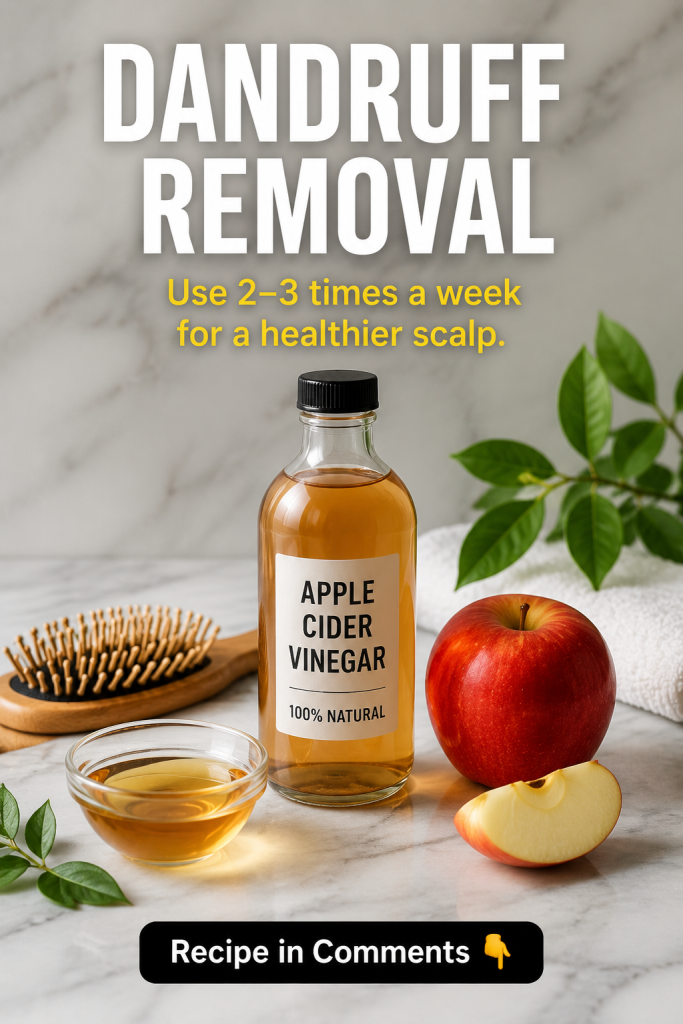
Dandruff is one of the most common scalp concerns affecting both men and women, often leading to itching, visible flakes, and reduced confidence. It is usually caused by excess oil production, fungal overgrowth (Malassezia), dry scalp conditions, or product buildup. While medicated shampoos can help, many people prefer natural approaches that gently restore scalp balance without harsh chemicals. Ingredients like apple cider vinegar, tea tree oil, aloe vera, lemon, neem, and coconut oil are widely studied for their antifungal, antibacterial, and exfoliating properties. When used correctly, they help reduce flakes, calm irritation, and restore a healthy scalp microbiome.
Below are scientifically inspired natural remedies tailored for different scalp types to help control dandruff effectively and safely.
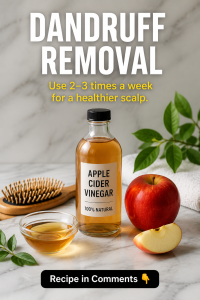
Remedy 1: For Normal Scalp (Balanced Anti-Dandruff Maintenance Wash)
Ingredients:
- Apple cider vinegar – 2 tablespoons (restores scalp pH balance)
- Aloe vera gel – 1 tablespoon (soothes inflammation and hydrates scalp)
- Tea tree oil – 2 drops (antifungal action against dandruff-causing microbes)
- Coconut oil – 1 tablespoon (reduces dryness and flaking)
- Green tea water – 2 tablespoons (antioxidant protection)
- Mild shampoo base (sulfate-free) – 2 tablespoons
Procedure:
Mix all ingredients and apply to scalp. Massage gently for 5–7 minutes, then rinse thoroughly with lukewarm water.
How Often to Apply:
2 times per week.
Initial Results:
Reduced itching and fewer visible flakes within 2–3 uses.
Scientific Working:
Tea tree oil contains terpinen-4-ol which reduces Malassezia fungal activity. Apple cider vinegar helps restore acidic scalp pH, making it less favorable for fungal growth.
Remedy 2: For Oily Scalp (Deep Clarifying Anti-Fungal Treatment)
Ingredients:
- Lemon juice – 1 tablespoon (oil control and mild exfoliation)
- Bentonite clay – 1 tablespoon (absorbs excess sebum)
- Tea tree oil – 3 drops
- Aloe vera juice – 1 tablespoon
- Witch hazel – 1 tablespoon (reduces oil secretion)
- Water – as needed to form paste
Procedure:
Apply directly on scalp roots. Leave for 10–15 minutes, then rinse with mild shampoo.
How Often to Apply:
2–3 times per week.
Initial Results:
Less greasiness and reduced flakes within 48 hours.
Scientific Working:
Clay binds excess sebum through adsorption. Witch hazel reduces oil gland activity, helping control oily dandruff conditions.
Remedy 3: For Dry Scalp (Deep Nourishing Anti-Flake Oil Therapy)
Ingredients:
- Coconut oil – 2 tablespoons (moisturizing fatty acids)
- Olive oil – 1 tablespoon (restores lipid barrier)
- Honey – 1 teaspoon (humectant moisture retention)
- Aloe vera gel – 1 tablespoon
- Vitamin E oil – 2 drops (skin repair support)
- Lavender oil – 2 drops (soothes irritation)
Procedure:
Warm slightly and massage into scalp. Leave for 1–2 hours before washing.
How Often to Apply:
2 times per week.
Initial Results:
Reduced dryness and scalp tightness within 2–3 days.
Scientific Working:
Fatty acids in coconut oil penetrate hair shafts and reduce protein loss, improving scalp barrier function.
Remedy 4: For Sensitive Scalp (Calming Anti-Itch Herbal Rinse)
Ingredients:
- Chamomile tea – ½ cup (anti-inflammatory effect)
- Neem water – 2 tablespoons (antimicrobial protection)
- Aloe vera juice – 2 tablespoons
- Oat water – 2 tablespoons (soothes irritation)
- Rose water – 1 tablespoon
- Coconut water – 2 tablespoons (hydration balance)
Procedure:
Use as final rinse after shampoo. Do not wash out again.
How Often to Apply:
3–4 times per week.
Initial Results:
Reduced redness and itching within 1–2 uses.
Scientific Working:
Neem contains nimbidin which inhibits fungal and bacterial growth. Oats reduce histamine-related itching responses.
Remedy 5: For Severe Dandruff (Intensive Scalp Reset Treatment)
Ingredients:
- Apple cider vinegar – 2 tablespoons
- Tea tree oil – 4 drops
- Neem paste – 1 tablespoon
- Aloe vera gel – 2 tablespoons
- Baking soda – ½ teaspoon (mild exfoliation)
- Coconut oil – 1 tablespoon
Procedure:
Apply to scalp and massage gently. Leave for 10 minutes only, then rinse thoroughly.
How Often to Apply:
Once weekly only.
Initial Results:
Visible reduction in flakes after first use, improved scalp clarity within 3–5 days.
Scientific Working:
Baking soda helps remove buildup, while neem provides strong antifungal activity against dandruff-causing organisms.
Final Tips
Consistency is key in dandruff control. Avoid using very hot water, as it increases scalp dryness and irritation. Wash hair regularly but not excessively, as over-washing can disrupt natural oils. Always ensure proper rinsing of oil-based treatments to avoid buildup. Maintain a balanced diet rich in omega-3 fatty acids, zinc, and vitamin B complex for long-term scalp health. Visible improvement typically begins within 3–5 days, while long-term dandruff control may require 2–4 weeks of consistent care. If severe dandruff persists or worsens, consult a dermatologist to rule out seborrheic dermatitis or fungal infection.
Diet Plan
A scalp-friendly diet plays a major role in dandruff control. Include foods rich in omega-3 fatty acids such as fish, flaxseeds, and walnuts. Eat zinc-rich foods like pumpkin seeds and legumes to support scalp healing. Stay hydrated by drinking at least 2–3 liters of water daily. Reduce sugar and processed foods, as they may increase fungal growth and inflammation. Probiotic foods like yogurt help balance gut microbiota, which indirectly supports skin and scalp health. Continue this dietary approach for at least 3–4 weeks for noticeable improvement.
References for the above remedy
- NIH – Tea Tree Oil Antifungal Activity
https://www.ncbi.nlm.nih.gov/pmc/articles/PMC1360273/ - Mayo Clinic – Dandruff Causes and Treatments
https://www.mayoclinic.org/diseases-conditions/dandruff/symptoms-causes/syc-20353850 - National Library of Medicine – Apple Cider Vinegar and Skin pH
https://pubmed.ncbi.nlm.nih.gov/25098494/ - NIH – Coconut Oil and Skin Barrier Function
https://www.ncbi.nlm.nih.gov/pmc/articles/PMC5796020/ - PubMed – Neem Antimicrobial Properties
https://pubmed.ncbi.nlm.nih.gov/22556994/ - Harvard Health – Scalp Health and Hygiene
https://www.health.harvard.edu/staying-healthy - Cleveland Clinic – Causes of Dandruff and Management
https://my.clevelandclinic.org/health/diseases/10979-dandruff - NIH – Aloe Vera Anti-Inflammatory Effects
https://www.ncbi.nlm.nih.gov/pmc/articles/PMC2763764/ - World Health Organization – Healthy Diet for Skin and Hair Health
https://www.who.int/news-room/fact-sheets/detail/healthy-diet