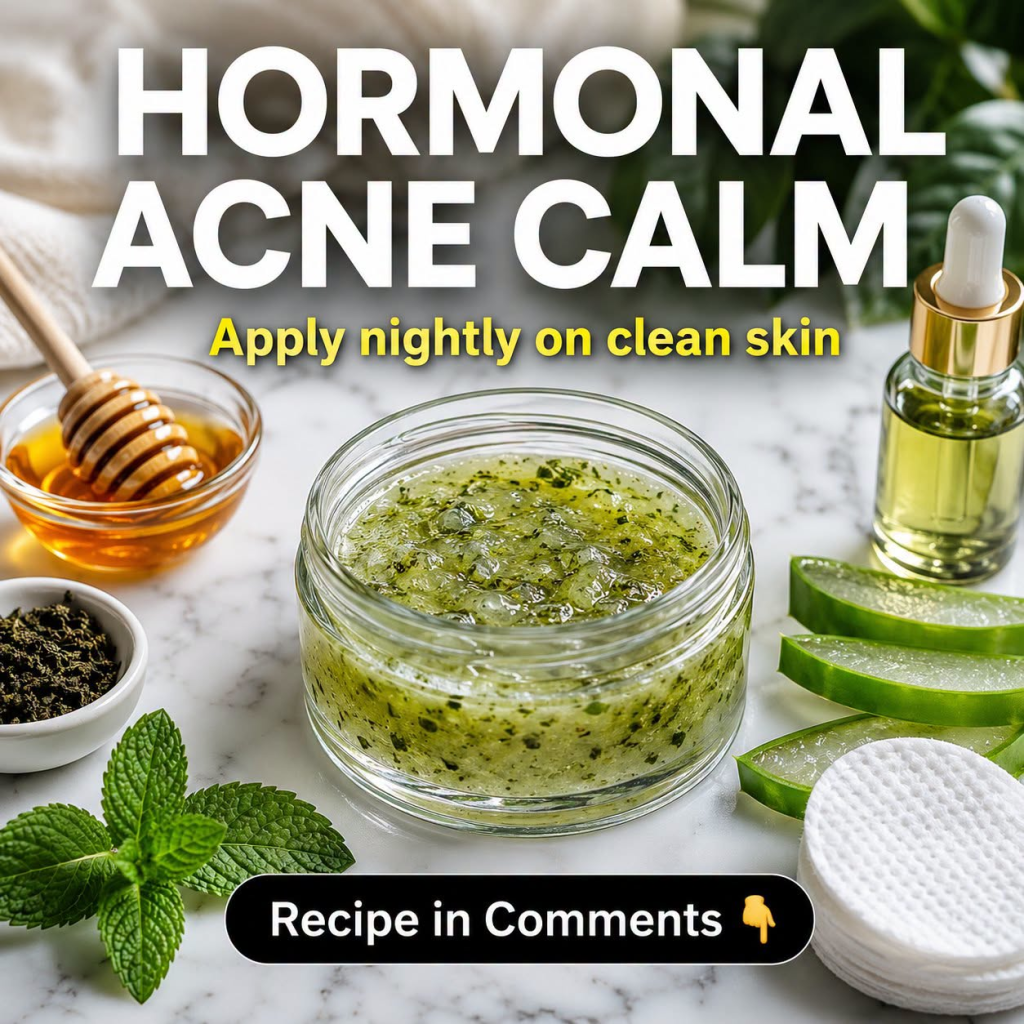
Hormonal acne is a persistent skin condition that often appears along the jawline, chin, and lower cheeks due to fluctuations in hormones such as androgens. These hormonal shifts can increase sebum production, clog pores, and trigger inflammation deep within the skin. Unlike regular acne, hormonal acne tends to be recurring and difficult to control with surface-level treatments alone. However, research suggests that natural ingredients with anti-inflammatory, antimicrobial, and hormone-supportive properties can help calm flare-ups and improve overall skin balance. This guide provides scientifically supported, skin-type-specific remedies designed to reduce hormonal acne activity while supporting skin healing and clarity.
Remedy 1: For Normal Skin (Hormonal Balance & Skin Detox Support)
Ingredients
- Matcha green tea powder (1 teaspoon) – rich in EGCG antioxidants
- Bentonite clay (1 tablespoon) – detoxifies impurities from pores
- Raw honey (1 tablespoon) – antibacterial and wound healing support
- Aloe vera gel (1 tablespoon) – reduces inflammation and redness
- Lavender essential oil (1–2 drops) – calming and antibacterial effects
- Rose water (1 tablespoon) – skin soothing and hydration
Procedure
Mix all ingredients into a smooth paste. Apply evenly to clean skin and leave for 15–20 minutes. Rinse with lukewarm water and gently pat dry.
Scientific Working of Ingredients
- Matcha contains epigallocatechin gallate (EGCG), which reduces sebum production and oxidative stress.
- Bentonite clay binds to toxins and excess oil, helping unclog pores.
- Honey provides natural antibacterial activity and supports tissue repair.
- Aloe vera suppresses inflammatory cytokines responsible for acne flare-ups.
How Often to Apply
3 times per week.
Initial Results
Within 3–5 days, reduced redness and smoother skin texture.
Remedy 2: For Combination Skin (Oil Regulation & Hormonal Acne Control)
Ingredients
- Rice flour (2 tablespoons) – gentle exfoliation
- Green tea extract (2 tablespoons cooled infusion) – antioxidant support
- Witch hazel (1 tablespoon) – astringent and pore tightening
- Cucumber juice (1 tablespoon) – reduces irritation
- Yogurt (1 tablespoon) – lactic acid for mild exfoliation
- Basil leaf paste (1 teaspoon) – antimicrobial and hormone-modulating properties
Procedure
Mix all ingredients into a light paste. Apply thinly on affected areas and leave for 15 minutes before rinsing.
Scientific Working of Ingredients
- Rice flour gently removes dead skin cells, preventing pore blockage.
- Witch hazel reduces inflammation and tightens enlarged pores.
- Basil contains eugenol compounds that show antibacterial activity against acne-causing bacteria.
- Yogurt provides lactic acid, improving skin texture and cell turnover.
How Often to Apply
3–4 times weekly, preferably at night.
Initial Results
Within 2–4 days, reduced oiliness and calmer skin.
Remedy 3: For Oily Skin (Deep Pore Cleansing & Sebum Control)
Ingredients
- Multani mitti (Fuller’s earth) (2 tablespoons) – oil absorption
- Neem powder (1 teaspoon) – antibacterial and antifungal
- Cinnamon powder (1/2 teaspoon) – improves blood circulation
- Tea tree oil (2 drops) – antimicrobial activity
- Apple cider vinegar diluted (1 teaspoon + water) – pH balancing
- Green tea water (1 tablespoon) – antioxidant protection
Procedure
Blend into a smooth paste and apply evenly on oily areas. Let it dry for 15–20 minutes, then rinse thoroughly.
Scientific Working of Ingredients
- Neem disrupts bacterial growth responsible for acne formation.
- Cinnamon improves circulation and reduces bacterial colonization.
- Tea tree oil reduces Propionibacterium acnes activity.
- Apple cider vinegar restores acidic skin pH, preventing microbial overgrowth.
How Often to Apply
2–3 times per week.
Initial Results
Within a few days, reduced shine and fewer active breakouts.
Remedy 4: For Dry Skin (Barrier Repair & Hormonal Acne Soothing)
Ingredients
- Avocado oil (1 teaspoon) – rich in fatty acids
- Oatmeal powder (1 tablespoon) – anti-inflammatory and soothing
- Chamomile tea extract (1 tablespoon cooled) – calming effect
- Flaxseed gel (1 tablespoon) – omega-3 support for skin barrier
- Shea butter (1 teaspoon) – deep moisturization
- Honey (1 teaspoon) – hydration and healing
Procedure
Mix all ingredients into a creamy consistency. Apply gently to affected areas and leave for 20 minutes before rinsing.
Scientific Working of Ingredients
- Avocado oil provides oleic acid that supports skin lipid repair.
- Flaxseed contains omega-3 fatty acids that reduce inflammation.
- Chamomile suppresses skin irritation pathways.
- Shea butter strengthens the skin barrier and prevents moisture loss.
How Often to Apply
3–4 times per week.
Initial Results
Within 2–3 days, improved softness and reduced dryness-related irritation.
Remedy 5: For Sensitive Skin (Gentle Hormonal Acne Relief)
Ingredients
- Colloidal oatmeal (2 tablespoons) – skin barrier protection
- Cucumber extract (1 tablespoon) – cooling and hydrating
- Calendula extract (1 teaspoon) – anti-inflammatory healing
- Aloe vera gel (1 tablespoon) – reduces redness
- Chamomile infusion (1 tablespoon) – soothing effect
- Rice water (1 tablespoon) – improves skin resilience
Procedure
Mix gently and apply a thin layer on the skin. Leave for 10–15 minutes and rinse with cool water.
Scientific Working of Ingredients
- Colloidal oatmeal contains beta-glucans that reduce itching and irritation.
- Calendula supports tissue repair and reduces inflammation.
- Rice water strengthens the skin barrier and improves elasticity.
- Aloe vera helps calm hormonal acne inflammation without irritation.
How Often to Apply
2–3 times weekly.
Initial Results
Within 3 days, reduced sensitivity and calmer skin appearance.
Final Tips
Hormonal acne requires consistency and internal balance as much as topical care. Always cleanse skin gently and avoid over-exfoliation, which can worsen hormonal flare-ups. Maintain a consistent sleep cycle to support hormone regulation. Drink sufficient water daily and manage stress through light physical activity or meditation, as stress hormones can worsen acne activity. Visible improvement usually begins within 3–5 days, while deeper hormonal balance may take several weeks of consistent care.
Diet Plan
A hormonal acne-friendly diet should focus on reducing inflammatory foods and supporting hormone balance. Include foods rich in omega-3 fatty acids such as chia seeds, walnuts, and flaxseeds. Add cruciferous vegetables like broccoli and cabbage, which support estrogen metabolism. Increase intake of zinc-rich foods like pumpkin seeds and lentils, as zinc helps regulate sebum production. Avoid high-sugar foods, refined carbohydrates, and excessive dairy, as they may trigger hormonal acne in some individuals. Green tea and spearmint tea may also support hormonal balance when consumed regularly. Continue both diet and topical remedies for 4–8 weeks. If acne persists or worsens, consult a dermatologist for hormonal evaluation and targeted medical treatment.
References for the above remedy
- https://www.ncbi.nlm.nih.gov/pmc/articles/PMC5384166/ – Green tea catechins and skin health effects
- https://www.ncbi.nlm.nih.gov/pmc/articles/PMC4740347/ – Tea tree oil antimicrobial activity in acne treatment
- https://www.ncbi.nlm.nih.gov/pmc/articles/PMC5796020/ – Honey wound healing and antibacterial properties
- https://www.ncbi.nlm.nih.gov/pmc/articles/PMC8875008/ – Zinc and acne severity correlation
- https://www.ncbi.nlm.nih.gov/pmc/articles/PMC7356199/ – Neem antimicrobial and anti-inflammatory properties
- https://www.ncbi.nlm.nih.gov/pmc/articles/PMC6330525/ – Aloe vera effects on skin inflammation and repair
- https://www.ncbi.nlm.nih.gov/pmc/articles/PMC6888832/ – Oatmeal skin barrier and anti-inflammatory effects
- https://www.ncbi.nlm.nih.gov/pmc/articles/PMC5749697/ – Omega-3 fatty acids and inflammatory skin conditions