Introduction
Split ends are one of the most common hair problems that make hair look rough, dull, and unhealthy. They occur when the protective outer layer of the hair shaft becomes damaged due to heat styling, excessive washing, chemical treatments, environmental exposure, and lack of moisture. Once the hair fiber splits, it cannot permanently fuse back together, but natural nourishing treatments can help reduce dryness, improve hair texture, protect the ends, and prevent further splitting.
Using ingredients rich in fatty acids, proteins, antioxidants, vitamins, and moisturizing compounds can support healthier-looking hair. Different hair types require different treatments, so selecting remedies according to your hair condition can provide better results. The following scientifically supported natural remedies focus on improving moisture balance, reducing breakage, and making hair smoother.
Remedy 1: For Normal Hair
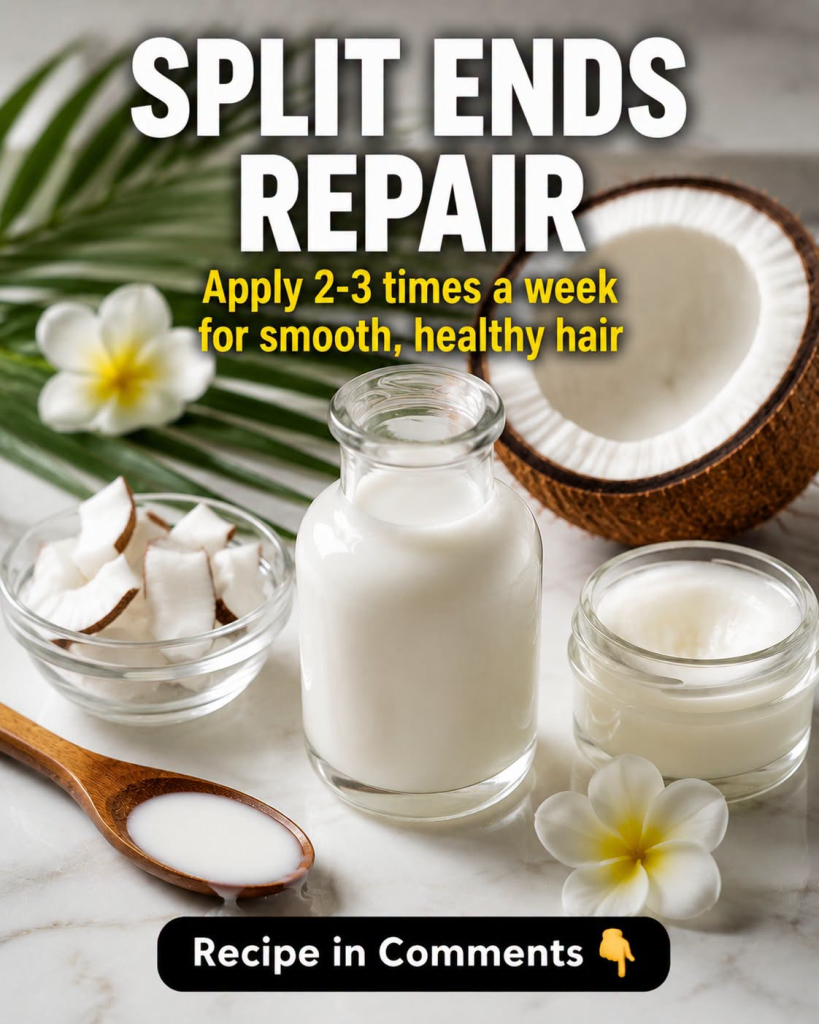
Coconut Milk and Aloe Vera Hair Repair Mask
Scientific Working of Each Ingredient
Coconut Milk (4 tablespoons)
Coconut milk contains natural fats, proteins, and minerals that help coat the hair shaft and improve softness. Its fatty acids reduce moisture loss and make dry ends appear smoother. Coconut-derived compounds have also been studied for their ability to reduce protein loss from hair.
Aloe Vera Gel (2 tablespoons)
Aloe vera contains polysaccharides, vitamins, and antioxidants that help hydrate hair strands and soothe the scalp. Its moisturizing properties improve hair flexibility and reduce rough texture.
Coconut Oil (1 tablespoon)
Coconut oil contains lauric acid, which has a unique ability to penetrate the hair shaft. Research suggests coconut oil can reduce protein loss from damaged and undamaged hair, helping improve strength.
Honey (1 teaspoon)
Honey acts as a natural humectant, meaning it attracts and holds moisture. This helps prevent dry, brittle ends.
Argan Oil (5 drops)
Argan oil contains vitamin E and fatty acids that smooth the hair surface and improve shine.
Procedure
- Mix coconut milk, aloe vera gel, coconut oil, honey, and argan oil in a bowl.
- Apply the mixture mainly on the middle lengths and split ends.
- Leave for 30 minutes.
- Wash with a mild shampoo.
- Allow hair to dry naturally.
How Often to Apply
Apply 2 times weekly for 3–4 weeks.
Initial Results
After the first few applications, hair may feel softer, smoother, and easier to comb. Visible reduction in roughness usually appears gradually.
Remedy 2: For Dry Hair
Avocado and Olive Oil Deep Conditioning Treatment
Scientific Working of Each Ingredient
Avocado (½ ripe fruit)
Avocado contains healthy fats, vitamin E, and antioxidants that help nourish dry hair. These nutrients improve moisture retention and reduce the appearance of damaged ends.
Extra Virgin Olive Oil (2 tablespoons)
Olive oil contains oleic acid and antioxidants that help soften hair and protect the outer hair layer from dryness.
Egg Yolk (1)
Egg yolk contains proteins, biotin, and fatty acids that support hair structure and improve conditioning.
Yogurt (2 tablespoons)
Yogurt contains proteins and lactic acid that help condition hair and improve smoothness.
Vitamin E Oil (5 drops)
Vitamin E supports moisture protection and helps reduce oxidative stress on hair fibers.
Procedure
- Mash avocado until smooth.
- Add olive oil, egg yolk, yogurt, and vitamin E oil.
- Apply from mid-length to ends.
- Cover hair with a shower cap.
- Leave for 30–40 minutes.
- Wash thoroughly with cool water.
How Often to Apply
Use 1–2 times weekly.
Initial Results
Within 3–5 days, hair may feel more hydrated and less tangled.
Remedy 3: For Oily Hair
Green Tea and Aloe Vera Split End Protection Mask
Scientific Working of Each Ingredient
Green Tea (3 tablespoons cooled)
Green tea contains catechins and antioxidants that help protect hair and scalp from oxidative damage.
Aloe Vera Gel (3 tablespoons)
Aloe vera provides hydration without adding heavy oils, making it suitable for oily hair.
Lemon Juice (½ teaspoon)
Lemon contains citric acid that helps remove excess oil and buildup. It should be diluted to avoid dryness.
Flaxseed Gel (2 tablespoons)
Flaxseed contains omega-3 fatty acids and creates a protective coating that improves hair smoothness.
Rosemary Water (2 tablespoons)
Rosemary contains antioxidant compounds and is traditionally used in hair care for supporting scalp health.
Procedure
- Prepare fresh flaxseed gel by boiling flaxseeds in water and cooling.
- Mix aloe vera gel, green tea, lemon juice, and rosemary water.
- Apply only to hair lengths and ends.
- Leave for 20 minutes.
- Rinse properly.
How Often to Apply
Apply 2 times weekly.
Initial Results
Hair may appear lighter, smoother, and less greasy within several applications.
Remedy 4: For Chemically Damaged Hair
Banana and Shea Butter Repair Hair Mask
Scientific Working of Each Ingredient
Banana (1 ripe)
Bananas contain potassium, natural oils, and vitamins that help improve hair softness and reduce dryness.
Shea Butter (1 tablespoon)
Shea butter contains fatty acids that create a protective layer around damaged hair and reduce moisture loss.
Coconut Oil (1 tablespoon)
Coconut oil helps strengthen hair by reducing protein loss and improving fiber protection.
Honey (1 tablespoon)
Honey improves hydration and helps restore softness.
Milk (2 tablespoons)
Milk contains proteins that provide temporary conditioning and improve hair texture.
Procedure
- Blend banana until completely smooth.
- Add shea butter, coconut oil, honey, and milk.
- Apply to damaged ends.
- Leave for 30 minutes.
- Wash with gentle shampoo.
How Often to Apply
Apply once or twice weekly for 4 weeks.
Initial Results
Hair may feel smoother and more manageable after the first treatment.
Remedy 5: For Sensitive Scalp and Fragile Hair
Oatmeal and Honey Gentle Hair Repair Mask
Scientific Working of Each Ingredient
Oatmeal Powder (2 tablespoons)
Oatmeal contains beta-glucan, which helps maintain moisture and provides soothing benefits for sensitive skin.
Honey (1 tablespoon)
Honey hydrates and provides antioxidant protection.
Aloe Vera Gel (2 tablespoons)
Aloe vera gently moisturizes without harsh chemicals.
Almond Oil (1 teaspoon)
Almond oil contains vitamin E and fatty acids that improve softness.
Chamomile Tea (2 tablespoons)
Chamomile contains antioxidant compounds that provide calming properties.
Procedure
- Mix oatmeal powder with aloe vera gel.
- Add honey, almond oil, and cooled chamomile tea.
- Apply gently to hair ends.
- Leave for 20 minutes.
- Rinse with lukewarm water.
How Often to Apply
Use 2 times weekly.
Initial Results
Hair may feel softer and less rough after several applications.
Final Tips for Preventing Split Ends
- Trim split ends regularly because damaged ends cannot completely repair themselves.
- Avoid excessive heat styling.
- Use a wide-tooth comb on wet hair.
- Avoid washing hair with very hot water.
- Protect hair from strong sunlight and pollution.
- Apply natural oils before shampooing if your hair is dry.
- Avoid tight hairstyles that cause breakage.
- Always perform a patch test before using any natural ingredient.
Visible improvement in softness and texture may begin within 2–3 days, but stronger and healthier-looking hair usually requires consistent care for several weeks.
If severe hair breakage, sudden thinning, scalp irritation, or unusual hair changes continue, consult a dermatologist.
Diet Plan for Stronger Hair and Reduced Split Ends
Healthy hair also depends on internal nutrition.
Morning
- Warm water
- 5 soaked almonds
- One fruit rich in vitamin C
Breakfast
- Eggs or another protein source
- Oatmeal with seeds and nuts
Lunch
- Lentils, fish, chicken, or beans
- Green vegetables
- Whole grains
Evening Snack
- Pumpkin seeds
- Yogurt or nuts
Dinner
- Protein-rich meal
- Vegetables containing iron and antioxidants
Continue this diet for at least 8–12 weeks because hair growth and repair happen gradually.
References for the above remedy
- International Journal of Trichology – Coconut oil and reduction of hair protein loss
https://pubmed.ncbi.nlm.nih.gov/12715094/ - National Center for Complementary and Integrative Health – Aloe Vera research information
https://www.nccih.nih.gov/health/aloe-vera - PubMed – Honey and its biological properties
https://pubmed.ncbi.nlm.nih.gov/24305429/ - PubMed – Green tea polyphenols and antioxidant activity
https://pubmed.ncbi.nlm.nih.gov/10926734/ - Harvard T.H. Chan School of Public Health – Healthy nutrients and diet
https://nutritionsource.hsph.harvard.edu/ - American Academy of Dermatology – Hair care and damage prevention
https://www.aad.org/public/everyday-care/hair-scalp-care/hair - PubMed – Olive oil components and skin/hair barrier benefits
https://pubmed.ncbi.nlm.nih.gov/22995032/ - Cleveland Clinic – Hair care and preventing hair damage
https://health.clevelandclinic.org/ways-to-prevent-hair-damage