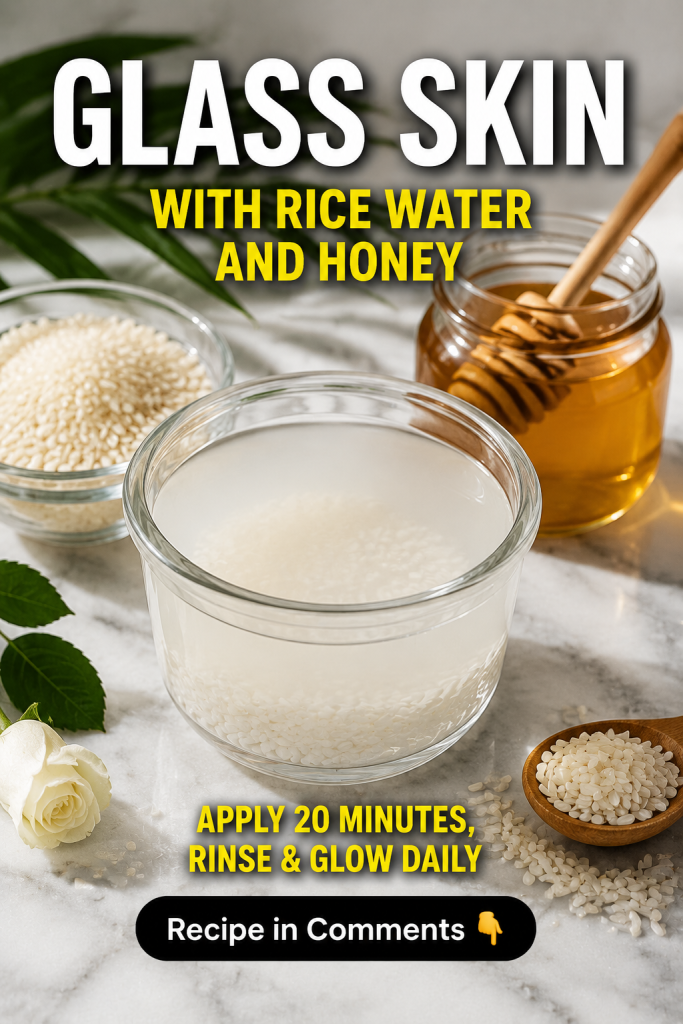
Glass skin refers to skin that appears smooth, hydrated, clear, and naturally luminous. This beauty concept focuses on improving the skin barrier, maintaining moisture balance, reducing rough texture, and supporting an even-looking complexion. While no home remedy can permanently transform skin overnight, consistent care with gentle ingredients can improve skin softness, hydration, and overall appearance.
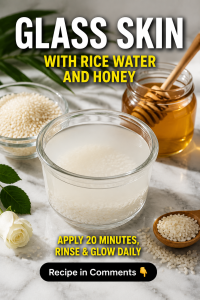
The rice water and honey remedy shown in the image is a traditional skincare practice used in many Asian beauty routines. Rice water contains starches, amino acids, vitamins, and antioxidant compounds that may help improve skin texture. Honey acts as a natural humectant, meaning it attracts and helps retain moisture. Together, these ingredients can support smoother, more hydrated-looking skin.
Different skin types require different approaches. Oily skin needs lightweight hydration and oil balance, dry skin needs moisture protection, and sensitive skin needs calming ingredients.
Remedy 1: For Normal Skin
Rice Water & Honey Glow Mask
Ingredients
3 tablespoons fermented rice water – contains starches, amino acids, and antioxidants.
1 teaspoon raw honey – attracts moisture and supports hydration.
1 tablespoon aloe vera gel – provides soothing hydration.
1 teaspoon rosewater – refreshes and supports skin comfort.
½ teaspoon oat powder – supports skin barrier.
2 drops vitamin E oil – helps protect skin lipids.
Scientific Working of Each Ingredient
Rice Water: Skin Texture Support
Rice water contains compounds such as starch and amino acids that can help improve skin smoothness and hydration. It creates a lightweight conditioning effect on the skin surface.
Honey: Natural Moisture Retention
Honey acts as a humectant by attracting water molecules, helping skin maintain softness and reducing dryness.
Aloe Vera: Hydration and Comfort
Aloe vera contains polysaccharides that help maintain moisture and provide a soothing effect.
Procedure
- Wash rice thoroughly.
- Soak rice in clean water for several hours.
- Strain the water.
- Mix rice water with honey, aloe vera, rosewater, oat powder, and vitamin E.
- Apply a thin layer to clean skin.
- Leave for 15–20 minutes.
- Rinse with cool water.
How Often to Apply
Apply daily or 4–5 times weekly.
Initial Results
Within 3–5 days, skin may feel softer, smoother, and more hydrated.
Remedy 2: For Oily Skin
Rice Water & Green Tea Pore Refining Treatment
Ingredients
3 tablespoons rice water – lightweight hydration.
2 tablespoons green tea – antioxidant support.
1 teaspoon aloe vera gel – non-heavy moisture.
1 teaspoon cucumber juice – cooling hydration.
½ teaspoon clay powder – absorbs excess oil.
Scientific Working of Each Ingredient
Green Tea: Antioxidant and Oil Balance Support
Green tea contains catechins that help protect skin from oxidative stress and may support healthier oil control.
Clay: Excess Oil Absorption
Natural clays can absorb surface oil, helping reduce shine and making pores appear less noticeable.
Cucumber: Cooling Hydration
Cucumber provides water content and refreshing compounds that support a fresh appearance.
Procedure
- Mix rice water and green tea.
- Add aloe vera and cucumber juice.
- Add clay powder slowly.
- Apply for 10 minutes.
- Wash before the mask completely dries.
How Often to Apply
Use 2–3 times weekly.
Initial Results
Oiliness may appear reduced within several applications, giving skin a cleaner look.
Remedy 3: For Dry Skin
Rice Water Honey Moisture Repair Mask
Ingredients
3 tablespoons rice water – conditioning support.
1 tablespoon honey – moisture retention.
1 tablespoon yogurt – gentle softening.
1 teaspoon almond oil – improves skin softness.
1 tablespoon aloe vera gel – hydration.
½ teaspoon oat powder – barrier support.
Scientific Working of Each Ingredient
Yogurt: Gentle Skin Renewal
Yogurt contains lactic acid, which helps remove dead surface cells gently and improves smoothness.
Almond Oil: Moisture Protection
Plant oils provide fatty acids that help reduce moisture loss from the skin surface.
Oats: Skin Barrier Support
Oats contain beta-glucans that support hydration and skin comfort.
Procedure
- Combine all ingredients into a smooth paste.
- Apply evenly to face.
- Leave for 15–20 minutes.
- Rinse gently.
- Apply moisturizer afterward.
How Often to Apply
Use 3–4 times weekly.
Initial Results
Dryness and rough texture may improve within one week.
Remedy 4: For Combination Skin
Rice Water & Niacinamide Support Routine
Ingredients
3 tablespoons rice water – hydration support.
1 tablespoon aloe vera gel – calming moisture.
1 teaspoon honey – hydration.
1 teaspoon green tea – antioxidant support.
1 teaspoon cucumber juice – refreshing effect.
Scientific Working of Each Ingredient
Rice Water: Balanced Hydration
Rice water provides lightweight conditioning without heavy oils.
Green Tea: Environmental Protection
Green tea polyphenols help protect skin from oxidative stress caused by environmental factors.
Aloe Vera: Maintaining Skin Balance
Aloe hydrates dry areas while remaining lightweight for combination skin.
Procedure
- Mix ingredients.
- Apply with clean hands or cotton pad.
- Leave for 15 minutes.
- Rinse.
How Often to Apply
Apply every alternate day.
Initial Results
Skin may appear more balanced and refreshed within several days.
Remedy 5: For Sensitive Skin
Gentle Rice Water & Oat Calming Mask
Ingredients
3 tablespoons rice water – gentle conditioning.
1 tablespoon aloe vera gel – soothing hydration.
1 teaspoon oat powder – barrier support.
1 teaspoon honey – moisture support.
1 teaspoon glycerin – hydration retention.
Scientific Working of Each Ingredient
Oat Powder: Sensitive Skin Support
Oats contain beta-glucans that help calm and support the protective skin barrier.
Glycerin: Deep Hydration
Glycerin is a scientifically studied humectant that attracts water into the outer skin layer.
Aloe Vera: Gentle Comfort
Aloe helps provide hydration without harsh exfoliating effects.
Procedure
- Mix all ingredients.
- Apply a thin layer.
- Leave for 10–15 minutes.
- Rinse gently.
How Often to Apply
Use 2–3 times weekly.
Initial Results
Skin may feel calmer and less dry after several applications.
Final Tips for Glass Skin Glow
- Cleanse your face gently twice daily.
- Never sleep with makeup on.
- Apply sunscreen every morning.
- Drink enough water.
- Eat protein-rich foods.
- Avoid harsh scrubs.
- Keep towels and pillowcases clean.
- Patch test all natural remedies before use.
- Avoid using fermented rice water if it develops an unpleasant smell or causes irritation.
Visible glow may begin within 1–2 weeks, while improved texture and skin barrier strength usually require 6–8 weeks of consistent care.
If you experience persistent acne, severe redness, itching, sudden pigmentation, or irritation, consult a dermatologist.
Diet Plan for Natural Glass Skin
Continue for 8 weeks.
Morning
- Warm water
- Eggs, yogurt, or oats
- Vitamin C-rich fruit
Lunch
Include:
- Green vegetables
- Lentils, fish, chicken, or tofu
- Whole grains
Evening
Choose:
- Almonds and walnuts
- Seeds
- Green tea
- Fresh fruit
Dinner
Include:
- Protein source
- Vegetables
- Healthy fats
Important Skin Nutrients
Vitamin C: supports collagen formation.
Protein: supports skin repair.
Omega-3 fatty acids: support skin barrier.
Zinc: supports healthy skin function.
Antioxidants: protect against oxidative stress.
If skin concerns continue despite proper skincare and diet for several months, seek advice from a dermatologist.
References for the above remedy
- American Academy of Dermatology. Skin Care Basics.
URL: https://www.aad.org/public/everyday-care/skin-care-basics - Surjushe A, Vasani R, Saple DG. Aloe vera: A short review. Indian Journal of Dermatology.
URL: https://pmc.ncbi.nlm.nih.gov/articles/PMC2763764/ - Burlando B, Cornara L. Honey in dermatology and skin care.
URL: https://pubmed.ncbi.nlm.nih.gov/24305429/ - Rawlings AV, Harding CR. Moisturization and skin barrier function.
URL: https://pubmed.ncbi.nlm.nih.gov/12553851/ - Mahmood T, Akhtar N. Green tea effects on skin health.
URL: https://pmc.ncbi.nlm.nih.gov/articles/PMC3738281/ - Lin TK, Zhong L, Santiago JL. Anti-inflammatory and skin barrier repair effects of topical plant oils.
URL: https://pmc.ncbi.nlm.nih.gov/articles/PMC5796020/ - Puri S, et al. Rice-derived ingredients and cosmetic applications.
URL: https://pubmed.ncbi.nlm.nih.gov/27477542/ - Fowler JF Jr. Understanding skin barrier function and moisturization.
URL: https://pubmed.ncbi.nlm.nih.gov/17121061/