Hair thinning, excessive shedding, breakage, and slow growth can affect confidence and make quick-growth remedies very appealing. However, healthy scalp hair normally grows gradually, and no oil can create several inches of new hair in a few days. Hair density is influenced by genetics, hormones, age, nutrition, illness, stress, scalp conditions, pregnancy, medications, and styling habits. A natural routine may improve scalp comfort, reduce breakage, strengthen the appearance of existing strands, and support healthier growth over time, but visible regrowth generally requires several months.
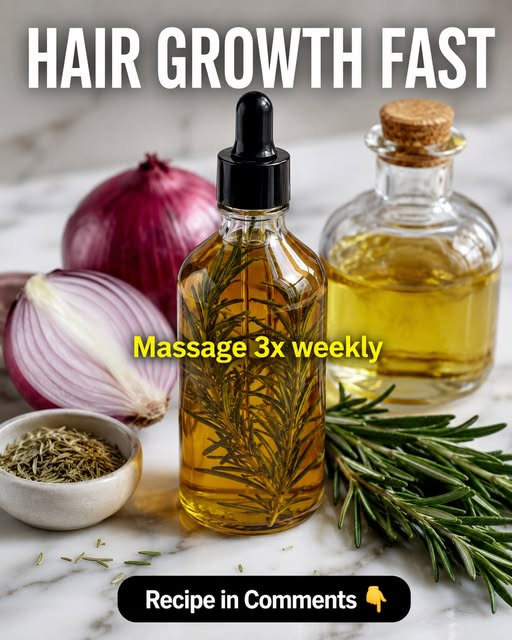
The image shows rosemary and onion with a hair oil. Rosemary oil has some of the strongest human evidence among natural topical ingredients. In a randomized study involving people with androgenetic hair loss, hair counts improved after six months of regular rosemary-oil use, while no significant improvement was observed after only three months. (PubMed) This means consistency is more realistic than expecting rapid growth after a few applications.
The following remedies are tailored to different scalp types. The individual ingredients have research supporting hair growth, reduced breakage, dandruff control, hydration, or scalp-barrier care. These exact homemade combinations have not been tested as complete clinical treatments. Always patch-test first, keep essential oils properly diluted, and stop immediately if burning, swelling, rash, or increased shedding occurs.
Remedy 1: Rosemary and Jojoba Growth Oil for Normal Scalp
A normal scalp is generally comfortable without excessive oil, dryness, itching, or persistent flaking. This lightweight pre-wash treatment combines diluted rosemary oil with ingredients that support healthy-looking hair and reduce friction.
Ingredients and Scientific Working
Jojoba oil — 1 tablespoon: Jojoba is a lightweight liquid wax that provides lubrication during massage and reduces pulling on the hair. It helps distribute rosemary oil safely across the scalp.
Virgin coconut oil — 1 teaspoon: Coconut oil can penetrate the hair fiber because of its chemical structure. Research found that it reduced protein loss from both damaged and undamaged hair when used before or after washing. (PubMed)
Rosemary essential oil — 4 drops: Rosemary oil has clinical evidence related to androgenetic hair loss. Its possible actions include supporting scalp microcirculation and influencing pathways involved in the hair-growth cycle. Results in the human trial required approximately six months. (PubMed)
Pumpkin seed oil — 1 teaspoon: Pumpkin seed oil contains fatty acids, antioxidants, and plant sterols. Human research has reported benefits from both oral and topical preparations for pattern hair loss, although standardized study preparations are more reliable than homemade mixtures. (PubMed)
Pure aloe vera gel — 1 teaspoon: Aloe should be applied separately after washing. It provides lightweight hydration and may reduce the tight feeling caused by dryness.
Procedure
Mix jojoba oil, coconut oil, pumpkin seed oil, and rosemary essential oil in a clean, dry bowl. Part the hair into several sections and apply a small amount directly to the scalp.
Massage gently with the pads of the fingers for four minutes. Do not scratch with the nails. Spread any remaining oil through the hair lengths and leave it on for 30–45 minutes.
Wash thoroughly with a gentle shampoo. After drying the scalp, apply a very thin layer of aloe gel only to areas that feel dry.
How Often to Apply
Use two or three times weekly for at least eight weeks. Continue consistently for three to six months before judging possible growth.
Initial Results
Within one to three applications, the hair may feel softer and appear shinier. Reduced friction may also decrease breakage. New hair growth should not be expected within the first few days.
Remedy 2: Pumpkin Seed and Green Tea Dual-Zone Treatment for Combination Scalp
A combination scalp may become oily around the crown while the sides feel dry and the hair ends become rough. This method applies lighter ingredients near oily roots and protective oils only where needed.
Ingredients and Scientific Working
Cold-pressed pumpkin seed oil — 1 teaspoon: A clinical study compared topical pumpkin seed oil with minoxidil in women with pattern hair loss and reported improvements in hair-growth measurements. However, standardized study preparations may differ from ordinary culinary oil. (PubMed)
Cooled green tea — 2 tablespoons: Green tea provides antioxidant polyphenols and creates a lightweight liquid base without adding heavy oil.
Pure aloe vera gel — 1 tablespoon: Aloe supports scalp hydration and reduces the need to place thick oil over oily areas.
Finely powdered colloidal oatmeal — 1 teaspoon: Oatmeal supports the skin barrier and may soothe dry, uncomfortable areas of the scalp.
Jojoba oil — 1 teaspoon: Jojoba provides light lubrication and is used mainly on the drier sides of the scalp.
Virgin coconut oil — 1 teaspoon: Coconut oil is applied only to dry hair lengths because its strongest evidence relates to reducing protein loss and hair-fiber damage. (PubMed)
Procedure
Mix green tea, aloe gel, and finely powdered oatmeal. Apply this light mixture over the crown and other oily areas. Leave it on for five minutes.
Mix pumpkin seed oil with jojoba oil and apply a small amount to areas showing thinning or dryness. Massage gently for three minutes.
Apply coconut oil only from the middle lengths to the ends. Leave the entire treatment on for 20–30 minutes, then wash thoroughly.
How Often to Apply
Use twice weekly for six to eight weeks. Continue for three months before assessing changes in shedding or density.
Initial Results
The crown may feel fresher after the first few applications, while the dry ends may become smoother. Less breakage may make the hair appear fuller, but genuine regrowth requires more time.
Remedy 3: Tea Tree Scalp-Cleansing Routine for Oily or Flaky Scalp
Excess oil, dandruff, itching, and scalp buildup can make hair lie flat and may increase scratching and breakage. Treating scalp inflammation does not create new follicles, but a healthier scalp environment supports comfortable hair care.
Ingredients and Scientific Working
Professionally prepared 5% tea tree shampoo — the amount directed on the label: A randomized controlled trial found that a 5% tea tree shampoo improved dandruff severity, itching, and greasiness over four weeks. (PubMed)
Strong cooled green tea — 3 tablespoons: Green tea provides a lightweight antioxidant rinse without coating oily roots.
Pure aloe vera gel — 1 tablespoon: Aloe adds water-based hydration after cleansing.
Colloidal oatmeal — 1 teaspoon: Finely powdered oatmeal helps reduce the dry, tight feeling that can follow dandruff care.
Vegetable glycerin — 1/8 teaspoon: A small amount supports hydration without creating a heavy finish.
Boiled and cooled water — 1/2 cup: Water dilutes the soothing rinse and helps distribute it evenly.
Procedure
Wash the scalp using the prepared 5% tea tree shampoo. Massage gently for the time directed and rinse thoroughly.
Mix green tea, aloe, oatmeal, glycerin, and cooled water. Allow the oatmeal to settle, then strain the liquid through a clean cloth.
Pour the smooth liquid over the scalp. Leave it for two minutes and rinse. Dry the scalp carefully rather than leaving the roots wet for a long period.
Do not add concentrated tea tree essential oil directly to ordinary shampoo because the final concentration may be uneven and irritating.
How Often to Apply
Use the tea tree shampoo two or three times weekly for four weeks. Apply the soothing rinse twice weekly.
Initial Results
Itching, oiliness, or visible flakes may begin to improve after several applications. Cleaner roots may look more lifted and voluminous, although this is not the same as new growth.
Remedy 4: Coconut and Avocado Breakage-Defense Mask for Dry Hair and Scalp
Dry hair often appears thin because repeated breakage reduces fullness through the lengths. Protecting the hair shaft can improve visible thickness even before any new growth occurs.
Ingredients and Scientific Working
Virgin coconut oil — 1 tablespoon: Coconut oil has evidence for reducing hair protein loss and protecting the fiber from grooming-related damage. (PubMed)
Ripe avocado — 1 tablespoon, smoothly mashed: Avocado supplies fatty acids and creates a soft conditioning base. Its role is mainly temporary lubrication and improved manageability rather than clinically proven regrowth.
Pure aloe vera gel — 1 tablespoon: Aloe adds water and slip, making the mask easier to distribute without pulling.
Pure honey — 1 teaspoon: Honey acts as a humectant and helps the mixture retain moisture.
Colloidal oatmeal — 1 teaspoon: Softened oatmeal supports scalp comfort and thickens the mask without using rough particles.
Jojoba oil — 1 teaspoon: Jojoba reduces friction and helps coat dry strands.
Procedure
Mash the avocado until completely smooth. Add coconut oil, aloe, honey, oatmeal, and jojoba oil. Mix until creamy.
Apply a small quantity to a dry scalp and spread most of the mask through the middle lengths and ends. Avoid rubbing solid particles into the scalp.
Leave for 20 minutes under a clean shower cap. Rinse thoroughly and shampoo gently. Use conditioner afterward if the hair still feels rough.
How Often to Apply
Apply twice weekly for three to five weeks. Reduce to once weekly when dryness improves.
Initial Results
Hair may feel softer after the first use. After two or three applications, reduced roughness and breakage may make the lengths look smoother, thicker, and healthier.
Remedy 5: Oat and Sunflower Comfort Treatment for Sensitive Scalp
A sensitive scalp may sting, itch, become red easily, or react to fragrance and essential oils. In this situation, restoring comfort is more important than applying strong growth ingredients.
Ingredients and Scientific Working
Colloidal oatmeal — 2 teaspoons: Oat compounds support the skin barrier and are used to calm dry or irritated skin.
Cold-pressed sunflower seed oil — 1 teaspoon: Sunflower oil contains linoleic-acid-rich lipids that support barrier function and reduce moisture loss.
Pure aloe vera gel — 1 tablespoon: Aloe provides light hydration but should be omitted if it has caused irritation previously.
Vegetable glycerin — 1/4 teaspoon: Diluted glycerin helps the scalp hold moisture and reduces tightness.
Weak cooled green tea — 1 tablespoon: Green tea provides a gentle antioxidant water phase.
Boiled and cooled water — 3 tablespoons: Water creates a light compress rather than a difficult-to-remove paste.
Procedure
Mix oatmeal, green tea, glycerin, aloe, and cooled water. Allow the oatmeal to soften for ten minutes.
Strain the liquid and apply it gently to dry or uncomfortable scalp areas with clean fingertips. Leave it on for five minutes and rinse.
After the scalp is dry, press a few drops of sunflower oil only onto visibly dry areas. Do not massage aggressively.
How Often to Apply
Use twice weekly for two weeks. Continue only if the scalp remains comfortable.
Initial Results
Dryness and tightness may improve within one to three applications. This remedy supports scalp comfort and may reduce breakage caused by scratching, but it is not a proven treatment for genetic hair loss.
Does Scalp Massage Improve Hair Thickness?
Gentle scalp massage may be a useful addition to a long-term routine. In a small study, participants performed four minutes of standardized massage each day. Hair thickness increased after 24 weeks, although the study included only nine men and should not be considered proof that massage works for every type of hair loss. (PMC)
Use the finger pads rather than the nails. Move the scalp gently without pulling the hair. Stop if massage causes pain, redness, increased shedding, or scalp tenderness.
What About Onion Juice?
The onion shown in the image has been studied for patchy alopecia areata, an autoimmune type of hair loss. One small study reported regrowth with crude onion juice, but this does not prove that onion juice treats ordinary pattern thinning, postpartum shedding, or slow-growing healthy hair. (PubMed)
Raw onion juice may cause burning, redness, odor, and contact irritation. It should not be treated as a universal hair-growth remedy, especially on sensitive, inflamed, or broken skin.
Final Tips for Faster, Healthier Hair Growth
Wash the scalp according to its oil level rather than avoiding shampoo for long periods. Apply shampoo mainly to the scalp and conditioner primarily through the hair lengths.
Avoid very tight ponytails, braids, extensions, repeated bleaching, excessive heat, and aggressive wet-hair brushing. Damaged strands break more easily and can make the hair appear thinner. Dermatologists recommend gentle washing and conditioning because fragile or thinning hair is easily damaged. (American Academy of Dermatology)
Keep combs, brushes, towels, pillowcases, and scalp tools clean. Do not share combs when a fungal scalp infection is possible.
Do not apply undiluted rosemary, peppermint, clove, or tea tree essential oil directly to the scalp. Avoid raw garlic, lemon juice, harsh salt scrubs, and concentrated onion mixtures.
Visible softness, shine, and reduced frizz may begin after one to three applications. Reduced breakage may improve fullness over several weeks. Meaningful regrowth usually requires three to six months, depending on the cause.
Diet Plan for Stronger Hair Growth
Healthy hair production requires sufficient energy, protein, vitamins, minerals, and essential fats. Extreme dieting, rapid weight loss, and nutritional deficiencies may contribute to excessive shedding. Excessive supplement intake can also cause harm, so iron, zinc, selenium, vitamin A, vitamin D, or biotin supplements should not be taken in high doses without medical advice. (PubMed)
Breakfast: Eat eggs with whole-grain bread, unsweetened oatmeal with milk and nuts, or plain yogurt with seeds.
Mid-morning: Choose guava, orange, kiwi, papaya, berries, or another vitamin-C-rich fruit. Vitamin C supports absorption of plant-based iron.
Lunch: Include lentils, chickpeas, beans, fish, eggs, chicken, tofu, or lean meat. Add leafy vegetables and whole-wheat roti or a moderate portion of rice.
Evening snack: Eat a small handful of pumpkin seeds, sunflower seeds, walnuts, or almonds with fresh fruit.
Dinner: Choose vegetables with beans, lentils, fish, eggs, tofu, or chicken. Include adequate protein daily rather than relying only on oils and masks.
Hydration: Drink according to thirst, physical activity, weather, and medical needs. Water supports general health but does not directly stimulate dormant hair follicles.
Continue the balanced diet for at least eight to twelve weeks. Use the remedy suited to the scalp two or three times weekly for eight weeks and evaluate possible growth only after three to six months.
See a dermatologist if shedding is sudden, severe, or continues for more than six to eight weeks. Medical assessment is also important for a widening part, receding hairline, round bald patches, painful scalp, pus, intense itching, scaling, burning, or loss of eyebrows or eyelashes. Hair loss has many causes, and effective treatment begins with identifying the correct cause. (American Academy of Dermatology)
References for the above remedy
- Panahi Y, et al. Rosemary Oil vs Minoxidil 2% for the Treatment of Androgenetic Alopecia: A Randomized Comparative Trial.
https://pubmed.ncbi.nlm.nih.gov/25842469/ - Ibrahim IM, et al. Pumpkin Seed Oil vs Minoxidil 5% Topical Foam for the Treatment of Female Pattern Hair Loss.
https://pubmed.ncbi.nlm.nih.gov/33544448/ - Cho YH, et al. Effect of Pumpkin Seed Oil on Hair Growth in Men With Androgenetic Alopecia.
https://pubmed.ncbi.nlm.nih.gov/24864154/ - Rele AS, Mohile RB. Effect of Mineral Oil, Sunflower Oil, and Coconut Oil on Prevention of Hair Damage.
https://pubmed.ncbi.nlm.nih.gov/12715094/ - Satchell AC, et al. Treatment of Dandruff With 5% Tea Tree Oil Shampoo.
https://pubmed.ncbi.nlm.nih.gov/12451368/ - Koyama T, et al. Standardized Scalp Massage Results in Increased Hair Thickness.
https://pubmed.ncbi.nlm.nih.gov/26904154/ - Sharquie KE, Al-Obaidi HK. Onion Juice, a New Topical Treatment for Alopecia Areata.
https://pubmed.ncbi.nlm.nih.gov/12126069/ - Rushton DH. Nutritional Factors and Hair Loss.
https://pubmed.ncbi.nlm.nih.gov/12190640/ - American Academy of Dermatology. Hair Loss: Diagnosis and Treatment.
https://www.aad.org/public/diseases/hair-loss/treatment/diagnosis-treat - American Academy of Dermatology. Hair Loss: Tips for Managing.
https://www.aad.org/public/diseases/hair-loss/treatment/tips