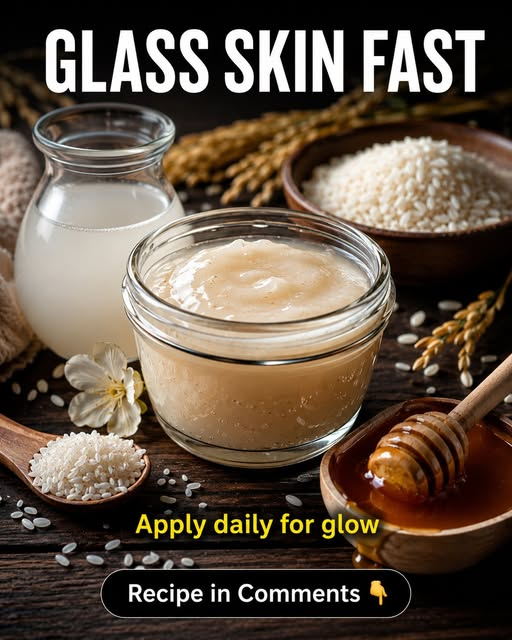
“Glass skin” describes a smooth, well-hydrated, fresh-looking complexion that reflects light evenly. Although no homemade mask can permanently remove pores, acne scars, pigmentation, or wrinkles in only a few days, improving surface hydration and supporting the skin barrier may make the face appear softer, plumper, and more luminous. Rice-inspired skincare is popular because rice starch and rice-derived compounds have moisturizing, antioxidant, and skin-conditioning properties. Research on rice ingredients is promising, although most clinical studies have used controlled cosmetic formulations rather than homemade rice masks. (PubMed)
The following rice face remedies are designed separately for normal, combination, oily, dry, and sensitive skin. Each recipe uses gentle, natural ingredients with scientific support for hydration, barrier care, oil balance, or soothing. Prepare every mixture fresh, never store homemade masks at room temperature, and rinse them off rather than sleeping with them overnight.
Remedy 1: Rice, Yogurt and Honey Glow Mask for Normal Skin
Ingredients
1 tablespoon freshly cooked and cooled white rice, 1 teaspoon plain unsweetened pasteurized yogurt, ½ teaspoon pure honey, ½ teaspoon rice bran oil, and 1 teaspoon freshly prepared rice-starch water.
Scientific Working of Each Ingredient
Freshly cooked rice: When mashed, cooked rice creates a soft paste that helps hold water against the skin temporarily. Rice contains starch and small amounts of naturally occurring compounds associated with moisturizing and antioxidant activity. Research on dermatological rice ingredients suggests potential benefits for hydration and skin appearance, but household cooked rice has not been proven to produce permanent skin whitening. (PubMed)
Rice-starch water: Rice starch may support damaged barrier recovery. In one controlled study, rice starch added to bath water improved the healing capacity of experimentally irritated skin. A homemade face mask is different from the studied method, but the research supports rice starch as a gentle skin-conditioning ingredient. (PubMed)
Plain yogurt: Yogurt provides a creamy base and contains naturally occurring lactic acid. However, its acid concentration is low and unpredictable, so it should not be considered equivalent to a professionally formulated lactic-acid treatment.
Honey: Honey contains humectant, antioxidant, and antimicrobial compounds. It may help the skin feel softer by attracting and retaining moisture, although ordinary kitchen honey is not a clinically established treatment for acne. (PubMed)
Rice bran oil: Rice bran oil contains fatty acids and antioxidant compounds that help soften the outer skin layer. Studies using formulated rice bran extracts have reported improvements in skin hydration. (PubMed)
Procedure
Mash the cooled rice until completely smooth. Add yogurt, honey, rice bran oil, and rice-starch water. Mix into a creamy paste without hard rice particles. Apply a thin layer to clean skin and leave it on for 8–10 minutes. Wet the mask before rinsing so that it does not pull against the skin.
How Often to Apply
Use once daily for 3 days. When the skin remains comfortable, continue for a maximum of 5 days, then reduce use to twice weekly.
Initial Results
Within 1–3 days, normal skin may feel softer and look temporarily more radiant because of improved surface hydration. Pigmentation and acne scars will not disappear during this period.
Remedy 2: Rice-Starch Green Tea Balance Mask for Combination Skin
Ingredients
2 teaspoons fine rice starch or very finely ground rice flour, 1 tablespoon cooled green tea, 1 teaspoon pure aloe vera inner-leaf gel, ½ teaspoon cosmetic-grade kaolin clay, and 2 drops of jojoba oil.
Scientific Working of Each Ingredient
Rice starch: Rice starch forms a soft, water-binding base that can reduce the rough appearance associated with dehydration. Its barrier-supporting effects make it suitable for combination skin when used without vigorous scrubbing. (PubMed)
Green tea: Green tea contains catechins, including EGCG. Research indicates that standardized topical green-tea preparations may reduce inflammatory acne activity and excessive sebum. Homemade tea is weaker and less predictable than the extracts used in clinical studies, but it may provide gentle antioxidant support. (PubMed)
Aloe vera gel: Aloe contains polysaccharides that act as humectants and may improve skin hydration. Controlled research on aloe-containing cosmetic formulations has shown moisturizing effects. (PubMed)
Kaolin clay: Kaolin is a gentle mineral clay that absorbs some surface oil. Using only a small quantity helps prevent the dry cheek area from becoming overly tight.
Jojoba oil: Jojoba is technically a liquid wax and has skin-softening properties. Preliminary clinical research involving clay and jojoba masks has reported improvement in mild acne-prone skin, although stronger studies are still needed. (PubMed)
Procedure
Mix the rice starch and kaolin first. Add green tea and aloe gradually. Stir in the jojoba oil. Apply a thin layer over the forehead, nose, and chin, then spread only a light amount over the cheeks. Leave for 6–8 minutes and rinse before the mask becomes completely dry or cracked.
How Often to Apply
Apply on alternate evenings for the first 3 days. When no irritation occurs, use up to 3 times during a 5-day period.
Initial Results
The T-zone may look less greasy, while mildly dry areas may feel smoother within 2–3 days. The treatment cannot permanently close pores because pore size is influenced by genetics, oil production, and skin structure.
Remedy 3: Rice, Green Tea and Clay Clarifying Mask for Oily Skin
Ingredients
2 teaspoons ultra-fine rice flour, 1 teaspoon kaolin clay, 1 tablespoon cooled green tea, 1 teaspoon aloe vera gel, and ¼ teaspoon vegetable glycerin.
Scientific Working of Each Ingredient
Ultra-fine rice flour: Finely powdered rice provides starch without requiring harsh exfoliation. Do not scrub the mixture because rough particles may create irritation and worsen inflamed blemishes.
Kaolin clay: Clay absorbs excess surface oil and may temporarily reduce shine. Clinical research on clay masks has reported improvements in oiliness, hydration, and skin texture, but results depend on the complete formulation. (PubMed)
Green tea: Topical green-tea extracts have shown potential for reducing inflammatory acne and sebum activity. Benefits in clinical studies developed over several weeks rather than overnight. (PubMed)
Aloe vera: Aloe supplies lightweight hydration that may reduce the tight feeling produced by clay. Its purpose here is barrier comfort rather than drying the skin further. (PubMed)
Vegetable glycerin: Glycerin is a humectant that draws water toward the outer skin layer. A small quantity helps prevent oily skin from becoming dehydrated and rough.
Procedure
Combine the rice flour and clay. Add green tea slowly, followed by aloe and glycerin. Apply a very thin layer without rubbing. Leave it on for 5–7 minutes. Rinse while the mask is still slightly damp.
How Often to Apply
Use once every other evening for 3–5 days. Do not apply more than once daily because frequent clay use may disturb the skin barrier.
Initial Results
Skin may appear less shiny after the first use, while texture may feel smoother within 2–3 days. Blackheads, inflamed acne, and clogged pores generally require consistent evidence-based treatment for several weeks.
Remedy 4: Creamy Rice, Oat and Honey Mask for Dry Skin
Ingredients
1 tablespoon freshly cooked rice paste, 1 tablespoon colloidal oatmeal or finely powdered plain oats, 1 teaspoon honey, ½ teaspoon rice bran oil, and ¼ teaspoon vegetable glycerin.
Scientific Working of Each Ingredient
Cooked rice paste: Smooth rice paste provides a moisture-rich base and can temporarily soften rough, flaky-looking skin.
Colloidal oatmeal: Oatmeal contains beta-glucans and antioxidant avenanthramides. Research shows that colloidal oatmeal can improve dryness, moisturization, and skin-barrier function. (PubMed)
Honey: Honey acts as a natural humectant and helps reduce the dry feeling that develops when water evaporates from the skin. (PubMed)
Rice bran oil: Rice bran ingredients contain fatty acids and antioxidant compounds associated with skin conditioning and improved hydration. (PubMed)
Vegetable glycerin: Glycerin supports water retention and may temporarily make fine dehydration lines look softer.
Procedure
Blend or mash the cooked rice until no grains remain. Add oatmeal, honey, rice bran oil, and glycerin. Apply the mixture to slightly damp skin. Leave it on for 10 minutes, soften it with lukewarm water, and rinse gently.
How Often to Apply
Apply nightly for 3 days. Continue for up to 5 days when the skin shows no itching or redness. Afterward, use once or twice weekly.
Initial Results
Dry skin may feel more comfortable within the first day. Flakiness, tightness, and rough texture may improve over 2–3 days. Dehydration lines may appear temporarily softer, but established wrinkles will not be removed by a rice mask.
Remedy 5: Gentle Rice and Oat Comfort Mask for Sensitive Skin
Ingredients
2 teaspoons pure rice starch, 1 tablespoon colloidal oatmeal, 1 teaspoon aloe vera inner-leaf gel, 2 drops of high-linoleic sunflower seed oil, and 1–2 tablespoons boiled and completely cooled water.
Scientific Working of Each Ingredient
Pure rice starch: Rice starch has evidence for supporting recovery of an irritated skin barrier and is less abrasive than grainy rice scrubs. (PubMed)
Colloidal oatmeal: Oat compounds demonstrate antioxidant and anti-inflammatory activity and may reduce dryness, roughness, and discomfort. (PubMed)
Aloe vera: Aloe can provide light hydration, but natural ingredients can still cause allergies. Leave it out when you have previously reacted to aloe. (PubMed)
Sunflower seed oil: High-linoleic sunflower oil contains essential fatty acids that support the outer barrier. Research found that sunflower oil preserved barrier integrity and improved hydration in adult skin. (PubMed)
Boiled and cooled water: Water creates a soft, non-scrubbing consistency without fragrance, acids, or essential oils.
Procedure
Mix the rice starch and oatmeal. Add cooled water gradually, then blend in aloe and sunflower oil. Apply without massaging. Leave for only 5 minutes and rinse gently. Stop immediately when burning, swelling, strong itching, or increasing redness develops.
How Often to Apply
After patch testing, apply once during the first 2 days. When fully tolerated, use every other evening for up to 5 days.
Initial Results
Sensitive skin may feel less tight and more comfortable in 1–3 days. Persistent redness, eczema, burning, or facial swelling should be assessed by a healthcare professional.
Final Tips for Achieving a Natural Glass-Skin Glow
Use a gentle cleanser, avoid rough facial scrubs, and never scrub the skin with dry rice grains. Apply a suitable fragrance-free moisturizer after rinsing a mask. During the day, use broad-spectrum sun protection because ultraviolet exposure contributes to uneven pigmentation, dryness, and premature skin aging.
Prepare only enough remedy for one application. Cooked rice, rice water, yogurt, and other food-based mixtures can become contaminated during storage. Discard leftovers rather than keeping them for the next day.
Patch-test every new recipe. Dermatologists recommend testing new skincare on a small area before wider use because even natural ingredients may trigger irritation or allergic contact dermatitis. (American Academy of Dermatology)
Do not leave masks on longer in the hope of obtaining faster results. Excessive mask use may cause irritation, particularly when clay or naturally acidic ingredients are included. (American Academy of Dermatology)
Visible glow may begin within 2–3 days because hydrated skin often looks smoother and reflects light more evenly. Continued moisturizing may soften the appearance of fine dehydration lines, but true collagen-related wrinkle reduction requires long-term, evidence-based skincare and sun protection.
Diet Plan for Clear, Glowing Skin
Follow this balanced plan for approximately 8–12 weeks rather than expecting dietary changes to transform the skin in a few days.
Breakfast: Oatmeal with chia or flax seeds and berries, or eggs with vegetables and whole-grain bread.
Mid-morning: One serving of fruit with a small handful of unsalted almonds or walnuts.
Lunch: Whole-grain roti, brown rice, barley, or quinoa with lentils, beans, fish, chicken, or another protein source. Add a generous portion of vegetables.
Evening snack: Cucumber, carrots, roasted chickpeas, fruit, or unsweetened tea.
Dinner: Vegetable soup, lentils, beans, grilled fish, chicken, or eggs with a moderate serving of whole grains.
Daily hydration: Drink water regularly according to thirst, activity, climate, and individual health requirements.
Reduce frequent sugary drinks, sweets, highly refined snacks, and excessive fried food. Research suggests that a lower-glycemic eating pattern may reduce acne in some individuals, although diet alone does not treat every cause of acne. (American Academy of Dermatology)
How Long to Continue the Home Remedy and Diet Plan
Use only the remedy created for your skin type for 3–5 days initially. When it is comfortable and helpful, reduce application to 1–2 times weekly. Continue the balanced diet for at least 8–12 weeks before evaluating possible changes.
Consult a dermatologist when acne is painful, deep, rapidly worsening, leaving scars, or continuing despite regular care. Also seek medical advice for persistent pigmentation, unexplained facial redness, swelling, severe itching, or a reaction that does not improve after stopping the remedy.
References for the above remedy
- Zamil DH, et al. Dermatological Uses of Rice Products: Trend or True?
https://pubmed.ncbi.nlm.nih.gov/35587098/ - De Paepe K, et al. Effect of Rice Starch as a Bath Additive on the Barrier Function of Healthy but SLS-Damaged Skin.
https://pubmed.ncbi.nlm.nih.gov/12353708/ - Manosroi A, et al. Antioxidant Activities and Skin Hydration Effects of Rice Bran Bioactive Compounds.
https://pubmed.ncbi.nlm.nih.gov/21449379/ - Kim S, et al. The Effects of Green Tea on Acne Vulgaris: A Systematic Review and Meta-Analysis.
https://pubmed.ncbi.nlm.nih.gov/32812270/ - Ilnytska O, et al. Colloidal Oatmeal Improves Skin Barrier Through Multi-Therapy Activity.
https://pubmed.ncbi.nlm.nih.gov/27272074/ - Dal’Belo SE, et al. Moisturizing Effect of Cosmetic Formulations Containing Aloe Vera Extract.
https://pubmed.ncbi.nlm.nih.gov/17026654/ - Burlando B, Cornara L. Honey in Dermatology and Skin Care: A Review.
https://pubmed.ncbi.nlm.nih.gov/24305429/ - Meier L, et al. Clay Jojoba Oil Facial Mask for Lesioned Skin and Mild Acne.
https://pubmed.ncbi.nlm.nih.gov/22585103/ - Danby SG, et al. Effect of Olive and Sunflower Seed Oil on the Adult Skin Barrier.
https://pubmed.ncbi.nlm.nih.gov/22995032/ - American Academy of Dermatology Association. Can the Right Diet Get Rid of Acne?
https://www.aad.org/public/diseases/acne-and-rosacea/can-the-right-diet-get-rid-of-acne