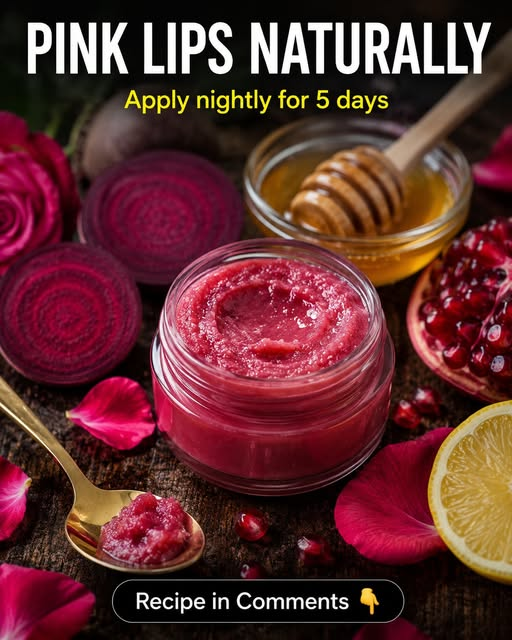
Naturally healthy lips can be light pink, deep pink, brown, reddish or purple depending on genetics, skin tone and melanin. A home remedy cannot permanently change a person’s natural lip colour in five days. However, gentle moisturising care may remove temporary dullness caused by dryness, flaking, lip licking and irritation, making the lips appear smoother and more even. Newly developed darkening can also result from sunlight, smoking, fragranced cosmetics, toothpaste, medication or pigmented contact cheilitis. Persistent or uneven pigmentation should therefore be assessed rather than repeatedly scrubbed. (PMC)
The following remedies are designed to improve hydration and provide a temporary healthy sheen. Research supports several individual ingredients and the general use of occlusive lip moisturisers, but these exact homemade mixtures have not been tested as complete clinical treatments. (PubMed)
Remedy 1: Beetroot and Sunflower Night Balm for Normal Skin
Ingredients and Their Scientific Benefits
Use one teaspoon of sunflower-seed oil to support the moisture barrier; half a teaspoon of virgin coconut oil to reduce moisture loss; half a teaspoon of unrefined shea butter to soften rough lips; half a teaspoon of jojoba oil for lightweight conditioning; one-quarter teaspoon of cosmetic-grade beeswax to form a protective layer; and a small pinch of finely sifted beetroot powder for temporary colour.
Scientific Working of the Ingredients
Sunflower oil contains linoleic acid and has been shown to preserve skin-barrier integrity while improving hydration. Virgin coconut oil improved dryness in a randomised trial involving people with xerosis. Jojoba oil contains wax esters that spread easily and help soften the skin, while shea butter acts as an emollient. Beeswax makes the balm more occlusive, helping the other ingredients remain on the lips. (PubMed)
Beetroot powder only leaves a temporary red-pink stain. There is no reliable clinical evidence that beetroot reduces melanin or permanently makes dark lips pink.
Procedure
Melt the beeswax, coconut oil and shea butter gently over warm water. Remove from the heat and mix in the sunflower and jojoba oils. Add a very small pinch of beetroot powder and stir thoroughly. Pour into a clean, completely dry container.
Apply a thin layer to clean lips before bed. Do not scrub the beetroot particles against the lips.
How Often to Apply
Apply nightly for five days. Continue four or five nights weekly for three to four weeks if the balm causes no irritation.
Initial Results
Within one to three days, the lips may feel softer and look smoother. Beetroot may create an immediate but washable pink tint. Natural pigmentation will not permanently change during this period.
Remedy 2: Cocoa and Jojoba Smoothing Balm for Combination Skin
This remedy suits people whose facial skin is combination but whose lips have dry outer edges and a relatively comfortable centre.
Ingredients and Their Scientific Benefits
Use one teaspoon of jojoba oil for lightweight moisturising; one teaspoon of sunflower oil for barrier support; half a teaspoon of cocoa butter for surface softness; one-quarter teaspoon of shea butter for rough lip edges; one-quarter teaspoon of beeswax for protection; and two drops of vegetable glycerin to attract moisture.
Scientific Working of the Ingredients
Jojoba oil is technically a liquid wax and has useful skin-conditioning properties. Sunflower oil supplies barrier-supporting fatty acids, while cocoa and shea butters fill rough spaces between dry surface cells. Glycerin is a humectant that increases water content in the outer skin layer. Research on glycerin-containing moisturisers shows measurable improvements in hydration, although professionally formulated products remain more stable than homemade mixtures. (PubMed)
Procedure
Warm the cocoa butter, shea butter and beeswax until melted. Mix in the jojoba and sunflower oils. When the mixture begins cooling, stir in the glycerin vigorously.
Because glycerin does not blend perfectly with oil, prepare only a small amount and stir before each use. Apply mainly to the dry edges, followed by a light layer over the entire lip.
How Often to Apply
Use every night for five days and once during the day when the lips feel tight. Continue for three weeks.
Initial Results
Peeling and tightness may begin improving within two or three days. The lips may reflect light more evenly, creating a healthier appearance without bleaching their natural colour.
Remedy 3: Lightweight Squalane Balm for Oily or Acne-Prone Skin
Lips do not have the same oil glands as facial skin, so “oily lips” are not a true skin category. This lightweight mixture is intended for people with oily or acne-prone skin who prefer to avoid a heavy balm around the mouth.
Ingredients and Their Scientific Benefits
Use one teaspoon of plant-derived squalane for lightweight emollience; one teaspoon of jojoba oil for easy spreading; half a teaspoon of sunflower oil for barrier support; one-quarter teaspoon of cocoa butter for structure; one-quarter teaspoon of beeswax for a thin protective film; and a small pinch of colloidal oatmeal for soothing care.
Scientific Working of the Ingredients
Squalane and jojoba reduce roughness without requiring a thick greasy layer. Sunflower oil supports hydration, while the small quantities of cocoa butter and beeswax keep the balm on the lips. Colloidal oatmeal contains avenanthramides and has demonstrated anti-inflammatory and barrier-supporting effects in clinical skin studies. (PubMed)
Procedure
Melt the cocoa butter and beeswax. Add the squalane, jojoba and sunflower oils. Stir in finely sifted colloidal oatmeal while the mixture cools.
Apply a rice-grain-sized quantity to each lip. Keep the balm within the lip border if oils tend to trigger bumps around the mouth.
How Often to Apply
Use on nights one, three and five. When no clogged pores, itching or redness develops, continue three nights weekly.
Initial Results
The lips may feel less tight within one to three days without appearing heavily coated. This formula will not treat acne or perioral dermatitis.
Remedy 4: Aloe, Honey and Oat Rescue Mask for Dry Skin
Ingredients and Their Scientific Benefits
Use one teaspoon of pure inner-leaf aloe gel for water-based hydration; half a teaspoon of honey to hold moisture against the lips; half a teaspoon of colloidal oatmeal for soothing support; three drops of sunflower oil for barrier care; three drops of coconut oil to reduce moisture loss; and one-quarter teaspoon of shea butter to seal the treatment.
Scientific Working of the Ingredients
Aloe gel provides a cooling, water-rich base, although occasional burning, itching and eczema have been reported. Colloidal oatmeal can improve hydration and barrier function. Coconut and sunflower oils reduce dryness, while shea butter creates a richer finishing layer. Honey gives the mixture a humectant texture, but people with pollen or bee-product allergies should avoid it. (NCCIH)
Procedure
Mix the aloe, honey and oatmeal immediately before use. Apply for five minutes without licking the mixture. Rinse gently, pat the lips slightly damp and seal them with the blended sunflower oil, coconut oil and shea butter.
Prepare a fresh portion every time. Do not store the water-based mask.
How Often to Apply
Use once daily for three to five days. Continue the oil-and-butter layer nightly for up to four weeks.
Initial Results
Dry flakes and tightness may improve within one to three days. Painful, bleeding or infected cracks require professional advice.
Remedy 5: Fragrance-Free Oat Compress for Sensitive Skin
Ingredients and Their Scientific Benefits
Use one teaspoon of colloidal oatmeal for calming support; two teaspoons of boiled and completely cooled water for moisture; one-quarter teaspoon of vegetable glycerin as a humectant; four drops of sunflower-seed oil for barrier protection; and one-quarter teaspoon of shea butter for gentle occlusion.
Scientific Working of the Ingredients
Sensitive lips generally benefit from a short, fragrance-free ingredient list. Oatmeal and glycerin increase hydration, sunflower oil supports barrier integrity, and shea butter reduces surface water loss. This mixture avoids citrus, perfume, essential oils, cinnamon and food colouring, all of which can irritate reactive lips.
Procedure
Combine the oatmeal, cooled water and glycerin. Place the mixture on clean cotton gauze and rest it over the lips for three minutes. Remove it without rubbing. Apply a very thin layer of sunflower oil and shea butter.
Patch-test the mixture beside the lip and wait 24–48 hours before completing the full treatment.
How Often to Apply
Use on days one, three and five. Continue once or twice weekly only when the lips remain comfortable.
Initial Results
Sensitive lips may feel calmer within two or three applications. Stop immediately if swelling, burning, itching or blistering occurs.
Final Tips for Naturally Healthy-Looking Lips
Do not apply lemon juice, undiluted vinegar, baking soda, toothpaste or coarse sugar scrubs. Although lemon appears in many beauty-remedy images, acidic juice can irritate already-dry lips and may make pigmentation more noticeable after inflammation.
Avoid licking, biting or pulling loose skin. Apply a non-irritating moisturiser several times daily and before sleeping. When outdoors, use a broad-spectrum lip balm with SPF 30 or higher and reapply it about every two hours. Sun exposure can burn the lips and contribute to persistent damage. (American Academy of Dermatology)
Check lipsticks, toothpaste and flavoured balms if pigmentation developed with burning, scaling or itching. Repeated exposure to allergens or irritants can lead to pigmented contact cheilitis. Beeswax and propolis can also cause contact allergy in susceptible individuals. (PubMed)
Visible softness and shine may begin within two to three days. Hydration may also make fine dehydration lines look temporarily softer, but home remedies cannot permanently remove lip wrinkles or alter genetically determined pigmentation.
Diet Plan for Healthy Lips
Begin breakfast with eggs and wholegrain bread, oatmeal with nuts and seeds, or plain yogurt with fruit. Lunch may include lentils, chickpeas, fish, chicken or beans with green vegetables and wholegrain roti or brown rice. For dinner, choose eggs, fish, tofu, chicken or lentil soup with vegetables.
Include iron-rich foods such as lentils, beans, leafy vegetables, meat and fortified cereals. Eggs, dairy products, fish and meat provide vitamin B12, while fortified foods are important for people following plant-based diets. Milk, eggs, almonds, mushrooms and fortified grains provide riboflavin. Deficiencies can contribute to certain forms of cheilitis, but supplements should not be taken without identifying a deficiency. (NCBI)
Drink water regularly, stop smoking and limit repeated contact with very spicy or irritating foods when the lips are cracked. Continue the suitable remedy and balanced diet for three to four weeks. Consult a dermatologist or doctor if darkening persists for eight weeks, appears suddenly, affects one area only, or occurs with pain, ulcers, swelling, bleeding, white patches or recurrent cracks at the mouth corners.
References for the above remedy
- American Academy of Dermatology. Seven Dermatologists’ Tips for Healing Dry, Chapped Lips.
https://www.aad.org/public/everyday-care/skin-care-basics/dry/heal-dry-chapped-lips - American Academy of Dermatology. Sunscreen Frequently Asked Questions.
https://www.aad.org/media/stats-sunscreen - Figueiredo AS, et al. Pigmented Contact Cheilitis: A Systematic Review.
https://pubmed.ncbi.nlm.nih.gov/39396149/ - Greenberg SA, et al. Diseases of the Lips.
https://pubmed.ncbi.nlm.nih.gov/29289276/ - Danby SG, et al. Effect of Olive and Sunflower Seed Oil on the Adult Skin Barrier.
https://pubmed.ncbi.nlm.nih.gov/22995032/ - Agero ALC, Verallo-Rowell VM. A Randomized Trial Comparing Coconut Oil with Mineral Oil for Xerosis.
https://pubmed.ncbi.nlm.nih.gov/15724344/ - Blaak J, Staib P. An Updated Review on the Efficacy and Benefits of Jojoba Oil.
https://pubmed.ncbi.nlm.nih.gov/34957578/ - Capone K, et al. Effects of Colloidal Oatmeal on Skin Barrier Function and Hydration.
https://pubmed.ncbi.nlm.nih.gov/32484623/ - Tamura E, et al. The Efficacy of a Highly Occlusive Formulation for Dry Lips.
https://pubmed.ncbi.nlm.nih.gov/31571236/ - National Institutes of Health, Office of Dietary Supplements. Vitamin B12 Fact Sheet.
https://ods.od.nih.gov/factsheets/VitaminB12-HealthProfessional/