Thin-looking hair can affect confidence, especially when the parting becomes wider, the ponytail feels smaller or excessive strands appear during washing. Hair may look less dense because of genetic pattern loss, temporary shedding, breakage, scalp inflammation, nutritional deficiency, hormonal changes, illness, childbirth, rapid dieting or repeated heat and chemical damage. Natural scalp remedies may improve softness, reduce breakage and support a healthier scalp, but they cannot create visibly new hair within a few days.
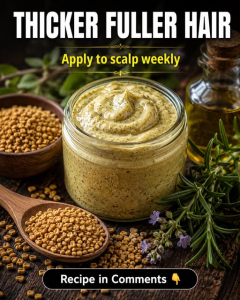
The image features fenugreek and rosemary. Fenugreek paste is widely used traditionally, but strong human evidence that a homemade fenugreek mask regrows hair is still lacking. Rosemary oil has better, though limited, clinical support: one small six-month trial found increased hair counts with rosemary oil, but improvement did not appear after only three months. Therefore, the remedies below use evidence-supported ingredients without promising instant regrowth. (PubMed)
Remedy 1: For a Normal Scalp
Rosemary and Pumpkin Seed Pre-Wash Treatment
Ingredients
- 1 tablespoon virgin coconut oil: penetrates the hair shaft and helps reduce protein loss.
- 1 teaspoon pumpkin seed oil: has been investigated in human studies of pattern hair loss.
- 1 teaspoon sunflower-seed oil: provides a lighter carrier and supports the scalp barrier.
- 3 drops rosemary essential oil: the principal hair-growth ingredient in this mixture.
- 1 teaspoon pure aloe vera gel: adds hydration and helps prevent a tight scalp feeling.
Procedure
- Warm the coconut oil between clean fingertips without heating it directly.
- Mix in the pumpkin seed and sunflower oils.
- Add exactly three drops of rosemary essential oil.
- Stir in the aloe gel immediately before use; some separation is normal.
- Part the dry hair and apply a thin amount across the scalp.
- Massage gently for two minutes without scratching.
- Leave it on for 30–45 minutes and wash thoroughly with a gentle cleanser.
Prepare the mixture fresh and do not store it.
Scientific Working of the Ingredients
Rosemary oil may influence follicular activity and local circulation, although the available human evidence comes from a relatively small trial conducted over six months. Pumpkin seed oil has also been studied for female and male pattern hair loss, but homemade preparations are not identical to the standardized formulations used in trials. (PubMed)
Coconut oil does not directly create new follicles. Its main scientifically demonstrated benefit is reducing protein loss from damaged and undamaged hair because lauric acid can penetrate the fibre. Less breakage can gradually make the hair appear fuller and preserve its length. (PubMed)
How Often to Apply
Use once during the first three to five days. Continue once weekly for at least three months if the scalp remains comfortable.
Initial Results
Within one to three days, the hair may feel softer and look smoother after washing. Reduced breakage requires repeated use, while genuine regrowth should not be expected before several months.
Remedy 2: For a Combination Scalp
Green Tea, Oat and Pumpkin Seed Balancing Mask
Ingredients
- 2 tablespoons strongly brewed, cooled green tea: supports oily scalp areas.
- 1 tablespoon pure aloe vera gel: hydrates without creating a heavy coating.
- 1 teaspoon colloidal oatmeal: soothes dry or itchy sections.
- ¼ teaspoon vegetable glycerin: attracts moisture to the scalp surface.
- ½ teaspoon pumpkin seed oil: adds a light lipid layer to dry areas.
- 1 tablespoon cooled boiled water: creates a spreadable consistency.
Procedure
- Brew plain green tea and cool it completely.
- Combine the tea, aloe gel and cooled boiled water.
- Add the colloidal oatmeal and allow it to soften for two minutes.
- Mix in the glycerin.
- Apply the water-based portion over the whole scalp.
- Press pumpkin seed oil only onto tight or flaky areas.
- Leave the mask on for ten minutes and rinse carefully.
Scientific Working of the Ingredients
A human clinical evaluation found that a formulated 2% green-tea hair tonic reduced scalp sebum after approximately three to four weeks. Homemade tea is not standardized to the same concentration, so it should be considered a gentle balancing rinse rather than a clinically equivalent treatment. (PubMed)
Colloidal oatmeal contains avenanthramides, lipids and beta-glucans that have anti-inflammatory, soothing and barrier-supporting actions. Aloe and glycerin increase surface hydration, helping dry areas feel less tight. Pumpkin seed oil is restricted to the dry zones so the oily areas are not unnecessarily coated. (PubMed)
How Often to Apply
Use twice during the first five days. Continue two times weekly for four weeks.
Initial Results
Dry areas may feel calmer after the first application. Greasiness may become easier to manage after several weeks, but the mask cannot permanently change sebaceous-gland activity.
Remedy 3: For an Oily Scalp
Lightweight Green Tea and Aloe Scalp Tonic
Ingredients
- 3 tablespoons cooled green tea: provides catechins and a light, non-oily base.
- 2 tablespoons cooled boiled water: dilutes the preparation.
- 1 tablespoon strained cucumber water: creates a fresh scalp feel.
- 1 teaspoon pure aloe vera gel: supplies lightweight hydration.
- ½ teaspoon colloidal oatmeal: helps protect against irritation.
- ⅛ teaspoon vegetable glycerin: prevents excessive dryness.
Procedure
- Brew green tea for three minutes and allow it to cool.
- Mix it with the boiled water and cucumber water.
- Add the aloe gel, oatmeal and glycerin.
- Strain the liquid if oatmeal particles remain.
- Apply it to the scalp with clean fingertips or cotton.
- Leave it on for five to eight minutes.
- Rinse with cool or lukewarm water.
Do not leave a kitchen-prepared water tonic on the scalp overnight.
Scientific Working of the Ingredients
Green-tea extract has shown a measurable reduction in scalp oil in a small clinical study. Controlling excessive surface sebum may make the roots look cleaner and more lifted, although it does not directly treat genetic hair loss. (PubMed)
Aloe and diluted glycerin help maintain hydration without using a rich oil. Oatmeal can reduce the irritation sometimes caused by frequent cleansing. A comfortable scalp may support normal hair care, but no rinse can revive a permanently inactive follicle.
How Often to Apply
Apply daily for the first three days. After that, use it three times weekly for three to four weeks.
Initial Results
The roots may feel fresher after the first use. Hair may appear slightly fuller because cleaner roots sit less flat, but this is a cosmetic effect rather than new growth.
Remedy 4: For a Dry Scalp
Coconut, Oat and Rosemary Repair Mask
Ingredients
- 1½ tablespoons virgin coconut oil: helps reduce hair-fibre protein loss.
- 1 tablespoon aloe vera gel: adds water-based hydration.
- 1 teaspoon colloidal oatmeal: soothes scaling and itching.
- 1 teaspoon pumpkin seed oil: provides emollient fatty acids.
- ¼ teaspoon vegetable glycerin: improves moisture retention.
- 3 drops rosemary essential oil: supplies the diluted active botanical.
Procedure
- Mix the aloe gel, glycerin and oatmeal in a clean bowl.
- Melt the coconut oil between the palms.
- Add the coconut and pumpkin seed oils to the aloe mixture.
- Mix in three drops of rosemary oil.
- Apply the remedy to the scalp and distribute any remainder through the lengths.
- Leave it on for 20–30 minutes.
- Wash twice if necessary to remove residue.
Scientific Working of the Ingredients
Coconut oil can enter the hair shaft and reduce protein loss, helping fragile hair resist grooming damage. This benefit may make dry, breakage-prone hair appear thicker over time by preserving existing fibres. (PubMed)
Oatmeal and aloe support a dry scalp barrier, while glycerin holds water near the surface. Rosemary oil may support hair counts with prolonged use, but the study supporting it required six months and did not prove immediate thickening. (PubMed)
How Often to Apply
Apply once during the first three days, then once weekly for at least eight to twelve weeks.
Initial Results
Dry hair may feel softer and more flexible after the first treatment. Flaking caused by simple dryness may improve within several days, but persistent dandruff may require antifungal treatment rather than additional oil.
Remedy 5: For a Sensitive Scalp
Minimal Aloe and Colloidal Oat Scalp Wrap
Ingredients
- 2 tablespoons cooled boiled water: forms a clean, fragrance-free base.
- 1 tablespoon pure aloe vera gel: provides gentle hydration when tolerated.
- 2 teaspoons colloidal oatmeal: helps relieve dryness and itching.
- ¼ teaspoon vegetable glycerin: supports moisture retention.
- ½ teaspoon sunflower-seed oil: creates a light protective layer.
Procedure
- Combine the water and oatmeal and leave them for five minutes.
- Mix in the aloe and glycerin.
- Patch-test the mixture behind the ear for 24–48 hours.
- If no reaction develops, apply a thin layer to the scalp.
- Leave it on for five minutes only.
- Rinse gently and press the sunflower oil over the driest areas.
- Stop immediately if burning, redness or swelling develops.
Scientific Working of the Ingredients
Colloidal oatmeal has clinically demonstrated anti-inflammatory, moisturising and barrier-supporting effects in irritated skin. These studies were not specifically designed to regrow scalp hair, but reducing itching can limit scratching and mechanical breakage. (PubMed)
Rosemary oil, onion juice and concentrated plant extracts are intentionally excluded because sensitive scalps are more likely to react. A calm scalp is beneficial, but recurring inflammation requires diagnosis.
How Often to Apply
Use once every other day for the first five days. Continue one or two times weekly only when well tolerated.
Initial Results
Tightness or mild dryness may improve within one to three applications. Stop home treatment if scaling, soreness or hair shedding increases.
Final Tips for Thicker, Fuller Hair
Wash according to scalp oiliness rather than deliberately allowing heavy oil and sweat to accumulate. Detangle gently, avoid very tight hairstyles and reduce frequent straightening, bleaching and high-temperature drying. These measures help preserve existing strands and prevent avoidable breakage.
Patch-test every remedy. Essential oils must always be diluted and should never be applied directly. Avoid vigorous fingernail massage, undiluted onion juice, lemon juice, baking soda and overnight wet masks.
Hair shedding can occur several months after fever, surgery, childbirth, major stress, rapid weight loss, crash dieting, thyroid changes or inadequate protein intake. This type of diffuse shedding is called telogen effluvium and often improves only after the trigger has been corrected. (PubMed)
Initial softness and improved manageability may appear within two or three days. Less breakage can become noticeable over several weeks, but new growth normally needs at least three to six months. Natural treatments should not delay a medical diagnosis.
Diet Plan to Support Healthy Hair Growth
Breakfast
Choose eggs, unsweetened yogurt, lentils, chickpeas or tofu with fruit. Hair fibres are primarily protein, and severely restricted protein intake may contribute to diffuse shedding.
Lunch
Eat chicken, fish, beans, lentils or lean meat with leafy vegetables and whole grains. Foods containing iron include meat, lentils, beans and fortified grains. Vitamin-C-rich vegetables or fruit can improve absorption of plant-based iron.
Afternoon Snack
Select plain yogurt, roasted chickpeas, pumpkin seeds, walnuts or fruit instead of relying on unproven hair supplements.
Dinner
Include a protein source, vegetables and healthy fats. Fish, walnuts, flaxseed and chia seeds provide omega-3 fats as part of a balanced diet.
Important Supplement Advice
Do not take high-dose iron, zinc, vitamin D or biotin simply because hair is shedding. Iron deficiency may contribute to telogen hair loss in some people, but studies are not completely consistent, and supplements are most appropriate after blood testing confirms a deficiency. (PubMed)
Follow the diet plan for at least eight to twelve weeks and use one suitable scalp remedy consistently. See a doctor or dermatologist if hair loss persists beyond six to eight weeks, creates visible patches, causes scalp pain or scarring, or occurs with fatigue, irregular periods, unexplained weight changes or other symptoms. Seek earlier care for sudden patchy loss, pus, intense itching, broken hairs, spreading redness or eyebrow and eyelash loss.
References for the above remedy
- Panahi Y, et al. Rosemary Oil vs Minoxidil 2% for the Treatment of Androgenetic Alopecia.
https://pubmed.ncbi.nlm.nih.gov/25842469/ - Rele AS, Mohile RB. Effect of Mineral Oil, Sunflower Oil and Coconut Oil on Prevention of Hair Damage.
https://pubmed.ncbi.nlm.nih.gov/12715094/ - Ibrahim IM, et al. Pumpkin Seed Oil vs Minoxidil 5% Topical Foam for Female Pattern Hair Loss.
https://pubmed.ncbi.nlm.nih.gov/33544448/ - Cho YH, et al. Effect of Pumpkin Seed Oil on Hair Growth in Men with Androgenetic Alopecia.
https://pubmed.ncbi.nlm.nih.gov/24864154/ - Nualsri C, et al. Development and Clinical Evaluation of Green Tea Hair Tonic for Greasy Scalp Treatment.
https://pubmed.ncbi.nlm.nih.gov/29394016/ - Cerio R, et al. Mechanism of Action and Clinical Benefits of Colloidal Oatmeal for Dermatologic Practice.
https://pubmed.ncbi.nlm.nih.gov/20865844/ - Reynertson KA, et al. Anti-Inflammatory Activities of Colloidal Oatmeal.
https://pubmed.ncbi.nlm.nih.gov/25607907/ - Malkud S. Telogen Effluvium: A Review.
https://pubmed.ncbi.nlm.nih.gov/28613598/ - Moeinvaziri M, et al. Iron Status in Diffuse Telogen Hair Loss Among Women.
https://pubmed.ncbi.nlm.nih.gov/20021982/ - Almohanna HM, et al. The Role of Vitamins and Minerals in Hair Loss.
https://pubmed.ncbi.nlm.nih.gov/30547302/