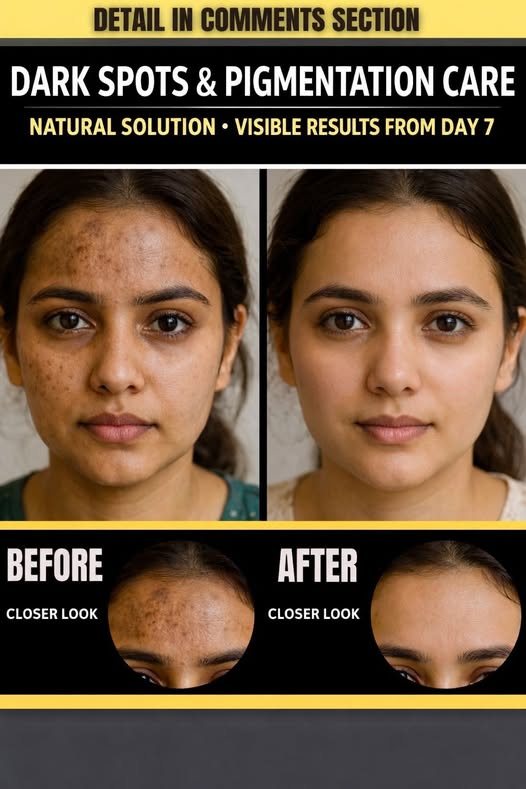
Dark spots and pigmentation make skin look uneven, dull, and older than its age. Whether caused by sun exposure, acne, hormonal imbalance, or stress, they often affect confidence. The good news is: natural ingredients—when used correctly—can noticeably reduce pigmentation. Each skin type responds differently, so personalized remedies bring faster and safer results. Below are scientifically supported, skin-type-specific home remedies that start showing visible improvements within 7 days.
Remedy 1: For Normal Skin
Ingredients (5–7) with Quantities & Scientific Benefits
- Amla powder – 1 tsp
Rich in vitamin C, inhibits melanin formation and boosts cell repair. - Raw honey – 1 tsp
Humectant; hydrates and enhances penetration of vitamin C, supporting faster brightening. - Licorice powder – ½ tsp
Contains glabridin, which blocks the enzyme tyrosinase — the root cause of pigmentation. - Rose water – 1 tbsp
Balances pH and soothes mild inflammation. - Aloe vera gel – 1 tsp
Contains aloesin, clinically shown to reduce excess melanin production. - Rice flour – 1 tsp
Provides gentle exfoliation and improves light reflection on skin.
Scientific Working of This Blend
The powerful combination of vitamin C (amla), glabridin (licorice), and aloesin (aloe vera) reduces melanin synthesis at the cellular level. Honey improves ingredient absorption, while rice flour removes old pigmented cells. Rose water provides hydration, helping the skin regenerate.
Procedure
- Mix all ingredients into a smooth paste.
- Apply evenly on clean skin.
- Leave for 20 minutes, then rinse with cool water.
How Often to Apply
- Daily for 7 days, then continue alternate days.
Initial Results (1–3 Days)
- Brighter appearance
- Slight fading of fresh spots
- Improved skin softness
Remedy 2: For Combination Skin
Ingredients & Scientific Benefits
- Green tea powder – 1 tsp
Epigallocatechin gallate (EGCG) controls melanin production and reduces oxidative pigmentation. - Multani mitti – 1 tbsp
Absorbs excess oil from T-zone while calming dry areas. - Cucumber juice – 1 tbsp
Contains silica and antioxidants that lighten dark patches. - Turmeric (kasturi haldi) – ¼ tsp
Curcumin reduces inflammation and prevents dark patch formation. - Yogurt – 1 tsp
Lactic acid gently exfoliates and lifts pigmentation. - Jojoba oil – 3 drops
Balances skin oil without clogging pores.
Scientific Working
Green tea’s EGCG slows melanin pathways; yogurt dissolves surface pigmentation through lactic acid; cucumber hydrates and cools dry cheeks; turmeric reduces inflammation. Multani mitti balances oily and dry zones simultaneously.
Procedure
- Mix all ingredients into a medium-thick mask.
- Apply on face for 15 minutes.
- Wash with lukewarm water.
How Often to Apply
- 4 days a week, preferably evening.
Initial Results (1–3 Days)
- Less oil in T-zone
- Brighter cheeks
- Pigmented areas start softening in tone
Remedy 3: For Oily Skin
Ingredients & Scientific Benefits
- Tomato pulp – 1 tbsp
Lycopene reduces tanning and melanin activity. - Lemon juice – ½ tsp
Citric acid exfoliates and breaks excess pigment clusters.
(Do NOT use on sensitive or irritated skin.) - Aloe vera gel – 1 tsp
Aloesin lowers melanin production and soothes. - Tea tree water – 1 tsp
Controls oil and prevents pigmentation caused by acne. - Oat flour – 1 tsp
Absorbs oil and provides gentle brightening. - Mint extract – 3–4 drops
Contains menthol which increases microcirculation and promotes glow.
Scientific Working
Tomato and lemon provide natural acids and antioxidants that fade dark spots. Aloe vera reduces melanin signalling. Oats and tea tree water control oil-related pigmentation caused by clogged pores.
Procedure
- Blend all ingredients.
- Apply as a thin layer for 12–15 minutes.
- Rinse with cool water.
How Often to Apply
- Alternate days for best oil control.
Initial Results (1–3 Days)
- Visible oil reduction
- Pores appear tighter
- Slight reduction in brownish patches caused by acne
Remedy 4: For Dry Skin
Ingredients & Scientific Benefits
- Sweet almond oil – ½ tsp
Contains vitamin E which fights oxidative pigmentation. - Mashed papaya – 2 tbsp
Papain enzyme removes dead, darkened skin cells. - Honey – 1 tsp
Deep hydration and improved skin repair. - Milk cream (malai) – 1 tsp
Lactic acid brightens while fats soften dry skin. - Saffron strands – 3 soaked in 1 tbsp warm milk
Crocin and safranal lighten pigmentation naturally. - Oat paste – ½ tsp
Acts as a soothing base and prevents irritation.
Scientific Working
Papaya enzymes and lactic acid from malai work together to peel pigmented cells gently. Almond oil and saffron deliver antioxidants to lighten deeper spots. Honey seals moisture, essential for dry skin cell turnover.
Procedure
- Mix papaya, malai, honey, saffron milk, almond oil, and oats.
- Apply for 20 minutes.
- Massage for 1 minute before washing.
How Often to Apply
- Daily for 1 week.
Initial Results (1–3 Days)
- Dryness reduces
- Skin looks plumped and brighter
- Dark spots become softer at edges
Remedy 5: For Sensitive Skin
Ingredients & Scientific Benefits
- Chamomile tea (cooled) – 1 tbsp
Apigenin soothes inflammation and reduces dark spots from irritation. - Aloe vera – 1 tbsp
Aloesin reduces melanin gently without irritating skin. - Cucumber gel – 1 tsp
High water content calms redness and pigmentation. - Pumpkin puree – 1 tsp
Contains mild fruit enzymes and vitamin A to brighten gently. - Rosehip oil – 4 drops
Rich in vitamin A and C, supports pigmentation repair. - Talc-free rice powder – ½ tsp
Very mild exfoliation and oil absorption.
Scientific Working
Chamomile and aloe soothe inflammation while regulating melanin pathways. Rosehip oil provides vitamin A, which encourages faster turnover of darkened cells. Pumpkin offers a gentle enzymatic peel suited for sensitive skin.
Procedure
- Mix into a smooth, gentle mask.
- Apply for 10–12 minutes.
- Wash with cool water.
How Often to Apply
- 3 times per week only.
Initial Results (1–3 Days)
- Reduced redness
- Softer appearance of dark patches
- Calmer, more even skin tone
Final Tips for Faster Results
- Drink at least 8–10 glasses of water daily.
- Sleep 7–8 hours for proper repair of pigmented cells.
- Always cleanse face before applying remedies.
- Keep applicators and brushes sanitized.
- Always do a patch test before using any remedy.
- Avoid harsh scrubs and bleaching creams.
- Wear sunscreen daily — even indoors.
- Visible results usually begin within 2–3 days, but deeper pigmentation fades steadily with continued use.
Weekly Diet Plan for Bright, Even Skin
Daily Essentials
- 1 glass lukewarm water with lemon
- 1 bowl seasonal fruit (papaya, berries, oranges)
- 1 tbsp soaked almonds or walnuts
- At least 2 cups anti-pigmentation teas (green tea / chamomile)
Breakfast Options
- Oatmeal with chia seeds
- Multigrain roti with egg
- Yogurt with honey and flaxseed
Lunch Options
- Grilled chicken/fish with vegetables
- Dal + brown rice + salad
- Khichdi + cucumber raita
Snacks
- Carrot sticks
- Coconut water
- Handful of pumpkin seeds
Dinner Options
- Light soup with vegetables
- Stir-fried veggies + protein
- Roti + light curry
Foods to Boost Skin Brightening
- Turmeric, amla, tomatoes, spinach, citrus
- Omega-3 foods like walnuts, fish, chia
Avoid
- Excess sugar, fried foods, packaged snacks, cola drinks
- Overuse of spicy foods that trigger inflammation
How Long to Continue & Medical Advice
Use the remedy according to your skin type for at least 2–3 weeks to maintain brightness and prevent re-darkening. If pigmentation is deep (melasma, hormonal patches) and does not improve in 4–6 weeks, consult a dermatologist.