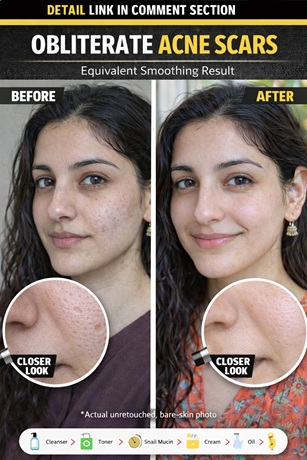
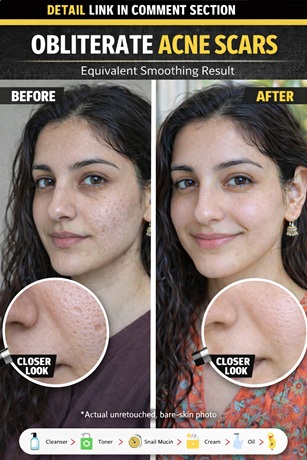
The image clearly shows visible acne scars, enlarged pores, and uneven skin texture, particularly concentrated around the cheeks and nose area. These are typically post-inflammatory changes that occur after acne lesions heal, leaving behind indentations (atrophic scars) and pigmentation irregularities. Such skin concerns can significantly affect confidence and overall appearance.
The encouraging part is that with consistent care using natural, scientifically supported remedies, it is possible to gradually improve skin texture, reduce the appearance of scars, and promote smoother, healthier-looking skin. Below are targeted remedies customized according to different skin types to ensure both safety and effectiveness.
Specific Remedies
Remedy 1: For Oily Skin
Ingredients:
- 1 tablespoon fresh aloe vera gel
- 1 teaspoon lemon juice
- 1 teaspoon honey
- 1 teaspoon green tea (cooled)
- 1 teaspoon multani mitti (Fuller’s earth)
- 2 drops tea tree oil
The Science Behind It
- Aloe vera contains polysaccharides that promote collagen synthesis and skin repair.
- Lemon juice provides citric acid, which gently exfoliates dead skin cells and lightens pigmentation.
- Honey has antibacterial and humectant properties that maintain moisture without clogging pores.
- Green tea is rich in epigallocatechin gallate (EGCG), reducing inflammation and sebum production.
- Multani mitti absorbs excess oil and clears clogged pores.
- Tea tree oil contains terpinen-4-ol, known for its antimicrobial effect against acne-causing bacteria.
Procedure:
Mix all ingredients into a smooth paste. Apply evenly to the affected areas. Leave it on for 15 minutes, then rinse with lukewarm water.
How Often to Apply:
Alternate days for 14 days.
Initial Results:
Within 2–3 days, oiliness reduces and pores appear tighter. Mild brightening becomes noticeable.
Remedy 2: For Dry Skin
Ingredients:
- 1 tablespoon mashed avocado
- 1 teaspoon olive oil
- 1 teaspoon raw milk
- 1 teaspoon honey
- ½ teaspoon turmeric powder
- 1 vitamin E capsule
The Science Behind It
- Avocado is rich in fatty acids and vitamin E, aiding skin regeneration.
- Olive oil contains squalene, which deeply hydrates and improves elasticity.
- Raw milk provides lactic acid for gentle exfoliation.
- Honey locks in moisture and accelerates healing.
- Turmeric contains curcumin, which reduces inflammation and pigmentation.
- Vitamin E acts as an antioxidant, supporting tissue repair and collagen formation.
Procedure:
Blend all ingredients into a creamy mixture. Apply gently and leave for 20 minutes before washing with lukewarm water.
How Often to Apply:
3 times a week for 2 weeks.
Initial Results:
Skin feels softer within 1–2 days, with reduced dryness and slight improvement in texture.
Remedy 3: For Combination Skin
Ingredients:
- 1 tablespoon yogurt
- 1 teaspoon honey
- 1 teaspoon rose water
- 1 teaspoon oatmeal powder
- 1 teaspoon cucumber juice
- 2 drops lavender oil
The Science Behind It
- Yogurt contains lactic acid that exfoliates and smoothens skin.
- Honey balances hydration across dry and oily zones.
- Rose water restores skin pH and tones pores.
- Oatmeal acts as a mild exfoliant and soothes irritation.
- Cucumber juice provides silica and hydration, improving elasticity.
- Lavender oil has anti-inflammatory and skin-calming properties.
Procedure:
Mix all ingredients into a paste. Apply evenly, focusing on scarred areas. Leave for 15 minutes and rinse.
How Often to Apply:
Every 2 days for 10–14 days.
Initial Results:
Skin feels balanced, with reduced redness and smoother appearance within 2–3 days.
Remedy 4: For Sensitive Skin
Ingredients:
- 1 tablespoon aloe vera gel
- 1 teaspoon chamomile tea (cooled)
- 1 teaspoon honey
- 1 teaspoon mashed banana
- 1 teaspoon rice flour
The Science Behind It
- Aloe vera soothes irritation and promotes healing.
- Chamomile tea contains flavonoids that reduce inflammation and redness.
- Honey provides gentle antibacterial action.
- Banana offers potassium and vitamins that nourish skin cells.
- Rice flour gently exfoliates without causing micro-tears.
Procedure:
Mix into a smooth paste and apply gently without rubbing. Leave for 10–12 minutes and rinse with cool water.
How Often to Apply:
3 times a week for 2 weeks.
Initial Results:
Redness reduces within 1–2 days, and skin feels calmer and smoother.
Remedy 5: For Normal Skin
Ingredients:
- 1 tablespoon papaya pulp
- 1 teaspoon honey
- 1 teaspoon lemon juice
- 1 teaspoon sandalwood powder
- 1 teaspoon rose water
The Science Behind It
- Papaya contains papain enzyme that exfoliates dead skin cells.
- Honey hydrates and promotes healing.
- Lemon juice brightens pigmentation.
- Sandalwood reduces inflammation and improves skin tone.
- Rose water tones and refreshes skin.
Procedure:
Mix well and apply evenly. Leave for 15 minutes and rinse.
How Often to Apply:
Every alternate day for 14 days.
Initial Results:
Visible glow and slight fading of scars within 2–3 days.
Targeted Exercise Routine (Facial Skin Tightening & Blood Circulation)
Although acne scars are primarily a skin condition, improving facial blood circulation enhances collagen production and healing.
Exercise 1: Cheek Lift Exercise
- Smile widely while keeping lips closed.
- Place fingers lightly on cheeks and lift upward.
- Hold for 10 seconds.
- Repeat 10 times.
Mechanism: Improves blood flow and stimulates collagen in the dermis.
Exercise 2: Jawline Stretch
- Tilt your head back and look upward.
- Push your lower jaw forward.
- Hold for 10 seconds.
- Repeat 10–12 times.
Mechanism: Enhances skin elasticity and reduces sagging around scar areas.
Exercise 3: Facial Massage
- Use clean fingers to massage in circular motions.
- Focus on scarred areas for 5 minutes daily.
Mechanism: Boosts lymphatic drainage and promotes tissue repair.
Targeted Diet Plan for Healing
Vegetarian Diet Plan
- Spinach and kale (rich in vitamin A and C)
- Carrots and sweet potatoes
- Nuts and seeds (almonds, walnuts, flaxseeds)
- Lentils and chickpeas
- Fresh fruits like berries and oranges
- Whole grains like quinoa and brown rice
Non-Vegetarian Diet Plan
- Fatty fish (salmon, mackerel)
- Eggs (rich in protein and biotin)
- Lean chicken
- Bone broth
- Tuna
- Yogurt
Diabetic-Friendly Diet Plan (Low GI)
- Leafy greens
- Chia seeds
- Whole oats
- Lentils
- Berries in moderation
- Unsweetened yogurt
Heart Patient-Friendly Diet Plan
- Olive oil
- Avocados
- Whole grains
- Fresh vegetables
- Nuts (in moderation)
- Fish rich in omega-3
Final Tips & Conclusion
- Always perform a patch test before applying any remedy.
- Stay hydrated with at least 2–3 liters of water daily.
- Avoid picking or squeezing acne lesions.
- Use gentle cleansing routines and avoid harsh chemicals.
- Maintain consistent sleep patterns to support skin repair.
- Keep pillowcases and skincare tools clean to prevent bacterial buildup.
Summary
By combining skin-type-specific natural remedies, simple facial exercises, and a nutrient-rich diet, you can gradually reduce acne scars and improve overall skin texture. Each remedy works by enhancing collagen production, reducing inflammation, and promoting cellular turnover.
Timeline
Follow this routine consistently for at least 14 days to begin seeing noticeable improvements. For deeper scars, continue for up to 4–6 weeks.
If the problem persists after this period, you must see a certified doctor or healthcare professional.