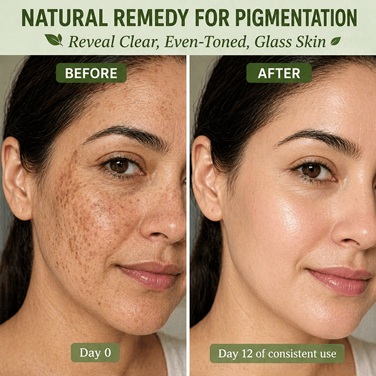
The image clearly shows a case of facial pigmentation characterized by dark spots, uneven skin tone, and sun-induced discoloration. This condition often develops due to excess melanin production triggered by factors such as UV exposure, hormonal imbalance, aging, or inflammation. Pigmentation not only affects the skin’s appearance but can also impact confidence and overall skin health perception.
The encouraging part is that consistent use of natural, scientifically supported home remedies can gradually reduce pigmentation, restore skin clarity, and promote a smooth, even-toned complexion. Below are carefully tailored remedies based on different skin types to ensure both safety and effectiveness.
Specific Remedies
Remedy 1: For Oily Skin
Ingredients:
- 1 tablespoon fresh aloe vera gel
- 1 teaspoon lemon juice
- 1 teaspoon rose water
- 1 teaspoon cucumber juice
- 1 teaspoon green tea extract
- ½ teaspoon turmeric powder
The Science Behind It:
Aloe vera contains aloin, a natural depigmenting compound that reduces melanin accumulation. Lemon juice is rich in vitamin C, which inhibits tyrosinase, the enzyme responsible for melanin production. Rose water balances sebum and soothes irritation. Cucumber juice provides hydration and mild bleaching effects. Green tea extract contains catechins that reduce oxidative stress. Turmeric has curcumin, known for anti-inflammatory and melanin-regulating properties.
Procedure:
Mix all ingredients into a smooth paste. Apply evenly to the affected areas using clean fingers or a brush. Leave it on for 15–20 minutes, then rinse with lukewarm water.
How Often to Apply:
Apply once daily for 10–14 days.
Initial Results:
Within 2–3 days, oiliness reduces and skin appears fresher. Slight lightening of dark spots may begin.
Remedy 2: For Dry Skin
Ingredients:
- 1 tablespoon raw milk
- 1 teaspoon honey
- 1 teaspoon mashed ripe banana
- 1 teaspoon almond oil
- ½ teaspoon sandalwood powder
- 1 teaspoon oatmeal powder
The Science Behind It:
Raw milk contains lactic acid, a gentle exfoliant that removes dead pigmented cells. Honey acts as a humectant, deeply hydrating and promoting skin repair. Banana provides vitamins A and E, supporting skin renewal. Almond oil is rich in vitamin E, reducing oxidative damage. Sandalwood has skin-lightening properties, while oatmeal gently exfoliates and improves texture.
Procedure:
Blend all ingredients into a creamy mixture. Apply a thick layer to the face and leave for 20 minutes. Gently massage before rinsing.
How Often to Apply:
Use on alternate days for 2 weeks.
Initial Results:
Skin feels softer within the first application, with gradual improvement in brightness within 3 days.
Remedy 3: For Sensitive Skin
Ingredients:
- 1 tablespoon chamomile tea (cooled)
- 1 teaspoon aloe vera gel
- 1 teaspoon cucumber pulp
- 1 teaspoon licorice extract
- ½ teaspoon rice flour
- 1 teaspoon yogurt
The Science Behind It:
Chamomile reduces inflammation and calms reactive skin. Aloe vera promotes healing and reduces pigmentation safely. Cucumber soothes irritation and hydrates. Licorice extract contains glabridin, which inhibits melanin production. Rice flour offers mild exfoliation without irritation. Yogurt contains probiotics and lactic acid, aiding gentle skin renewal.
Procedure:
Mix ingredients into a smooth paste and apply evenly. Leave for 15 minutes, then rinse with cool water.
How Often to Apply:
Apply 3–4 times a week for 14 days.
Initial Results:
Redness reduces within 1–2 days, and skin tone begins to look more even.
Remedy 4: For Combination Skin
Ingredients:
- 1 tablespoon multani mitti (Fuller’s earth)
- 1 teaspoon tomato juice
- 1 teaspoon yogurt
- 1 teaspoon aloe vera gel
- ½ teaspoon turmeric
- 1 teaspoon honey
The Science Behind It:
Multani mitti absorbs excess oil while maintaining balance in dry areas. Tomato juice contains lycopene, which protects against UV damage and lightens pigmentation. Yogurt exfoliates gently with lactic acid. Aloe vera repairs damaged skin. Turmeric reduces inflammation, and honey provides hydration and antibacterial support.
Procedure:
Mix into a smooth paste and apply to the face, focusing on pigmented areas. Leave for 15–20 minutes before washing.
How Often to Apply:
Use every alternate day for 10–12 days.
Initial Results:
Oil balance improves within 2 days, and pigmentation starts appearing lighter.
Remedy 5: For Normal Skin
Ingredients:
- 1 tablespoon papaya pulp
- 1 teaspoon honey
- 1 teaspoon lemon juice
- 1 teaspoon rose water
- ½ teaspoon turmeric
- 1 teaspoon gram flour
The Science Behind It:
Papaya contains papain enzyme, which exfoliates dead skin cells and promotes renewal. Honey hydrates and repairs. Lemon juice brightens through vitamin C. Rose water tones and refreshes. Turmeric controls pigmentation, while gram flour acts as a natural cleanser and exfoliant.
Procedure:
Combine ingredients into a paste. Apply evenly and let it dry for 15–20 minutes before rinsing.
How Often to Apply:
Apply daily for 10–14 days.
Initial Results:
Skin becomes smoother and brighter within 2–3 days.
Targeted Exercise Routine
While pigmentation is primarily a skin concern, improving blood circulation and lymphatic drainage enhances skin repair.
Facial Blood Circulation Exercise:
- Cheek Lift Movement
Place fingers on cheeks and gently lift upward. Hold for 10 seconds.
Repetitions: 10 times, 2 sets
Mechanism: Improves blood flow, delivering oxygen and nutrients to skin cells. - Jawline Stretch
Tilt head upward and stretch lips forward. Hold for 8 seconds.
Repetitions: 12 times
Mechanism: Enhances circulation in lower face where pigmentation may accumulate. - Facial Massage Technique
Use fingertips to massage face in circular motions for 5 minutes.
Mechanism: Stimulates lymphatic drainage, reducing toxin buildup.
Targeted Diet Plan for Healing
Vegetarian Diet Plan
- Spinach and kale (rich in iron and antioxidants)
- Carrots (high in beta-carotene for skin repair)
- Citrus fruits (vitamin C boosts collagen and reduces pigmentation)
- Nuts and seeds (vitamin E for skin protection)
- Turmeric milk (anti-inflammatory benefits)
- Beetroot (improves blood circulation)
Non-Vegetarian Diet Plan
- Salmon (omega-3 fatty acids reduce inflammation)
- Eggs (biotin and protein for skin regeneration)
- Chicken breast (lean protein supports tissue repair)
- Liver (rich in vitamin A for skin renewal)
- Tuna (high in selenium and antioxidants)
- Bone broth (collagen support)
Diabetic-Friendly Diet Plan
- Bitter gourd (regulates blood sugar and detoxifies)
- Lentils (low glycemic protein source)
- Chia seeds (fiber-rich and anti-inflammatory)
- Green vegetables (low GI and nutrient dense)
- Cinnamon (improves insulin sensitivity)
- Avocado (healthy fats for skin repair)
Heart Patient-Friendly Diet Plan
- Oats (reduce cholesterol and support skin health)
- Olive oil (anti-inflammatory fats)
- Walnuts (omega-3 fatty acids)
- Berries (rich in antioxidants)
- Green tea (improves circulation)
- Flaxseeds (supports vascular health)
Final Tips & Conclusion
Maintaining consistency is key when dealing with pigmentation. Always perform a patch test before applying any remedy to avoid allergic reactions. Protect your skin from sun exposure by covering the face or using natural barriers. Stay hydrated and aim for at least 7–8 hours of sleep to allow proper skin regeneration.
Avoid harsh chemical-based products that may worsen pigmentation. Keep your skin clean and use gentle cleansing methods.
Summary:
The remedies focus on reducing melanin production, exfoliating dead cells, and nourishing the skin. Facial exercises improve circulation, while a targeted diet supports internal healing.
Timeline:
Follow this routine consistently for at least 14 days to observe visible improvements.
If the problem persists after this period, you must see a certified doctor or healthcare professional.