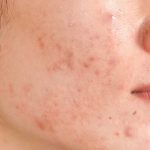
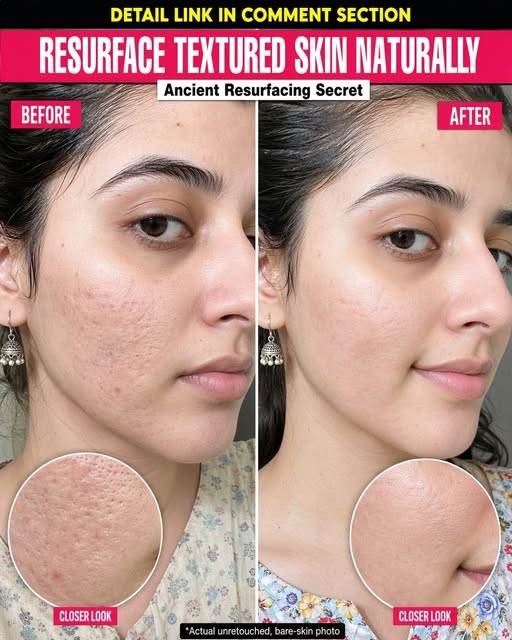
The image clearly shows uneven, textured facial skin characterized by visible pores, acne scars, and rough patches in the “before” state, with smoother, refined skin in the “after” appearance. This condition often results from clogged pores, collagen breakdown, past acne inflammation, or improper exfoliation. Textured skin can affect confidence, as it reduces the natural glow and smoothness of the face.
The good news is that skin resurfacing does not always require aggressive chemical treatments. With the right combination of natural exfoliants, skin-repairing nutrients, and consistent care, you can gradually improve skin texture at home. The remedies below are tailored according to different skin types and are based on dermatological principles of exfoliation, hydration, and collagen stimulation.
Specific Remedies
Remedy 1: For Oily Skin
Ingredients:
- 1 tablespoon multani mitti (Fuller’s earth)
- 1 teaspoon neem powder
- 1 teaspoon turmeric powder
- 2 teaspoons rose water
- 3–4 drops lemon juice
- 1 teaspoon aloe vera gel
The Science Behind It
Multani mitti absorbs excess sebum and unclogs pores, which is essential for oily skin prone to texture. Neem powder contains antibacterial compounds like nimbidin that help reduce acne-causing bacteria. Turmeric provides curcumin, a powerful anti-inflammatory agent that reduces redness and supports healing. Lemon juice contains citric acid, a natural alpha hydroxy acid (AHA) that exfoliates dead skin cells. Aloe vera promotes hydration and contains polysaccharides that aid skin repair. Rose water balances pH and tightens pores.
Procedure:
Mix all ingredients into a smooth paste. Apply evenly on clean skin, focusing on textured areas. Leave for 15 minutes and rinse with lukewarm water.
How Often to Apply:
Use 3 times a week for 14 days.
Initial Results:
Within 2–3 days, oiliness reduces and pores appear tighter, giving a slightly smoother appearance.
Remedy 2: For Dry Skin
Ingredients:
- 1 tablespoon mashed ripe banana
- 1 teaspoon honey
- 1 teaspoon milk cream
- 1 teaspoon finely ground oats
- 2–3 drops almond oil
- 1 teaspoon aloe vera gel
The Science Behind It
Banana contains potassium and natural sugars that deeply hydrate and improve skin elasticity. Honey acts as a humectant, drawing moisture into the skin and promoting healing. Milk cream provides lactic acid, a gentle exfoliant that removes dead cells without drying. Oats contain beta-glucan, which soothes irritation and forms a protective barrier. Almond oil is rich in vitamin E, which supports skin regeneration. Aloe vera helps maintain hydration and reduces micro-inflammation.
Procedure:
Blend all ingredients into a creamy mixture. Apply gently and massage in circular motions for 2 minutes. Leave for 20 minutes before rinsing.
How Often to Apply:
Use on alternate days for 10–14 days.
Initial Results:
Skin feels softer and more hydrated within 1–2 applications, with reduced flakiness and smoother texture.
Remedy 3: For Combination Skin
Ingredients:
- 1 tablespoon yogurt
- 1 teaspoon honey
- 1 teaspoon sandalwood powder
- 1 teaspoon cucumber juice
- 1 teaspoon rice flour
- 2 drops tea tree oil
The Science Behind It
Yogurt contains lactic acid, which gently exfoliates and improves skin texture. Honey balances moisture levels across dry and oily zones. Sandalwood powder has anti-inflammatory properties that calm irritated skin. Cucumber juice hydrates and tightens pores due to its silica content. Rice flour acts as a mild physical exfoliant, helping remove dead skin cells. Tea tree oil has antimicrobial properties that prevent acne formation in oily areas.
Procedure:
Mix all ingredients into a semi-thick paste. Apply evenly, focusing on the T-zone and rough patches. Massage lightly and leave for 15 minutes before washing.
How Often to Apply:
Apply 2–3 times a week for 2 weeks.
Initial Results:
Skin begins to feel balanced, with reduced oiliness in the T-zone and improved smoothness overall.
Remedy 4: For Sensitive Skin
Ingredients:
- 1 tablespoon aloe vera gel
- 1 teaspoon chamomile tea (cooled)
- 1 teaspoon oatmeal powder
- 1 teaspoon cucumber pulp
- 1 teaspoon honey
- 2 drops lavender oil
The Science Behind It
Aloe vera contains anti-inflammatory compounds like acemannan that calm irritated skin. Chamomile tea is rich in flavonoids, reducing redness and sensitivity. Oatmeal provides soothing beta-glucan and acts as a gentle exfoliant. Cucumber cools the skin and reduces swelling. Honey supports healing while maintaining moisture balance. Lavender oil has mild antibacterial and calming properties that support skin recovery without irritation.
Procedure:
Mix into a smooth gel-like consistency. Apply gently without rubbing. Leave for 15 minutes and rinse with cool water.
How Often to Apply:
Use every 2 days for 10–12 days.
Initial Results:
Redness reduces within 1–2 days, and skin feels calmer and more even.
Remedy 5: For Normal Skin
Ingredients:
- 1 tablespoon papaya pulp
- 1 teaspoon honey
- 1 teaspoon lemon juice
- 1 teaspoon gram flour (besan)
- 1 teaspoon rose water
- 2 drops vitamin E oil
The Science Behind It
Papaya contains papain enzyme, which naturally exfoliates dead skin cells and promotes renewal. Honey hydrates and enhances healing. Lemon juice provides mild chemical exfoliation through citric acid. Gram flour acts as a gentle cleanser and exfoliator. Rose water tones and refreshes the skin. Vitamin E oil supports collagen production and protects against oxidative damage.
Procedure:
Mix thoroughly and apply evenly. Massage gently for 2 minutes, then leave for 15 minutes before rinsing.
How Often to Apply:
Use 3 times weekly for 2 weeks.
Initial Results:
Skin appears brighter and smoother within 2–3 applications.
Targeted Exercise Routine
Facial exercises help improve blood circulation and stimulate collagen production, which can gradually reduce skin texture irregularities.
Exercise 1: Cheek Lifting Exercise
- Smile widely while keeping lips closed
- Place fingers on cheekbones and gently lift upward
- Hold for 10 seconds
- Repeat 10 times, 2 sets
Mechanism: This exercise stimulates facial muscles and improves circulation, enhancing nutrient delivery to skin cells.
Exercise 2: Jawline Tightening
- Tilt your head upward
- Push your lower jaw forward
- Hold for 10 seconds
- Repeat 12 times
Mechanism: Improves lymphatic drainage and reduces stagnation, helping skin appear smoother.
Exercise 3: Face Yoga Massage
- Use fingertips to massage in upward circular motions
- Focus on textured areas for 5 minutes daily
Mechanism: Boosts microcirculation and collagen stimulation.
Targeted Diet Plan for Healing
Vegetarian Diet Plan
- Spinach and kale (rich in vitamin A for skin repair)
- Carrots (beta-carotene improves cell turnover)
- Nuts and seeds (vitamin E for skin healing)
- Yogurt (probiotics improve gut-skin axis)
- Lentils (protein for collagen production)
- Citrus fruits (vitamin C boosts collagen)
Non-Vegetarian Diet Plan
- Fatty fish like salmon (omega-3 reduces inflammation)
- Eggs (biotin supports skin regeneration)
- Chicken breast (lean protein for collagen synthesis)
- Bone broth (natural collagen source)
- Tuna (rich in selenium for skin repair)
- Liver (vitamin A supports cell turnover)
Diabetic-Friendly Diet Plan
- Bitter gourd (controls blood sugar and reduces inflammation)
- Whole grains like quinoa
- Chia seeds (fiber and omega-3)
- Leafy greens
- Unsweetened yogurt
- Almonds and walnuts
Heart Patient-Friendly Diet Plan
- Oats (improves circulation)
- Olive oil (healthy fats for skin elasticity)
- Avocados (vitamin E rich)
- Berries (antioxidants reduce oxidative stress)
- Green tea (anti-inflammatory properties)
- Flaxseeds (omega-3 fatty acids)
Final Tips & Conclusion
Maintaining smooth, resurfaced skin requires consistency and a combination of topical care, internal nutrition, and gentle stimulation through exercise.
General Tips:
- Always cleanse your face before applying remedies
- Perform a patch test before trying any new ingredient
- Stay hydrated with at least 8–10 glasses of water daily
- Avoid harsh scrubs or over-exfoliation
- Use clean towels and avoid touching your face frequently
- Ensure 7–8 hours of quality sleep for skin regeneration
Summary:
Natural resurfacing works through gentle exfoliation, hydration, and collagen stimulation. The remedies above target different skin types, while facial exercises improve circulation and diet supports internal healing.
Timeline:
Follow this routine consistently for at least 14 days to notice visible improvement in texture and smoothness.
Mandatory Medical Disclaimer:
If the problem persists after this period, you must see a certified doctor or healthcare professional.