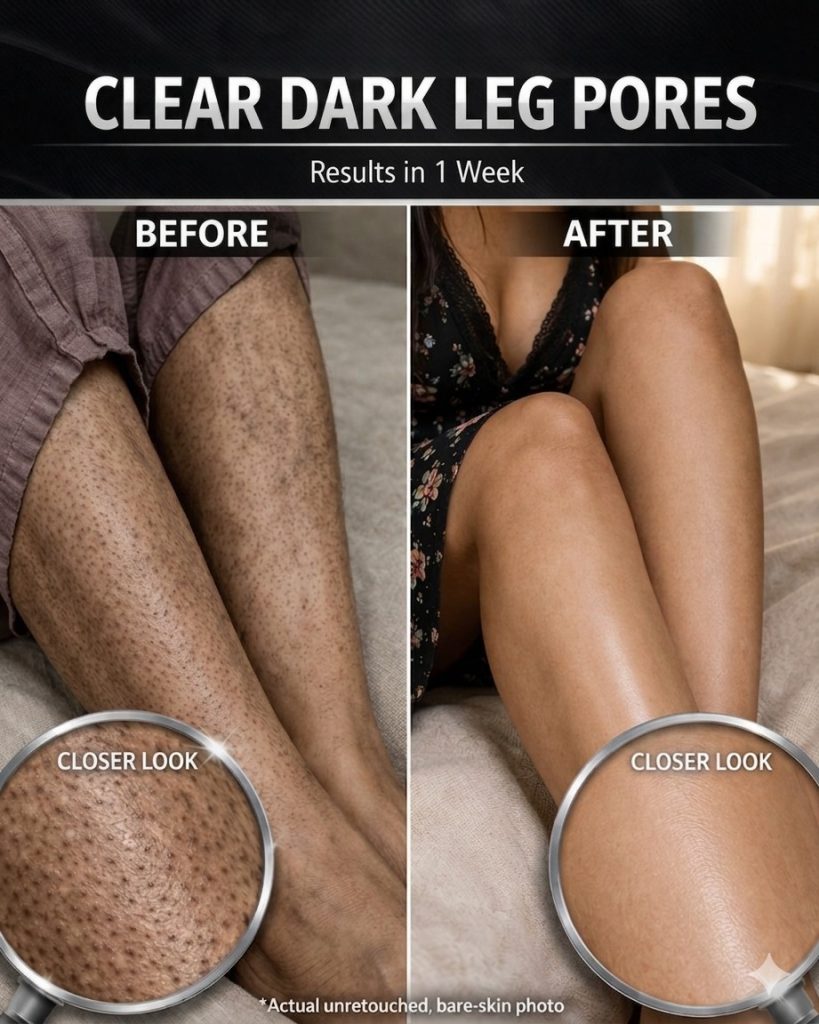
Dark leg pores, often called “strawberry legs,” can make the skin appear rough, dotted, and uneven. This condition usually happens because of clogged hair follicles, dead skin buildup, trapped oil, shaving irritation, or dryness. Many people lose confidence wearing shorts or dresses because the legs no longer look smooth and healthy. Fortunately, natural ingredients rich in antioxidants, lactic acid, enzymes, vitamins, and anti-inflammatory compounds can help improve the appearance of dark pores naturally when used correctly according to skin type.
The remedies below are designed for different skin types because every skin reacts differently. Scientifically supported natural ingredients such as turmeric, yogurt, oatmeal, aloe vera, honey, cucumber, and green tea may help exfoliate dead cells, reduce inflammation, improve hydration, and support skin barrier repair. Visible softness and smoother texture may begin within a few days when remedies are used consistently.
Remedy 1: For Normal Skin
Ingredients
- Gram flour – 2 tablespoons
Scientifically helps absorb excess oil and gently exfoliates dead skin cells. - Turmeric – 1/2 teaspoon
Contains curcumin which may reduce inflammation and pigmentation. - Yogurt – 2 tablespoons
Rich in lactic acid that helps loosen dead skin buildup. - Honey – 1 teaspoon
Natural humectant that keeps the skin moisturized. - Rose water – 1 tablespoon
Helps soothe irritation and refresh the skin. - Aloe vera gel – 1 tablespoon
Supports skin healing and hydration.
Scientific Working of This Remedy
Lactic acid in yogurt gently exfoliates clogged pores while turmeric’s curcumin may reduce post-inflammatory dark spots. Aloe vera contains polysaccharides that support skin repair, and honey helps maintain moisture balance, preventing dryness after exfoliation.
Procedure
- Mix all ingredients into a smooth paste.
- Wash the legs with lukewarm water.
- Apply the mixture evenly on dark pores.
- Massage gently in circular motions for 3 minutes.
- Leave it for 15 minutes.
- Rinse with normal water and pat dry.
- Apply a light natural moisturizer afterward.
How Often to Apply
Use once daily for 5 to 7 days.
Initial Results
Within 2–3 days, the skin may feel softer and smoother. After one week, pores may appear lighter and less noticeable.
Remedy 2: For Combination Skin
Ingredients
- Oatmeal powder – 2 tablespoons
Helps exfoliate while calming irritation. - Cucumber juice – 2 tablespoons
Contains antioxidants and cooling compounds. - Green tea – 2 tablespoons brewed
Rich in catechins that may reduce inflammation. - Honey – 1 teaspoon
Helps maintain hydration. - Lemon juice – 1/2 teaspoon
Contains citric acid that may brighten dark spots. - Coconut milk – 1 tablespoon
Helps nourish dry areas of the skin.
Scientific Working of This Remedy
Oatmeal contains avenanthramides known for soothing irritated skin. Green tea polyphenols may help reduce redness and clogged pores. Mild citric acid in lemon helps exfoliate dead cells while coconut milk nourishes dry patches.
Procedure
- Blend all ingredients into a thick paste.
- Apply on the affected leg area.
- Massage gently for 2 minutes.
- Leave for 12–15 minutes.
- Wash with cool water.
How Often to Apply
Apply on alternate days for one week.
Initial Results
The legs may begin looking fresher and cleaner within 3 days, with gradual reduction in rough texture.
Remedy 3: For Oily Skin
Ingredients
- Multani mitti (Fuller’s earth) – 2 tablespoons
Helps absorb excess oil from pores. - Neem powder – 1 teaspoon
Known for antibacterial properties. - Tomato pulp – 2 tablespoons
Contains lycopene and mild acids. - Turmeric – 1/4 teaspoon
Helps calm inflammation. - Aloe vera gel – 1 tablespoon
Provides lightweight hydration. - Rice flour – 1 tablespoon
Works as a gentle exfoliant. - Tea tree water – 1 tablespoon diluted
May reduce bacteria associated with follicle blockage.
Scientific Working of This Remedy
Fuller’s earth absorbs excess sebum while rice flour physically removes dead skin buildup. Tomato contains natural acids that may improve uneven texture. Neem and tea tree compounds may help reduce bacteria and irritation around hair follicles.
Procedure
- Combine all ingredients into a smooth paste.
- Apply evenly to legs.
- Allow the mixture to semi-dry.
- Scrub gently using wet hands.
- Wash thoroughly and pat dry.
How Often to Apply
Use 3–4 times weekly.
Initial Results
Oiliness may reduce after the first few applications, and pores may start appearing cleaner within one week.
Remedy 4: For Dry Skin
Ingredients
- Mashed banana – 2 tablespoons
Rich in potassium and moisture. - Fresh cream – 1 tablespoon
Helps nourish dry skin. - Oatmeal – 1 tablespoon
Soothes rough texture. - Honey – 1 tablespoon
Helps retain moisture. - Almond oil – 1 teaspoon
Rich in vitamin E. - Aloe vera gel – 1 tablespoon
Supports hydration and repair.
Scientific Working of This Remedy
Dry skin often worsens dark pores because rough skin traps dead cells. Banana and cream deeply moisturize while oatmeal gently exfoliates without damaging the barrier. Vitamin E from almond oil supports skin softness and repair.
Procedure
- Mash and mix all ingredients well.
- Apply generously to legs.
- Leave for 20 minutes.
- Massage gently before rinsing.
- Wash with lukewarm water.
How Often to Apply
Apply daily for at least 5 days.
Initial Results
Dryness and roughness may improve within 2–3 applications. Skin may begin appearing smoother and healthier after one week.
Remedy 5: For Sensitive Skin
Ingredients
- Aloe vera gel – 2 tablespoons
Helps calm sensitive skin. - Colloidal oatmeal – 1 tablespoon
Reduces irritation and itching. - Chamomile tea – 2 tablespoons cooled
Known for soothing effects. - Cucumber paste – 2 tablespoons
Provides cooling hydration. - Raw honey – 1 teaspoon
Helps protect the skin barrier. - Rice water – 2 tablespoons
Contains amino acids beneficial for skin texture.
Scientific Working of This Remedy
Sensitive skin needs barrier-supportive ingredients instead of harsh exfoliants. Oatmeal contains anti-inflammatory compounds while chamomile may reduce redness. Aloe vera and cucumber help cool irritated follicles and maintain hydration.
Procedure
- Mix all ingredients gently.
- Apply using clean fingers or cotton.
- Leave for 15 minutes.
- Wash gently with cool water.
- Avoid scrubbing.
How Often to Apply
Use once daily for 5–7 days.
Initial Results
Redness and irritation may begin reducing within 2 days, while pores may gradually appear softer and lighter.
Final Tips
- Exfoliate gently only 2–3 times weekly to avoid skin damage.
- Avoid dry shaving because it increases follicle irritation.
- Use a clean razor every time.
- Moisturize the legs immediately after bathing.
- Drink enough water to support healthy skin repair.
- Include antioxidant-rich fruits and vegetables in the diet.
- Always perform a patch test before trying any remedy.
- Avoid extremely hot water because it can worsen dryness and irritation.
- Wear breathable cotton clothing to reduce friction.
- Visible improvements usually begin within 2–3 days, while smoother and brighter skin may continue improving over several weeks with consistency.
Diet Plan for Healthier and Smoother Legs
Morning
- Warm water with lemon
- 5 soaked almonds
- One bowl of papaya or berries
Breakfast
- Oatmeal with chia seeds
- Boiled eggs or yogurt
- Green tea
Mid-Morning
- Coconut water or cucumber slices
Lunch
- Brown rice or whole wheat roti
- Grilled fish or lentils
- Spinach or mixed vegetables
- Salad with carrots and cucumber
Evening Snack
- Roasted chickpeas or nuts
- Herbal tea
Dinner
- Vegetable soup
- Grilled chicken or beans
- Steamed vegetables
Before Sleep
- Turmeric milk or chamomile tea
How Long to Continue
Follow the remedies and diet consistently for at least 2–4 weeks for better improvement. If dark pores worsen, become painful, develop swelling, or continue despite proper care, consult a dermatologist or doctor for professional evaluation.
References for the above remedy
- American Academy of Dermatology – Strawberry Legs and Follicular Care
https://www.aad.org/public/everyday-care/skin-care-basics/dry/strawberry-legs - National Center for Biotechnology Information – Curcumin and Skin Benefits
https://www.ncbi.nlm.nih.gov/pmc/articles/PMC5664031/ - National Center for Biotechnology Information – Colloidal Oatmeal in Dermatology
https://www.ncbi.nlm.nih.gov/pmc/articles/PMC3279181/ - Mayo Clinic – Dry Skin Care and Exfoliation
https://www.mayoclinic.org/diseases-conditions/dry-skin/in-depth/dry-skin/art-20048232 - National Center for Biotechnology Information – Aloe Vera and Skin Healing
https://www.ncbi.nlm.nih.gov/pmc/articles/PMC2763764/ - Cleveland Clinic – Causes of Strawberry Legs
https://health.clevelandclinic.org/strawberry-legs - National Center for Biotechnology Information – Honey in Dermatology and Skin Care
https://www.ncbi.nlm.nih.gov/pmc/articles/PMC5661189/ - National Center for Biotechnology Information – Green Tea Polyphenols and Skin Protection
https://www.ncbi.nlm.nih.gov/pmc/articles/PMC5384166/ - Harvard Health – Skin Hydration and Nutrition
https://www.health.harvard.edu/staying-healthy/nourishing-your-skin-from-the-inside-out - National Center for Biotechnology Information – Tea Tree Oil Antimicrobial Properties
https://www.ncbi.nlm.nih.gov/pmc/articles/PMC1360273/