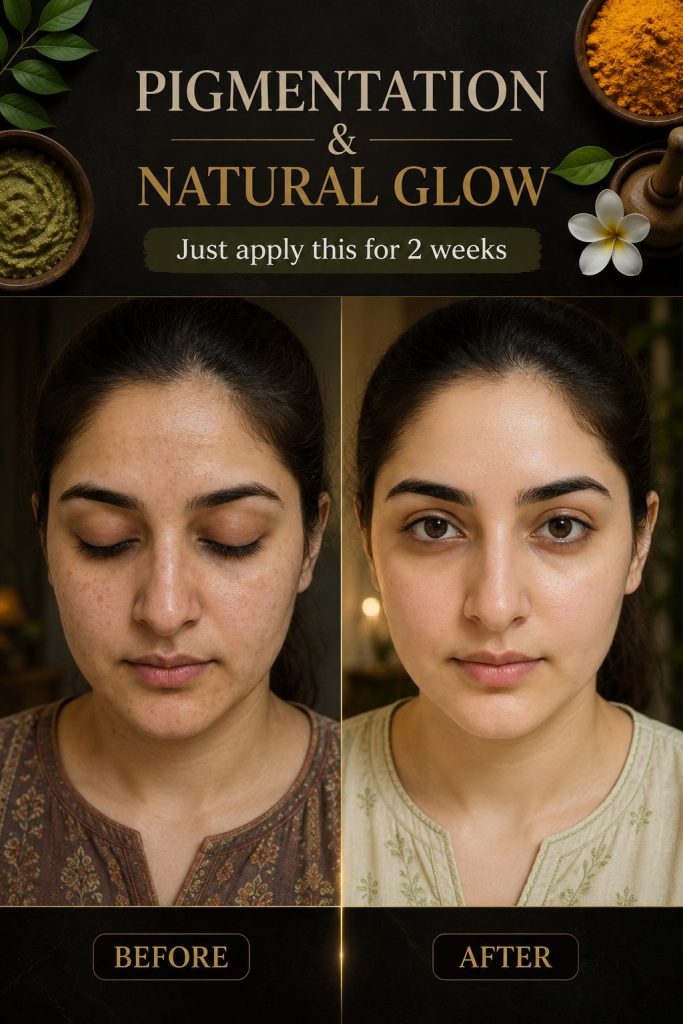
Pigmentation, uneven skin tone, acne marks, and dullness can make the face appear tired and less radiant. These dark patches often develop because of sun exposure, inflammation, hormonal imbalance, stress, lack of sleep, dehydration, or post-acne marks. When melanin production becomes uneven, the skin may start looking patchy or rough. Fortunately, many scientifically studied natural ingredients contain antioxidants, enzymes, vitamins, and anti-inflammatory compounds that may help brighten the skin and improve natural glow gradually.
The remedies below are specially designed according to different skin types because oily, dry, sensitive, and combination skin react differently to exfoliation and hydration. Ingredients such as turmeric, licorice, potato, yogurt, papaya, saffron, aloe vera, and rice water may help improve skin texture and reduce visible pigmentation naturally when used consistently.
Remedy 1: For Normal Skin
Ingredients
- Yogurt – 2 tablespoons
Contains lactic acid that gently exfoliates dead skin. - Potato juice – 2 tablespoons
Contains catecholase enzymes that may brighten pigmentation. - Turmeric – 1/4 teaspoon
Rich in curcumin with antioxidant properties. - Rice flour – 1 tablespoon
Helps remove dull surface buildup. - Honey – 1 teaspoon
Supports skin hydration and softness. - Aloe vera gel – 1 tablespoon
Helps calm and repair the skin barrier.
Scientific Working of This Remedy
Lactic acid from yogurt helps dissolve dead skin buildup while potato enzymes may support a brighter appearance. Turmeric’s curcumin helps reduce oxidative stress linked with pigmentation, and aloe vera supports skin repair and hydration.
Procedure
- Mix all ingredients into a creamy paste.
- Apply evenly to clean skin.
- Massage gently for 2 minutes.
- Leave for 15–20 minutes.
- Wash with cool water.
How Often to Apply
Use daily for 2 weeks.
Initial Results
The skin may appear fresher and smoother within 3–4 days, while gradual brightening may begin within 2 weeks.
Remedy 2: For Combination Skin
Ingredients
- Papaya pulp – 3 tablespoons
Contains papain enzyme for exfoliation. - Cucumber juice – 2 tablespoons
Helps cool and hydrate the skin. - Gram flour – 1 tablespoon
Removes excess oil and impurities. - Rose water – 1 tablespoon
Refreshes irritated skin. - Honey – 1 teaspoon
Prevents dryness in dry areas. - Flaxseed gel – 1 tablespoon
Supports hydration and skin barrier health.
Scientific Working of This Remedy
Papaya enzymes help loosen dead cells that contribute to uneven tone. Flaxseed gel and cucumber hydrate the skin while gram flour gently cleanses oily areas. This balance helps improve natural glow without over-drying the skin.
Procedure
- Blend all ingredients thoroughly.
- Apply to the face and neck.
- Leave for 15 minutes.
- Massage gently before rinsing.
How Often to Apply
Apply on alternate days for 2 weeks.
Initial Results
The skin may begin looking more balanced and refreshed within several applications.
Remedy 3: For Oily Skin
Ingredients
- Multani mitti (Fuller’s earth) – 2 tablespoons
Helps absorb excess oil. - Tomato pulp – 2 tablespoons
Rich in lycopene and mild natural acids. - Neem powder – 1 teaspoon
Known for antibacterial properties. - Green tea – 2 tablespoons brewed
Contains antioxidant catechins. - Lemon peel powder – 1 teaspoon
Helps remove dull dead skin. - Aloe vera gel – 1 tablespoon
Provides lightweight hydration.
Scientific Working of This Remedy
Excess oil and clogged pores may worsen pigmentation after acne. Fuller’s earth helps absorb oil while tomato and lemon peel provide mild exfoliation. Green tea antioxidants may help reduce inflammation associated with acne marks.
Procedure
- Mix all ingredients into a smooth mask.
- Apply evenly to pigmented areas.
- Leave until semi-dry.
- Wash gently with cool water.
How Often to Apply
Use 3 times weekly.
Initial Results
Oiliness may reduce within days, while post-acne marks may gradually start appearing lighter.
Remedy 4: For Dry Skin
Ingredients
- Avocado mash – 2 tablespoons
Rich in healthy fats and vitamin E. - Banana puree – 2 tablespoons
Helps improve hydration. - Fresh cream – 1 tablespoon
Nourishes dehydrated skin. - Honey – 1 teaspoon
Helps retain moisture. - Saffron-infused milk – 1 tablespoon
Traditionally used for brightening appearance. - Oat flour – 1 tablespoon
Gently smooths rough skin texture.
Scientific Working of This Remedy
Dry skin may appear dull because dehydration weakens the skin barrier. Avocado and cream deeply nourish the skin while saffron milk may help improve radiance. Oat compounds soothe irritation and improve softness.
Procedure
- Mix ingredients thoroughly.
- Apply generously to face and neck.
- Leave for 20 minutes.
- Massage gently before washing.
How Often to Apply
Use daily for 10–14 days.
Initial Results
Skin may feel softer and more hydrated within 2–3 applications, with gradual improvement in glow.
Remedy 5: For Sensitive Skin
Ingredients
- Aloe vera gel – 2 tablespoons
Helps calm irritated skin. - Rice water – 2 tablespoons
Contains amino acids beneficial for skin texture. - Oatmeal powder – 1 tablespoon
Helps support the skin barrier. - Chamomile tea – 2 tablespoons cooled
Known for soothing properties. - Cucumber puree – 2 tablespoons
Provides cooling hydration. - Raw honey – 1 teaspoon
Helps maintain skin softness.
Scientific Working of This Remedy
Sensitive skin often reacts badly to harsh brightening ingredients. Aloe vera and oatmeal help reduce irritation while rice water and cucumber improve hydration and smoothness gently without disrupting the skin barrier.
Procedure
- Mix all ingredients carefully.
- Apply gently without scrubbing.
- Leave for 15 minutes.
- Rinse with cool water.
How Often to Apply
Use once daily for 2 weeks.
Initial Results
The skin may appear calmer and healthier within several days, while mild brightening may gradually become visible.
Final Tips
- Apply sunscreen daily because UV rays worsen pigmentation.
- Avoid touching or picking acne marks.
- Sleep at least 7–8 hours daily.
- Drink enough water to support skin repair.
- Include antioxidant-rich fruits and vegetables in the diet.
- Avoid excessive sugar and processed foods.
- Always patch test natural remedies before use.
- Use clean towels and pillowcases regularly.
- Visible improvements may begin within 1–2 weeks, while deeper pigmentation may require several weeks of consistency.
Diet Plan for Healthy Glow and Reduced Pigmentation
Morning
- Warm lemon water
- 5 soaked almonds
- Papaya or orange slices
Breakfast
- Oats with chia seeds
- Yogurt or boiled eggs
- Green tea
Mid-Morning
- Coconut water
- Cucumber or carrot sticks
Lunch
- Brown rice or chapati
- Grilled fish, lentils, or chicken
- Leafy vegetables and salad
Evening Snack
- Walnuts or pumpkin seeds
- Herbal tea
Dinner
- Vegetable soup
- Lean protein or beans
- Steamed broccoli or spinach
Before Sleep
- Turmeric milk or chamomile tea
How Long to Continue
Continue the remedies and healthy diet consistently for at least 4–6 weeks for better improvement in pigmentation and skin radiance. If severe pigmentation, irritation, or sudden dark patches continue, consult a dermatologist or healthcare professional.
References for the above remedy
- National Center for Biotechnology Information – Aloe Vera and Skin Benefits
https://www.ncbi.nlm.nih.gov/pmc/articles/PMC2763764/ - National Center for Biotechnology Information – Curcumin and Skin Disorders
https://www.ncbi.nlm.nih.gov/pmc/articles/PMC5664031/ - National Center for Biotechnology Information – Oatmeal in Dermatology
https://www.ncbi.nlm.nih.gov/pmc/articles/PMC3279181/ - National Center for Biotechnology Information – Green Tea Polyphenols and Skin Protection
https://www.ncbi.nlm.nih.gov/pmc/articles/PMC5384166/ - Harvard Health – Nutrition and Healthy Skin
https://www.health.harvard.edu/staying-healthy/nourishing-your-skin-from-the-inside-out - Mayo Clinic – Hyperpigmentation and Skin Care
https://www.mayoclinic.org/diseases-conditions/melasma/symptoms-causes/syc-20374956 - National Center for Biotechnology Information – Honey in Skin Care
https://www.ncbi.nlm.nih.gov/pmc/articles/PMC5661189/ - American Academy of Dermatology – Dark Spots and Pigmentation Care
https://www.aad.org/public/diseases/a-z/post-inflammatory-hyperpigmentation-overview - National Center for Biotechnology Information – Antioxidants and Skin Health
https://www.ncbi.nlm.nih.gov/pmc/articles/PMC5514576/ - Cleveland Clinic – Hyperpigmentation Overview
https://my.clevelandclinic.org/health/diseases/21885-hyperpigmentation