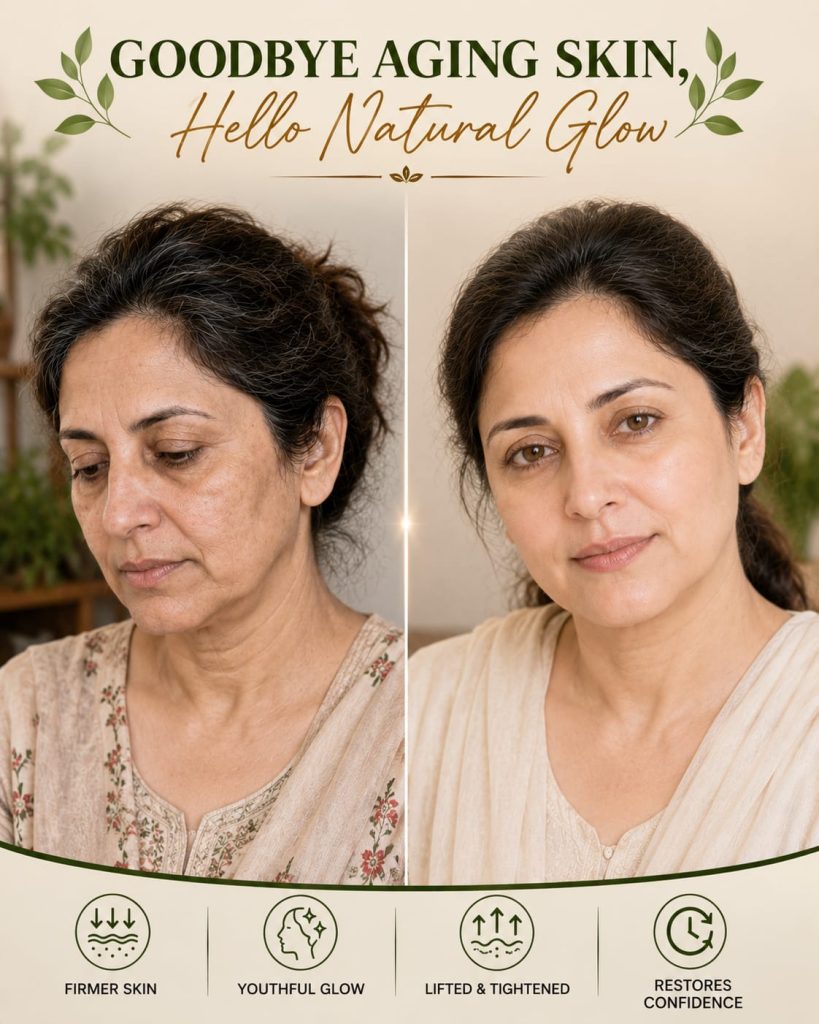
Aging skin can reduce confidence. Fine lines, dullness, sagging, and dryness often appear due to collagen loss, sun exposure, stress, and dehydration. Natural remedies can help improve skin texture gently. Many kitchen ingredients contain antioxidants, vitamins, enzymes, and anti-inflammatory compounds that support collagen production and skin repair. Choosing remedies according to skin type gives better and safer results.
Below are scientifically-supported remedies designed for different skin types. Each remedy uses natural ingredients known for improving elasticity, hydration, and glow.
Remedy 1: For Normal Skin
Ingredients
- 2 tablespoons aloe vera gel
Rich in polysaccharides. Helps collagen repair. - 1 teaspoon honey
Natural humectant. Locks moisture. - 1 teaspoon yogurt
Contains lactic acid. Smooths fine lines. - 1 teaspoon cucumber juice
Hydrates and cools skin. - 3 drops vitamin E oil
Supports antioxidant protection. - 1 teaspoon mashed banana
Contains potassium and silica. - 1 teaspoon oat powder
Gently exfoliates dead cells.
Scientific Working of Ingredients
Aloe vera supports fibroblast activity. This helps collagen formation. Honey improves moisture retention and reduces dryness-related wrinkles. Yogurt contains lactic acid that removes dead cells and improves brightness. Banana provides silica which supports skin elasticity. Vitamin E protects skin from oxidative stress caused by pollution and UV exposure.
Procedure
Mix all ingredients into a smooth paste. Clean the face with lukewarm water. Apply a thick layer evenly. Leave for 20 minutes. Rinse gently with cool water. Pat dry softly.
How Often to Apply
Apply once daily for 5 days.
Initial Results
Skin feels softer within 1 day. Mild glow appears within 2–3 days. Fine dryness lines may appear reduced after regular use.
Remedy 2: For Combination Skin
Ingredients
- 1 tablespoon papaya pulp
Contains papain enzyme. Improves texture. - 1 teaspoon rose water
Refreshes and tones skin. - 1 teaspoon flaxseed gel
Supports skin tightening. - 1 teaspoon raw milk
Softens rough areas. - 1 teaspoon gram flour
Removes excess oil gently. - ½ teaspoon turmeric
Contains curcumin antioxidants. - 4 drops almond oil
Nourishes dry patches.
Scientific Working of Ingredients
Papaya contains enzymes that help remove dull surface cells. Flaxseed gel contains omega-3 fatty acids and lignans that support hydration and elasticity. Turmeric has anti-inflammatory properties that may reduce oxidative damage. Gram flour balances oily areas without harsh stripping.
Procedure
Blend ingredients until creamy. Apply to face and neck. Focus gently on sagging areas. Leave for 15–20 minutes. Wash with normal water.
How Often to Apply
Use on alternate days for 1 week.
Initial Results
Skin may look fresher within 2 days. Oil balance improves gradually. Texture feels smoother after several applications.
Remedy 3: For Oily Skin
Ingredients
- 1 tablespoon tomato pulp
Rich in lycopene antioxidants. - 1 teaspoon green tea powder
Reduces oxidative stress. - 1 teaspoon multani mitti
Absorbs excess oil. - 1 teaspoon aloe vera gel
Hydrates without greasiness. - ½ teaspoon lemon juice
Contains vitamin C. - 1 teaspoon rice flour
Improves smoothness. - 1 teaspoon cucumber juice
Helps calm irritation.
Scientific Working of Ingredients
Green tea contains catechins that help reduce inflammation and skin aging. Tomato provides lycopene which may protect against photoaging. Aloe vera hydrates without clogging pores. Rice flour gently exfoliates and improves skin appearance. Vitamin C from lemon supports collagen production.
Procedure
Combine ingredients into a paste. Apply evenly to clean skin. Avoid eye area. Leave for 15 minutes only. Wash gently with cool water.
How Often to Apply
Use 3–4 times weekly.
Initial Results
Skin feels cleaner immediately. Excess oil may reduce within 2–3 days. Pores appear tighter with continued use.
Remedy 4: For Dry Skin
Ingredients
- 1 tablespoon avocado pulp
Rich in healthy fats. - 1 teaspoon olive oil
Supports moisture barrier. - 1 teaspoon honey
Deep hydration support. - 1 teaspoon fresh cream
Softens flaky skin. - 1 teaspoon mashed ripe banana
Improves elasticity. - ½ teaspoon cocoa powder
Contains antioxidants. - 3 drops rosehip oil
Supports skin regeneration.
Scientific Working of Ingredients
Avocado contains vitamin E and fatty acids that help repair the skin barrier. Rosehip oil contains essential fatty acids and provitamin A compounds supporting skin renewal. Olive oil helps reduce moisture loss. Cocoa contains polyphenols that may improve skin texture and circulation.
Procedure
Mash ingredients thoroughly. Apply thickly over face and neck. Massage gently upward for 2 minutes. Leave for 20 minutes. Rinse with lukewarm water.
How Often to Apply
Apply daily for 5–7 days.
Initial Results
Skin feels deeply moisturized quickly. Dryness reduces within 2 days. Skin may appear plumper after regular use.
Remedy 5: For Sensitive Skin
Ingredients
- 2 tablespoons chilled aloe vera gel
Soothes irritated skin. - 1 teaspoon oatmeal powder
Calms inflammation. - 1 teaspoon chamomile tea
Reduces redness. - 1 teaspoon cucumber puree
Cooling effect. - 1 teaspoon honey
Supports hydration. - 1 teaspoon mashed boiled potato
Gentle skin softening. - 2 drops calendula oil
Helps calm sensitivity.
Scientific Working of Ingredients
Oatmeal contains beta-glucans and avenanthramides that help soothe irritation. Chamomile contains apigenin with calming effects. Aloe vera provides hydration while reducing redness. Calendula may help support skin barrier recovery. These ingredients are generally gentle for reactive skin.
Procedure
Mix ingredients into a smooth blend. Apply softly without rubbing. Leave for 15 minutes. Wash with cool water carefully.
How Often to Apply
Use once daily for 5 days.
Initial Results
Skin feels calmer after first use. Redness may reduce within 2–3 days. Skin texture gradually becomes softer.
Final Tips
- Drink enough water daily.
- Sleep at least 7 hours.
- Avoid excessive sugar intake.
- Use sunscreen outdoors.
- Keep pillow covers clean.
- Avoid harsh scrubs frequently.
- Always patch test first.
- Eat antioxidant-rich foods.
- Avoid smoking and stress.
Visible improvements usually begin within 2–3 days. Firmer and healthier-looking skin develops gradually with consistent care. If severe irritation, allergies, or persistent skin issues continue, consult a dermatologist.
Diet Plan for Natural Skin Tightening
Morning
- Warm water with lemon
- Soaked almonds
- Papaya or berries
Breakfast
Vegetarian
- Oatmeal with chia seeds
- Green smoothie
Non-Vegetarian
- Boiled eggs
- Whole grain toast
Lunch
Vegetarian
- Lentils
- Brown rice
- Salad
Non-Vegetarian
- Grilled fish or chicken
- Steamed vegetables
Evening
- Green tea
- Pumpkin seeds
Dinner
Vegetarian
- Vegetable soup
- Cottage cheese
Non-Vegetarian
- Light chicken soup
- Steamed vegetables
For Diabetic Individuals
- Avoid refined sugar
- Choose low glycemic fruits
- Include fiber-rich foods
For Cholesterol Control
- Reduce fried foods
- Include walnuts and flaxseeds
- Prefer olive oil
Continue the remedies and healthy diet for at least 3–4 weeks for noticeable skin tightening support. If deep wrinkles, severe pigmentation, or skin problems persist, seek medical advice from a qualified doctor.
References for the above remedy
- Aloe vera and skin healing research
https://pmc.ncbi.nlm.nih.gov/articles/PMC6011405/ - Honey in dermatology and skin repair
https://pmc.ncbi.nlm.nih.gov/articles/PMC5661189/ - Green tea polyphenols and skin protection
https://pmc.ncbi.nlm.nih.gov/articles/PMC5384166/ - Oatmeal benefits for sensitive skin
https://pmc.ncbi.nlm.nih.gov/articles/PMC4353917/ - Papaya enzymes and skin exfoliation
https://www.ncbi.nlm.nih.gov/pmc/articles/PMC3583891/ - Rosehip oil and skin regeneration
https://pubmed.ncbi.nlm.nih.gov/20579547/ - Turmeric antioxidant and anti-aging effects
https://pmc.ncbi.nlm.nih.gov/articles/PMC5664031/ - Vitamin E and skin protection
https://pmc.ncbi.nlm.nih.gov/articles/PMC4976416/ - Flaxseed compounds and skin hydration
https://pubmed.ncbi.nlm.nih.gov/17147659/ - Lycopene and skin photoaging protection
https://pmc.ncbi.nlm.nih.gov/articles/PMC3583891/