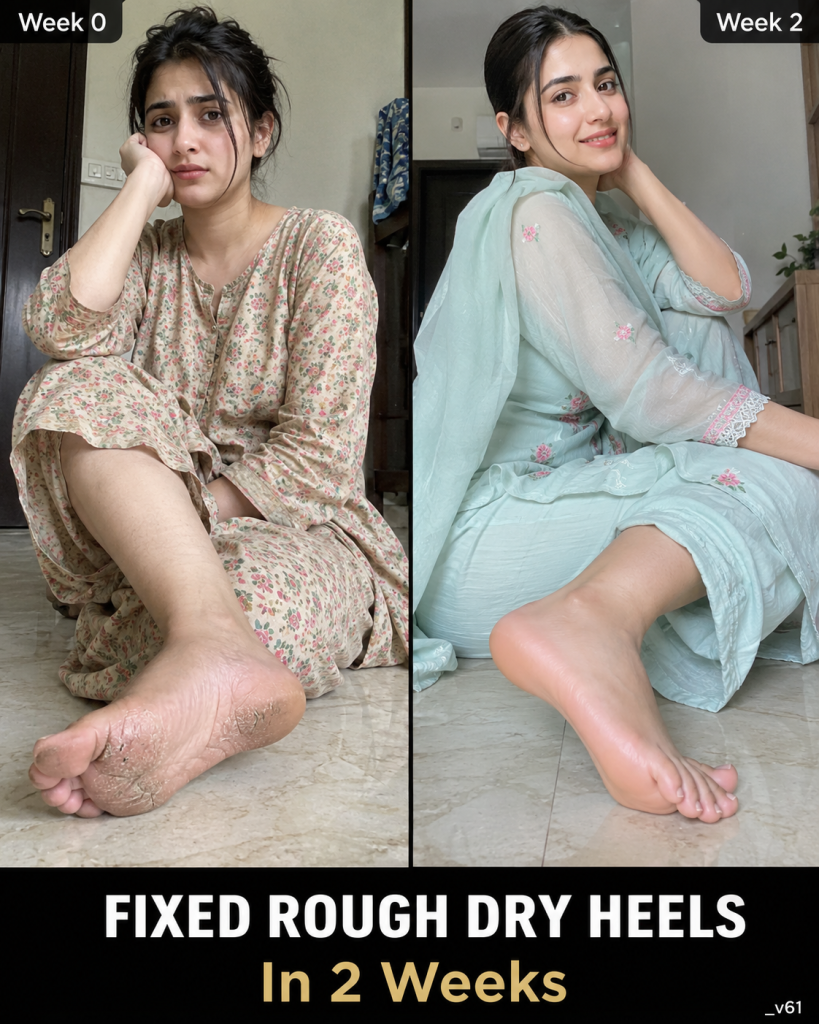
Dry cracked heels happen due to dead skin buildup, dehydration, friction, and lack of moisture. These natural remedies help soften rough skin, repair cracks, and improve heel texture naturally. The ingredients below are commonly used in traditional skincare and are supported by scientific studies for hydration and skin repair.
Remedy 1: Coconut Oil and Aloe Vera Overnight Heel Mask
Ingredients
- 2 tablespoons aloe vera gel — repairs damaged skin
- 1 tablespoon virgin coconut oil — locks moisture
- 1 teaspoon honey — hydrates rough heels
- 1 vitamin E capsule — supports skin healing
- 5 drops lavender oil — calms irritation
- Cotton socks
Scientific Working of Ingredients
Aloe vera contains polysaccharides that improve hydration and support skin healing. Coconut oil reduces water loss from cracked skin because of its fatty acids. Honey acts as a natural humectant and attracts moisture into dry heels. Vitamin E strengthens the skin barrier and helps rough skin recover faster. Lavender oil soothes irritation and dryness.
Procedure
- Wash feet with warm water.
- Dry heels completely.
- Mix all ingredients well.
- Apply thick layer on heels.
- Massage gently for 5 minutes.
- Wear cotton socks overnight.
- Wash feet next morning.
How Often to Apply
Use daily for 7–14 days.
Initial Results
Heels feel softer after 2 nights.
Dry flakes reduce within 4 days.
Visible cracks improve within 2 weeks.
Remedy 2: Rice Flour and Yogurt Heel Scrub
Ingredients
- 2 tablespoons rice flour — removes dead skin
- 2 tablespoons yogurt — gently exfoliates
- 1 teaspoon honey — improves hydration
- 1 teaspoon olive oil — nourishes dry skin
- 1 tablespoon mashed banana — softens rough texture
- 5 drops lemon juice — loosens hardened skin
Scientific Working of Ingredients
Rice flour physically exfoliates dead skin layers from rough heels. Yogurt contains lactic acid which helps dissolve thick skin gently. Honey maintains hydration and prevents excessive dryness. Olive oil improves softness and elasticity. Banana contains potassium and silica that help smooth damaged skin. Lemon juice provides mild natural acids that loosen hardened buildup.
Procedure
- Soak feet in warm water.
- Mix ingredients into paste.
- Apply on cracked heels.
- Scrub gently for 4 minutes.
- Leave for 15 minutes.
- Rinse using lukewarm water.
- Apply moisturizer afterward.
How Often to Apply
Use 3 times weekly.
Initial Results
Skin feels smoother immediately.
Dead skin reduces after few uses.
Heel texture improves within 1 week.
Remedy 3: Shea Butter and Beeswax Heel Repair Balm
Ingredients
- 2 tablespoons shea butter — deeply moisturizes
- 1 teaspoon beeswax — protects skin barrier
- 1 tablespoon almond oil — softens thick skin
- 1 teaspoon coconut oil — repairs dryness
- 1 teaspoon honey — hydrates cracked areas
- 1 vitamin E capsule — supports healing
Scientific Working of Ingredients
Shea butter contains fatty acids and vitamins that deeply nourish damaged heels. Beeswax creates a protective layer that prevents moisture loss. Almond oil softens rough skin and improves flexibility. Coconut oil helps repair cracked skin naturally. Honey keeps skin hydrated. Vitamin E improves recovery and skin barrier function.
Procedure
- Melt shea butter and beeswax.
- Add remaining ingredients.
- Mix until creamy.
- Apply balm on clean heels.
- Massage for 3 minutes.
- Wear socks overnight.
How Often to Apply
Apply every night for 2 weeks.
Initial Results
Dryness improves after first use.
Cracks become less visible gradually.
Heels feel smoother within 10–14 days.
Final Tips
- Drink enough water daily.
- Avoid walking barefoot.
- Use comfortable footwear.
- Moisturize feet every night.
- Avoid harsh soaps.
- Gently exfoliate weekly.
- Keep feet clean and dry.
- Always do patch test first.
Continue remedies for at least 2 weeks. If deep cracks bleed, become painful, or show signs of infection, consult a doctor immediately.
References for the above remedy
- Aloe vera and wound healing
URL: https://www.ncbi.nlm.nih.gov/pmc/articles/PMC2763764/ - Coconut oil and skin barrier repair
URL: https://pubmed.ncbi.nlm.nih.gov/15724344/ - Honey in skin healing
URL: https://www.ncbi.nlm.nih.gov/pmc/articles/PMC3941901/ - Oatmeal and skin protection research
URL: https://pubmed.ncbi.nlm.nih.gov/17373175/ - Shea butter skin benefits
URL: https://www.ncbi.nlm.nih.gov/pmc/articles/PMC4852572/ - Olive oil and moisturization
URL: https://pubmed.ncbi.nlm.nih.gov/19167997/ - Vitamin E and skin barrier function
URL: https://pubmed.ncbi.nlm.nih.gov/7633944/ - Lactic acid exfoliation benefits
URL: https://pubmed.ncbi.nlm.nih.gov/20646128/