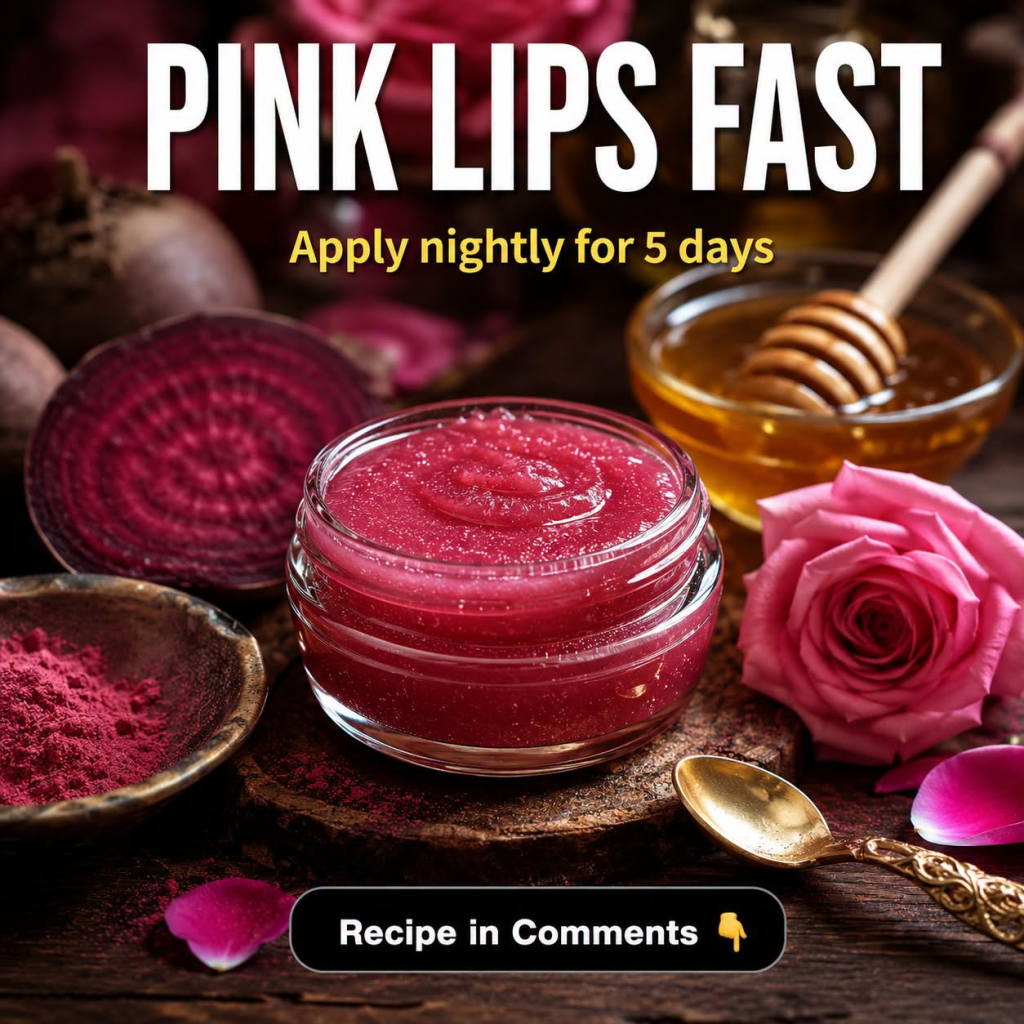
Dark, dry, cracked, or uneven-looking lips can affect the whole face because the lips are naturally a central feature of expression and confidence. The “pink lips fast” idea in the image is popular, but it is important to understand the truth: no home remedy can permanently change natural lip color in only 5 days. However, the right natural ingredients can remove dull dead skin, improve hydration, calm irritation, reduce dryness-related darkness, and give the lips a healthier rosy appearance. These remedies use gentle ingredients such as beetroot, honey, aloe vera, rose water, yogurt, oats, glycerin, and licorice. Beetroot gives a temporary natural tint, honey and glycerin attract moisture, aloe vera soothes, yogurt gently smooths, and licorice may help reduce excess pigmentation over time. Use the remedies at night because lips repair better when they stay protected and moisturized for several hours.
Remedy 1: For Normal Skin
Ingredients
Beetroot juice: 1 teaspoon
Gives a temporary natural pink tint because beetroot contains betalain pigments.
Raw honey: ½ teaspoon
Acts as a humectant and keeps lips soft.
Aloe vera gel: ½ teaspoon
Soothes the lip surface and supports hydration.
Rose water: ½ teaspoon
Adds a cooling feel and helps reduce mild dryness discomfort.
Sweet almond oil: 3 drops
Softens the lip barrier and gives a smooth finish.
Finely ground oat powder: ¼ teaspoon
Provides very gentle polishing without harsh scrubbing.
Scientific Working of Each Ingredient
Beetroot works mainly as a natural stain, so it can make the lips look pink quickly but temporarily. Honey holds water on the lip surface, which reduces the dry, dark, rough appearance. Aloe vera contains water-rich polysaccharides that help moisturize and calm the skin. Rose water gives a soothing effect, while almond oil helps seal softness. Oat powder gently removes loose dead cells, allowing the natural lip color to look clearer.
Procedure
Mix beetroot juice, honey, aloe vera, rose water, almond oil, and oat powder into a soft paste. Apply a thin layer on clean lips at night. Massage very gently for 20–30 seconds, then leave it for 10 minutes. Wipe with a damp cotton pad and apply one drop of almond oil before sleeping.
How Often to Apply
Apply nightly for 5 days. After that, use 2–3 times weekly.
Initial Results
Within 1–3 days, lips may look fresher, smoother, and lightly pink because dryness and dull surface cells reduce. The pink tint from beetroot is temporary and needs repeated use.
Remedy 2: For Combination Skin
Ingredients
Beetroot juice: 1 teaspoon
Adds a natural rosy tint.
Plain yogurt: ½ teaspoon
Contains lactic acid, which gently smooths dead surface cells.
Honey: ½ teaspoon
Softens dry areas of the lips.
Aloe vera gel: ½ teaspoon
Balances hydration without making lips greasy.
Rose water: ½ teaspoon
Keeps the remedy light and refreshing.
Licorice powder: 1 small pinch
Supports a brighter look by helping target excess pigmentation over time.
Scientific Working of Each Ingredient
Combination skin often has an oily face but dry lips, so this remedy balances smoothing and hydration. Yogurt provides mild lactic acid action, helping dull surface cells loosen gently. Honey and aloe vera prevent over-drying. Beetroot gives a quick healthy tint, while licorice contains compounds studied for their effect on melanin-related pathways. Rose water makes the mixture less heavy and more comfortable.
Procedure
Mix yogurt and honey first until smooth. Add beetroot juice, aloe gel, rose water, and a tiny pinch of licorice powder. Apply to the lips before bed and leave for 8–10 minutes. Rinse gently with cool water. Finish with a thin layer of honey or almond oil.
How Often to Apply
Use nightly for 5 days. Continue every alternate night for another week if lips are not irritated.
Initial Results
In 1–2 days, the lips may feel softer. By day 3, the lip surface may look smoother and slightly brighter. Deeper pigmentation needs longer and sun protection.
Remedy 3: For Oily Skin
Ingredients
Beetroot juice: 1 teaspoon
Provides temporary pink color.
Aloe vera gel: 1 teaspoon
Hydrates without heaviness.
Green tea: ½ teaspoon, cooled
Adds antioxidant support.
Honey: ¼ teaspoon
Prevents dryness without making the remedy sticky.
Rice flour: ¼ teaspoon
Gently smooths rough lip texture.
Licorice powder: 1 small pinch
Helps support an even-toned appearance.
Rose water: ½ teaspoon
Keeps the mask fresh and light.
Scientific Working of Each Ingredient
People with oily skin may avoid heavy oils around the mouth, so this recipe uses aloe, green tea, and rose water instead of thick butters. Aloe hydrates lightly. Green tea is rich in polyphenols that support antioxidant protection. Rice flour gives mild physical smoothing, but it must be used gently. Beetroot gives a fast rosy stain, and licorice supports gradual brightness.
Procedure
Combine beetroot juice, aloe vera, green tea, honey, rice flour, licorice, and rose water. Mix until it becomes a thin paste. Apply to clean lips and leave for 7–8 minutes only. Before removing, wet your fingertip and massage softly for 10 seconds. Rinse and apply a tiny amount of aloe vera gel.
How Often to Apply
Apply nightly for 5 days. After that, use twice weekly.
Initial Results
Lips may look cleaner and less dull from the first or second use. A mild pink tint can appear quickly due to beetroot, while smoother texture usually improves in 2–3 days.
Remedy 4: For Dry Skin
Ingredients
Beetroot juice: ½ teaspoon
Gives a gentle rosy tint.
Honey: 1 teaspoon
Deeply softens dry lips.
Vegetable glycerin: 1 drop
Helps attract and retain moisture.
Aloe vera gel: ½ teaspoon
Soothes cracks and dryness.
Coconut oil: 3 drops
Helps support the skin barrier.
Mashed ripe avocado: ¼ teaspoon
Adds nourishing fatty texture.
Oat powder: ¼ teaspoon
Calms and gently smooths flakes.
Scientific Working of Each Ingredient
Dry lips often look darker because cracks, flakes, and dehydration create shadows. Honey and glycerin are humectants, meaning they pull moisture toward the surface. Coconut oil and avocado help reduce water loss by leaving a soft protective layer. Aloe vera calms dryness, oat powder soothes roughness, and beetroot gives a mild pink tint.
Procedure
Mash avocado very smoothly. Add honey, aloe gel, beetroot juice, glycerin, coconut oil, and oat powder. Apply a creamy layer on lips at night. Leave for 12 minutes. Wipe gently with a damp cloth. Before sleeping, seal the lips with 1–2 drops of coconut oil.
How Often to Apply
Use nightly for 5 days. If lips are very dry, continue for 10–14 days, but stop if burning or itching appears.
Initial Results
After the first night, lips may feel more comfortable. In 2–3 days, flakes may reduce and the lips may look softer, plumper, and naturally brighter.
Remedy 5: For Sensitive Skin
Ingredients
Aloe vera gel: 1 teaspoon
Soothes and cools sensitive lips.
Honey: ½ teaspoon
Softens without harsh exfoliation.
Colloidal oatmeal or very fine oat powder: ¼ teaspoon
Supports the delicate lip barrier.
Rose water: ½ teaspoon
Gives mild freshness if tolerated.
Vegetable glycerin: 1 drop
Helps prevent dryness.
Beetroot juice: 3–4 drops only
Adds very light tint with less irritation risk.
Scientific Working of Each Ingredient
Sensitive lips need calming first, not strong scrubbing. Aloe vera and oatmeal are the main comfort ingredients because they help reduce dryness and irritation. Honey and glycerin support moisture. Rose water should be used only if it does not sting. Beetroot is used in a very small amount because even natural pigments can irritate reactive lips.
Procedure
Mix aloe vera, honey, oatmeal, rose water, glycerin, and a few drops of beetroot juice. Apply a thin layer for only 5–7 minutes. Do not scrub. Remove with cool water and apply plain aloe vera gel or a fragrance-free lip balm.
How Often to Apply
Apply every other night for 5 days. Sensitive lips should not be treated aggressively.
Initial Results
Within 1–3 days, lips may feel calmer and less dry. A soft pink look may appear once irritation and roughness reduce.
Final Tips
Always do a patch test before applying any new ingredient to the lips. Do not use lemon juice, baking soda, toothpaste, cinnamon, or strong scrubs on lips because they can burn, irritate, and worsen darkness. Avoid licking or biting your lips, as saliva dries the lip barrier. During the day, use a non-irritating lip balm with SPF 30 or higher because sunlight can darken and damage lips. Keep your water intake steady, clean your lip brush or applicator, remove lipstick before sleeping, and avoid fragrance-heavy lip products. Visible softness and freshness may begin within 2–3 days, but real improvement in dryness-related darkness usually needs 2–4 weeks of consistent care.
Diet Plan for Pink, Healthy-Looking Lips
Continue the home remedy for 5 nights first. If your lips improve, maintain the routine 2–3 times weekly for 3–4 weeks. Along with this, follow a simple diet plan because pale, cracked, or dark-looking lips can sometimes be linked with dehydration, low nutrition, sun exposure, smoking, or irritation.
Morning: Drink 1–2 glasses of water. Eat oats, yogurt, eggs, lentils, or nuts for protein and minerals.
Midday: Add vitamin C foods such as orange, guava, lemon water, strawberries, amla, or bell pepper. Vitamin C supports collagen formation and skin repair.
Lunch: Eat leafy greens, carrots, beetroot, beans, chicken, fish, or lentils. These foods support iron, protein, and antioxidants.
Evening: Drink green tea or water and eat fruit instead of sugary snacks.
Dinner: Keep meals balanced with vegetables, protein, and healthy fats from seeds, nuts, avocado, or olive oil.
Avoid smoking, excess tea or coffee, very spicy foods if they irritate your lips, and frequent matte lipstick use. If lip darkness, cracking, bleeding, swelling, burning, or sores persist after 2 weeks of care, see a doctor or dermatologist.
References for the above remedy
- American Academy of Dermatology Association. “7 dermatologists’ tips for healing dry, chapped lips.” This supports lip hydration, avoiding irritants, and SPF 30 lip protection. URL: https://www.aad.org/public/everyday-care/skin-care-basics/dry/heal-dry-chapped-lips
- Dal’Belo SE, Gaspar LR, Maia Campos PMBG. “Moisturizing effect of cosmetic formulations containing Aloe vera extract.” PubMed. This supports aloe vera’s hydration role. URL: https://pubmed.ncbi.nlm.nih.gov/17026654/
- Tashkandi H. “Honey in wound healing: An updated review.” PMC. This supports honey’s soothing, anti-inflammatory, and skin-supportive properties. URL: https://pmc.ncbi.nlm.nih.gov/articles/PMC8496555/
- Smith WP. “Epidermal and dermal effects of topical lactic acid.” PubMed. This supports the gentle smoothing effect of lactic acid used through yogurt. URL: https://pubmed.ncbi.nlm.nih.gov/8784274/
- Yokota T, Nishio H, Kubota Y, Mizoguchi M. “The inhibitory effect of glabridin from licorice extracts on melanogenesis and inflammation.” PubMed. This supports licorice’s pigmentation-related benefit. URL: https://pubmed.ncbi.nlm.nih.gov/9870547/
- Fluhr JW et al. “Glycerol and the skin: holistic approach to its origin and functions.” PubMed. This supports glycerin’s role in skin hydration. URL: https://pubmed.ncbi.nlm.nih.gov/18510666/
- Evangelista MTP, Abad-Casintahan F, Lopez-Villafuerte L. “The effect of topical virgin coconut oil on transepidermal water loss and skin capacitance.” PubMed. This supports coconut oil’s moisturizing and barrier-supportive role. URL: https://pubmed.ncbi.nlm.nih.gov/24320105/
- Lee M et al. “Skin anti-inflammatory activity of rose petal extract.” PMC. This supports the soothing potential of rose-derived ingredients. URL: https://pmc.ncbi.nlm.nih.gov/articles/PMC6261181/
- Sadowska-Bartosz I, Bartosz G. “Biological Properties and Applications of Betalains.” PMC. This supports antioxidant properties of beetroot betalain pigments. URL: https://pmc.ncbi.nlm.nih.gov/articles/PMC8123435/
- Pullar JM, Carr AC, Vissers MCM. “The Roles of Vitamin C in Skin Health.” PMC. This supports the diet plan’s focus on vitamin C for skin support. URL: https://pmc.ncbi.nlm.nih.gov/articles/PMC5579659/