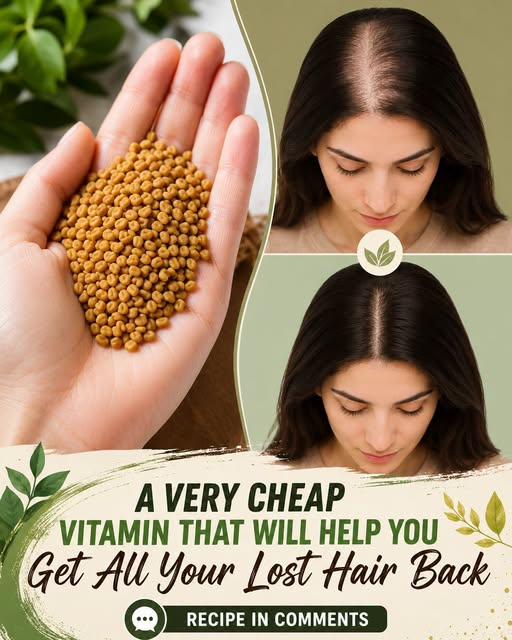
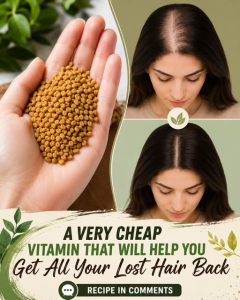
Hair thinning can make the parting look wider, reduce hair volume, and affect confidence. The image shows mustard seeds and refers to a “cheap vitamin,” which is commonly understood to mean biotin, or vitamin B7. Biotin supports normal metabolism and healthy hair formation, and a true deficiency may cause thinning or hair loss. However, biotin deficiency is uncommon in people who eat a varied diet, and research does not show that high-dose biotin can restore all lost hair in otherwise healthy people. (Office of Dietary Supplements)
Mustard seeds contain natural oils and plant compounds, but mustard is not itself a vitamin. Mustard oil may soften dry hair and reduce friction, yet it has not been clinically proven to regrow bald areas. Hair loss caused by genetics, thyroid disease, iron deficiency, hormonal changes, autoimmune disease, illness, or scarring needs treatment directed at the underlying cause. (American Academy of Dermatology)
The routines below are designed to improve scalp comfort, reduce dryness, protect fragile strands, and support healthier-looking hair according to scalp type. The complete homemade mixtures have not been tested as medical hair-growth treatments. Perform a patch test for 24 hours before full use.
Remedy 1: Mustard, Coconut, and Pumpkin Seed Pre-Wash Oil for Normal Scalp
Ingredients
- 2 teaspoons virgin coconut oil
- 1 teaspoon pumpkin seed oil
- ½ teaspoon cold-pressed mustard oil
- 1 teaspoon jojoba oil
- 1 teaspoon argan oil
Scientific Working of Each Ingredient
Coconut oil: Its lauric-acid-rich structure allows it to enter the hair fibre more effectively than many other oils. Research found that coconut oil reduced protein loss from both damaged and healthy hair, which may lower breakage. (PubMed)
Pumpkin seed oil: Human studies using controlled pumpkin seed oil preparations have reported improvements in some forms of pattern hair loss. However, these findings cannot guarantee that a homemade oil mixture will produce the same result. (PubMed)
Mustard oil: Mustard oil acts mainly as a rich emollient. It coats dry strands and improves softness, but direct clinical proof that it creates new hair growth is lacking.
Jojoba oil: Jojoba provides lightweight lubrication and helps spread the stronger oils evenly without making the mixture excessively heavy.
Argan oil: Argan oil coats the hair surface and may reduce damage and protein loss when used before washing. (PubMed)
Procedure
Mix all oils in a clean bowl. Apply a small amount to the scalp and spread the remainder through the hair lengths. Massage gently with the fingertips for three to five minutes. Leave for 30 minutes, then wash with a gentle shampoo.
How Often to Apply
Apply twice during the first five days. If no irritation occurs, continue twice weekly for eight to twelve weeks.
Initial Results
Within one to three days, hair may feel softer and appear shinier. Reduced breakage may require several weeks. New hair growth should not be expected after only a few applications.
Remedy 2: Coffee, Aloe, and Oat Balancing Treatment for Combination Scalp
Ingredients
- 2 tablespoons strongly brewed, cooled coffee
- 1 tablespoon pure aloe vera gel
- 1 teaspoon finely powdered colloidal oatmeal
- 1 teaspoon plain unsweetened yogurt
- ½ teaspoon pure honey
Scientific Working of Each Ingredient
Coffee: Caffeine has shown potential in studies of standardized topical hair preparations. Homemade coffee does not have a controlled caffeine concentration, so it should be considered a supportive scalp ingredient rather than a proven treatment. (PubMed)
Aloe vera: Aloe provides lightweight moisture and may help reduce the tight feeling that sometimes develops after scalp washing.
Colloidal oatmeal: Oats support the skin barrier and can calm mild dryness or irritation.
Plain yogurt: Yogurt gives the mixture a soft, conditioning texture and may help dry hair lengths feel smoother.
Honey: Honey acts as a humectant, helping the mixture retain moisture.
Procedure
Combine all ingredients until smooth. Apply a thin layer mainly to the scalp and dry areas near the hairline. Do not rub coffee grounds into the skin. Leave for ten minutes, rinse thoroughly, and shampoo if needed.
How Often to Apply
Use on days one, three, and five. Continue once or twice weekly if the scalp remains comfortable.
Initial Results
The scalp may feel fresher after one or two applications, while dry areas may feel less tight. This treatment will not permanently reverse hereditary hair loss.
Remedy 3: Lightweight Green Tea and Rice-Water Gel for Oily Scalp
Ingredients
- 2 tablespoons cooled green tea
- 1 tablespoon fresh rice water
- 1 tablespoon pure aloe vera gel
- 1 teaspoon very finely ground oats
- ¼ teaspoon honey
Scientific Working of Each Ingredient
Green tea: Green tea contains antioxidant polyphenols that may help calm the appearance of an oily or stressed scalp.
Rice water: Rice starch creates a light coating that may make the hair feel smoother. Evidence for homemade rice water as a hair-growth treatment remains limited.
Aloe vera: Aloe supplies hydration without adding a heavy oil layer.
Finely ground oats: Oats help support scalp comfort and should be used without scrubbing.
Honey: A small quantity helps reduce excessive dryness after rinsing.
This oil-free remedy is intended to support scalp comfort rather than stimulate new follicles. Excess oil does not necessarily cause hair loss, and repeatedly stripping the scalp may increase irritation.
Procedure
Mix the ingredients into a thin gel. Apply a light layer to the scalp with clean fingertips. Leave for eight to ten minutes, then rinse with cool to lukewarm water. Do not allow the mixture to dry into a hard layer.
How Often to Apply
Apply every other day during a five-day trial. Continue no more than twice weekly.
Initial Results
The roots may feel lighter and less coated within one to three days. Visible regrowth requires months and depends on the cause of hair loss.
Remedy 4: Coconut, Argan, and Honey Repair Mask for Dry Scalp and Brittle Hair
Ingredients
- 1 tablespoon virgin coconut oil
- 1 teaspoon argan oil
- 1 tablespoon plain unsweetened yogurt
- 1 teaspoon pure aloe vera gel
- ½ teaspoon honey
Scientific Working of Each Ingredient
Coconut oil: Helps reduce hair protein loss and protects fragile strands during washing. (PubMed)
Argan oil: Forms a protective coating that may reduce some types of physical damage. (PubMed)
Yogurt: Gives slip to dry hair and makes the mask easier to spread.
Aloe vera: Adds water-based hydration and reduces the heavy feel of the oils.
Honey: Helps hold moisture near the hair and scalp surface.
Dry, damaged hair may appear to “stop growing” when the ends repeatedly break. Protecting the hair fibre can help more length remain visible, although it does not create new follicles.
Procedure
Mix until creamy. Apply first to dry hair lengths and ends, then place only a small amount on the scalp. Leave for 20 minutes. Rinse and shampoo gently.
How Often to Apply
Apply twice during the first five days. Continue once or twice weekly for at least six weeks.
Initial Results
Hair may feel smoother after the first use. Frizz, roughness, and tangling may improve within two or three days. Reduced breakage requires continued care.
Remedy 5: Fragrance-Free Oat Comfort Gel for Sensitive Scalp
Ingredients
- 2 tablespoons cooled oat water
- 1 tablespoon pure inner-leaf aloe vera gel
- ½ teaspoon vegetable glycerin
- ¼ teaspoon sunflower seed oil
- 1 tablespoon previously boiled and cooled water
Scientific Working of Each Ingredient
Oat water: Provides soothing oat compounds and is gentler than rough homemade scrubs.
Aloe vera: Supplies lightweight moisture but should still be patch-tested.
Vegetable glycerin: Attracts water and helps reduce dryness.
Sunflower seed oil: Provides barrier-supporting fatty acids in a very small quantity.
Cooled water: Dilutes the mixture and reduces heaviness.
Mustard oil is intentionally excluded because mustard compounds can irritate or trigger contact allergy in some people. (PubMed)
Procedure
Mix all ingredients thoroughly. Apply a thin layer without rubbing or scratching. Leave for five minutes during the first use. Rinse gently and stop immediately if burning, swelling, or worsening redness develops.
How Often to Apply
Use on days one, three, and five. Continue once weekly only if the scalp responds well.
Initial Results
Mild dryness or tightness may improve within one to three days. This comfort treatment is not intended to regrow hair from bald or scarred areas.
Final Tips for Reducing Hair Fall and Protecting Growth
Use only one remedy suited to your scalp type. Applying several oils, masks, and strong ingredients together can make irritation more likely.
Massage gently rather than pressing hard. A small study found increased hair thickness after regular standardized scalp massage, but the results were measured after 24 weeks, not after a few days. (PubMed)
Use a gentle shampoo, condition after washing, avoid very tight hairstyles, reduce frequent straightening and bleaching, and comb fragile hair carefully. Dermatologists also recommend avoiding unnecessary supplements because excessive intake of certain nutrients may worsen hair loss. (American Academy of Dermatology)
Healthy shine and softness may begin within two to three days. Reduced breakage may take several weeks. Genuine improvement in density usually requires three to six months and depends on the underlying diagnosis.
Diet Plan for Biotin and Healthy Hair
Biotin is available naturally in cooked eggs, fish, meat, nuts, seeds, and vegetables such as sweet potatoes. The adequate intake for most adults is 30 micrograms daily, and many people already obtain enough through a varied diet. (Office of Dietary Supplements)
Breakfast: Eat one or two fully cooked eggs with oats or whole-grain bread. Add fruit such as guava, orange, berries, or apple.
Mid-morning: Eat a small handful of sunflower seeds or almonds. Seeds and nuts provide biotin along with healthy fats and other nutrients.
Lunch: Choose lentils, beans, chicken, fish, or lean meat with vegetables and whole-wheat roti or brown rice.
Evening snack: Have plain yogurt, roasted chickpeas, fruit, or a small portion of nuts.
Dinner: Eat fish, eggs, beans, lentils, tofu, or chicken with vegetables. Include sweet potato once or twice weekly.
Avoid consuming large amounts of raw egg white because avidin in raw egg white can bind biotin and reduce its absorption. Cooking changes avidin so that it no longer interferes in the same way. (Office of Dietary Supplements)
How Long Should You Continue?
Follow the selected scalp remedy for six to eight weeks if no irritation develops. Continue the balanced diet as a long-term eating pattern. Take monthly photographs in the same lighting rather than expecting visible regrowth within days.
Do not begin high-dose biotin simply because hair is falling. Evidence for biotin supplementation is mainly strongest when an underlying deficiency or medical condition is present. (PubMed) High-dose biotin can also interfere with some laboratory tests and produce incorrect results, so inform your doctor and laboratory staff if you take it. (U.S. Food and Drug Administration)
See a dermatologist if hair loss is sudden, severe, patchy, painful, rapidly worsening, or accompanied by itching, scaling, pus, redness, or scarring. Also seek medical advice if shedding continues for more than two to three months or the scalp parting keeps widening.
References for the above remedy
- National Institutes of Health, Office of Dietary Supplements. Biotin: Health Professional Fact Sheet.
https://ods.od.nih.gov/factsheets/Biotin-HealthProfessional/ - Patel DP, et al. A Review of the Use of Biotin for Hair Loss.
https://pubmed.ncbi.nlm.nih.gov/28879195/ - American Academy of Dermatology. Hair Loss: Diagnosis and Treatment.
https://www.aad.org/public/diseases/hair-loss/treatment/diagnosis-treat - American Academy of Dermatology. Hair Loss: Tips for Managing.
https://www.aad.org/public/diseases/hair-loss/treatment/tips - U.S. Food and Drug Administration. Biotin Interference with Troponin Lab Tests.
https://www.fda.gov/medical-devices/in-vitro-diagnostics/biotin-interference-troponin-lab-tests-assays-subject-biotin-interference - Rele AS, Mohile RB. Effect of Mineral Oil, Sunflower Oil, and Coconut Oil on Prevention of Hair Damage.
https://pubmed.ncbi.nlm.nih.gov/12715094/ - Cho YH, et al. Effect of Pumpkin Seed Oil on Hair Growth in Men with Androgenetic Alopecia.
https://pubmed.ncbi.nlm.nih.gov/24864154/ - Ibrahim IM, et al. Pumpkin Seed Oil Versus Minoxidil for Female Pattern Hair Loss.
https://pubmed.ncbi.nlm.nih.gov/33544448/ - Sharifi N, et al. Argan Oil as a Pretreatment of Human Hair Before Oxidative Damage.
https://pubmed.ncbi.nlm.nih.gov/35226791/ - Koyama T, et al. Standardized Scalp Massage Results in Increased Hair Thickness.
https://pubmed.ncbi.nlm.nih.gov/26904154/