Loose-looking, tired, or less elastic skin can make the face appear older and may affect confidence. Skin firmness naturally changes with age because collagen, elastin, moisture, and facial fullness gradually decline. Sun exposure, dehydration, smoking, poor sleep, harsh skincare, and repeated irritation can make these changes more noticeable. Natural remedies may improve hydration, softness, surface smoothness, and the appearance of fine dehydration lines, but they cannot permanently lift sagging skin or rebuild large amounts of collagen within a few days.
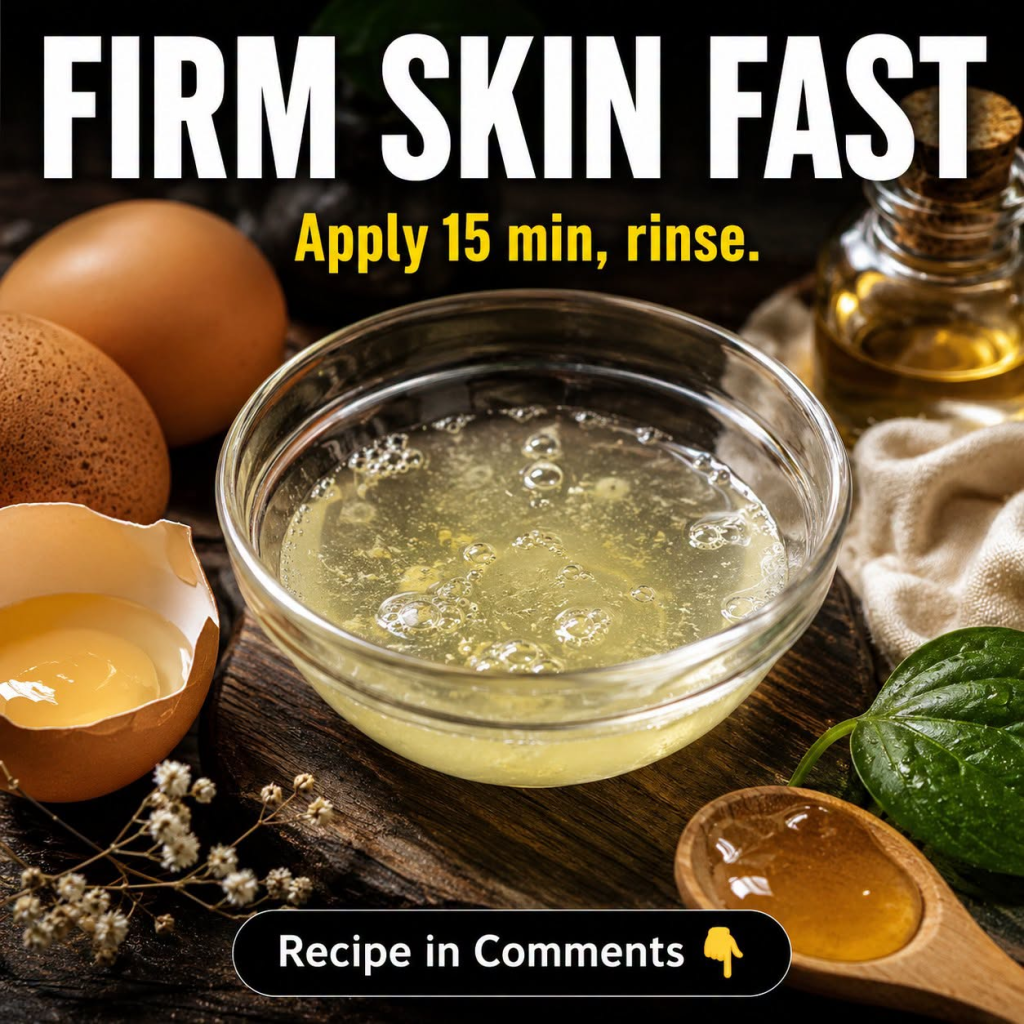
The image suggests an egg-white mask. Raw egg white dries into a temporary film and may make skin feel tight for a short time, but reliable clinical evidence that it permanently firms skin is lacking. Raw eggs can also contain harmful bacteria, and egg proteins may trigger irritation or allergy. Therefore, the remedies below use better-studied natural ingredients such as aloe vera, colloidal oatmeal, green tea, honey, argan oil, and sunflower seed oil. (CDC)
The complete homemade mixtures have not been tested as finished clinical treatments. Scientific evidence mainly supports the individual ingredients and their effects on hydration, barrier function, elasticity, or antioxidant protection. Perform a patch test for 24 hours before applying any remedy to the whole face.
Remedy 1: Aloe, Green Tea, and Argan Firming Mask for Normal Skin
Ingredients
- 1 tablespoon pure inner-leaf aloe vera gel
- 1 tablespoon cooled green tea
- 1 teaspoon pure honey
- 1 teaspoon fresh rice water
- 1 teaspoon finely powdered colloidal oatmeal
- 3 drops pure argan oil
Scientific Working of Each Ingredient
Aloe vera: Aloe acts as a natural humectant and has been shown to improve skin hydration. Better-hydrated skin often looks smoother and temporarily plumper. (PubMed)
Green tea: Green-tea polyphenols provide antioxidant activity and may help protect skin from processes involved in photoaging. (PubMed)
Honey: Honey attracts moisture and contains antioxidant and skin-conditioning compounds that may improve softness. (PubMed)
Rice water: Rice-derived compounds have moisturizing, soothing, and barrier-supporting potential. (PubMed)
Colloidal oatmeal: Oat compounds support the skin barrier and help improve dryness, roughness, and hydration. (PubMed)
Argan oil: Regular topical argan-oil use has been associated with improved skin-elasticity measurements in a clinical study. (PubMed)
Procedure
Mix all ingredients until a smooth gel forms. Apply a thin layer to a clean, slightly damp face. Massage very gently upward for one minute without pulling the skin. Leave for 12–15 minutes, then rinse with cool to lukewarm water.
How Often to Apply
Apply once daily for three days. Continue two or three times weekly if the skin remains comfortable.
Initial Results
Within one to three days, the skin may feel softer, smoother, and better hydrated. Fine dryness lines may appear less noticeable, but deeper sagging will not disappear within this period.
Remedy 2: Pomegranate and Jojoba Balancing Mask for Combination Skin
Ingredients
- 1 tablespoon fresh pomegranate juice
- 1 tablespoon pure aloe vera gel
- 1 tablespoon cooled green tea
- 1 teaspoon finely ground oats
- ½ teaspoon honey
- 2 drops jojoba oil
Scientific Working of Each Ingredient
Pomegranate: Pomegranate contains antioxidant anthocyanins and polyphenols. A clinically tested pomegranate formulation showed anti-aging potential, although homemade juice is not equivalent to the standardized cream used in research. (PubMed)
Aloe vera: Gives lightweight hydration to both oily and dry facial areas.
Green tea: Provides antioxidant support without adding a heavy oily layer.
Oats: Help calm dry cheek areas while supporting the protective skin barrier.
Honey: Helps retain moisture and prevents the mask from becoming excessively drying.
Jojoba oil: Acts as a light emollient and is best applied mainly to dry areas rather than the oily T-zone. (PubMed)
Procedure
Mix the pomegranate juice, aloe, green tea, oats, and honey. Apply a thin layer over the face. Add the jojoba oil only to dry cheek and jaw areas. Leave for ten minutes and rinse gently without scrubbing.
How Often to Apply
Use on alternate days for five days. Continue two times weekly afterward.
Initial Results
Drier areas may feel softer within one or two applications, while the face may appear fresher and more evenly hydrated. Long-term changes in elasticity require consistent care.
Remedy 3: Lightweight Green Tea and Pomegranate Gel for Oily Skin
Ingredients
- 2 tablespoons cooled green tea
- 1 tablespoon pure aloe vera gel
- 1 teaspoon fresh pomegranate juice
- 1 teaspoon fresh rice water
- 1 teaspoon colloidal oatmeal
- ¼ teaspoon vegetable glycerin
Scientific Working of Each Ingredient
Green tea: Supplies antioxidant polyphenols in a lightweight, oil-free base.
Aloe vera: Helps hydrate oily skin without creating a greasy surface.
Pomegranate juice: Provides naturally occurring antioxidant compounds, although it should not be considered equal to a clinically standardized extract.
Rice water: May support softness and improve the feel of rough skin.
Colloidal oatmeal: Helps maintain barrier comfort and reduces the risk of over-drying.
Vegetable glycerin: Glycerin is naturally present in the skin and attracts water into the outer skin layer, helping fine dehydration lines appear softer. (PubMed)
Procedure
Mix all ingredients thoroughly. Apply a very thin layer to clean skin, avoiding the eyes. Leave for eight to ten minutes and rinse before the mask dries completely.
How Often to Apply
Apply once daily for three days. Afterward, use no more than twice weekly.
Initial Results
The face may feel hydrated without heaviness, and temporary dullness may improve within one to three days. The mask will not permanently shrink pores or lift loose skin.
Remedy 4: Honey, Argan, and Sunflower Moisture Mask for Dry Skin
Ingredients
- 1 tablespoon pure aloe vera gel
- 1 teaspoon pure honey
- 1 teaspoon finely powdered colloidal oatmeal
- ¼ teaspoon vegetable glycerin
- ½ teaspoon argan oil
- ¼ teaspoon sunflower seed oil
Scientific Working of Each Ingredient
Aloe vera, honey, and glycerin: These ingredients attract and retain moisture, helping dry skin look smoother and temporarily fuller.
Colloidal oatmeal: Supports the barrier and improves roughness, scaling, and dryness. (PubMed)
Argan oil: Provides emollient fatty acids and has human evidence related to improved skin elasticity over continued use. (PubMed)
Sunflower seed oil: Contains barrier-supporting fatty acids. Research found that sunflower oil helped preserve skin-barrier integrity more effectively than olive oil in the study conditions. (PubMed)
Procedure
Blend all ingredients into a creamy mask. Apply to a clean, slightly damp face and neck. Use light upward movements for one minute. Leave for 10–12 minutes, then rinse before the oatmeal becomes completely dry.
How Often to Apply
Use once daily for three to five days. Continue three times weekly if no irritation develops.
Initial Results
Dryness and tightness may improve after the first treatment. Within two or three days, the skin may appear softer, smoother, and temporarily more plump.
Remedy 5: Minimal Oat and Aloe Barrier Mask for Sensitive Skin
Ingredients
- 2 teaspoons colloidal oatmeal
- 1 tablespoon previously boiled and cooled water
- 1 teaspoon pure inner-leaf aloe vera gel
- 1 teaspoon diluted rice water
- 2 drops sunflower seed oil
Scientific Working of Each Ingredient
Colloidal oatmeal: Oats provide soothing, moisturizing, antioxidant, and barrier-supporting effects. Clinical studies have shown improvements in skin hydration and barrier function. (PubMed)
Cooled water: Creates a simple, fragrance-free base.
Aloe vera: Adds lightweight hydration but should still be patch-tested.
Diluted rice water: Gives the mixture a soft texture and may provide mild moisturizing support.
Sunflower seed oil: Reduces friction and helps limit moisture loss.
Procedure
Mix all ingredients into a soft paste. Apply a thin layer without rubbing. Leave it on for five minutes during the first application. Rinse with cool to lukewarm water and pat dry.
How Often to Apply
Use on days one, three, and five. Continue once or twice weekly only if the skin remains calm.
Initial Results
Sensitive skin may feel less tight and more comfortable within one to three days. Stop immediately if burning, swelling, hives, intense itching, or worsening redness develops.
Final Tips for Naturally Firmer-Looking Skin
Use only one remedy suited to your skin type rather than applying several masks together. Too many ingredients can irritate the skin and make fine lines appear more visible.
Use a gentle cleanser and avoid harsh scrubs, undiluted lemon juice, baking soda, toothpaste, strong essential oils, and repeated rubbing. Keep towels, makeup brushes, pillowcases, rollers, and facial tools clean.
Apply a moisturizer after rinsing. Hydrated skin reflects light more evenly and may make fine lines appear less noticeable. Dermatologists consider moisturizer and daily sun protection the foundation of an effective anti-aging routine. (American Academy of Dermatology)
Protect the face and neck every day with broad-spectrum, water-resistant SPF 30 or higher. Ultraviolet exposure contributes to wrinkles, sagging, uneven pigmentation, and premature loss of firmness. (American Academy of Dermatology)
Visible softness and glow may begin within two to three days. Continued care may gradually reduce the appearance of fine dehydration lines, but established wrinkles and significant skin looseness usually require longer-term treatment.
Diet Plan for Healthy, Firm-Looking Skin
A balanced eating pattern supports normal collagen production by supplying protein, vitamin C, antioxidants, minerals, and essential fatty acids. Food cannot lift loose skin overnight, but healthy nutrition supports normal skin structure and repair.
Breakfast
Eat plain yogurt, eggs, oats, or another protein source. Add guava, orange, berries, kiwi, or another vitamin-C-rich fruit. Include a small portion of walnuts, almonds, chia seeds, or pumpkin seeds.
Mid-Morning
Choose one fresh fruit and drink water according to thirst. Avoid depending on sugary juices for hydration.
Lunch
Fill approximately half the plate with vegetables or salad. Add lentils, beans, fish, chicken, eggs, tofu, or another protein source. Include whole-wheat roti, brown rice, or another minimally processed carbohydrate.
Evening Snack
Choose plain yogurt, roasted chickpeas, fruit, unsweetened green tea, or a small handful of nuts.
Dinner
Eat vegetables with fish, chicken, lentils, beans, tofu, or eggs. Include tomatoes, leafy vegetables, carrots, and other colorful produce regularly. Tomato and lycopene research suggests potential protection against ultraviolet-related skin damage when included as part of the diet. (PubMed)
Continue this balanced eating pattern long term rather than using it as a three-day treatment. Avoid smoking, sleep approximately seven to nine hours, and limit repeated crash dieting because major weight changes may affect facial fullness.
How Long Should You Continue?
Use the selected home remedy for six to eight weeks if there is no irritation. During the first three to five days, focus on checking tolerance and early hydration. Do not increase the quantity or application time in an attempt to obtain faster results.
Continue daily sun protection, gentle skincare, sufficient sleep, and a balanced diet as long-term habits. Noticeable improvement in hydration may occur within days, while elasticity and wrinkle-related changes usually take several weeks or months.
Consult a dermatologist if the skin becomes persistently red, painful, swollen, severely itchy, unusually thin, or increasingly loose. Also seek professional advice for rapidly changing growths, bleeding areas, persistent rashes, or skin changes that do not improve.
References for the above remedy
- Dal’Belo SE, et al. Moisturizing Effect of Cosmetic Formulations Containing Aloe Vera Extract.
https://pubmed.ncbi.nlm.nih.gov/17026654/ - Boucetta KQ, et al. The Effect of Dietary and/or Cosmetic Argan Oil on Postmenopausal Skin Elasticity.
https://pubmed.ncbi.nlm.nih.gov/25673976/ - Ilnytska O, et al. Colloidal Oatmeal Improves Skin Barrier Through Multi-Therapy Activity.
https://pubmed.ncbi.nlm.nih.gov/27272074/ - Reynertson KA, et al. Anti-Inflammatory Activities of Colloidal Oatmeal.
https://pubmed.ncbi.nlm.nih.gov/25607907/ - Chiu AE, et al. Double-Blinded, Placebo-Controlled Trial of Green Tea in Photoaging Skin.
https://pubmed.ncbi.nlm.nih.gov/16029678/ - Burlando B, Cornara L. Honey in Dermatology and Skin Care: A Review.
https://pubmed.ncbi.nlm.nih.gov/24305429/ - Fluhr JW, et al. Glycerol and the Skin: Holistic Approach to Its Origin and Functions.
https://pubmed.ncbi.nlm.nih.gov/18510666/ - Danby SG, et al. Effect of Olive and Sunflower Seed Oil on the Adult Skin Barrier.
https://pubmed.ncbi.nlm.nih.gov/22995032/ - Abdellatif AAH, et al. Anthocyanins-Rich Pomegranate Cream as a Topical Anti-Aging Formulation.
https://pubmed.ncbi.nlm.nih.gov/32022625/ - American Academy of Dermatology. 11 Ways to Reduce Premature Skin Aging.
https://www.aad.org/public/everyday-care/skin-care-secrets/anti-aging/reduce-premature-aging-skin