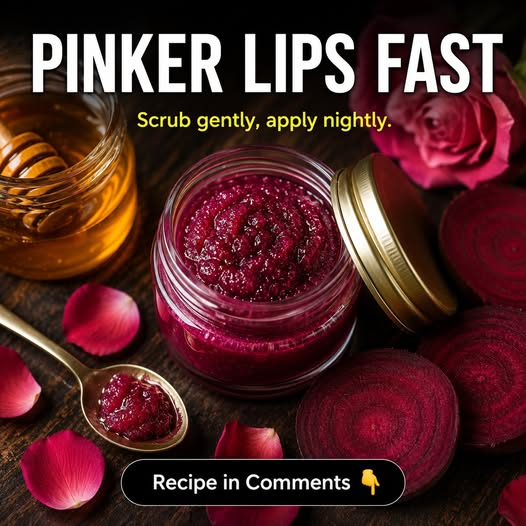
Healthy lips naturally vary from pale pink and rose to brown, mauve and deeper tones, depending on genetics and melanin. No homemade remedy can permanently change everyone’s natural lip color in a few days. However, dryness, peeling, repeated lip licking, sun exposure and irritation can make lips appear rough, dull or temporarily darker. A consistent routine that restores moisture, protects the lip barrier and prevents further irritation may reveal a smoother, healthier-looking natural tone. Beetroot can provide an immediate rosy stain because it contains red betalain pigments, but this effect is temporary and should not be confused with permanent reduction of melanin. (PMC)
The remedies below use moisturizing ingredients supported by skin-barrier research. The complete homemade mixtures have not been clinically tested as finished lip treatments, so results should remain realistic. Do not scrub the lips every day. Frequent rubbing can create irritation, and repeated inflammation may worsen uneven pigmentation. (DermNet®)
Remedy 1: Beetroot, Aloe and Honey Rosy Mask for Normal Lips
Ingredients
- Fresh beetroot juice: ½ teaspoon
Beetroot contains betanin and related betalain pigments that create a temporary red or rosy stain. - Pure aloe vera gel: 1 teaspoon
Aloe supports surface hydration through a humectant effect. - Plain honey: ½ teaspoon
Honey helps create a soft, moisture-retaining coating. - Finely ground colloidal oatmeal: ½ teaspoon
Oatmeal supports the skin barrier and reduces roughness. - Sunflower seed oil: 3 drops
Sunflower oil provides emollient fatty acids and helps reduce moisture loss.
Scientific Working of Each Ingredient
Beetroot is responsible for the immediate pink appearance because its natural pigment temporarily colors the lip surface. Research supports the antioxidant properties of beetroot betalains, but there is no strong clinical evidence that beetroot permanently lightens naturally pigmented lips. (PMC)
Aloe and honey improve moisture and softness, while oatmeal supports the protective barrier. Sunflower oil helps seal water into the outer layer and has been shown to improve hydration while preserving skin-barrier integrity. (PubMed)
Procedure
Mix the beetroot juice, aloe, honey and oatmeal into a smooth paste. Apply a thin layer to clean lips.
Leave it on for five to seven minutes. Rinse gently with cool or lukewarm water without rubbing.
While the lips are still slightly damp, apply three drops of sunflower oil and gently press the lips together.
Prepare the mixture fresh each time and discard all leftovers.
How Often to Apply
Use three evenings weekly for five to seven days. Apply plain sunflower oil on the other nights when additional moisture is needed.
Initial Results
The lips may develop a temporary rosy tint immediately after application. Softness and reduced dullness caused by dryness may become noticeable within one to three days. The beet color will gradually fade after eating, drinking and washing.
Remedy 2: Green Tea, Oat and Jojoba Routine for Combination Lip Area
Some people have dry lips but oily or acne-prone skin around the mouth. Heavy oils spread beyond the lip border and may feel uncomfortable, so this remedy uses a light hydrating treatment followed by only a small amount of oil.
Ingredients
- Strong green tea, cooled: 1 teaspoon
Provides antioxidant tea polyphenols. - Pure aloe vera gel: 1 teaspoon
Adds lightweight hydration. - Colloidal oatmeal: ½ teaspoon
Helps soothe dry, flaky areas. - Vegetable glycerin: 1 drop
Attracts water to the outer skin surface. - Jojoba oil: 2 drops
Provides lightweight emollience. - Fresh beetroot juice: 2 drops
Adds a mild temporary rosy tint.
Scientific Working of Each Ingredient
The aloe, glycerin and oatmeal improve hydration and reduce the rough appearance created by dryness. Colloidal oatmeal has demonstrated moisturizing, anti-inflammatory and barrier-supporting properties in clinical research. (PubMed)
Jojoba acts as a lightweight emollient, while green tea supplies antioxidant compounds. The small quantity of beetroot provides color only; it should not be described as a permanent lip-lightening treatment.
Procedure
Mix the cooled green tea, aloe, oatmeal, glycerin and beetroot juice.
Apply only within the natural lip border. Leave for five minutes and rinse completely.
Press one drop of jojoba oil onto the upper lip and one drop onto the lower lip. Avoid spreading the oil onto acne-prone skin around the mouth.
How Often to Apply
Use every other evening for one week.
Initial Results
The lips may feel less tight after one or two applications. The temporary tint may appear subtle, while smoother texture may make the natural lip color look clearer within two or three days.
Remedy 3: Aloe and Sunflower Lightweight Treatment for Oily or Acne-Prone Skin
Ingredients
- Pure aloe vera gel: 1 teaspoon
Provides light, water-based hydration. - Boiled and cooled water: ½ teaspoon
Makes the treatment thinner and easier to rinse. - Colloidal oatmeal: ¼ teaspoon
Supports the barrier without heavy oil. - Vegetable glycerin: 1 drop
Helps retain moisture. - Sunflower seed oil: 2 drops
Creates a light protective layer. - Fresh beetroot juice: 1 drop, optional
Provides a very mild temporary tint.
Scientific Working of Each Ingredient
Oily facial skin does not mean that the lips cannot become dehydrated. Aloe and glycerin increase surface moisture without creating a heavy coating, while oatmeal helps calm irritation. Sunflower seed oil is used in a very small amount because it supports hydration and barrier integrity without requiring a thick oily layer. (PubMed)
The optional beetroot drop changes appearance temporarily but does not treat acne, pigmentation or the underlying cause of dark lips.
Procedure
Mix aloe, water, oatmeal, glycerin and the optional beetroot drop.
Apply a thin layer for three to five minutes. Rinse gently and pat dry.
Apply two drops of sunflower oil only to the lips. Keep the mixture away from active pimples around the mouth.
How Often to Apply
Use three times weekly for at least five days.
Initial Results
The lips may feel more comfortable after the first few uses. Flaking and roughness may begin improving within one to three days.
Remedy 4: Coconut, Beeswax and Sunflower Night Balm for Very Dry Lips
Ingredients
- Virgin coconut oil: 1 teaspoon
Acts as an emollient and has clinical evidence supporting its moisturizing effect on dry skin. - Sunflower seed oil: 1 teaspoon
Provides barrier-supporting fatty acids. - Pure cosmetic-grade beeswax: ½ teaspoon
Creates a protective surface layer that slows moisture loss. - Shea butter: ½ teaspoon
Softens rough lips and improves the texture of the balm. - Finely ground oatmeal: ¼ teaspoon
Adds soothing, barrier-supporting compounds.
Scientific Working of Each Ingredient
Coconut oil improved hydration in a randomized study of dry skin and performed similarly to mineral oil as a moisturizer. Sunflower oil supports barrier integrity, while beeswax creates a protective film that helps reduce water evaporation. (PubMed)
Oatmeal supports the moisture barrier and may reduce roughness. This balm can make dry lips look smoother and healthier, but it does not permanently remove natural melanin.
Procedure
Place coconut oil, sunflower oil, beeswax and shea butter in a small heat-safe bowl.
Warm gently using a double-boiler method until melted. Remove from the heat and stir in the finely ground oatmeal.
Pour into a clean, dry container and allow it to cool completely. Because the mixture contains no water, it is more stable than fresh aloe or fruit masks, but always use clean hands or a clean applicator.
Apply a very thin layer before sleeping.
How Often to Apply
Apply nightly for seven to fourteen days. Reapply during the day whenever the lips feel dry.
Initial Results
The lips may feel softer by the next morning. Peeling and dehydration lines may become less visible within two or three days.
Remedy 5: Minimal Oat and Sunflower Care for Sensitive Lips
Ingredients
- Colloidal oatmeal: ½ teaspoon
Supports sensitive, dry skin. - Boiled and cooled water: 1 teaspoon
Creates a mild, fresh paste. - Pure aloe vera gel: ½ teaspoon
Provides lightweight moisture after a successful patch test. - Sunflower seed oil: 3 drops
Helps reduce moisture loss. - Coconut oil: 2 drops
Adds softness and a light protective layer.
Scientific Working of Each Ingredient
Sensitive lips usually respond better to a short, fragrance-free routine. Oatmeal supports barrier repair and has demonstrated moisturizing and anti-inflammatory properties. Aloe supplies hydration, while sunflower and coconut oils help reduce dryness. (PubMed)
Even natural ingredients can cause irritation. Patch testing is important, especially when the lips frequently burn, swell or develop rashes.
Procedure
Patch-test the ingredients on a small area near the jaw for 24–48 hours.
Mix oatmeal, water and aloe. Apply the fresh paste to the lips for only three minutes.
Rinse gently. Mix the sunflower and coconut oils in the palm and press a very thin layer onto the lips.
Stop immediately if burning, swelling, itching or increased redness occurs.
How Often to Apply
Use twice weekly for five days. Apply only the tolerated oil blend between treatments.
Initial Results
Mild tightness may improve after one or two uses. Sensitive lips should be treated slowly rather than trying to create rapid color changes.
Final Tips for Naturally Healthy-Looking Pink Lips
Avoid licking, biting or peeling the lips. Saliva evaporates quickly and can make dryness worse. Dermatologists recommend using a non-irritating lip moisturizer and stopping products that cause burning, tingling or stinging. (American Academy of Dermatology)
Use a broad-spectrum lip balm with SPF 30 or higher during the day. Sun exposure can worsen dryness and contribute to uneven lip color. Reapply approximately every two hours while outdoors and after eating or drinking. (American Academy of Dermatology)
Do not use lemon juice, undiluted vinegar, baking soda, toothpaste, cinnamon oil or strong essential oils on the lips. These ingredients may cause burning, contact irritation and additional discoloration.
Avoid scrubbing with dry sugar, salt or a toothbrush. When loose flakes are present, soften the lips with balm first and remove only detached skin using a soft, damp cloth without pressure.
Keep lip containers, spoons and applicators clean. Discard fresh mixtures containing beetroot, aloe, tea, honey or water immediately after use because homemade mixtures do not contain a tested preservative system.
A temporary beetroot tint can appear within minutes. Improvements in softness and surface glow may begin within two or three days. Naturally dark lip pigment generally will not become permanently pink after a few applications.
Diet Plan for Healthy Lips
Diet cannot guarantee pink lips, but balanced nutrition supports normal skin renewal and general health.
Breakfast
Eat eggs, oats, plain yogurt or another protein-rich breakfast.
Add guava, orange, berries or another vitamin-C-rich fruit.
Drink one glass of water.
Mid-Morning
Choose cucumber, watermelon, seasonal fruit or a small handful of nuts.
Lunch
Include vegetables, whole grains and protein from lentils, beans, chicken, fish, eggs or lean meat.
Add leafy vegetables and a vitamin-C-rich food to support dietary iron absorption.
Evening Snack
Choose fruit, plain yogurt, nuts or roasted chickpeas instead of frequently eating highly salted snacks.
Dinner
Eat vegetables with a protein source such as fish, chicken, eggs, beans or lentils.
Include healthy fats from nuts, seeds or suitable plant oils.
Drink according to thirst, especially during hot weather or physical activity. Adequate fluids support general hydration, but drinking excessive water will not directly remove lip pigmentation.
Do not start iron, vitamin B12 or other high-dose supplements simply to change lip color. Supplements should be based on medical advice and confirmed need.
How Long Should You Continue?
Use the remedy suited to your lip condition for one to two weeks. Continue daily sun protection and regular moisturizing as long-term habits.
See a doctor or dermatologist when the lips remain painfully cracked, swollen, bleeding or persistently inflamed. Medical assessment is also important for repeated burning, sores that do not heal, unexplained color changes or a new dark area that grows, develops an uneven border, contains several colors or bleeds. A changing dark area on the lip should not automatically be treated as ordinary pigmentation. (American Academy of Dermatology)
References for the above remedy
- American Academy of Dermatology. “7 Dermatologists’ Tips for Healing Dry, Chapped Lips.”
https://www.aad.org/public/everyday-care/skin-care-basics/dry/heal-dry-chapped-lips - American Academy of Dermatology. “How to Apply Sunscreen.”
https://www.aad.org/public/everyday-care/sun-protection/shade-clothing-sunscreen/how-to-apply-sunscreen - Dal’Belo SE, et al. “Moisturizing Effect of Cosmetic Formulations Containing Aloe Vera Extract.”
https://pubmed.ncbi.nlm.nih.gov/17026654/ - Danby SG, et al. “Effect of Olive and Sunflower Seed Oil on the Adult Skin Barrier.”
https://pubmed.ncbi.nlm.nih.gov/22995032/ - Agero ALC, Verallo-Rowell VM. “A Randomized Double-Blind Controlled Trial Comparing Extra Virgin Coconut Oil with Mineral Oil as a Moisturizer for Xerosis.”
https://pubmed.ncbi.nlm.nih.gov/15724344/ - Ilnytska O, et al. “Colloidal Oatmeal Improves Skin Barrier Through Multi-Therapy Activity.”
https://pubmed.ncbi.nlm.nih.gov/27272074/ - Nong Y, et al. “A Review of the Use of Beeswax in Skincare.”
https://pubmed.ncbi.nlm.nih.gov/36999457/ - Hadipour E, et al. “Biological Effects of Red Beetroot and Betalains: A Review.”
https://pubmed.ncbi.nlm.nih.gov/32171042/ - Martinez RM, et al. “Betalains: A Narrative Review on Pharmacological Mechanisms and Biological Effects.”
https://pmc.ncbi.nlm.nih.gov/articles/PMC11640225/ - American Academy of Dermatology. “Finding Skin Cancer in People with Darker Skin Tones.”
https://www.aad.org/public/diseases/skin-cancer/find/skin-of-color