Fine lines and wrinkles are a normal part of aging, but dryness, repeated sun exposure, smoking, stress and damage to the skin barrier can make them appear deeper and more noticeable. Facial oils and upward massage may temporarily improve softness, circulation and surface glow, but no homemade remedy can make skin permanently “wrinkle-free.” Daily sunscreen and consistent moisturization remain the most important foundations of an anti-aging routine. (American Academy of Dermatology)
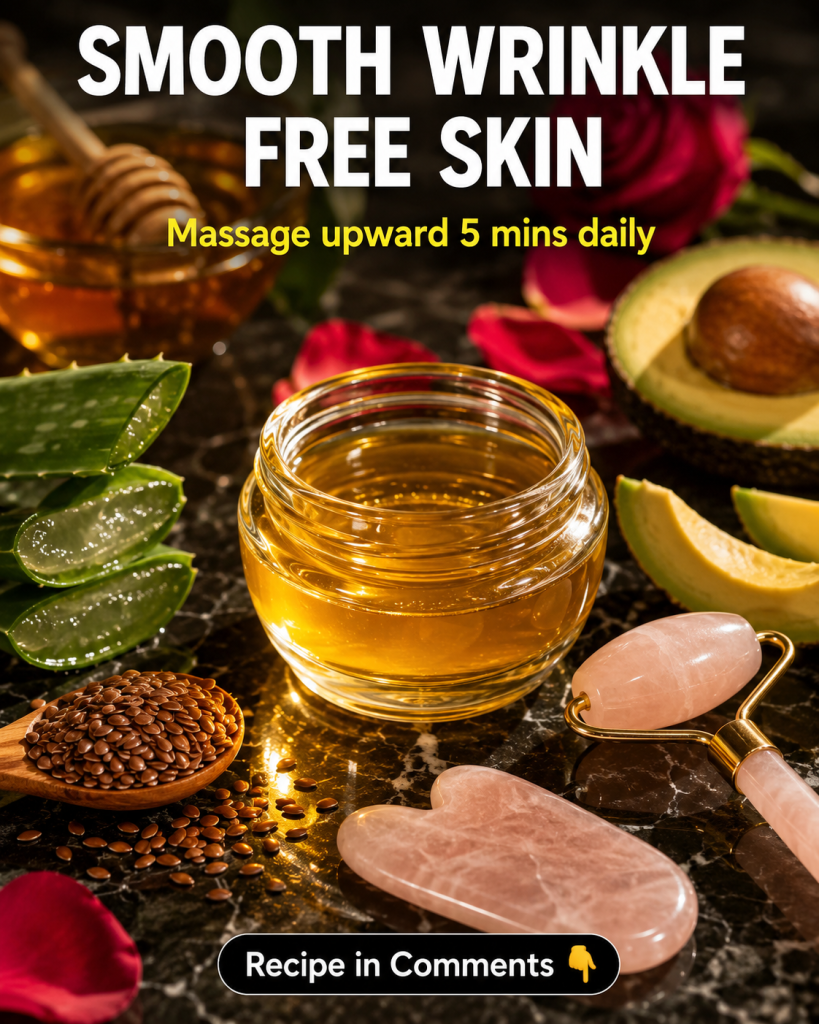
The image suggests massaging upward for five minutes. Gentle massage can help distribute moisturizer and may temporarily reduce puffiness or improve facial appearance. A small eight-week study found improvements in some measurements of facial contour and elasticity with facial rollers and gua sha, but massage alone has not been proven to erase established wrinkles. (PubMed)
The remedies below use natural or naturally derived ingredients with research supporting hydration, barrier repair or improvement in signs of photoaging. The complete homemade mixtures have not been clinically tested as finished formulas. Prepare fresh water-based mixtures for one application only, patch-test first and choose just one routine according to your skin type.
Remedy 1: For Normal Skin
Bakuchiol, Aloe and Green Tea Renewal Routine
Ingredients
- Fragrance-free 0.5% bakuchiol formula: ¼ teaspoon
Bakuchiol is a plant-derived ingredient studied for wrinkles and uneven pigmentation. - Pure aloe vera gel: 1 teaspoon
Helps increase moisture in the outer layer of the skin. - Strong green tea, completely cooled: 1 teaspoon
Contains antioxidant polyphenols that help protect the skin from oxidative stress. - Vegetable glycerin: 2 drops
Attracts water and supports a softer, smoother skin surface. - Finely powdered colloidal oatmeal: ½ teaspoon
Supports the protective skin barrier and reduces dryness. - Jojoba oil: 2 drops
Acts as a light emollient and reduces roughness.
How These Ingredients Work Scientifically
Bakuchiol has some of the strongest direct evidence among plant-derived anti-aging ingredients. In a randomized double-blind study, 0.5% bakuchiol and retinol both improved wrinkle surface area and pigmentation after twelve weeks, while bakuchiol produced less scaling and stinging. (PubMed)
Aloe and glycerin increase hydration, helping fine dehydration lines look softer. Oatmeal supports the barrier, while green tea provides antioxidant compounds. Jojoba oil seals in moisture but does not directly rebuild collagen.
Procedure
Mix aloe, cooled green tea, glycerin and oatmeal. Apply a thin layer for eight minutes and rinse gently.
Pat the skin until slightly damp. Apply the measured 0.5% bakuchiol formula according to its directions, then press two drops of jojoba oil over dry areas.
Massage gently upward and outward for one minute. Avoid pulling or stretching the skin.
How Often to Apply
Use every other night during the first five days. Increase to once nightly only when there is no burning, peeling or persistent redness. Continue for eight to twelve weeks.
Initial Results
Skin may feel softer and appear more hydrated within one to three days. Visible wrinkle improvement requires several weeks and cannot be expected after one application.
Remedy 2: For Combination Skin
Soy, Oat and Green Tea Balancing Treatment
Ingredients
- Stabilized cosmetic-grade soy extract gel: 1 teaspoon
Soy-derived compounds have been studied for uneven tone, texture and signs of photoaging. - Pure aloe vera gel: 1 teaspoon
Provides lightweight hydration. - Cooled green tea: 1 teaspoon
Supplies antioxidant plant compounds. - Colloidal oatmeal: ½ teaspoon
Supports dry cheeks and reduces barrier irritation. - Vegetable glycerin: 1 drop
Helps retain moisture without creating a heavy oily layer. - Jojoba oil: 2 drops
Softens dry areas while keeping the treatment lightweight.
How These Ingredients Work Scientifically
Clinical research on stabilized soy preparations found gradual improvements in skin tone, texture and signs associated with photoaging. Improvements developed over several weeks, not overnight. Raw soy milk is less standardized, which is why a cosmetic-grade stabilized extract is preferred. (PubMed)
Aloe, oatmeal and glycerin improve hydration, while green tea provides antioxidant support. The small amount of jojoba oil is intended only for dry areas.
Procedure
Mix the soy gel, aloe, green tea, oatmeal and glycerin.
Apply a thin layer over the face for eight to ten minutes. Rinse with lukewarm water.
Apply one drop of jojoba oil to each dry cheek. Avoid adding oil to an oily forehead, nose or acne-prone area.
How Often to Apply
Use on alternate evenings for at least five days. Continue three or four evenings weekly for eight to twelve weeks.
Initial Results
Dry areas may feel smoother within one or two applications. Skin may look fresher after two or three days because of improved moisture, while fine-line changes take longer.
Remedy 3: For Oily Skin
Lightweight Aloe, Green Tea and Bakuchiol Gel Routine
Ingredients
- Pure aloe vera gel: 1 tablespoon
Provides water-based hydration without a heavy oily coating. - Cooled green tea: 2 teaspoons
Supplies antioxidant polyphenols. - Colloidal oatmeal: ½ teaspoon
Helps reduce irritation caused by excessive cleansing. - Vegetable glycerin: 1 drop
Supports hydration when used in a very small quantity. - Boiled and cooled water: 1 teaspoon
Creates a light, easily rinsed texture. - Fragrance-free 0.5% bakuchiol gel: ¼ teaspoon
Provides the evidence-supported plant-derived anti-aging step.
How These Ingredients Work Scientifically
Oily skin can still become dehydrated. When the barrier loses water, fine surface lines may become more obvious even though the skin produces oil. Aloe and glycerin increase hydration, while oatmeal supports barrier function. Aloe-containing cosmetic formulations have demonstrated measurable moisturizing effects. (PubMed)
Bakuchiol is applied separately because mixing it into a homemade mask may change its intended concentration and performance.
Procedure
Mix aloe, green tea, oatmeal, glycerin and water.
Apply a thin layer for five to seven minutes. Rinse and allow the skin to dry completely.
Apply the 0.5% bakuchiol gel according to its directions. Do not layer heavy oil over oily or acne-prone skin.
How Often to Apply
Use the hydrating mask three times during the first five days. Apply bakuchiol every other night initially and increase only when tolerated.
Initial Results
The skin may feel hydrated without excessive greasiness after one or two uses. Fine dehydration lines may look less obvious within two or three days, but structural wrinkle improvement requires consistent long-term use.
Remedy 4: For Dry Skin
Coconut, Oat and Shea Overnight Comfort Treatment
Ingredients
- Virgin coconut oil: 1 teaspoon
Reduces moisture loss and has clinical evidence as a moisturizer for dry skin. - Shea butter: ½ teaspoon
Creates a rich protective layer over rough, dry areas. - Sunflower seed oil: 1 teaspoon
Supports the skin barrier and improves hydration. - Pure aloe vera gel: 2 teaspoons
Provides the water-based hydration dry skin needs. - Colloidal oatmeal: 1 teaspoon
Helps improve dryness and barrier condition. - Vegetable glycerin: ⅛ teaspoon
Attracts water into the outer skin layer.
How These Ingredients Work Scientifically
Dry skin can make wrinkles look deeper because a dehydrated outer layer becomes rough and reflects light unevenly. Aloe and glycerin increase moisture, while oatmeal supports barrier recovery. Coconut oil has performed effectively as a moisturizer in a randomized clinical study. (PubMed)
Sunflower seed oil has been shown to preserve skin-barrier integrity and improve hydration. (PubMed) Shea butter mainly acts as an emollient and protective layer; it should not be considered a proven wrinkle remover.
Procedure
Mix aloe, oatmeal and glycerin. Apply for ten minutes and rinse gently.
Leave the skin slightly damp. Melt the shea butter between clean fingertips and combine it with coconut and sunflower oils.
Massage a very thin layer upward and outward for two minutes. Avoid pulling around the eyes.
How Often to Apply
Use nightly for the first five to seven days. Continue three or four nights weekly after dryness improves.
Initial Results
The skin may feel softer by the following morning. Roughness and fine dehydration lines may appear reduced within one to three days.
Remedy 5: For Sensitive Skin
Minimal Oat, Aloe and Sunflower Barrier Mask
Ingredients
- Colloidal oatmeal: 1 tablespoon
Supports the skin barrier and helps calm dryness. - Boiled and cooled water: 1 tablespoon
Creates a simple fragrance-free base. - Pure aloe vera gel: ½ teaspoon
Provides gentle hydration after successful patch testing. - Vegetable glycerin: 1 drop
Helps improve moisture retention. - Sunflower seed oil: 3 drops
Reduces moisture loss and softens the skin. - Stabilized soy extract gel: ¼ teaspoon, optional
May support gradual improvement in photoaged texture but should be introduced only after patch testing.
How These Ingredients Work Scientifically
Sensitive skin often looks older when irritation damages the barrier and increases dryness. Colloidal oatmeal has demonstrated improvements in dryness, moisturization and barrier condition. (PubMed)
Glycerin supports hydration and skin mechanical properties, while sunflower oil creates a light protective layer. (PubMed) The optional soy extract should be omitted when the skin is actively irritated.
Procedure
Patch-test every ingredient for 24–48 hours.
Mix oatmeal, water, aloe and glycerin. Add the optional soy gel only when previously tolerated.
Apply for five minutes without rubbing. Rinse with cool or lukewarm water.
Press three drops of sunflower oil over slightly damp skin. Do not use a facial roller or gua sha when the skin is red, painful or inflamed.
How Often to Apply
Use every other evening during the first five days. Continue two or three times weekly when comfortable.
Initial Results
Mild tightness may improve after one or two applications. Sensitive skin should be treated gradually rather than with aggressive massage or multiple active ingredients.
Final Tips for Smoother, Younger-Looking Skin
Apply broad-spectrum, water-resistant sunscreen with SPF 30 or higher every morning. Daily sunscreen is more important for preventing premature wrinkles than facial oil or massage because ultraviolet exposure contributes to collagen damage and photoaging. A randomized trial found that regular sunscreen use slowed visible skin aging. (PubMed)
Massage only after applying a slippery moisturizer or oil. Use light pressure and move from the center of the face outward. Five minutes is not necessary for sensitive or acne-prone skin; one or two gentle minutes may be enough. Stop when massage causes redness, tenderness or broken capillaries.
Do not pull the skin aggressively with a roller or stone. Clean facial tools after every use and never share them. Avoid massage over painful acne, active eczema, rosacea flare-ups, sunburn, infections or recently treated skin.
Do not use lemon juice, baking soda, undiluted essential oils or rough sugar scrubs. Irritation can weaken the barrier and make fine lines, redness and pigmentation more visible.
Hydrated glow and smoother texture may begin within two or three days. Continued moisturization can soften dehydration lines, while evidence-supported anti-aging ingredients usually need eight to twelve weeks. Deep wrinkles will not disappear from home remedies.
Diet Plan for Healthy, Smooth-Looking Skin
Breakfast
Eat eggs, plain yogurt, oats or another protein-rich food.
Add guava, orange, kiwi, berries or another vitamin-C-rich fruit. Protein provides amino acids required for normal tissue maintenance, while vitamin C supports normal collagen production.
Mid-Morning
Choose fruit with a small handful of walnuts, almonds, pumpkin seeds or ground flaxseed.
The image includes flaxseed. Flaxseed is better used as part of a balanced diet than rubbed over the face. Human research suggests that dietary flaxseed oil may improve skin hydration and reduce roughness over time. (PubMed)
Lunch
Include lentils, beans, chicken, fish, eggs or lean meat.
Add leafy vegetables, tomatoes, carrots and whole grains.
Evening Snack
Choose plain yogurt, fruit, roasted chickpeas or nuts instead of frequently consuming sugary drinks and highly processed snacks.
Dinner
Eat vegetables with fish, eggs, chicken, beans or lentils.
Include healthy fats from walnuts, seeds, avocado or suitable plant oils.
Drink water according to thirst and increase fluid intake during hot weather or physical activity. Adequate hydration supports normal skin function but does not erase established wrinkles.
How Long Should You Continue?
Follow the remedy designed for your skin type for at least eight to twelve weeks. Continue sunscreen, gentle cleansing, adequate sleep and moisturization as permanent habits.
See a dermatologist when wrinkles are accompanied by persistent redness, itching, burning, severe dryness or unexplained skin changes. Medical advice is also recommended when a new spot grows, changes color, develops an irregular border, repeatedly bleeds or does not heal.
A dermatologist can discuss treatments with stronger evidence for established wrinkles, including prescription retinoids, chemical procedures, laser treatments, microneedling, injectables or other appropriate options.
References for the above remedy
- American Academy of Dermatology. “How to Select Anti-Aging Skin Care Products.”
https://www.aad.org/public/everyday-care/skin-care-secrets/anti-aging/selecting-anti-aging-products - Hughes MCB, et al. “Sunscreen and Prevention of Skin Aging: A Randomized Trial.”
https://pubmed.ncbi.nlm.nih.gov/23732711/ - Dhaliwal S, et al. “Prospective, Randomized, Double-Blind Assessment of Topical Bakuchiol and Retinol for Facial Photoageing.”
https://pubmed.ncbi.nlm.nih.gov/29947134/ - Wallo W, et al. “Efficacy of a Soy Moisturizer in Photoaging.”
https://pubmed.ncbi.nlm.nih.gov/17941363/ - Dal’Belo SE, et al. “Moisturizing Effect of Cosmetic Formulations Containing Aloe Vera Extract.”
https://pubmed.ncbi.nlm.nih.gov/17026654/ - Ilnytska O, et al. “Colloidal Oatmeal Improves Skin Barrier Through Multi-Therapy Activity.”
https://pubmed.ncbi.nlm.nih.gov/27272074/ - Fluhr JW, et al. “Glycerol and the Skin: Holistic Approach to Its Origin and Functions.”
https://pubmed.ncbi.nlm.nih.gov/18510666/ - Danby SG, et al. “Effect of Olive and Sunflower Seed Oil on the Adult Skin Barrier.”
https://pubmed.ncbi.nlm.nih.gov/22995032/ - Agero ALC, Verallo-Rowell VM. “Extra Virgin Coconut Oil as a Moisturizer for Mild to Moderate Xerosis.”
https://pubmed.ncbi.nlm.nih.gov/15724344/ - Ahn SH, et al. “Comparative Effects of Facial Roller and Gua Sha Massage on Facial Contour, Muscle Tone, and Skin Elasticity.”
https://pubmed.ncbi.nlm.nih.gov/40439289/