Strong, smooth nails can improve the appearance of the hands and make everyday grooming easier. Nails may become weak, thin, peeling, or easily broken because of frequent handwashing, prolonged water exposure, detergents, repeated gel manicures, nail-biting, harsh polish removers, aging, nutritional deficiencies, or certain medical conditions. Fingernails grow slowly—approximately 3.5 millimetres per month on average—so no oil can create long, thick nails within a few days. However, consistent moisturization may improve flexibility, reduce dryness around the cuticles, and help prevent splitting and breakage. (PubMed)
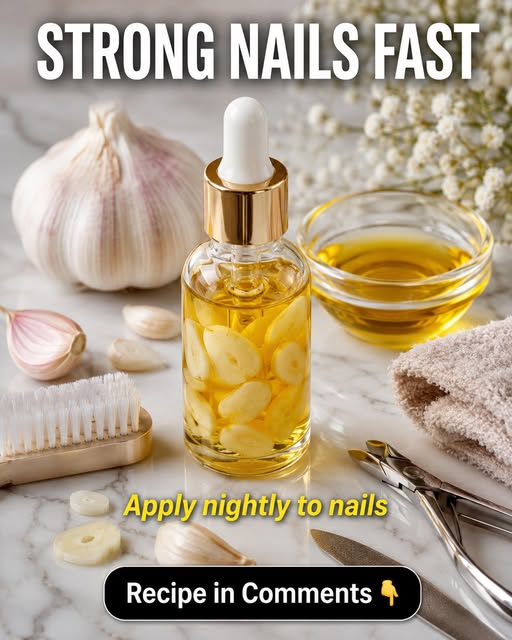
The image shows garlic-infused oil. Raw garlic is not a clinically proven treatment for making healthy nails grow faster or become stronger. Garlic can cause irritant contact dermatitis and even chemical burns, particularly when crushed garlic is left against the skin or covered overnight. For this reason, the remedies below do not use raw garlic. (PubMed)
The remedies are organized by the condition of the hands, cuticles, and surrounding skin. Their main purpose is to hydrate and protect the nail plate so it is less likely to peel or break. The individual ingredients have scientific support for moisturization or skin-barrier care, but these exact homemade mixtures have not been clinically tested as complete nail-growth treatments.
Remedy 1: Jojoba, Sunflower, and Oat Nail Serum for Normal Skin
This balanced treatment is suitable for healthy hands with occasional dryness, mild peeling, or nails that break after frequent washing.
Ingredients and Their Scientific Working
Jojoba oil — 1 teaspoon: Jojoba is a liquid wax that provides lubrication and reduces friction around the cuticle. Research reviews describe jojoba as a useful skin-conditioning and barrier-supporting ingredient. (PubMed)
Cold-pressed sunflower seed oil — 1 teaspoon: Sunflower oil contains linoleic-acid-rich lipids. Human research found that it supported skin-barrier integrity and improved hydration. (PubMed)
Virgin coconut oil — 1/2 teaspoon: Coconut oil acts as an emollient and has demonstrated moisturizing benefits in clinical research involving dry skin. (PubMed)
Colloidal oatmeal — 1/2 teaspoon: Finely powdered oatmeal supports hydration and helps calm dry skin around the nails.
Vegetable glycerin — 3 drops: Glycerin attracts water into the outer skin layer and helps soften rough cuticles.
Boiled and cooled water — 1 teaspoon: Water softens the oatmeal and provides immediate hydration.
Procedure
Mix the oatmeal, glycerin, and cooled water. Apply the soft mixture over the nails and cuticles for five minutes. Rinse gently and pat the hands until slightly damp.
Combine jojoba, sunflower, and coconut oils. Massage one drop over each nail, along the sidewalls, and around the cuticle for approximately one minute. Leave the thin oil layer on overnight.
How Often to Apply
Apply nightly for five days. Continue three evenings weekly afterward.
Initial Results
Within one to three days, the cuticles may feel softer and the nail surface may look smoother and more conditioned. Existing splits will not repair themselves, but better flexibility may reduce new breakage.
Remedy 2: Flaxseed and Aloe Nail Wrap for Combination Skin
This treatment is suitable for hands with dry cuticles but normal or slightly sweaty palms. It provides lightweight hydration without covering the entire hand in heavy oil.
Ingredients and Their Scientific Working
Fresh flaxseed gel — 1 tablespoon: Flaxseed releases a smooth plant mucilage when heated. It forms a light moisturizing film and reduces friction during application.
Pure aloe vera gel — 1 tablespoon: Aloe supplies lightweight hydration and improves the spreadability of the treatment.
Vegetable glycerin — 1/8 teaspoon: Diluted glycerin supports water retention around dry cuticles.
Colloidal oatmeal — 1/2 teaspoon: Oatmeal supports the protective barrier and reduces rough texture.
Jojoba oil — 4 drops: Jojoba provides light emollient support without requiring a thick coating. (PubMed)
Sunflower seed oil — 2 drops: Sunflower oil adds barrier-supporting lipids to particularly dry nail edges. (PubMed)
Procedure
To prepare flaxseed gel, simmer one teaspoon of whole flaxseeds in half a cup of water for about five minutes. Strain while warm and allow the gel to cool completely.
Mix one tablespoon of the gel with aloe, glycerin, and oatmeal. Apply only over the nails, cuticles, and dry finger areas. Leave it on for seven minutes and rinse.
Mix the jojoba and sunflower oils. Apply the oil mainly around dry cuticles rather than over sweaty palms.
How Often to Apply
Use on alternate nights for five days. Continue twice or three times weekly.
Initial Results
Dry cuticles may feel more flexible within two or three applications. The nails may appear healthier because the surrounding skin is smoother and less flaky.
Remedy 3: Aloe and Oat Fresh Nail Gel for Oily or Sweaty Hands
People with sweaty palms may dislike thick oils or overnight gloves. This lighter remedy hydrates the nail area while minimizing a greasy feeling.
Ingredients and Their Scientific Working
Pure aloe vera gel — 1 tablespoon: Aloe provides a lightweight, water-rich base.
Colloidal oatmeal — 1 teaspoon: Oat compounds help support dry skin around the nails without using rough exfoliating particles.
Vegetable glycerin — 1/8 teaspoon: A small quantity helps retain moisture without making the mixture excessively sticky.
Cooled green tea — 1 tablespoon: Green tea creates a light liquid base and supplies antioxidant plant compounds.
Jojoba oil — 2 drops: A very small amount reduces friction around the cuticles. (PubMed)
Boiled and cooled water — 1 tablespoon: Water creates a thin, easy-to-rinse consistency.
Procedure
Mix aloe, oatmeal, glycerin, green tea, and cooled water. Allow the oatmeal to soften for five minutes.
Apply a thin layer to the nails and cuticles. Leave it on for five minutes and rinse. Dry carefully, including between the fingers.
Massage one drop of jojoba oil across the nails of each hand. Avoid thick oil layers or cotton gloves when they increase sweating.
How Often to Apply
Use once nightly for three to five days. Continue every other evening if comfortable.
Initial Results
The nail area may feel less tight within one to three days. The surface can look smoother without leaving the palms heavily coated.
Remedy 4: Coconut and Sunflower Overnight Balm for Dry, Brittle Nails
This richer treatment is designed for dry cuticles and nails that peel, split, or break easily. Moisturization is an important part of brittle-nail care because dry nails are less flexible and more likely to separate into layers. Dermatologists commonly recommend rehydrating the nails and cuticles and protecting them from repeated water exposure. (American Academy of Dermatology)
Ingredients and Their Scientific Working
Virgin coconut oil — 1 teaspoon: Coconut oil reduces moisture loss and improves softness. (PubMed)
Cold-pressed sunflower seed oil — 1 teaspoon: Sunflower oil supports the skin barrier and improves hydration. (PubMed)
Natural shea butter — 1 teaspoon: Shea butter acts as a rich emollient. Clinical moisturizer research supports its role as part of formulations designed to improve hydration and barrier condition. (PubMed)
Pure aloe vera gel — 1 teaspoon: Aloe adds a water-based moisturizing layer.
Vegetable glycerin — 1/4 teaspoon: Glycerin attracts water and helps reduce cuticle roughness.
Colloidal oatmeal — 1 teaspoon: Oatmeal supports dry, irritated skin around the nails.
Procedure
Mix oatmeal, aloe, and glycerin. Apply the mixture over each nail and cuticle for five minutes, then gently remove the excess with a damp cloth.
Warm the coconut oil, sunflower oil, and shea butter between clean fingertips. Massage a very thin layer into the nails and surrounding skin.
Wear clean cotton gloves and leave the balm on overnight. Dermatologists may recommend overnight moisturization and light cotton gloves to improve hydration of brittle nails and cuticles. (American Academy of Dermatology)
How Often to Apply
Apply nightly for five days. Continue three nights weekly for six to eight weeks.
Initial Results
The cuticles may feel softer after the first application. Within two or three days, dry nails may feel more flexible and appear less chalky. Growing out damaged nail material takes months.
Remedy 5: Minimal Oat and Sunflower Treatment for Sensitive Skin
Sensitive hands may react to fragrance, essential oils, raw garlic, lemon juice, or complicated homemade mixtures. This remedy uses fewer ingredients and avoids aggressive massage.
Ingredients and Their Scientific Working
Colloidal oatmeal — 2 teaspoons: Oatmeal helps support hydration and soothe rough, sensitive skin.
Boiled and cooled water — 2 tablespoons: Water creates a gentle nail compress.
Vegetable glycerin — 1/4 teaspoon: Glycerin helps the surrounding skin retain moisture.
Cold-pressed sunflower seed oil — 1/2 teaspoon: Sunflower oil provides barrier-supporting lipids. (PubMed)
Jojoba oil — 1/2 teaspoon: Jojoba improves lubrication and reduces friction. (PubMed)
Procedure
Mix oatmeal, glycerin, and cooled water. Allow the oatmeal to soften for ten minutes.
Dip clean cotton pads into the liquid and rest them over the nails for three to five minutes. Do not scrub or push the cuticles.
Pat dry. Mix sunflower and jojoba oils and press a very small amount over the nails and dry skin.
How Often to Apply
Use once daily for three days. Continue every other night only if there is no itching, burning, swelling, or increased redness.
Initial Results
Sensitive cuticles may feel calmer and less tight within one to three applications. Stop immediately if irritation becomes worse.
Why Garlic Oil Is Not Recommended for Strong Nails
Garlic contains sulfur-containing compounds, which is why it is frequently promoted in homemade nail recipes. However, there is no strong clinical evidence that placing raw garlic in oil makes normal nails grow faster or permanently increases nail strength.
Fresh or crushed garlic can cause severe skin irritation. Chemical burns have been reported when garlic was applied directly and kept against the skin, especially under a covering. (PubMed)
Do not place raw garlic pieces under gloves, bandages, artificial nails, or overnight coverings. Burning and redness are signs of injury, not signs that the remedy is strengthening the nail.
Final Tips for Stronger, Healthier Nails
Keep nails short and file rough edges gently in one direction. Do not use fingernails to open cans, remove labels, or scrape hard surfaces because repeated mechanical pressure can cause chipping and splitting. (American Academy of Dermatology)
Protect the hands during dishwashing and cleaning. Repeated wetting and drying can weaken the nail plate and increase peeling. Wear nitrile or vinyl gloves for prolonged wet work and moisturize after washing. (American Academy of Dermatology)
Avoid cutting the cuticles because they help protect the area where the nail grows. Do not bite, pick, or repeatedly push them back. Nail-biting can damage the tissue responsible for normal growth and increase infection risk. (American Academy of Dermatology)
Limit frequent gel manicures, artificial nails, harsh acetone exposure, and aggressive buffing. Gel manicures may contribute to brittleness, peeling, and cracking when performed repeatedly. (American Academy of Dermatology)
Do not expect visible length in three days. Average fingernail growth is only a fraction of a millimetre per day. The first realistic improvement is usually less dryness and breakage, while replacing a damaged fingernail may take several months. (PubMed)
Diet Plan for Strong Nails
Nutrition supports the production of new nail material, but no food can repair a split nail overnight. Follow a balanced diet for at least eight to twelve weeks.
Breakfast: Eat eggs with whole-grain bread, unsweetened oatmeal with milk and nuts, or plain yogurt with seeds.
Mid-morning: Choose guava, orange, kiwi, papaya, berries, or another vitamin-C-rich fruit.
Lunch: Include lentils, chickpeas, beans, fish, eggs, chicken, tofu, or lean meat. Add vegetables with whole-wheat roti or a moderate serving of rice.
Evening snack: Choose almonds, walnuts, pumpkin seeds, sunflower seeds, or fresh fruit.
Dinner: Eat vegetables with lentils, beans, fish, eggs, tofu, or chicken. Include adequate protein because nails are largely made of keratin, a structural protein.
Hydration: Drink water according to thirst, climate, activity, and medical needs. Drinking excessive water does not directly increase nail-growth speed.
Do not begin high-dose biotin solely because the nails are weak. Evidence is limited and larger controlled studies are still needed. High-dose biotin may also interfere with certain laboratory tests and produce misleading results. (PubMed)
How Long Should You Continue?
Use the remedy suited to your hands for three to five days initially. When it is well tolerated, continue two or three times weekly for at least six to eight weeks. Protective habits should continue daily.
See a dermatologist or doctor if brittle nails continue for more than two to three months, affect many nails suddenly, or occur with fatigue, hair loss, weight changes, pain, swelling, or skin symptoms. Medical conditions, nutritional deficiencies, thyroid disorders, inflammatory skin disease, and infections can sometimes affect nail strength. (PubMed)
Seek medical assessment for nails that become yellow, green, black, unusually thick, painful, lifted from the nail bed, or surrounded by redness or discharge. Nail fungus generally does not disappear by itself and may require prescription treatment. (American Academy of Dermatology)
References for the above remedy
- American Academy of Dermatology. 11 Dermatologists’ Tips for Healthy Nails.
https://www.aad.org/public/everyday-care/nail-care-secrets/basics/healthy-nail-tips - Chessa MA, et al. Pathogenesis, Clinical Signs and Treatment Recommendations in Brittle Nails: A Review.
https://pubmed.ncbi.nlm.nih.gov/31749091/ - Yaemsiri S, et al. Growth Rate of Human Fingernails and Toenails in Healthy American Young Adults.
https://pubmed.ncbi.nlm.nih.gov/19744178/ - American Academy of Dermatology. What Can Make My Hands Look Younger?
https://www.aad.org/public/cosmetic/younger-looking/what-makes-hands-look-younger - Danby SG, et al. Effect of Olive and Sunflower Seed Oil on the Adult Skin Barrier.
https://pubmed.ncbi.nlm.nih.gov/22995032/ - Agero ALC, Verallo-Rowell VM. A Randomized Double-Blind Controlled Trial Comparing Extra Virgin Coconut Oil With Mineral Oil as a Moisturizer for Xerosis.
https://pubmed.ncbi.nlm.nih.gov/15724344/ - Blaak J, et al. An Updated Review on the Efficacy and Benefits of Sweet Almond, Evening Primrose and Jojoba Oils in Skin Care Applications.
https://pubmed.ncbi.nlm.nih.gov/34957578/ - Xu S, et al. Chemical Burn Caused by Topical Application of Garlic Under Occlusion.
https://pubmed.ncbi.nlm.nih.gov/24456964/ - Lipner SR. Biotin for the Treatment of Nail Disease: What Is the Evidence?
https://pubmed.ncbi.nlm.nih.gov/29057689/ - U.S. Food and Drug Administration. Biotin Interference With Certain Laboratory Tests.
https://www.fda.gov/medical-devices/in-vitro-diagnostics/biotin-interference-troponin-lab-tests-assays-subject-biotin-interference