Youthful-looking skin is not created by one mask or a single “miracle” ingredient. Skin naturally becomes thinner, drier, and less elastic with age, while sunlight, smoking, stress, poor sleep, and repeated irritation may accelerate visible aging. A well-chosen natural mask can improve hydration, soften rough texture, reduce dullness, and temporarily make fine dehydration lines appear less noticeable. However, deep wrinkles, sagging, and long-term collagen loss cannot disappear within three days. Daily moisturization and sun protection remain among the most effective ways to maintain a younger-looking complexion. (American Academy of Dermatology)
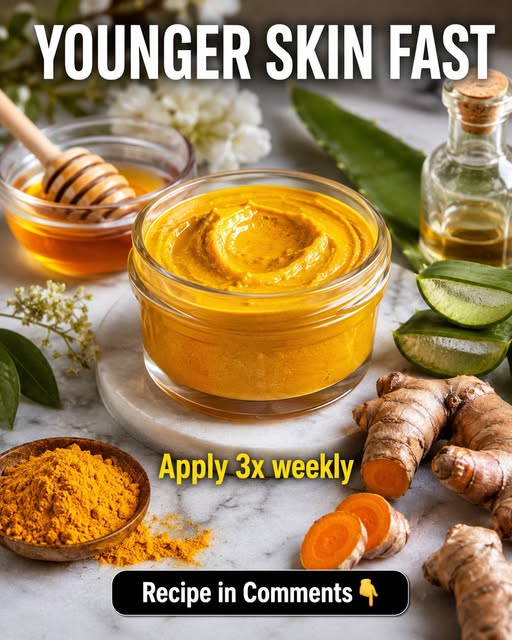
The image features turmeric, aloe vera, honey, and natural oils. Turmeric contains curcumin, which has antioxidant and anti-inflammatory properties, but clinical evidence is still developing, and household turmeric masks are not proven to reverse aging. (PubMed) The following remedies use small, skin-appropriate quantities and are customized for normal, combination, oily, dry, and sensitive skin. The individual ingredients have scientific support, but the exact homemade mixtures have not been tested as complete clinical anti-aging treatments.

Remedy 1: For Normal Skin — Golden Turmeric and Oat Renewal Mask
Ingredients
- 1 tablespoon pure aloe vera inner-leaf gel
- 1 tablespoon finely powdered colloidal oatmeal
- 1 teaspoon plain unsweetened soy milk
- ½ teaspoon pure honey
- One very small pinch of turmeric powder
- ¼ teaspoon vegetable glycerin
Scientific Working of Each Ingredient
Turmeric contains curcumin, a plant compound studied for antioxidant and anti-inflammatory activity. It may help support a calmer and more even-looking complexion, but evidence does not show that kitchen turmeric instantly stimulates enough collagen to erase wrinkles. (PubMed)
Aloe vera contains water-rich polysaccharides and acts as a natural humectant. Research on aloe-containing formulations has demonstrated improvements in skin hydration. (PubMed)
Colloidal oatmeal contains beta-glucans and antioxidant avenanthramides that support the moisture barrier and help improve dryness and roughness. (PubMed)
Soy milk contains naturally occurring soy compounds associated with improvements in uneven pigmentation and signs of photoaging when used in properly formulated topical treatments. Household soy milk is much less concentrated. (PubMed)
Honey and glycerin attract and retain moisture, helping the surface appear smoother and temporarily plumper. (PubMed)
Procedure
Mix the oatmeal and soy milk first. Add aloe, honey, and glycerin. Finally, blend in only a tiny pinch of turmeric. Apply a thin layer to clean skin while avoiding the eyelids and lips. Leave for 8–10 minutes, rinse gently with lukewarm water, and pat dry.
How Often to Apply
Apply every other evening during the first 5 days. When well tolerated, continue up to three times weekly.
Initial Results
Within 1–3 days, normal skin may feel softer and look more hydrated. Fine lines caused mainly by dehydration may appear temporarily less obvious. Permanent wrinkle removal should not be expected.
Remedy 2: For Combination Skin — Green Tea and Rice Two-Zone Mask
Ingredients
- 1 tablespoon freshly prepared and cooled green tea
- 2 teaspoons pure rice starch or ultra-fine rice flour
- 1 tablespoon aloe vera gel
- ½ teaspoon cosmetic-grade kaolin clay
- 2 drops of jojoba oil
- ¼ teaspoon vegetable glycerin
Scientific Working of Each Ingredient
Green tea supplies catechins, including EGCG, which have antioxidant activity. Studies of concentrated green-tea formulations have examined their effects on photoaging, although clinical results are mixed and homemade tea is not equivalent to a standardized extract. (PubMed)
Rice starch provides a soft, non-abrasive base and may support hydration and barrier comfort. Rice-derived skincare ingredients have demonstrated moisturizing and potential anti-aging properties. (PubMed)
Kaolin clay absorbs some excess surface oil from the forehead, nose, and chin.
Aloe and glycerin provide lightweight hydration, while jojoba oil reduces dryness and improves softness without requiring a heavy coating. Jojoba has documented emollient and anti-inflammatory properties in dermatological research. (PubMed)
Procedure
Divide the mixture into two portions. Add kaolin only to the portion intended for the oily forehead, nose, and chin. Add jojoba oil only to the mixture intended for the cheeks.
Apply each mixture to the correct area. Leave for 7 minutes and rinse before the clay becomes completely dry.
How Often to Apply
Use on alternate evenings for 5 days. Continue two or three times weekly when the skin remains comfortable.
Initial Results
The T-zone may appear less shiny while the cheeks feel smoother within 2–3 days. Improved moisture may produce a fresher appearance, but the treatment cannot permanently tighten loose skin.
Remedy 3: For Oily Skin — Turmeric, Green Tea and Clay Refining Mask
Ingredients
- 1 tablespoon cooled green tea
- 1 tablespoon aloe vera gel
- 1 teaspoon cosmetic-grade kaolin clay
- 1 teaspoon pure rice starch
- One tiny pinch of turmeric
- ¼ teaspoon vegetable glycerin
Scientific Working of Each Ingredient
Green tea provides antioxidant compounds and may help support oil balance. Research has investigated topical green tea for excessive sebum and inflammatory skin concerns. (PubMed)
Kaolin clay absorbs excess surface oil, temporarily reducing shine without requiring a rough facial scrub.
Turmeric provides curcumin compounds with antioxidant and anti-inflammatory activity. Only a trace amount is used because excessive turmeric may stain or irritate the skin. Turmeric allergy and contact dermatitis have also been reported. (PubMed)
Rice starch creates a smooth consistency, while aloe and glycerin provide water-based hydration. Oily skin can still become dehydrated, especially after frequent washing or overuse of drying masks.
Procedure
Combine the clay, rice starch, and turmeric. Slowly mix in green tea, followed by aloe and glycerin.
Spread a very thin layer over clean skin. Do not rub or scrub. Leave for 5–6 minutes and rinse while the mask remains slightly moist.
How Often to Apply
Apply every other evening during the first 5 days. Afterward, limit use to two times weekly.
Initial Results
Surface shine may decrease after the first few applications. Better hydration may make skin texture look smoother within 2–3 days, but deep wrinkles and enlarged pores will not disappear.
Remedy 4: For Dry Skin — Honey, Soy and Oat Moisture Mask
Ingredients
- 2 tablespoons colloidal oatmeal
- 1 tablespoon aloe vera gel
- 1 teaspoon plain unsweetened soy milk
- ½ teaspoon pure honey
- ¼ teaspoon high-linoleic sunflower seed oil
- ¼ teaspoon vegetable glycerin
Scientific Working of Each Ingredient
Colloidal oatmeal improves moisture retention and helps support the protective skin barrier. Clinical studies have reported improvements in dryness, roughness, scaling, and hydration. (PubMed)
Aloe vera adds water-based hydration, while soy milk provides skin-conditioning compounds.
Honey acts as a natural humectant and emollient. It helps reduce tightness and supports a softer surface appearance. (PubMed)
Sunflower seed oil contains linoleic acid and other fatty acids that support barrier integrity. Research found that sunflower oil improved hydration without the barrier damage observed with olive oil. (PubMed)
Glycerin helps hold water in the outer skin layer and may soften the appearance of dehydration lines. (PubMed)
Procedure
Mix all ingredients into a soft cream. Apply to slightly damp skin without pulling or rubbing. Leave for approximately 10 minutes. Add a little lukewarm water before rinsing so the mixture comes away gently.
How Often to Apply
Apply once daily for the first 3 days. When no irritation develops, continue every other day through day 5 and then use two or three times weekly.
Initial Results
Tightness may improve after the first use. Skin may look plumper and more luminous within 2–3 days because moisturized skin reflects light more evenly. Established wrinkles will need longer-term skincare.
Remedy 5: For Sensitive Skin — Minimal Oat Barrier-Comfort Mask
Ingredients
- 1 tablespoon finely powdered colloidal oatmeal
- 1 teaspoon pure rice starch
- 1½ tablespoons boiled and completely cooled water
- 1 teaspoon pure aloe vera gel
- ¼ teaspoon vegetable glycerin
- 2 drops of high-linoleic sunflower seed oil
Scientific Working of Each Ingredient
Colloidal oatmeal provides antioxidant, soothing, moisturizing, and barrier-supporting activity. It is one of the better-studied natural ingredients for dry and reactive skin. (PubMed)
Rice starch thickens the mixture without requiring abrasive grains.
Aloe vera provides light hydration but should be omitted by anyone with a previous aloe reaction.
Glycerin and sunflower oil help reduce moisture loss and friction, supporting a smoother outer skin layer. (PubMed)
Turmeric is intentionally excluded because sensitive skin may react to botanical ingredients, and turmeric has documented allergenic potential. (PubMed)
Procedure
Mix oatmeal and rice starch. Slowly add the cooled water, followed by aloe, glycerin, and sunflower oil.
Apply without massaging. Leave for only 5 minutes and rinse gently. Stop immediately if burning, strong itching, swelling, or increasing redness occurs.
How Often to Apply
Patch-test before facial use. Apply once every other day during the first 5 days. Continue once or twice weekly only when completely comfortable.
Initial Results
Sensitive skin may feel less tight and appear smoother within 1–3 days. Persistent redness or irritation requires professional assessment rather than repeated homemade treatments.
Final Tips for Maintaining Younger-Looking Skin
Protect the skin from sunlight every day. Dermatologists recommend broad-spectrum, water-resistant SPF 30 or higher because ultraviolet exposure contributes to wrinkles, age spots, uneven pigmentation, and loss of firmness. (American Academy of Dermatology)
Use a gentle cleanser, avoid rough facial scrubs, and apply moisturizer while the skin is slightly damp. Moisturization traps water in the skin and can temporarily soften fine lines and brighten a dull complexion. (American Academy of Dermatology)
Keep pillowcases, facial tools, makeup brushes, and towels clean. Sleep regularly, avoid smoking, and limit excessive alcohol. Do not apply lemon juice, undiluted vinegar, baking soda, toothpaste, or concentrated essential oils to the face.
Patch-test each remedy before full application. Natural ingredients can still trigger allergic contact dermatitis. Dermatologists recommend testing a new topical preparation on a small area before regular use. (American Academy of Dermatology)
Visible softness and glow may begin within 2–3 days. Continued hydration can make fine lines look less noticeable, but meaningful improvement in photoaging and wrinkles generally requires consistent care over several weeks or months.
Diet Plan for Healthy, Youthful-Looking Skin
Follow this balanced eating pattern for at least 8–12 weeks.
Breakfast: Oatmeal with berries, chia seeds, and plain yogurt, or eggs with vegetables and whole-grain bread.
Mid-morning: Eat one vitamin-rich fruit such as guava, orange, kiwi, papaya, or berries with a small handful of unsalted almonds. A controlled study found that regular almond intake may improve some measurements of facial photoaging in postmenopausal women, but almonds are not an instant wrinkle treatment. (PubMed)
Lunch: Choose whole-grain roti, brown rice, or another high-fibre carbohydrate with lentils, beans, eggs, fish, or chicken. Fill approximately half the plate with vegetables.
Healthy skin addition: Include cooked tomatoes several times weekly. Tomato and lycopene research suggests gradual support against UV-related skin damage, but dietary protection does not replace sunscreen. (PubMed)
Evening snack: Choose fruit, cucumber, carrots, plain yogurt, roasted chickpeas, or unsalted nuts.
Dinner: Eat vegetables with lentils, beans, eggs, fish, or chicken. Limit frequent sugary drinks, highly refined snacks, and heavily fried foods.
Drink water according to thirst, activity, weather, and individual health requirements. A balanced diet rich in fruits and vegetables is associated with healthier skin-aging patterns, but no single food can reverse aging. (PubMed)
How Long to Continue
Use only the remedy intended for your skin type. Test it for 3–5 days, then continue two or three times weekly for approximately 6–8 weeks when it remains comfortable.
Continue the balanced diet, adequate sleep, daily moisturizing, and sun protection for at least 8–12 weeks before evaluating gradual changes. Homemade remedies may support softness and radiance but cannot restore lost facial volume or remove deep wrinkles.
Consult a dermatologist when you have rapidly changing pigmentation, a new or changing mole, persistent redness, severe itching, bleeding, painful skin, unexplained swelling, or a rough patch that does not heal. Professional advice is also appropriate when wrinkles, acne scars, sagging, or dark spots remain a major concern despite consistent care.
References for the above remedy
- American Academy of Dermatology Association. 11 Ways to Reduce Premature Skin Aging.
https://www.aad.org/public/everyday-care/skin-care-secrets/anti-aging/reduce-premature-aging-skin - American Academy of Dermatology Association. How to Select Anti-Aging Skin Care Products.
https://www.aad.org/public/everyday-care/skin-care-secrets/anti-aging/selecting-anti-aging-products - Vaughn AR, et al. Effects of Turmeric (Curcuma longa) on Skin Health: A Systematic Review.
https://pubmed.ncbi.nlm.nih.gov/27213821/ - Ilnytska O, et al. Colloidal Oatmeal Improves Skin Barrier Through Multi-Therapy Activity.
https://pubmed.ncbi.nlm.nih.gov/27272074/ - Dal’Belo SE, et al. Moisturizing Effect of Cosmetic Formulations Containing Aloe Vera Extract.
https://pubmed.ncbi.nlm.nih.gov/17026654/ - Leyden JJ, et al. Natural Options for the Management of Hyperpigmentation.
https://pubmed.ncbi.nlm.nih.gov/21623927/ - Burlando B, Cornara L. Honey in Dermatology and Skin Care: A Review.
https://pubmed.ncbi.nlm.nih.gov/24305429/ - Danby SG, et al. Effect of Olive and Sunflower Seed Oil on the Adult Skin Barrier.
https://pubmed.ncbi.nlm.nih.gov/22995032/ - Fluhr JW, et al. Glycerol and the Skin: Holistic Approach to Its Origin and Functions.
https://pubmed.ncbi.nlm.nih.gov/18510666/ - Rybak I, et al. Effects of Almond Consumption on Facial Wrinkles and Pigmentation: A Randomized Controlled Trial.
https://pubmed.ncbi.nlm.nih.gov/33673587/