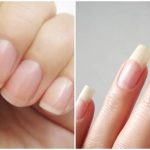
Weak nails can bend, peel, split or break before they grow to the desired length, affecting the appearance of the hands and lowering confidence. Frequent washing, detergents, acetone removers, artificial nails, aggressive filing and repeated wetting and drying can gradually weaken the nail plate. Natural oils and moisturising ingredients may improve flexibility, reduce dryness and protect the surrounding cuticles, but no home remedy can produce completely new, stronger nails overnight. Fingernails grow by approximately 3.47 millimetres per month, so visible surface smoothness may begin within a few days while meaningful improvement normally requires six to twelve weeks. (PubMed)
The garlic oil shown in many online nail recipes has not been clinically proven to strengthen healthy nails. Fresh garlic can also cause painful irritant or allergic contact dermatitis, especially when it is covered and left on overnight. For this reason, the following treatments use gentler ingredients and focus on scientifically supported nail hydration, protection and reduced breakage. (PubMed)

Remedy 1: Jojoba, Oat and Beeswax Nail Balm for Normal Nails
Ingredients and Their Scientific Benefits
- Jojoba oil – 1 teaspoon: Acts as a lightweight emollient that reduces dryness around the nail folds.
- Sunflower seed oil – 1 teaspoon: Contains linoleic-acid-rich lipids that support the surrounding skin barrier.
- Natural beeswax – ½ teaspoon: Creates a protective coating that slows moisture evaporation.
- Vegetable glycerin – ¼ teaspoon: Works as a humectant by attracting water to the nail surface and cuticles.
- Pure aloe vera gel – 1 teaspoon: Provides lightweight hydration and helps soothe dry surrounding skin.
- Finely ground colloidal oatmeal – ½ teaspoon: Forms a soothing film over rough cuticles and irritated nail folds.
How This Remedy Works Scientifically
Brittle nails are often managed by regularly applying creams, ointments or oils and reducing exposure to water and irritants. The oils soften the dry nail surface, glycerin and aloe provide moisture, and beeswax helps retain it. Colloidal oatmeal supports the skin barrier around the nail, which may reduce picking, hangnails and cuticle damage. Moisturising does not change the nail instantly, but it can make the existing plate more flexible and less likely to snap. (PMC)
Procedure
Melt the beeswax gently using a bowl placed over warm water. Remove it from the heat and stir in the jojoba and sunflower oils. Allow it to cool slightly before mixing in the glycerin, aloe and oatmeal.
Massage a pea-sized amount over each nail, under the free edge and around the cuticles for two minutes. Wear clean cotton gloves overnight. Because aloe introduces water into the recipe, prepare only enough for one application and discard leftovers.
How Often to Apply
Apply nightly for five days, then continue three nights weekly.
Initial Results
Within one to three days, the cuticles may feel softer and the nails may look smoother and shinier. Reduced splitting requires continued care as stronger nail grows from the base.
Remedy 2: Rice-Starch Protective Cream for Water-Exposed Nails
Ingredients and Their Scientific Benefits
- Rice starch – 1 tablespoon: Produces a soft protective paste and helps absorb excess surface moisture.
- Colloidal oatmeal – 1 teaspoon: Supports barrier recovery and reduces irritation from repeated washing.
- Vegetable glycerin – ½ teaspoon: Helps replace moisture lost after handwashing.
- Pure aloe vera gel – 1 tablespoon: Hydrates the nail folds without creating a heavy greasy layer.
- Sunflower seed oil – 1 teaspoon: Softens nails and cuticles while supporting the surrounding skin.
- Natural beeswax – ¼ teaspoon: Leaves a thin moisture-retaining barrier.
- Cooled boiled water – 1 teaspoon: Creates a smooth, spreadable consistency.
How This Remedy Works Scientifically
Nails repeatedly absorb water, expand and then contract as they dry. Over time, these cycles can weaken the connections between layers of the nail plate and cause peeling at the tips. Protective gloves, fewer wet-dry cycles and regular moisturising are therefore more important than any single ingredient. (PMC)
Procedure
Melt the beeswax with the sunflower oil. In another bowl, combine the rice starch, oatmeal, glycerin, aloe and water. Slowly whisk the warm oil mixture into the paste.
After the final handwash of the evening, dry the hands carefully. Apply the cream over the nails and cuticles, paying particular attention to peeling tips. Cover with cotton gloves for at least two hours or overnight.
How Often to Apply
Use every night for five to seven days. During the day, wear waterproof gloves over cotton liners when washing dishes or cleaning.
Initial Results
Nails may feel less rough after two or three applications. Peeling edges will not fuse together, but moisturising and trimming can prevent them from catching and splitting farther.
Remedy 3: Lightweight Aloe Nail Gel for Soft Nails and Clammy Hands
Ingredients and Their Scientific Benefits
- Pure aloe vera gel – 1½ tablespoons: Supplies non-greasy hydration to the nail folds.
- Rice starch – 1 teaspoon: Reduces the sticky feeling of the gel and absorbs some surface moisture.
- Colloidal oatmeal – ½ teaspoon: Helps calm skin irritated by frequent handwashing.
- Vegetable glycerin – ¼ teaspoon: Prevents the mixture from drying too rapidly.
- Jojoba oil – ¼ teaspoon: Adds a small amount of emollient without heavily coating the hands.
- Cooled boiled water – 1 teaspoon: Creates a thin consistency suitable for soft nails.
How This Remedy Works Scientifically
Soft nails can develop from excessive moisture exposure rather than simple dryness. Applying very heavy oils throughout the day may feel uncomfortable when the hands are already clammy. This lightweight preparation hydrates the cuticles while encouraging the user to keep the nail plate dry between applications. Clean, dry nails are also less favourable for bacterial and fungal growth. (American Academy of Dermatology)
Procedure
Stir the rice starch and oatmeal into the aloe gel. Add glycerin, jojoba oil and water, then mix until smooth.
Apply a very thin layer around the cuticles and over the nail plate. Leave it for 20 minutes, wipe away any excess and allow the nails to remain uncovered overnight. Do not apply beneath lifted nails.
How Often to Apply
Use on alternate nights for five days.
Initial Results
Cuticles may look smoother after one or two applications without leaving the hands excessively greasy. Soft nail plates require reduced water exposure for several weeks before a clear difference becomes visible.
Remedy 4: Coconut and Shea Recovery Mask for Very Dry, Brittle Nails
Ingredients and Their Scientific Benefits
- Virgin coconut oil – 1 teaspoon: Forms a conditioning layer and helps reduce dryness.
- Plain shea butter – 1 teaspoon: Works as a rich emollient for cracked nail folds.
- Sunflower seed oil – 1 teaspoon: Improves spreadability and supports the skin barrier.
- Vegetable glycerin – ½ teaspoon: Holds water close to the nail and cuticle surface.
- Colloidal oatmeal – 1 teaspoon: Soothes rough, dry skin surrounding the nails.
- Pure aloe vera gel – 1 teaspoon: Adds water-based hydration to the oil-rich mask.
How This Remedy Works Scientifically
Very dry nails need both water-attracting and moisture-sealing ingredients. Glycerin and aloe provide hydration, while the oils and shea butter reduce evaporation. The treatment cannot rebuild a damaged nail tip, but keeping the plate flexible can reduce further cracking while healthier nail grows out. Reviews of brittle-nail management consistently recommend moisturisers, protective measures and avoidance of repeated trauma. (PMC)
Procedure
Soften the shea butter and coconut oil between clean fingers or over gently warmed water. Mix in the sunflower oil, glycerin, oatmeal and aloe.
Apply generously to the nails, cuticles and fingertips. Massage for three minutes and wear cotton gloves overnight. Do not use on infected, bleeding or severely inflamed skin.
How Often to Apply
Apply nightly for five to seven nights, followed by three applications weekly for at least six weeks.
Initial Results
Dryness and tightness may improve after the first night. The nails may appear glossier within three days, but a genuinely stronger free edge develops gradually.
Remedy 5: Minimal Oat Barrier Paste for Sensitive Cuticles
Ingredients and Their Scientific Benefits
- Colloidal oatmeal – 1 tablespoon: Helps soothe irritation and supports the protective skin barrier.
- Rice starch – 1 teaspoon: Gives the paste a smooth texture without fragrance.
- Sunflower seed oil – ½ teaspoon: Provides light emollient protection.
- Vegetable glycerin – ¼ teaspoon: Maintains surface hydration.
- Plain shea butter – ¼ teaspoon: Seals moisture over especially dry cuticles.
- Cooled boiled water – 1½ tablespoons: Forms a gentle, easy-to-rinse paste.
How This Remedy Works Scientifically
Sensitive cuticles generally tolerate simple, fragrance-free formulas better than concentrated essential oils, lemon juice or raw garlic. Colloidal oatmeal has clinical evidence supporting barrier protection and soothing effects, although every botanical ingredient can still cause a reaction in some individuals. (PMC)
Procedure
Combine the oatmeal and rice starch with water. Add the glycerin, sunflower oil and softened shea butter. Patch-test the mixture on a small area for 24 hours.
When tolerated, apply it over the nails and cuticles for 20 minutes. Rinse gently, pat dry and apply one drop of sunflower oil around each nail. Avoid cutting or pushing back the cuticles.
How Often to Apply
Use every other night for three to five applications.
Initial Results
The surrounding skin may feel calmer and softer within one to three days. Stop immediately if redness, itching, swelling or burning develops.
Final Tips for Stronger Nails
Keep nails short while they recover and file rough edges gently in one direction. Do not scrape underneath the nails with sharp objects, bite them or remove the cuticle, because the cuticle helps seal the space between the skin and nail plate. Wear gloves for dishwashing, cleaning and prolonged food preparation.
Take a break from gel nails, acrylics, acetone removers and frequent polish changes. Artificial nail procedures and repeated removal can worsen peeling, thinning and cracking. (American Academy of Dermatology)
Do not rub raw garlic onto nails or sleep with garlic slices taped to the fingers. Natural garlic compounds can cause blistering and chemical-like burns. Lemon and baking soda may also dry or irritate the surrounding skin.
Diet Plan for Healthy Nail Growth
Follow a balanced diet for at least eight to twelve weeks:
Breakfast: Eggs, plain yoghurt or oatmeal with berries and pumpkin seeds.
Mid-morning: Guava, orange, kiwi or another vitamin-C-rich fruit.
Lunch: Lentils, chickpeas, fish or chicken with leafy vegetables and whole grains.
Snack: Almonds, walnuts or sunflower seeds.
Dinner: Beans, eggs, fish, tofu or lean meat with mixed vegetables.
Hydration: Drink regularly according to thirst, climate and physical activity.
Nails are largely made of keratin, so adequate protein and overall nutrition are important. Iron deficiency, thyroid disorders and certain skin diseases can also contribute to fragile nails. High-dose biotin is not automatically necessary for well-nourished people. Although small studies reported improvement in some individuals after several months, the evidence remains limited, and biotin supplements can interfere with important laboratory tests. (PubMed)
Continue the selected home treatment for at least six to eight weeks and maintain protective nail habits for three months. See a doctor or dermatologist when weakness persists, affects most nails or occurs with pain, swelling, pus, nail lifting, deep grooves, dark streaks, yellow thickening, fatigue or unexplained hair loss. These signs may require examination for infection, psoriasis, anaemia, thyroid disease or another underlying problem.
References for the above remedy
- Chessa MA, et al. Pathogenesis, Clinical Signs and Treatment Recommendations in Brittle Nails: A Review.
https://pmc.ncbi.nlm.nih.gov/articles/PMC6994568/ - Reinecke JK, Hinshaw MA. Nail Health in Women.
https://pmc.ncbi.nlm.nih.gov/articles/PMC7105659/ - Yaemsiri S, et al. Growth Rate of Human Fingernails and Toenails in Healthy American Young Adults.
https://pubmed.ncbi.nlm.nih.gov/19744178/ - Lipner SR. Biotin for the Treatment of Nail Disease: What Is the Evidence?
https://pubmed.ncbi.nlm.nih.gov/29057689/ - Hochman LG, et al. Brittle Nails: Response to Daily Biotin Supplementation.
https://pubmed.ncbi.nlm.nih.gov/8477615/ - Lee DK, et al. Optimal Diagnosis and Management of Common Nail Disorders.
https://pmc.ncbi.nlm.nih.gov/articles/PMC8896184/ - American Academy of Dermatology Association. Eleven Dermatologists’ Tips for Healthy Nails.
https://www.aad.org/public/everyday-care/nail-care-secrets/basics/healthy-nail-tips - American Academy of Dermatology Association. Manicure and Pedicure Safety.
https://www.aad.org/public/everyday-care/nail-care-secrets/basics/pedicures/manicure-pedicure-safety - Jamaluddin J, et al. An Unexpected Reaction to Topical Garlic Medicament.
https://pubmed.ncbi.nlm.nih.gov/36788861/ - U.S. Food and Drug Administration. Biotin Interference with Troponin Laboratory Tests.
https://www.fda.gov/medical-devices/in-vitro-diagnostics/biotin-interference-troponin-lab-tests-assays-subject-biotin-interference