Summer heat, air conditioning, frequent showers, swimming and sun exposure can leave the skin looking rough, tight or uneven. A well-formulated summer glow oil can soften dry areas and create a healthier-looking sheen, but it cannot lighten the skin, remove pigmentation or protect against ultraviolet radiation. Its visible “glow” mainly comes from a smoother skin surface that reflects light more evenly.
Body oils work best when applied shortly after showering while the skin is still slightly damp. They function mainly as emollients and occlusives, filling rough spaces and slowing water loss. Dermatologists recommend applying a fragrance-free moisturizer within a few minutes of bathing because this helps trap water in the skin. (American Academy of Dermatology)
The following recipes are anhydrous, meaning they contain no water, juice, aloe gel or fresh flowers. This reduces the risk of microbial contamination and allows the mixtures to remain stable for longer. Although research supports several individual oils, these precise homemade blends have not been clinically tested as complete treatments.
Remedy 1: Balanced Golden Glow Oil for Normal Skin
Ingredients and Scientific Benefits
Sunflower-seed oil: 1 tablespoon. Its linoleic-acid content helps soften the skin while supporting the outer barrier.
Jojoba oil: 1 teaspoon. This liquid wax spreads easily and leaves a lighter finish than many heavier oils.
Argan oil: 1 teaspoon. It contains fatty acids and tocopherols that condition the skin and support flexibility.
Rosehip-seed oil: ½ teaspoon. It provides essential fatty acids that may improve the appearance of dry, uneven texture.
Marula oil: ½ teaspoon. Its emollient and occlusive qualities help reduce roughness and moisture loss.
Scientific Working of the Ingredients
A human study found that sunflower-seed oil preserved the integrity of the stratum corneum and did not produce the redness associated with olive oil in the same investigation. Jojoba has anti-inflammatory and barrier-supporting properties, although evidence is stronger for its use within properly formulated skincare preparations than for homemade blends. (PubMed)
Clinical research involving argan oil reported improvements in skin-elasticity measurements after regular topical use. Marula oil has demonstrated moisturizing, hydrating and moderately occlusive effects, while rosehip oil contributes conditioning fatty acids. These oils create radiance by improving softness rather than changing the skin’s natural colour. (PubMed)
Procedure
Pour the oils into a clean, completely dry, dark-glass bottle. Close the bottle and roll it gently between the palms to combine them.
After showering, lightly pat the body with a towel. While the skin remains slightly damp, place six to eight drops in the palm and massage them over each arm or lower leg. Use less on the chest and back if these areas are prone to breakouts.
How Often to Apply
Apply once daily for five days. Continue four or five times weekly throughout summer when the skin remains comfortable.
Initial Results
Within one to three days, the skin may feel softer and appear more luminous. Long-term improvement in persistent roughness requires several weeks of regular moisturising.
Remedy 2: Lightweight Jojoba Blend for Combination Skin
Ingredients and Scientific Benefits
Jojoba oil: 2 teaspoons, providing a light emollient base.
Plant-derived squalane: 1 teaspoon, smoothing the skin without a thick, sticky finish.
Sunflower-seed oil: 1 teaspoon, supporting areas vulnerable to dryness.
Grapeseed oil: 1 teaspoon, giving the blend a thin, quick-spreading texture.
Argan oil: ½ teaspoon, conditioning drier areas such as the elbows and knees.
Scientific Working of the Ingredients
Combination skin may feel dry on the legs and arms while becoming oily or congested on the chest, shoulders and back. Jojoba consists mainly of wax esters and is commonly used for its skin-conditioning and anti-inflammatory properties. Squalane is a stable emollient related to squalene, a natural component of human sebum. (PubMed)
Sunflower and argan oils provide additional softness, while grapeseed oil makes the mixture feel less heavy. However, there is limited clinical evidence that grapeseed oil treats acne or improves pigmentation. Its role in this recipe is mainly cosmetic and textural.
Procedure
Combine the ingredients in a clean bottle. After bathing, use two to three drops on each shoulder and a slightly larger quantity over the arms and legs. Do not repeatedly layer the oil over sweaty or unwashed skin.
Apply the blend only after the skin has been gently cleansed. Persistent body acne should be treated separately rather than covered with heavy oil.
How Often to Apply
Use on alternate days during the first five days. When no clogged pores or irritation develop, apply once daily to dry zones and three times weekly to oilier areas.
Initial Results
Dry sections may feel smoother within the first two applications. Oily areas should remain comfortable rather than heavily coated. Stop using it on any area where new bumps appear.
Remedy 3: Minimal Summer Oil for Oily or Acne-Prone Skin
Ingredients and Scientific Benefits
Plant-derived squalane: 2 teaspoons, offering a light emollient finish.
Jojoba oil: 2 teaspoons, helping reduce surface roughness without requiring a thick layer.
Grapeseed oil: 1 teaspoon, improving spreadability.
Sunflower-seed oil: ½ teaspoon, supplying linoleic-acid-rich barrier support.
Argan oil: ¼ teaspoon, conditioning flaky areas in a very small amount.
Scientific Working of the Ingredients
Oily skin can still become dehydrated, particularly after strong cleansers, swimming or repeated showering. Applying a very small quantity of oil to damp skin may reduce tightness without creating an excessively greasy coating. Jojoba and squalane are selected because of their lighter sensory profiles, not because they are proven treatments for acne.
Research reviews support the broader role of certain plant oils in barrier repair, inflammation control and moisturisation. Nevertheless, individual responses vary, and even an oil described as lightweight can aggravate breakouts in some people. (PubMed)
Procedure
Mix the oils in a dry bottle. At night, cleanse the desired body area and leave it slightly damp. Spread only two or three drops between both palms and press them lightly over the skin.
Do not massage large quantities onto active pimples, folliculitis, sweaty skin or areas covered by tight clothing. This oil should not replace appropriate acne treatment.
How Often to Apply
Apply on nights one, three and five. Continue two or three nights weekly only when the skin remains clear.
Initial Results
Flaky or tight areas may feel more comfortable within one to three days. The oil will not clear active acne or reduce pores during this period.
Remedy 4: Rich Coconut and Shea Glow Oil for Dry Skin
Ingredients and Scientific Benefits
Virgin coconut oil: 2 teaspoons, providing a rich occlusive moisturising layer.
Sunflower-seed oil: 2 teaspoons, supporting barrier integrity.
Shea butter: 1 teaspoon, softening rough elbows, knees and heels.
Argan oil: 1 teaspoon, improving flexibility and surface smoothness.
Marula oil: 1 teaspoon, reducing moisture loss.
Jojoba oil: ½ teaspoon, helping the richer ingredients spread more evenly.
Scientific Working of the Ingredients
Virgin coconut oil has been evaluated in a randomized trial involving mild-to-moderate xerosis and improved skin hydration comparably to mineral oil. Another controlled study found benefits from topical coconut oil in people with atopic dermatitis, although eczema should still be managed with professional medical advice. (PubMed)
Sunflower oil supports the barrier, while shea butter, argan and marula oils form a richer emollient coating. This combination is suitable for very dry body skin but may be too heavy for acne-prone areas.
Procedure
Place the shea butter and coconut oil in a clean bowl. Stand the bowl in warm water until both ingredients soften; do not overheat them. Stir in the remaining oils and transfer the mixture to a dry container.
After showering, massage a pea-sized quantity over each elbow or knee and a thin layer over the arms and legs. Allow several minutes for absorption before dressing.
How Often to Apply
Apply every evening for at least five days. Continue nightly for six to eight weeks, especially after swimming or extended time in air-conditioned rooms.
Initial Results
Tightness and ashiness may improve after one to three applications. Cracked, inflamed or painful skin needs medical assessment rather than repeated home treatment.
Remedy 5: Fragrance-Free Comfort Oil for Sensitive Skin
Ingredients and Scientific Benefits
Sunflower-seed oil: 2 teaspoons, supporting the skin barrier.
Plant-derived squalane: 1 teaspoon, providing lightweight emollience.
Jojoba oil: 1 teaspoon, improving softness and spreadability.
Argan oil: ½ teaspoon, conditioning rough patches.
Shea butter: ½ teaspoon, creating a gentle protective coating.
Scientific Working of the Ingredients
Sensitive skin generally responds better to short, fragrance-free ingredient lists. Sunflower oil has comparatively strong evidence for supporting barrier integrity, while squalane and jojoba are stable emollients used to improve softness. Shea butter and argan oil are included in small amounts to reduce roughness without producing an overly heavy blend.
Natural does not automatically mean non-allergenic. Any botanical oil can trigger irritation or contact allergy in a susceptible person. A patch test is therefore essential, especially for people with eczema, fragrance allergy or a history of unexplained rashes.
Procedure
Mix the ingredients in a sanitized, dry container. Patch-test a small amount on the inner arm and wait 48 hours. When no redness, itching or swelling occurs, apply a few drops to damp body skin after an evening shower.
Avoid recently shaved, sunburned or broken skin until it has healed.
How Often to Apply
Use once on the first day. When the patch remains comfortable, apply on days three and five. Continue three times weekly.
Initial Results
The skin may feel calmer and less tight within two or three days. Discontinue the blend if itching, heat, redness or small blisters appear.
Important Summer Safety Warning
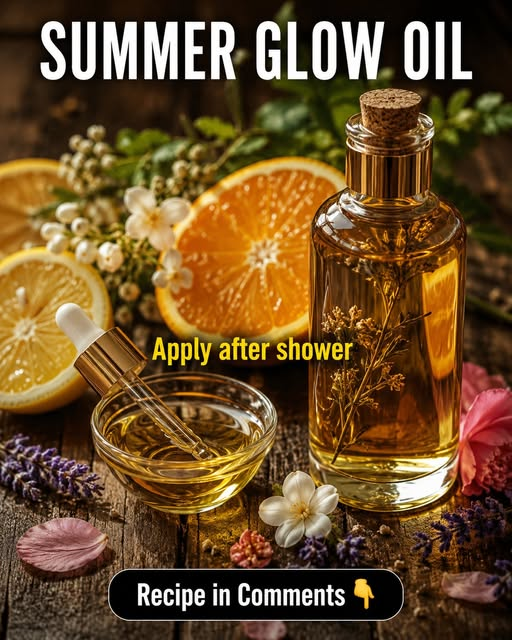
Do not add fresh lemon juice, orange juice, citrus peel, perfume or undiluted essential oils to these recipes. Citrus fruits may look attractive in a summer skincare image, but lemon, lime, bergamot and certain expressed citrus oils contain substances that can cause phototoxic reactions when exposed to ultraviolet light. Lemon peel can also irritate the skin. (DermNet®)
A glow oil is not sunscreen. Apply a broad-spectrum, water-resistant SPF 30 or higher to exposed skin every morning. Let the body oil absorb first, and then apply sunscreen generously. Reapply it after swimming, heavy sweating and according to the label directions. (American Academy of Dermatology)
Final Tips for Naturally Glowing Summer Skin
Take brief showers with warm rather than very hot water. Apply oil within approximately five minutes of bathing while the skin is damp. Prepare small batches, keep water out of the bottle and discard the blend if its smell, colour or texture changes.
Use loose, breathable clothing during hot weather, shower after excessive sweating and avoid rough scrubs on sun-exposed skin. Hydration and surface glow may improve within two to three days, but body oils will not permanently remove wrinkles, stretch marks, tanning or pigmentation.
Diet Plan for Healthy-Looking Skin
For breakfast, choose plain yogurt with oats and berries, eggs with wholegrain bread and tomatoes, or unsweetened oatmeal with seeds and fruit. At lunch, include lentils, chickpeas, fish or chicken with a generous serving of colourful vegetables and wholegrain roti or brown rice.
Dinner can include beans, grilled fish, tofu, chicken or lentil soup with vegetables. Choose oranges, guava, watermelon, cucumber, nuts, seeds or plain yogurt as snacks. Drink water throughout the day, particularly during hot weather, and limit heavily sweetened drinks, frequent fried meals and highly processed snacks.
A balanced diet rich in vegetables, fruits, whole grains and suitable protein sources supports general skin health, but no single food produces an instant glow. (Mayo Clinic)
Continue the appropriate oil and diet routine for six to eight weeks. See a dermatologist if dryness, itching or inflammation persists, or if the skin develops spreading redness, painful cracks, oozing, swelling or recurring rashes. Seek prompt medical care for facial swelling, breathing difficulty or a severe allergic reaction.
References for the above remedy
- American Academy of Dermatology. Dermatologists’ Top Tips for Relieving Dry Skin.
https://www.aad.org/public/everyday-care/skin-care-basics/dry/dermatologists-tips-relieve-dry-skin - American Academy of Dermatology. Twelve Summer Skin Problems You Can Prevent.
https://www.aad.org/public/everyday-care/skin-care-secrets/routine/prevent-summer-skin-problems - Danby SG, et al. Effect of Olive and Sunflower Seed Oil on the Adult Skin Barrier.
https://pubmed.ncbi.nlm.nih.gov/22995032/ - Agero ALC, Verallo-Rowell VM. A Randomized Double-Blind Trial Comparing Extra Virgin Coconut Oil with Mineral Oil for Xerosis.
https://pubmed.ncbi.nlm.nih.gov/15724344/ - Boucetta KQ, et al. The Effect of Dietary and Cosmetic Argan Oil on Skin Elasticity.
https://pubmed.ncbi.nlm.nih.gov/25673976/ - Blaak J, Staib P. An Updated Review on the Efficacy and Benefits of Jojoba Oil.
https://pubmed.ncbi.nlm.nih.gov/34957578/ - Komane B, et al. Safety and Efficacy of Marula Oil for Topical Application.
https://pubmed.ncbi.nlm.nih.gov/26528587/ - Lin TK, Zhong L, Santiago JL. Anti-Inflammatory and Skin-Barrier Repair Effects of Topical Plant Oils.
https://pubmed.ncbi.nlm.nih.gov/29280987/ - DermNet. Lemon: Skin Reactions and Phototoxicity.
https://dermnetnz.org/topics/lemon - American Academy of Dermatology. Sunscreen Frequently Asked Questions.
https://www.aad.org/media/stats-sunscreen