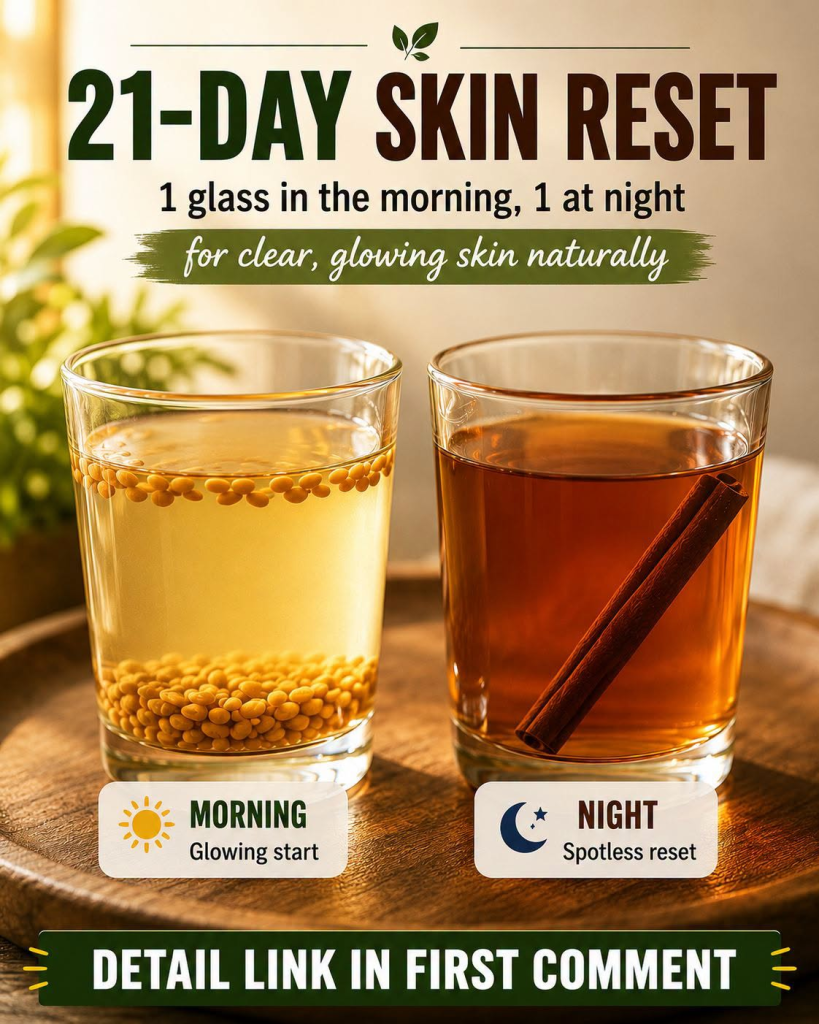
A 21-day skin reset should focus on calming irritation, protecting the skin barrier, controlling excess oil, improving hydration and supporting the skin through a balanced diet. It should not promise “spotless” skin from two drinks alone. Fenugreek water and cinnamon tea, as shown in the image, have not been clinically proven to clear acne, pigmentation or dullness within 21 days. A more reliable plan combines a gentle topical remedy selected for your skin type, daily sun protection, adequate sleep and a low-glycaemic, nutrient-rich diet. Each remedy below contains natural ingredients supported by human research for hydration, barrier repair or acne-related benefits, although the complete homemade mixtures have not been clinically tested as finished formulas.
Use only one remedy suited to your skin type for 21 days. Prepare it fresh, patch-test it for 24–48 hours and stop immediately if you develop burning, swelling, persistent redness or itching. Mild improvements in softness and hydration may begin within two or three days, while acne, pigmentation and visible ageing generally require considerably longer.
Are Fenugreek Water and Cinnamon Tea Proven Skin-Clearing Drinks?
There is currently no strong clinical evidence that drinking soaked fenugreek seeds every morning makes the skin clear or glowing. Fenugreek may influence blood sugar and can cause digestive discomfort, allergic reactions or interactions with glucose-lowering medicines. Medicinal quantities should also be avoided during pregnancy unless approved by a healthcare professional. (NCCIH)
Cinnamon tea is also not a proven treatment for acne, dark spots or wrinkles. Cassia cinnamon contains coumarin, and prolonged intake of concentrated amounts may be unsuitable for people with liver disease or those taking certain medicines. Cinnamon is best treated as a culinary spice rather than a nightly skin medicine. (NCCIH)
Remedy 1: Green Tea and Aloe Reset Gel for Normal Skin
Ingredients
- 1 tablespoon pure inner-leaf aloe vera gel
- 1 teaspoon cooled green tea
- 1 teaspoon finely milled colloidal oatmeal
- 1 teaspoon strained cucumber water
- ⅛ teaspoon vegetable glycerin
- 2 drops high-linoleic sunflower-seed oil
Procedure
- Brew plain green tea and allow it to cool completely.
- Combine the aloe gel, cucumber water and green tea.
- Mix in the colloidal oatmeal and glycerin.
- Add the sunflower oil and stir until smooth.
- Apply a thin layer to freshly cleansed skin, avoiding the eyelids and lips.
- Leave it on for eight to ten minutes.
- Rinse with lukewarm water and pat dry.
Discard any leftover mixture because homemade water-based masks do not contain preservatives.
Scientific Working of the Ingredients
Aloe vera acts primarily as a humectant and has demonstrated an ability to increase surface hydration. Colloidal oatmeal supplies soothing compounds, lipids and beta-glucans that help strengthen the outer barrier. Green-tea polyphenols offer antioxidant and anti-inflammatory activity, while sunflower oil supplies linoleic acid and helps reduce moisture loss. Research suggests that properly formulated topical green-tea extracts may also help reduce acne lesions, although ordinary brewed tea is much less concentrated than the preparations studied clinically. (PubMed)
How Often to Apply
Apply once daily for the first five days. Continue on alternate evenings for the remainder of the 21-day plan.
Initial Results
Normal skin may feel smoother and less tight after one or two uses. A fresher, more hydrated appearance may become noticeable within two to three days.
Remedy 2: Two-Zone Cucumber and Oat Mask for Combination Skin
Ingredients
- 1 tablespoon strained cucumber water
- 2 teaspoons aloe vera gel
- 1 teaspoon colloidal oatmeal
- 1 teaspoon cooled boiled water
- ⅛ teaspoon vegetable glycerin
- 3 drops sunflower-seed oil
Procedure
- Mix the cucumber water, aloe, boiled water and glycerin.
- Stir in the colloidal oatmeal and leave it for two minutes.
- Apply a light layer over the complete face.
- Press the sunflower oil only onto dry areas such as the cheeks or sides of the mouth.
- Do not apply additional oil to the nose, forehead or chin.
- Leave the mask on for eight minutes and rinse gently.
Scientific Working of the Ingredients
Combination skin needs water-binding ingredients without covering every area in a heavy layer of oil. Aloe and diluted glycerin increase hydration, while oatmeal helps reduce roughness and strengthens barrier function. Sunflower oil is used only on dehydrated zones because human research found that it improved hydration and preserved barrier integrity. This targeted application prevents already-oily areas from feeling unnecessarily greasy. (PubMed)
How Often to Apply
Use on alternate evenings for 21 days. Apply the sunflower oil only when the cheeks feel dry or tight.
Initial Results
Dry zones may feel more comfortable after the first application. The face may appear more evenly hydrated within two to three days, although the remedy will not permanently change genetically determined skin type.
Remedy 3: Lightweight Green Tea Compress for Oily Skin
Ingredients
- 1 tablespoon strongly brewed, cooled green tea
- 1 tablespoon cooled boiled water
- 1 teaspoon aloe vera gel
- ½ teaspoon colloidal oatmeal
- 1 teaspoon cucumber water
- 1 drop vegetable glycerin
Procedure
- Combine the cooled green tea and boiled water.
- Add the aloe, cucumber water and glycerin.
- Mix in the oatmeal and allow it to soften.
- Soak clean cotton pads or a clean muslin cloth in the liquid.
- Press it gently onto oily areas for five minutes.
- Remove the compress and rinse with cool water.
- Do not scrub, squeeze spots or leave the preparation on overnight.
Scientific Working of the Ingredients
Green tea contains catechins with antioxidant and anti-inflammatory properties. A systematic review of randomized trials found that topical green-tea extracts may reduce inflammatory and non-inflammatory acne lesions; however, brewed tea should be regarded as a mild supportive compress rather than a substitute for established acne treatment. Aloe, cucumber water and a small amount of glycerin hydrate without a heavy oily coating. Oatmeal can help reduce irritation caused by over-cleansing. (PubMed)
How Often to Apply
Apply once daily for five days, followed by three applications weekly until day 21.
Initial Results
Oily skin may feel fresher after the first use. Temporary redness or surface oiliness may look reduced within one to three days, but clogged pores and inflamed acne usually need several weeks of consistent treatment.
Remedy 4: Coconut, Aloe and Oat Recovery Mask for Dry Skin
Ingredients
- 2 teaspoons pure aloe vera gel
- 1 teaspoon colloidal oatmeal
- ½ teaspoon virgin coconut oil
- ½ teaspoon sunflower-seed oil
- ⅛ teaspoon vegetable glycerin
- 1 teaspoon cooled boiled water
Procedure
- Combine the aloe, boiled water and glycerin.
- Add the oatmeal and allow it to absorb the liquid.
- Warm the coconut oil between clean fingertips.
- Stir the coconut and sunflower oils into the mixture.
- Apply a thin, even layer to damp skin.
- Leave it on for ten minutes.
- Rinse lightly and massage any remaining softness into the skin.
People who develop clogged pores from coconut oil should omit it and use an additional half teaspoon of sunflower oil instead.
Scientific Working of the Ingredients
Virgin coconut oil has performed favourably as a moisturiser in controlled studies involving dry skin. Sunflower oil supports barrier lipids, while aloe and glycerin increase water content in the outer layer. Colloidal oatmeal helps relieve scaling, roughness and irritation. Together, these effects can make dry skin appear smoother and temporarily soften fine dehydration lines. (PubMed)
How Often to Apply
Apply nightly for the first five nights. Use it every second night for the rest of the 21-day period.
Initial Results
Tightness and flaking may begin improving after one or two applications. The complexion may appear softer and more luminous within two to three days because hydrated skin reflects light more evenly.
Remedy 5: Minimal Oat Barrier Compress for Sensitive Skin
Ingredients
- 1 tablespoon cooled boiled water
- 2 teaspoons pure aloe vera gel
- 1 teaspoon colloidal oatmeal
- ⅛ teaspoon vegetable glycerin
- 2 drops sunflower-seed oil
Procedure
- Mix the oatmeal and water and let them stand for five minutes.
- Add the aloe and glycerin.
- Patch-test the mixture beside the jaw for 24–48 hours.
- When no reaction occurs, apply a very thin layer for three to five minutes.
- Rinse without rubbing.
- Press two drops of sunflower oil over slightly damp skin.
Omit aloe and replace it with additional cooled boiled water if aloe causes stinging.
Scientific Working of the Ingredients
Sensitive skin benefits from a short ingredient list without fragrance, citrus juice, essential oils or spices. Colloidal-oat preparations have shown clinical improvements in dryness, itching, hydration and barrier function. Aloe can provide short-term hydration when tolerated, and sunflower oil forms a lightweight emollient layer. These ingredients will not cure eczema, rosacea or allergic dermatitis, but they may support a mildly dry or irritated barrier. (PubMed)
How Often to Apply
Use every other evening for five days. Continue twice weekly until day 21 only when the skin remains comfortable.
Initial Results
Mild tightness may improve within two or three days. Stop immediately if redness, itching, heat or swelling increases.
Final Tips for a Successful 21-Day Skin Reset
Cleanse gently no more than twice daily, use lukewarm water and avoid rough brushes, facial scrubs and repeated exfoliation. Do not apply lemon juice, undiluted vinegar, baking soda, toothpaste, cinnamon, raw garlic or essential oils to the face.
Apply broad-spectrum SPF 30 or higher every morning. Daily sunscreen use has been shown to slow visible photoageing, making it more dependable for preventing dullness, uneven pigmentation and premature lines than most homemade masks. (PubMed)
Aim for seven to nine hours of sleep, keep pillowcases and skincare tools clean and avoid picking pimples. Research has associated poor sleep with slower skin-barrier recovery and more visible signs of ageing. (PubMed)
Visible hydration and softness may begin within two to three days. Continued care can improve glow and make dehydration lines less prominent, but home remedies cannot erase scars, deep wrinkles, melasma or severe acne within 21 days.
21-Day Diet Plan for Clearer-Looking Skin
Morning
Start with plain water rather than a concentrated medicinal drink. Eat a low-glycaemic breakfast such as oats with seeds, eggs with whole-grain bread, chickpeas, or unsweetened yogurt with berries or guava.
Lunch
Choose lentils, beans, chicken, fish or tofu with vegetables and a moderate serving of brown rice, whole-grain bread or another minimally processed carbohydrate.
Afternoon Snack
Select fruit, unsalted nuts, roasted chickpeas or plain yogurt instead of sugary drinks, sweets and refined bakery foods.
Dinner
Eat vegetables with a protein source and a smaller portion of whole grains. Include omega-3-rich foods such as fish, walnuts or ground flaxseed several times weekly.
Low-glycaemic dietary interventions have improved acne in some controlled trials, although results are not identical across every study. Diet should support medical skincare rather than replace it. (PubMed)
Continue the selected remedy and diet plan for 21 days. Consult a doctor or dermatologist if painful acne, cysts, spreading redness, pus, severe itching, sudden pigmentation or persistent symptoms continue. Seek professional advice sooner if the condition is leaving scars or affecting confidence.
References for the above remedy
- Dal’Belo SE, et al. Moisturizing Effect of Cosmetic Formulations Containing Aloe Vera Extract.
https://pubmed.ncbi.nlm.nih.gov/17026654/ - Capone K, et al. Effects of Colloidal Oatmeal Topical Atopic Dermatitis Cream on Skin Microbiome and Barrier Function.
https://pubmed.ncbi.nlm.nih.gov/32484623/ - Danby SG, et al. Effect of Olive and Sunflower Seed Oil on the Adult Skin Barrier.
https://pubmed.ncbi.nlm.nih.gov/22995032/ - Agero ALC, Verallo-Rowell VM. Virgin Coconut Oil as a Moisturizer for Mild to Moderate Xerosis.
https://pubmed.ncbi.nlm.nih.gov/15724344/ - Kim S, et al. The Effects of Green Tea on Acne Vulgaris: A Systematic Review and Meta-Analysis.
https://pubmed.ncbi.nlm.nih.gov/32812270/ - Smith RN, et al. A Low-Glycemic-Load Diet Improves Symptoms in Acne Vulgaris Patients.
https://pubmed.ncbi.nlm.nih.gov/17616769/ - Hughes MCB, et al. Sunscreen and Prevention of Skin Aging: A Randomized Trial.
https://pubmed.ncbi.nlm.nih.gov/23732711/ - National Center for Complementary and Integrative Health. Fenugreek: Usefulness and Safety.
https://www.nccih.nih.gov/health/fenugreek - National Center for Complementary and Integrative Health. Cinnamon: Usefulness and Safety.
https://www.nccih.nih.gov/health/cinnamon - Oyetakin-White P, et al. Does Poor Sleep Quality Affect Skin Ageing?
https://pubmed.ncbi.nlm.nih.gov/25266053/