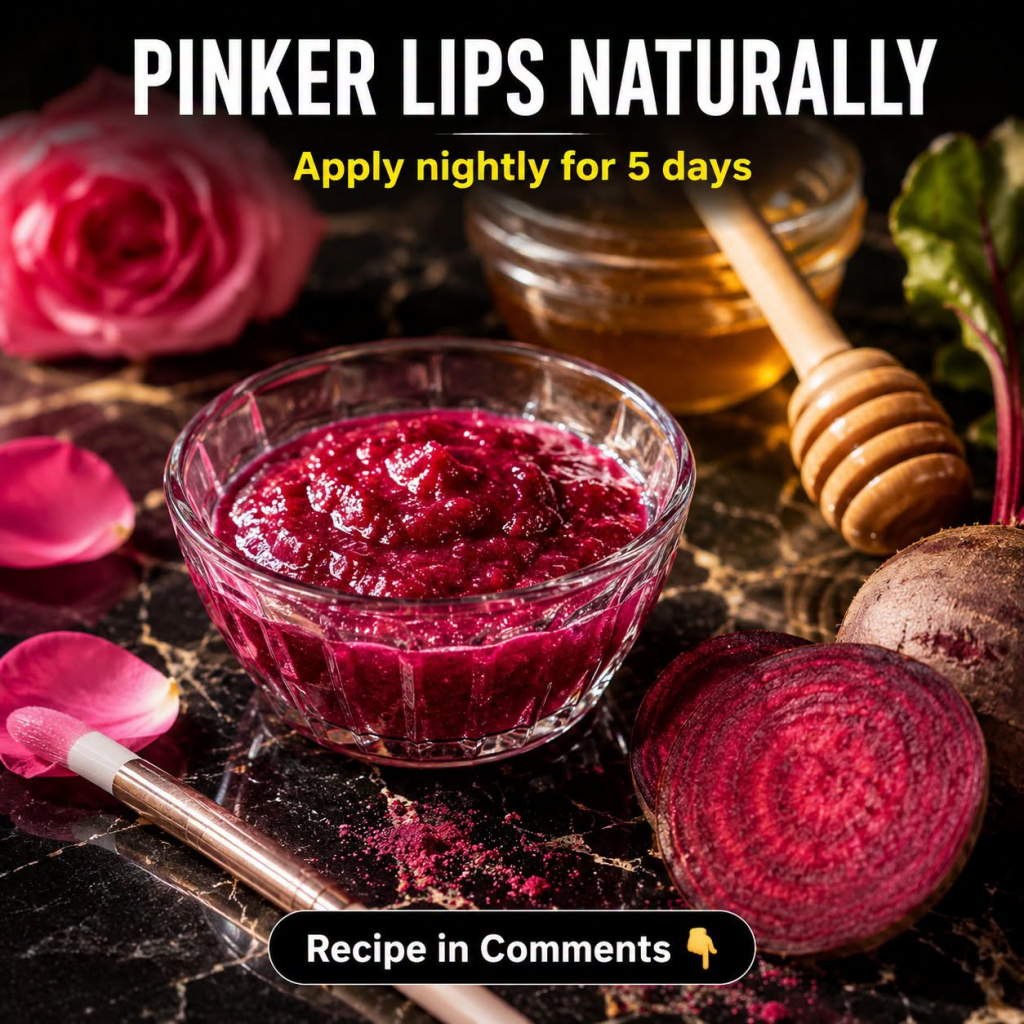
Healthy lips usually look smoother and more even when they are adequately moisturized, protected from sunlight and free from ongoing irritation. Genetics largely determine natural lip colour, while dryness, sun exposure, smoking, frequent lip licking, dehydration and reactions to lip products can make the lips appear dull or uneven. Natural remedies cannot permanently transform genetically dark lips into pink lips, but they can restore softness, reduce flaky buildup and create a healthier-looking tone. Beetroot can also provide a temporary rosy stain because it contains red-violet betalain pigments. Scientific evidence supports moisturizing and barrier protection far more strongly than permanent lip lightening. (PubMed)
The following remedies are organized by facial skin type, although lips do not produce oil in the same way as the surrounding facial skin. Prepare water-based mixtures fresh for every application, patch-test each remedy and never apply them over bleeding cracks, cold sores or infected skin.
Remedy 1: Beetroot and Glycerin Lip Tint for Normal Skin
Ingredients and Scientific Benefits
- Fresh beetroot juice – ½ teaspoon: Contains betacyanins that leave a temporary pink-red tint on the surface.
- Pure aloe vera gel – 1 teaspoon: Provides water-based hydration and may calm mild dryness.
- Pure honey – ¼ teaspoon: Functions as a humectant, helping the lips retain moisture.
- Plant-derived glycerin – 2 drops: Draws water toward the outer skin layer and improves softness.
- Jojoba oil – 2 drops: Its wax esters create a light emollient layer that reduces roughness.
Scientific Working of the Remedy
Beetroot does not bleach melanin. Its betalain pigments temporarily colour the lip surface, producing a natural tint that fades with washing, drinking and eating. Aloe, glycerin and honey improve water retention, while jojoba oil reduces moisture loss. Hydrated lips reflect light more evenly, making their natural colour appear fresher. Research supports glycerin as an effective moisturizing ingredient and jojoba as a skin-conditioning wax, although this exact homemade combination has not been clinically tested. (PubMed)
Procedure
Wash and finely grate a small piece of beetroot. Press it through a clean cloth to collect the juice. Mix ½ teaspoon of juice with aloe, honey, glycerin and jojoba oil. Apply a thin coating with a clean cotton bud. Leave it on for five to seven minutes and rinse gently. Prepare a fresh mixture each time.
How Often to Apply
Apply once nightly for five days. Afterward, reduce use to two or three nights per week.
Initial Results
A temporary rosy tint may be visible after the first application. Within one to three days, the lips may feel smoother and less dry, but natural pigmentation will not permanently change.
Remedy 2: Green Tea and Rice Mask for Combination Skin
Ingredients and Scientific Benefits
- Cooled green tea – 1 teaspoon: Supplies polyphenol antioxidants that help protect against environmental oxidative stress.
- Rice starch – ½ teaspoon: Creates a soft film and supports the damaged outer barrier.
- Colloidal oatmeal – ¼ teaspoon: Contains beta-glucans and avenanthramides that help calm dryness and irritation.
- Aloe vera gel – ½ teaspoon: Provides lightweight moisture without a greasy texture.
- Plant glycerin – 2 drops: Improves water retention.
- Sunflower seed oil – 1 drop: Provides linoleic acid and light emollient protection.
Scientific Working of the Remedy
This mask combines humectants with a very small amount of oil, making it suitable for people who dislike heavy lip balms. Colloidal oatmeal has demonstrated benefits for skin hydration, roughness and barrier function. Rice starch has also been studied for barrier-supporting effects, while sunflower oil can improve hydration without the barrier disruption associated with some other kitchen oils. (PubMed)
Procedure
Brew plain green tea without sugar or flavouring and allow it to cool completely. Mix the rice starch and oatmeal, then add green tea, aloe and glycerin. Finish with one drop of sunflower oil. Apply for five minutes and rinse before it dries completely.
How Often to Apply
Use on alternate nights for five days. Continue twice weekly if the lips remain comfortable.
Initial Results
Dry patches may become less noticeable within two days. The surface can look smoother and more even, but the mask does not directly remove melanin.
Remedy 3: Lightweight Aloe and Oat Gel for Oily Skin
Ingredients and Scientific Benefits
- Pure aloe vera gel – 1 teaspoon: Creates a light hydrating base.
- Boiled and cooled water – ½ teaspoon: Dilutes the mixture and supplies moisture without oiliness.
- Colloidal oatmeal – ¼ teaspoon: Helps reduce roughness and supports the protective barrier.
- Rice starch – ¼ teaspoon: Thickens the gel and creates a gentle protective film.
- Plant glycerin – 2 drops: Holds water in the outer lip surface.
Scientific Working of the Remedy
Oily facial skin does not prevent the lips from becoming dehydrated. This oil-free gel supplies water and humectants without leaving a heavy coating around the mouth. Oatmeal helps calm irritation, while glycerin improves hydration. Better hydration can reduce the grey, dull appearance associated with flaky lips, although it will not produce an artificial pink colour. (PubMed)
Procedure
Mix the oatmeal and rice starch. Add the cooled water gradually, followed by aloe and glycerin. Stir until smooth. Apply a thin layer for five minutes and rinse gently. Do not rub the mixture into the lips.
How Often to Apply
Use once daily for three days. Apply again on day five if no stinging, redness or peeling occurs.
Initial Results
The lips may feel softer within one or two days. Small dry flakes may decrease by day three, helping the natural lip tone appear clearer.
Remedy 4: Beeswax and Coconut Overnight Balm for Dry Skin
Ingredients and Scientific Benefits
- Virgin coconut oil – ½ teaspoon: Works as an emollient and has clinical evidence for improving dry skin.
- Unrefined shea butter – ½ teaspoon: Softens rough skin and contributes to an occlusive barrier.
- Pure beeswax – ¼ teaspoon: Forms a semi-occlusive film that slows water evaporation.
- Sunflower seed oil – ½ teaspoon: Supports hydration and barrier integrity through its linoleic-acid content.
- Rosehip seed oil – 2 drops: Supplies fatty acids that condition dry skin.
Scientific Working of the Remedy
The lips naturally lose water more easily than facial skin, which is why highly occlusive formulas can improve dryness and roughness. Beeswax, shea butter and coconut oil form a protective layer, while sunflower and rosehip oils improve flexibility. A controlled study found virgin coconut oil effective as a moisturizer for xerosis, and lip-specific research shows that increasing occlusivity reduces roughness by limiting water loss. (PubMed)
Beeswax and related bee substances can trigger contact allergy in some people with cheilitis. Avoid this balm if bee-derived ingredients have previously caused itching, swelling or burning. (PubMed)
Procedure
Place the beeswax, coconut oil and shea butter in a heat-safe bowl. Warm the bowl over hot water until the ingredients melt. Remove it from the heat and stir in the sunflower and rosehip oils. Transfer to a clean container and allow it to set. Apply only a rice-grain-sized amount before bed.
How Often to Apply
Apply nightly for five to seven days. Use a clean applicator and discard the balm if its smell, colour or texture changes.
Initial Results
Tightness may decrease after the first night. Flaking and surface lines may look less noticeable within two or three days because the lips are retaining more moisture.
Remedy 5: Minimal Oat Barrier Paste for Sensitive Skin
Ingredients and Scientific Benefits
- Colloidal oatmeal – ½ teaspoon: Helps soothe itching, scaling and irritation.
- Rice starch – ½ teaspoon: Supports the outer barrier and creates a smooth texture.
- Boiled and cooled water – 1 teaspoon: Provides a fragrance-free liquid base.
- Plant glycerin – 1 drop: Adds humectant hydration.
- Sunflower seed oil – 2 drops: Softens the lips and helps reduce moisture loss.
Scientific Working of the Remedy
Sensitive lips can darken following repeated irritation, a condition sometimes called pigmented contact cheilitis. A minimal mixture avoids fragrances, acids, flavourings and essential oils that may worsen inflammation. Oatmeal has anti-inflammatory and antioxidant activity, while sunflower oil preserves barrier integrity and improves hydration. (DermNet®)
Procedure
Combine the oatmeal and rice starch. Slowly add the cooled water until a soft paste forms. Add glycerin and sunflower oil. Apply for three to five minutes, then rinse without rubbing.
How Often to Apply
Patch-test first. Apply on day one and, if there is no reaction, repeat on days three and five.
Initial Results
The lips may feel calmer and less rough within one to three days. This remedy will not stain the lips; it improves their appearance by reducing dryness and irritation.
Final Tips for Naturally Rosy and Healthy Lips
Use a fragrance-free lip moisturizer several times daily and before bed. Before going outdoors, apply a broad-spectrum lip sunscreen with SPF 30 or higher and reapply approximately every two hours during continued exposure. Sunlight can worsen dryness, uneven colour and chronic lip damage. (American Academy of Dermatology)
Avoid licking, biting, peeling or brushing the lips. Saliva repeatedly wetting the lips can cause irritant dermatitis, while picking removes healing surface cells. Also avoid lemon juice, undiluted apple cider vinegar, toothpaste, baking soda, cinnamon, peppermint oil and coarse sugar scrubs. Burning or tingling is a sign of irritation, not proof that a remedy is working.
Keep bowls, jars and applicators clean. Discard every water-based mixture immediately after use. Perform a 24-hour patch test before applying beetroot, aloe, honey, plant oils or beeswax. People with pollen, nut, seed or bee-product allergies need additional caution.
Softness may begin to improve within two or three days, but ongoing dryness often needs two to three weeks of consistent care. Permanent lip lightening should not be expected from a five-day home remedy.
Diet Plan for Healthy-Looking Lips
Follow this balanced diet for six to eight weeks while continuing gentle external care.
Breakfast: Eat eggs, plain yogurt, lentils or unsweetened soy food with oatmeal or whole-grain bread. Add a vitamin-C-rich fruit such as guava, orange, kiwi or strawberries.
Lunch: Choose beans, lentils, chicken or fish with leafy vegetables, carrots, tomatoes and brown rice or whole-grain bread.
Evening snack: Have fresh fruit with a small portion of walnuts, almonds, pumpkin seeds or sunflower seeds.
Dinner: Eat fish, tofu, eggs, beans or lean meat with cooked vegetables and a whole-grain carbohydrate.
Hydration: Drink water regularly according to thirst, activity level and climate. Severe dehydration can contribute to oral dryness, but excessive water will not permanently lighten the lips.
Iron, folate, vitamin B12 and protein deficiencies can sometimes contribute to changes around the mouth. Do not begin high-dose supplements unless a healthcare professional confirms a deficiency.
Continue the chosen remedy for two weeks if it causes no irritation. Consult a dermatologist or dentist if the discolouration persists, develops suddenly or becomes patchy. Medical assessment is also necessary for swelling, pain, bleeding, repeated cracking at the mouth corners, ulcers, crusting, white patches or a lower-lip lesion that does not heal. Chronic ultraviolet exposure can cause actinic cheilitis, which requires professional evaluation. (DermNet®)
References for the above remedy
- American Academy of Dermatology Association. Seven Dermatologists’ Tips for Healing Dry, Chapped Lips.
https://www.aad.org/public/everyday-care/skin-care-basics/dry/heal-dry-chapped-lips - American Academy of Dermatology Association. Sunscreen Frequently Asked Questions.
https://www.aad.org/media/stats-sunscreen - Tamura E, et al. The Efficacy of a Highly Occlusive Formulation for Dry Lips.
https://pubmed.ncbi.nlm.nih.gov/31571236/ - Danby SG, et al. Effect of Olive and Sunflower Seed Oil on the Adult Skin Barrier.
https://pubmed.ncbi.nlm.nih.gov/22995032/ - Capone K, et al. Effects of Colloidal Oatmeal Topical Cream on Skin Barrier Properties.
https://pubmed.ncbi.nlm.nih.gov/32484623/ - Loden M, et al. A Double-Blind Study Comparing the Effect of Glycerin and Urea on Dry Skin.
https://pubmed.ncbi.nlm.nih.gov/12013198/ - Agero ALC, Verallo-Rowell VM. Virgin Coconut Oil Compared with Mineral Oil as a Moisturizer for Xerosis.
https://pubmed.ncbi.nlm.nih.gov/15724344/ - Nong Y, et al. A Review of the Use of Beeswax in Skincare.
https://pubmed.ncbi.nlm.nih.gov/36999457/ - Chhikara N, et al. Bioactive Compounds of Beetroot and Utilization in the Food Processing Industry.
https://pubmed.ncbi.nlm.nih.gov/30309532/ - DermNet New Zealand. Pigmented Contact Cheilitis.
https://dermnetnz.org/topics/pigmented-contact-cheilitis