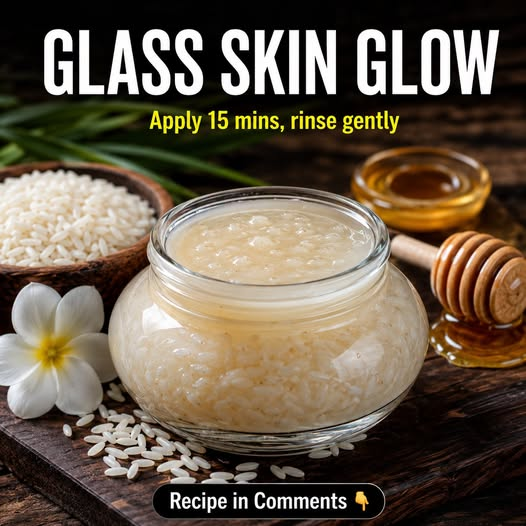
“Glass skin” describes a complexion that looks smooth, clear, evenly hydrated and naturally reflective. It does not mean poreless or literally transparent skin. Dryness, excess oil, accumulated dead cells, acne, irritation, insufficient sleep and ultraviolet exposure can all reduce radiance. A rice-and-honey mask like the one shown may temporarily soften the skin, but it cannot create permanent glass skin in 15 minutes. Research supports certain formulated rice-derived ingredients for hydration and barrier care, while a clinical study found that rice starch helped damaged skin recover. Evidence for ordinary homemade rice water is much more limited, so it should be used as a fresh, gentle supporting treatment rather than a guaranteed brightening cure. (PubMed)
The following remedies are designed for different skin types. Their exact combinations have not been tested as complete clinical formulations, but their ingredients have evidence for hydration, soothing, oil control or barrier support. Patch-test every mixture for 24 hours, prepare only one application at a time and never use old or fermented homemade rice water.
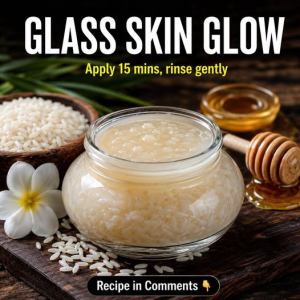
Remedy 1: Fresh Rice Hydration Gel for Normal Skin
Ingredients
- Fresh boiled rice water: 1 tablespoon
- Rice starch: 1 teaspoon
- Pure aloe vera gel: 1 teaspoon
- Cooled green tea: 1 teaspoon
- Pure honey: ½ teaspoon
- Plant-derived glycerin: 2 drops
Scientific Working of Each Ingredient
Fresh boiled rice water contains small amounts of starch and water-soluble rice components. It can leave a temporary smoothing film, although it is weaker than the standardized rice extracts studied in cosmetic research.
Rice starch helps form a soft protective layer and has been associated with improved recovery of an experimentally damaged skin barrier.
Aloe vera works mainly as a humectant. Clinical testing of aloe-containing formulations has shown increased skin hydration.
Green tea supplies antioxidant catechins that can help calm the appearance of environmental stress.
Honey attracts moisture and helps keep the mask from drying rapidly. Its strongest dermatological evidence relates to soothing, wound care and antimicrobial activity rather than permanent brightening.
Glycerin binds water within the outer skin layer, creating a temporarily plumper and more reflective surface. (PubMed)
Procedure
Boil plain white rice in extra water without salt or oil. Strain one tablespoon of the cloudy water and allow it to cool completely.
Mix the cooled rice water with rice starch. Add aloe, green tea, honey and glycerin. Apply a thin layer to freshly cleansed skin, avoiding the eyelids and lips. Leave it on for eight to ten minutes, then rinse gently with lukewarm water.
How Often to Apply
Apply once daily for three days. Continue two or three times weekly for another three weeks if the skin remains comfortable.
Initial Results
Within one to three days, the face may feel softer and look temporarily more dewy. Uneven pigmentation, scars and wrinkles will not disappear during this period.
Remedy 2: Soy, Cucumber and Yogurt Mask for Combination Skin
Ingredients
- Unsweetened soy milk: 1 tablespoon
- Plain unsweetened yogurt: 1 teaspoon
- Fresh cucumber juice: 1 teaspoon
- Colloidal oatmeal: 1 teaspoon
- Rice starch: ½ teaspoon
- Jojoba oil: 1 drop
Scientific Working of Each Ingredient
Soy milk contains proteins and isoflavone-related compounds. Formulated topical soy preparations have shown potential benefits for dullness, uneven tone and photoaged skin, although kitchen soy milk is considerably less concentrated.
Plain yogurt contains moisture and naturally occurring lactic acid. Lactic acid can improve surface smoothness and epidermal renewal when used in controlled formulations, but the amount in yogurt is mild and unpredictable.
Cucumber juice provides a cooling, water-rich base. It supports temporary freshness rather than clinically proven whitening.
Colloidal oatmeal supplies beta-glucans and avenanthramides that help reduce roughness and reinforce the barrier.
Rice starch thickens the mask and supports a soft finish without physical scrubbing.
Jojoba oil reduces dryness on the cheeks while remaining lighter than many cooking oils. (PubMed)
Procedure
Blend or grate a small piece of cucumber and strain the juice. Mix it with soy milk and yogurt. Add oatmeal and rice starch, then stir in one drop of jojoba oil.
Apply a thin layer over the face, using less around an oily nose or forehead. Leave the mask on for five to seven minutes. Rinse before it becomes completely dry.
How Often to Apply
Use on alternate days for five days. After the first week, apply no more than twice weekly.
Initial Results
The cheeks may feel less tight within two applications, while the T-zone may appear fresher. The improvement comes from balanced hydration and smoother texture rather than instant skin lightening.
Remedy 3: Green Tea and Kaolin Rice Mask for Oily Skin
Ingredients
- Kaolin clay: 1 teaspoon
- Rice starch: 1 teaspoon
- Cooled green tea: 1 tablespoon
- Pure aloe vera gel: 1 teaspoon
- Colloidal oatmeal: ½ teaspoon
- Pure honey: ¼ teaspoon
Scientific Working of Each Ingredient
Kaolin clay absorbs excess surface sebum and reduces shine. This can make the complexion look clearer, although clay cannot pull toxins from the skin.
Green tea contains epigallocatechin gallate and related polyphenols. Human research on standardized topical green-tea preparations has reported improvements in acne and oil-associated skin concerns.
Rice starch provides additional light oil absorption and improves the texture of the mask.
Aloe vera adds hydration without a thick oily layer.
Colloidal oatmeal helps prevent the clay from leaving the skin overly tight or irritated.
Honey acts as a humectant so the mask remains slightly moist instead of cracking on the skin. (PubMed)
Procedure
Combine the kaolin, rice starch and oatmeal. Gradually add green tea, aloe and honey until a thin paste forms.
Spread it over oily areas, especially the forehead, nose and inner cheeks. Leave it for four to five minutes only. Rinse while the mask is still slightly damp.
How Often to Apply
Apply on day one and day four of the first five-day routine. Continue once weekly.
Initial Results
Excess shine may decrease after the first use. Within two or three days, pores may appear cleaner because surface oil has been reduced. The mask does not permanently shrink pores.
Remedy 4: Avocado, Oat and Honey Glow Mask for Dry Skin
Ingredients
- Finely mashed ripe avocado: 1 teaspoon
- Colloidal oatmeal: 1 tablespoon
- Pure aloe vera gel: 1 tablespoon
- Pure honey: 1 teaspoon
- Sunflower seed oil: 3 drops
- Plant-derived glycerin: 2 drops
Scientific Working of Each Ingredient
Avocado contains emollient fats that soften flaky skin, although evidence for direct pigment or wrinkle treatment is limited.
Colloidal oatmeal has clinical evidence for improving hydration, scaling, roughness and barrier function.
Aloe vera increases water content in the outer skin layer.
Honey and glycerin are humectants that draw moisture toward the surface and can temporarily soften dehydration lines.
Sunflower seed oil is rich in linoleic acid. Research suggests that it can support skin-barrier integrity and hydration when used in small amounts. (PubMed)
Procedure
Mash the avocado until completely smooth. Add oatmeal, aloe, honey, sunflower oil and glycerin.
Apply the mixture to slightly damp skin. Leave it on for eight to ten minutes, then rinse without rubbing. Immediately apply a fragrance-free moisturizer to seal in hydration.
How Often to Apply
Use once daily for the first three days. Continue twice weekly for four weeks.
Initial Results
Flaking and tightness may improve after one or two applications. Better-hydrated skin reflects light more evenly, creating a more noticeable glow.
Remedy 5: Minimal Rice and Oat Compress for Sensitive Skin
Ingredients
- Colloidal oatmeal: 1 tablespoon
- Rice starch: 1 teaspoon
- Boiled and cooled water: 2 tablespoons
- Pure aloe vera gel: ½ teaspoon
- Plant-derived glycerin: 1 drop
- Sunflower seed oil: 1 drop
Scientific Working of Each Ingredient
Colloidal oatmeal provides anti-inflammatory and antioxidant activity and has repeatedly improved dryness, roughness and itching in clinical studies.
Rice starch supports barrier recovery without relying on acids or abrasive particles.
Boiled and cooled water creates a simple base with no fragrance or botanical acids.
Aloe vera supplies lightweight hydration but should be omitted if it has caused stinging previously.
Glycerin and sunflower oil combine water-binding and moisture-sealing effects while keeping the recipe minimal.
This remedy supports calmness and hydration. It does not bleach sensitive skin or treat rosacea, eczema or allergic dermatitis. (PubMed)
Procedure
Mix the oatmeal and rice starch. Slowly add the cooled water, followed by aloe, glycerin and sunflower oil.
Test the paste on a small area first. When it feels comfortable, apply a thin layer to the face for three to five minutes. Rinse immediately if burning, itching or increasing redness develops.
How Often to Apply
Use on day one. If there is no reaction, repeat on day three and day five.
Initial Results
Sensitivity-related tightness may improve within one to three days. Persistent redness or burning requires medical evaluation rather than additional masks.
Final Tips for Maintaining a Glass Skin Glow
Wash the face gently twice daily and after heavy sweating. Avoid harsh scrubs, cleansing brushes, lemon juice, baking soda, undiluted vinegar and very hot water. Physical irritation can damage the barrier and make the skin look rougher or darker.
Apply moisturizer while the skin is slightly damp. Use a light texture for oily skin and a richer fragrance-free cream for dry skin. Moisturizing consistently is more important than using a new homemade mask every day.
Apply broad-spectrum, water-resistant sunscreen with SPF 30 or higher every morning. Sun protection helps prevent uneven pigmentation, collagen breakdown and premature ageing and remains one of the most important steps for maintaining clear, radiant skin. (American Academy of Dermatology)
Never keep homemade rice water at room temperature for later use. Water-rich mixtures can become contaminated because they contain no preservative system. Make a fresh quantity, use it immediately and discard the remainder.
Keep pillowcases, face towels, makeup brushes and applicators clean. Avoid picking pimples or squeezing clogged pores. Complete a patch test before using honey, soy, oats, aloe or plant oils.
Visible hydration and softness may begin within two or three days. Continued barrier care can maintain glow and make fine dehydration lines appear softer over time. Kitchen masks cannot permanently reduce true wrinkles, deep pigmentation, acne scars or enlarged pores.
Diet Plan for Glowing Skin
Follow this balanced plan for at least eight to twelve weeks.
Breakfast: Eat eggs, plain yogurt, unsweetened soy food or oatmeal. Add guava, oranges, berries or kiwi for vitamin C, which the body requires for normal collagen production.
Lunch: Combine lentils, beans, chicken or fish with leafy vegetables, tomatoes and brown rice or whole-grain bread.
Snack: Choose fresh fruit with a small portion of walnuts, almonds, pumpkin seeds or sunflower seeds.
Dinner: Eat fish, tofu, eggs, beans or lean meat with cooked vegetables. Adequate protein provides amino acids needed for normal tissue renewal.
Healthy fats: Include nuts, seeds, fish, avocado or modest quantities of plant oils.
Fluids: Drink according to thirst, physical activity and climate. Water supports normal hydration, but excessive intake will not cure dullness or replace moisturizer.
A varied diet is generally more appropriate than taking unneeded “skin glow” supplements. Dermatologists recommend obtaining nutrients through balanced food unless a deficiency has been identified. (American Academy of Dermatology)
Continue a suitable remedy for three to four weeks unless irritation develops. Consult a dermatologist if dullness persists with severe acne, painful bumps, itching, scaling, swelling, sudden pigmentation or a rash. Medical advice is also needed when a mole or dark patch changes in size, shape or colour.
References for the above remedy
- Zamil DH, et al. Dermatological Uses of Rice Products: Trend or True?
https://pubmed.ncbi.nlm.nih.gov/35587098/ - De Paepe K, et al. Effect of Rice Starch as a Bath Additive on Skin Barrier Function.
https://pubmed.ncbi.nlm.nih.gov/12353708/ - Manosroi A, et al. Antioxidant Activities and Skin Hydration Effects of Rice Bran Bioactive Compounds.
https://pubmed.ncbi.nlm.nih.gov/21449379/ - Capone K, et al. Effects of Colloidal Oatmeal on Skin Barrier Properties and Hydration.
https://pubmed.ncbi.nlm.nih.gov/32484623/ - Reynertson KA, et al. Anti-Inflammatory Activities of Colloidal Oatmeal.
https://pubmed.ncbi.nlm.nih.gov/25607907/ - Dal’Belo SE, et al. Moisturizing Effect of Cosmetic Formulations Containing Aloe Vera Extract.
https://pubmed.ncbi.nlm.nih.gov/17026654/ - Burlando B, Cornara L. Honey in Dermatology and Skin Care: A Review.
https://pubmed.ncbi.nlm.nih.gov/24305429/ - Elsaie ML, et al. The Efficacy of Topical Green Tea Lotion in Mild-to-Moderate Acne.
https://pubmed.ncbi.nlm.nih.gov/19363854/ - American Academy of Dermatology Association. Ten Skin-Care Secrets for Healthier-Looking Skin.
https://www.aad.org/public/everyday-care/skin-care-secrets/routine/healthier-looking-skin - National Institutes of Health, Office of Dietary Supplements. Vitamin C Fact Sheet.
https://ods.od.nih.gov/factsheets/VitaminC-HealthProfessional/