Uneven skin tone, dullness, post-acne marks, and mild pigmentation are among the most common skincare concerns. Sun exposure, pollution, stress, aging, and an unhealthy lifestyle can gradually reduce the skin’s natural radiance. Fortunately, several natural ingredients have been studied for their antioxidant, anti-inflammatory, and skin-conditioning properties. When used consistently and appropriately for your skin type, these ingredients may help improve the appearance of the skin while supporting its natural barrier.
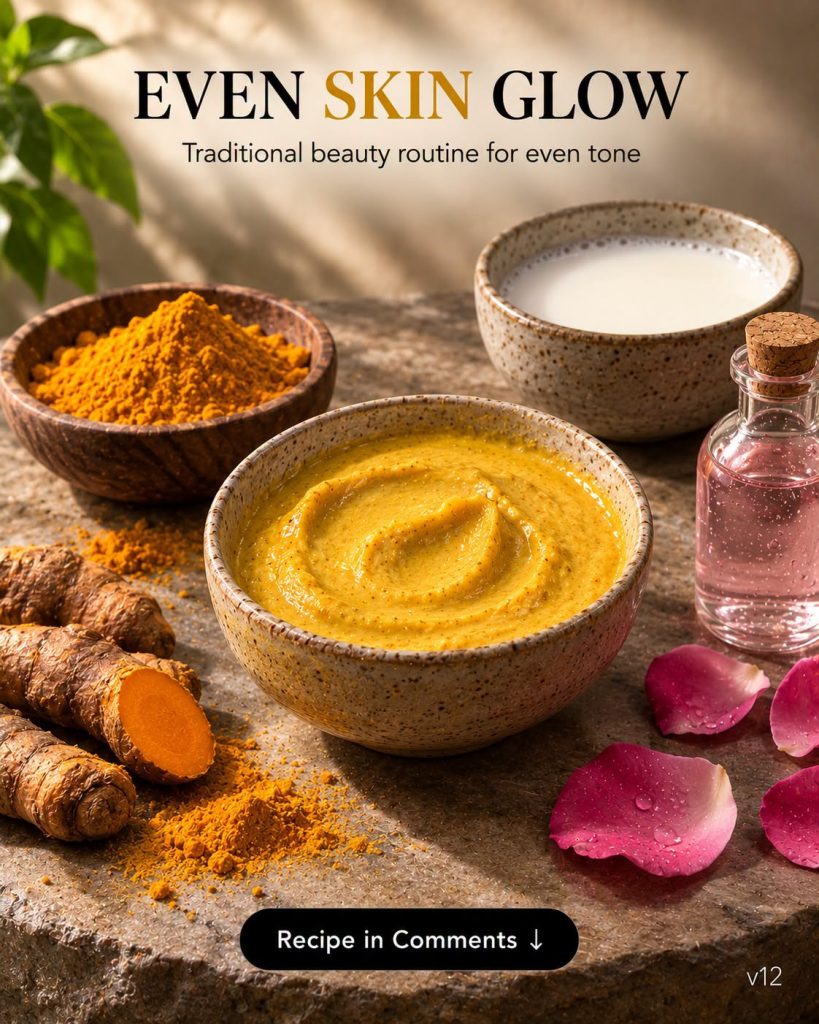
The traditional turmeric and milk remedy shown above has been used for generations. Turmeric provides powerful antioxidant compounds, while milk contains lactic acid that gently exfoliates dead skin cells. This article explains five unique remedies designed for different skin types, along with the scientific reasoning behind each ingredient, a diet plan, and practical skincare advice.

Remedy 1: For Normal Skin
Ingredients
- Turmeric powder – ½ teaspoon
- Raw milk – 2 tablespoons
- Gram flour (besan) – 1 tablespoon
- Honey – 1 teaspoon
- Rose water – 1 teaspoon
- Aloe vera gel – 1 teaspoon
Scientific Working of the Ingredients
Turmeric contains curcumin, a natural antioxidant and anti-inflammatory compound that helps reduce oxidative stress responsible for uneven-looking skin.
Milk provides lactic acid, an alpha-hydroxy acid (AHA) that gently exfoliates dead skin cells and improves skin smoothness.
Gram flour absorbs excess impurities without excessively drying the skin.
Honey is a natural humectant that helps retain moisture while supporting the skin barrier.
Rose water offers soothing effects and temporarily refreshes tired-looking skin.
Aloe vera contains polysaccharides that hydrate the skin and help maintain its protective barrier.
Procedure
- Mix all ingredients into a smooth paste.
- Cleanse the face with lukewarm water.
- Apply an even layer over the face and neck.
- Leave for 15–20 minutes.
- Rinse gently using cool water.
How Often to Apply
Use three times per week for at least one week.
Initial Results
Within 2–3 days, the skin may appear softer, cleaner, and more refreshed. Continued use may gradually improve the appearance of uneven skin tone.
Remedy 2: For Combination Skin
Ingredients
- Turmeric – ¼ teaspoon
- Yogurt – 2 tablespoons
- Oatmeal powder – 1 tablespoon
- Cucumber juice – 1 tablespoon
- Honey – 1 teaspoon
- Rose water – 1 teaspoon
Scientific Working of the Ingredients
Yogurt contains lactic acid that gently removes dead skin cells.
Oatmeal contains beta-glucans that help soothe and moisturize the skin.
Cucumber supplies water and antioxidants that temporarily reduce the appearance of tired skin.
Honey supports hydration.
Turmeric provides antioxidant protection against environmental stress.
Rose water offers soothing and refreshing effects.
Procedure
Mix thoroughly until creamy.
Apply evenly over clean skin.
Leave for 15 minutes.
Wash with cool water.
How Often to Apply
Use every alternate day for five applications.
Initial Results
The skin often feels smoother and more balanced with reduced surface dryness and oiliness.
Remedy 3: For Oily Skin
Ingredients
- Turmeric – ¼ teaspoon
- Multani mitti (Fuller’s earth) – 1 tablespoon
- Tomato pulp – 1 tablespoon
- Aloe vera gel – 1 tablespoon
- Green tea – 1 tablespoon
- Lemon juice – 3–4 drops (avoid if skin is irritated)
Scientific Working of the Ingredients
Multani mitti absorbs excess surface oil.
Green tea contains catechins that possess antioxidant properties.
Tomato provides lycopene, a natural antioxidant.
Aloe vera hydrates without leaving a heavy feel.
Turmeric helps reduce visible redness associated with minor irritation.
Small amounts of lemon juice contain citric acid, which may help brighten the skin, though it should be used cautiously due to possible irritation.
Procedure
Combine all ingredients.
Apply a thin layer.
Leave for 12–15 minutes.
Wash thoroughly.
Follow with a moisturizer.
How Often to Apply
Use twice weekly.
Initial Results
Within several applications, oily skin often appears fresher with a cleaner surface and reduced shine.
Remedy 4: For Dry Skin
Ingredients
- Turmeric – ¼ teaspoon
- Milk cream (fresh cream) – 2 teaspoons
- Honey – 1 teaspoon
- Avocado pulp – 1 tablespoon
- Oat flour – 1 tablespoon
- Aloe vera gel – 1 teaspoon
Scientific Working of the Ingredients
Milk cream contains fats that soften rough skin.
Honey helps maintain skin hydration.
Avocado provides vitamin E and healthy fatty acids that nourish dry skin.
Oats help calm and protect the skin barrier.
Aloe vera contributes hydration.
Turmeric provides antioxidant support.
Procedure
Blend until smooth.
Massage gently over the face.
Leave for 20 minutes.
Rinse with lukewarm water.
How Often to Apply
Three times weekly.
Initial Results
Skin generally feels softer, smoother, and more comfortable after several uses.
Remedy 5: For Sensitive Skin
Ingredients
- Turmeric – ⅛ teaspoon
- Aloe vera gel – 2 tablespoons
- Colloidal oatmeal – 1 tablespoon
- Chamomile tea – 1 tablespoon
- Cucumber juice – 1 tablespoon
- Honey – ½ teaspoon
Scientific Working of the Ingredients
Aloe vera hydrates and supports the skin barrier.
Colloidal oatmeal is widely used to soothe sensitive skin.
Chamomile contains naturally occurring compounds with calming properties.
Cucumber provides hydration.
Honey supports moisture retention.
A very small amount of turmeric supplies antioxidant compounds while reducing the chance of irritation.
Procedure
Mix gently.
Apply without rubbing.
Leave for 10–15 minutes.
Rinse carefully with cool water.
How Often to Apply
Twice weekly after performing a patch test.
Initial Results
The skin may feel calmer, softer, and more hydrated after a few applications.
Final Tips
- Always perform a patch test before using any new natural ingredient.
- Apply sunscreen every morning because UV exposure contributes significantly to uneven skin tone.
- Drink enough water daily.
- Sleep for 7–9 hours each night.
- Avoid excessive sugar and smoking.
- Keep makeup brushes and towels clean.
- Do not scrub the face aggressively.
- Consistent skincare usually provides noticeable improvement after several weeks rather than overnight.
Diet Plan for Healthy, Even-Toned Skin
Breakfast
- Oatmeal with berries
- Boiled egg or Greek yogurt
- Green tea
Mid-Morning Snack
- Orange or kiwi
- A handful of almonds or walnuts
Lunch
- Grilled fish or beans
- Brown rice or whole wheat roti
- Mixed vegetables
- Cucumber salad
Evening Snack
- Coconut water
- Pumpkin or sunflower seeds
Dinner
- Lentil soup
- Steamed vegetables
- Grilled chicken, tofu, or chickpeas
Before Bed
- A small glass of milk if tolerated, or unsweetened soy milk.
Continue these home remedies and a healthy diet consistently for 6–8 weeks. If pigmentation, dark patches, irritation, or uneven skin tone continue to worsen or do not improve, consult a dermatologist for proper evaluation and treatment.
References for the above remedy
- National Center for Complementary and Integrative Health. Turmeric. URL: https://www.nccih.nih.gov/health/turmeric
- American Academy of Dermatology Association. Skin care basics and sun protection. URL: https://www.aad.org
- National Eczema Association. Colloidal Oatmeal for Skin. URL: https://nationaleczema.org
- National Center for Biotechnology Information. Curcumin in Skin Disorders. URL: https://www.ncbi.nlm.nih.gov/pmc/articles/PMC5664031/
- National Center for Biotechnology Information. Aloe Vera: A Short Review. URL: https://www.ncbi.nlm.nih.gov/pmc/articles/PMC2763764/
- National Center for Biotechnology Information. Honey in Dermatology and Skin Care. URL: https://www.ncbi.nlm.nih.gov/pmc/articles/PMC5661189/
- DermNet NZ. Alpha Hydroxy Acids (including Lactic Acid). URL: https://dermnetnz.org/topics/alpha-hydroxy-acids
- National Center for Biotechnology Information. Green Tea Polyphenols and Skin Photoprotection. URL: https://www.ncbi.nlm.nih.gov/pmc/articles/PMC3390139/
- National Center for Biotechnology Information. Chamomile: Herbal Medicine Review. URL: https://www.ncbi.nlm.nih.gov/books/NBK92761/
- Harvard T.H. Chan School of Public Health. The Nutrition Source – Healthy Eating Plate. URL: https://www.hsph.harvard.edu/nutritionsource/healthy-eating-plate/