Acne can affect appearance, comfort and self-confidence, especially when inflamed pimples appear before an important event. However, acne develops through several processes, including blocked pores, excess oil, inflammation and changes in skin bacteria. No homemade mask can reliably eliminate acne overnight. In the first one to three days, gentle home care may reduce temporary redness, surface oil and dryness, while a meaningful decrease in new pimples usually requires several weeks of consistent treatment. Dermatology guidelines give stronger support to benzoyl peroxide, topical retinoids, salicylic acid and azelaic acid than to kitchen remedies. (American Academy of Dermatology)
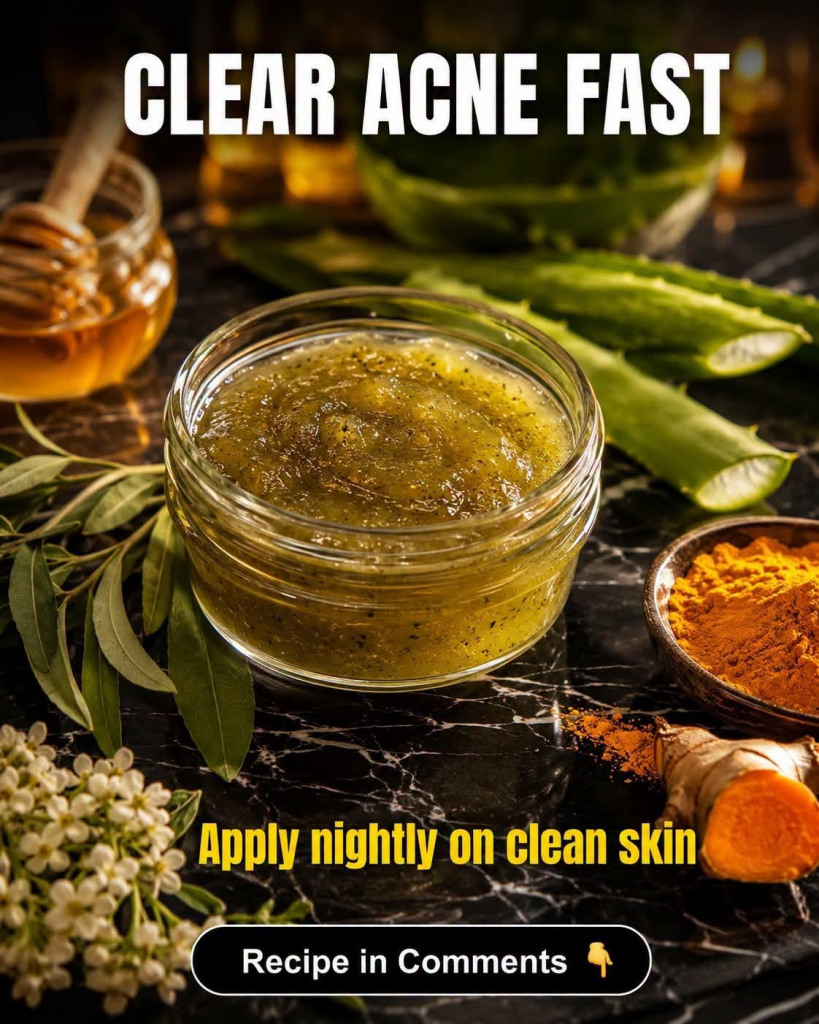
The aloe, honey, neem and turmeric mixture pictured online has not been clinically tested as a complete acne treatment. Research involving natural ingredients generally uses standardized concentrations for six to eight weeks, so brewed tea, fresh plant gel and homemade mixtures are not equivalent to clinical formulations. The remedies below should therefore be viewed as supportive skin-care options for mild breakouts, not replacements for medical treatment. Patch-test every mixture, prepare it fresh and never leave a homemade mask on overnight.
Remedy 1: Green Tea and Aloe Calming Mask for Normal Skin
Ingredients and Their Scientific Working
- Strong cooled green tea – 1 tablespoon: Green tea contains catechins, particularly epigallocatechin gallate. Clinical research suggests that standardized topical green-tea extracts may reduce inflammatory acne lesions by influencing oil production, inflammation and acne-associated bacteria. Homemade tea is weaker but may provide a gentle antioxidant compress. (PubMed)
- Pure aloe vera gel – 1 tablespoon: Aloe supplies water and soothing polysaccharides. A clinical trial found that a standardized aloe gel improved the effectiveness and tolerability of tretinoin, although aloe alone was not proven to clear acne. (PubMed)
- Finely ground colloidal oatmeal – 1 teaspoon: Oat beta-glucans help retain moisture, while avenanthramides have anti-inflammatory and barrier-supporting activity. This can help calm irritation that sometimes makes acne appear more noticeable. (PubMed)
- Pasteurized honey – ½ teaspoon: Honey gives the mask a softer consistency and may reduce excessive dryness. Its clinical evidence relates mainly to wound care rather than ordinary acne, so it should not be considered an acne medication. (PubMed)
- Vegetable glycerin – 2 drops: Glycerin attracts water into the outer skin layer and supports barrier flexibility without requiring a heavy facial oil. (PubMed)
Procedure
Mix all ingredients in a clean bowl. Apply a thin layer to freshly washed skin, avoiding the eyelids, lips and open pimples. Leave it on for eight minutes. Rinse with lukewarm water without scrubbing, pat dry and apply a non-comedogenic moisturizer.
How Often to Apply
Use once daily for the first three days. If the skin remains comfortable, continue three times weekly for four to six weeks.
Initial Results
Within one to three days, normal skin may feel softer and look less irritated. Existing pimples will not necessarily disappear, but their surrounding dryness or temporary redness may improve.
Remedy 2: Two-Zone Balancing Mask for Combination Skin
Ingredients and Their Scientific Working
- Cooled green tea – 2 teaspoons: Supplies antioxidant catechins and creates a lightweight base suitable for both oily and dry facial areas.
- Pure aloe vera gel – 2 teaspoons: Hydrates the cheeks without coating the oilier forehead and nose with a heavy oil.
- Colloidal oatmeal – 1 teaspoon: Supports the skin barrier and reduces the rough feeling caused by over-cleansing.
- Kaolin clay – ½ teaspoon: Clay physically absorbs some surface oil. It can temporarily reduce shine but does not unclog pores as effectively as clinically recommended acne treatments.
- Sunflower seed oil – 1 drop: Linoleic-acid-rich sunflower oil may support barrier integrity and hydration. Use it only on dry areas because even natural oils may not suit every acne-prone face. (PubMed)
Procedure
Mix the green tea, aloe, oatmeal and clay. Apply a thin layer over the oily T-zone. Add one drop of sunflower oil to the remaining mixture and apply it only to dry cheek areas. Leave both sections on for seven minutes and rinse before the clay becomes hard or cracked.
How Often to Apply
Use on alternate evenings for five days. After that, apply it twice weekly if it does not produce clogged pores or irritation.
Initial Results
The T-zone may appear less shiny after the first few applications, while dry areas may feel more comfortable. A meaningful decline in blackheads and inflamed lesions requires longer-term acne management.
Remedy 3: Tea Tree and Green Tea Routine for Oily Skin
Ingredients and Their Scientific Working
- Properly formulated 5% tea tree gel – a thin spot-treatment layer: Randomized trials found that a 5% tea tree gel reduced mild-to-moderate acne lesions after approximately six weeks. Undiluted tea tree essential oil must never be placed directly on the face because it can cause irritant or allergic dermatitis. (PubMed)
- Strong cooled green tea – 1 tablespoon: Topical green-tea extracts have demonstrated anti-inflammatory and sebum-regulating potential, although brewed tea is less concentrated than the preparations used in studies.
- Kaolin clay – 1 teaspoon: Temporarily absorbs excess surface oil and helps the mask remain in place.
- Colloidal oatmeal – 1 teaspoon: Reduces the stripping effect that may occur when oily skin is treated too aggressively.
- Aloe vera gel – 1 teaspoon: Adds lightweight hydration and helps reduce the dry, tight feeling that can stimulate repeated washing.
Procedure
First mix the tea, clay, oatmeal and aloe. Apply the mask for five to seven minutes and rinse thoroughly. Once the skin is completely dry, apply a very thin layer of properly prepared 5% tea tree gel only to affected acne-prone areas. Do not mix pure essential oil into the mask.
How Often to Apply
Use the mask every other evening for three to five days and then twice weekly. Apply the tea tree gel according to its instructions, usually once daily initially. Stop if persistent burning, swelling or itching develops.
Initial Results
Surface oil and shine may decrease during the first one to three days. Tea tree treatment should not be judged after only a few applications; clinical trials assessed results over several weeks.
Remedy 4: Oat and Sunflower Barrier Mask for Dry Acne-Prone Skin
Ingredients and Their Scientific Working
- Colloidal oatmeal – 1 tablespoon: Provides starches and beta-glucans that hold water against the skin while avenanthramides help calm inflammation.
- Aloe vera gel – 1 tablespoon: Supplies moisture without relying on a thick, pore-coating cream.
- Vegetable glycerin – 3 drops: Improves water retention and supports the flexibility of dry surface cells.
- Pasteurized honey – ½ teaspoon: Prevents the mask from drying too quickly and helps create a comfortable moist layer.
- Sunflower seed oil – 1 to 2 drops: Helps reduce water loss in very dry areas. Use only a tiny quantity and discontinue it if clogged pores increase.
Procedure
Combine the oatmeal, aloe, glycerin and honey. Add one drop of sunflower oil, using a second drop only when the skin is visibly flaky. Apply for eight to ten minutes, rinse gently and immediately use a non-comedogenic moisturizer.
How Often to Apply
Apply daily for three days, followed by two or three applications weekly. Avoid using the mask immediately before or after strong exfoliating acids.
Initial Results
Tightness, flaking and rough texture may begin improving within two or three days. Better hydration can make acne look less inflamed, but it does not remove the plug inside a blocked pore.
Remedy 5: Minimal Oatmeal Compress for Sensitive Skin
Ingredients and Their Scientific Working
- Colloidal oatmeal – 1 tablespoon: Helps support the barrier and calm dry, reactive skin through its water-holding and anti-inflammatory components.
- Pure aloe vera gel – 1 teaspoon: Offers light hydration, provided the user is not sensitive to aloe.
- Weak cooled green tea – 1 teaspoon: Provides a low-strength antioxidant liquid without harsh acids or fragrance.
- Vegetable glycerin – 1 drop: Helps retain moisture while keeping the formula simple.
- Cooled boiled water – 1 tablespoon: Dilutes the mixture and lowers the amount of potentially irritating botanical material touching the skin.
Procedure
Mix the oatmeal with water first, then add aloe, weak tea and one drop of glycerin. Patch-test it on the inner arm for 24 hours. During the first facial use, leave it on for only five minutes. Rinse with cool water and do not rub with a towel.
How Often to Apply
Use every other day for three to five days. Do not apply it during an eczema flare, after a chemical peel or on broken and infected skin.
Initial Results
Sensitive skin may feel calmer and less tight after one to three applications. Stop immediately if the mask causes heat, burning, hives or prolonged redness.
Final Tips for Clearing Acne Safely
Wash the face gently no more than twice daily and after heavy sweating. Scrubbing, frequently switching remedies and squeezing pimples can increase inflammation, dark marks and scarring. Use clean pillowcases, makeup brushes, towels and phone screens, and keep oily hair away from the face. (American Academy of Dermatology)
Apply a broad-spectrum, non-comedogenic SPF 30 or higher every morning. Sun exposure can darken post-acne marks, while several acne treatments increase sensitivity to ultraviolet radiation. Get adequate sleep, manage stress and drink enough fluid to prevent dehydration, but remember that water alone does not cure acne.
Visible improvements in surface oil, redness and hydration may begin within two to three days. A healthier barrier can gradually improve brightness and soften fine dehydration lines, but these remedies cannot remove true wrinkles or completely clear acne within a few nights. Evaluate a well-tolerated routine after six to eight weeks rather than changing it every few days.
Diet Plan for Acne-Prone Skin
A supportive acne diet should focus on steady blood-sugar levels rather than extreme restriction. Evidence indicates that high-glycemic diets may modestly aggravate acne in some individuals, while the relationship between acne and dairy varies between populations. (PubMed)
Breakfast: Choose eggs, unsweetened oats or whole-grain bread with cucumber, tomato or a low-sugar fruit. Avoid beginning each day with sweet drinks, sugary cereal and refined bakery foods.
Mid-morning snack: Eat a small serving of walnuts, almonds, pumpkin seeds or one whole fruit.
Lunch: Combine lentils, beans, chicken or fish with vegetables and a moderate portion of brown rice, barley or whole-grain flatbread.
Evening snack: Choose unsweetened green tea, roasted chickpeas or fruit instead of biscuits, sweets and sweetened beverages.
Dinner: Eat vegetable soup, grilled protein, beans or lentils with salad and a small serving of whole grains.
Continue the home-care routine for four to six weeks and the balanced eating pattern for at least eight to twelve weeks. Do not take high-dose zinc, vitamin A or herbal supplements without professional advice. Consult a dermatologist if acne remains unchanged after six to eight weeks, repeatedly leaves dark marks, causes scars or includes deep, painful nodules. Sudden severe adult acne, widespread chest or back acne, irregular menstrual cycles or signs of infection also require medical assessment.
References for the above remedy
- American Academy of Dermatology. Updated guidelines for the management of acne.
https://www.aad.org/news/updated-guidelines-acne-management - American Academy of Dermatology. Acne: Tips for managing.
https://www.aad.org/public/diseases/acne/skin-care/tips - Enshaieh S, et al. The efficacy of 5% topical tea tree oil gel in mild to moderate acne vulgaris: a randomized, double-blind placebo-controlled study.
https://pubmed.ncbi.nlm.nih.gov/17314442/ - Hajheydari Z, et al. Effect of Aloe vera topical gel combined with tretinoin in treatment of mild and moderate acne vulgaris.
https://pubmed.ncbi.nlm.nih.gov/23336746/ - Kim S, et al. The effects of green tea on acne vulgaris: A systematic review and meta-analysis of randomized clinical trials.
https://pubmed.ncbi.nlm.nih.gov/32812270/ - Cerio R, et al. Mechanism of action and clinical benefits of colloidal oatmeal for dermatologic practice.
https://pubmed.ncbi.nlm.nih.gov/20865844/ - Fluhr JW, et al. Glycerol and the skin: holistic approach to its origin and functions.
https://pubmed.ncbi.nlm.nih.gov/18510666/ - Danby SG, et al. Effect of olive and sunflower seed oil on the adult skin barrier.
https://pubmed.ncbi.nlm.nih.gov/22995032/ - Jull AB, et al. Honey as a topical treatment for wounds.
https://pubmed.ncbi.nlm.nih.gov/25742878/ - Meixiong J, et al. Diet and acne: A systematic review.
https://pubmed.ncbi.nlm.nih.gov/35373155/