Natural Face Glow: DIY High-Point Glow Routine for Every Skin Type
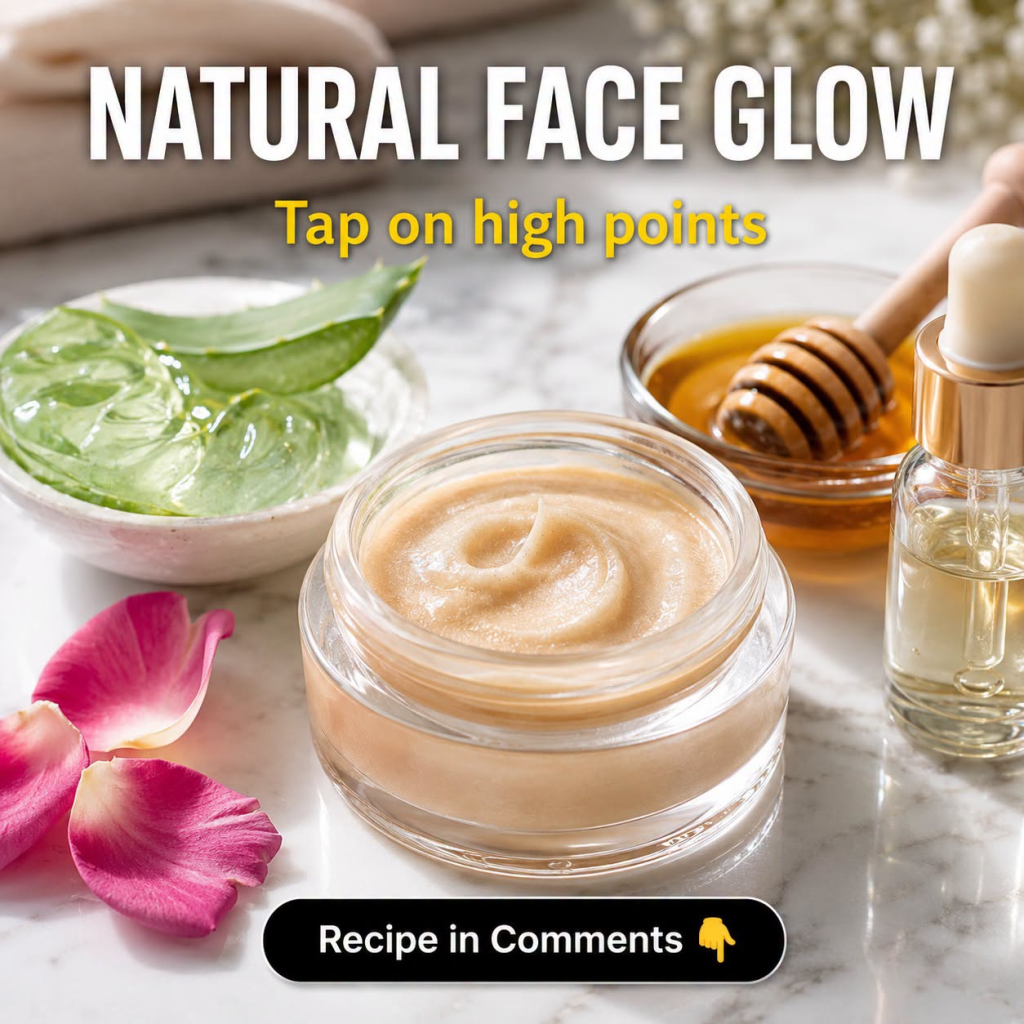
A natural face glow is not about making the skin look shiny or greasy; it is about creating a soft, healthy radiance on the high points of the face, such as the cheekbones, brow bone, bridge of the nose, cupid’s bow, and center of the chin. Dull skin, dry patches, rough texture, excess oil, and sensitivity can hide this natural brightness and make the face look tired. The best glow routine should first support the skin barrier, then add hydration, calm inflammation, and finally give a soft reflective finish using safe natural ingredients. The remedies below are designed by skin type and use ingredients with scientific support for hydration, soothing, antioxidant protection, gentle exfoliation, and barrier repair. These are not instant medical cures, but they can help the skin look fresher within a few days when used correctly and consistently.
Remedy 1: For Normal Skin
Ingredients
Rice flour: 1 teaspoon, helps polish dead surface cells gently and gives a smoother look.
Aloe vera gel: 1 teaspoon, provides water-based hydration and soothing support.
Raw honey: ½ teaspoon, works as a humectant and helps skin hold moisture.
Rose water: 1 teaspoon, refreshes the skin and gives a soft cooling effect.
Green tea: 1 tablespoon cooled, gives antioxidant support against dullness.
Sweet almond oil: 3 drops, adds a soft natural glow without heaviness.
Scientific Working of Each Ingredient
Rice flour gives mild physical smoothing, which can make light reflect better from the skin surface. Aloe vera contains water-binding compounds that help the skin feel fresh and calm. Honey attracts moisture to the upper layer of the skin and supports a healthier-looking surface. Green tea contains catechins that help protect the skin from oxidative stress. Sweet almond oil contains fatty acids that soften the skin and create a gentle glow on high points.
Procedure
Mix rice flour, aloe vera gel, honey, rose water, and green tea into a creamy paste. Apply a thin layer to the whole face and leave it for 10 minutes. Rinse with cool water. After drying the face, rub 3 drops of almond oil between your fingers and lightly tap it only on cheekbones, brow bone, and cupid’s bow.
How Often to Apply
Use once daily at night for 5 days.
Initial Results
Within 1–3 days, the skin may look smoother, softer, and more naturally radiant, especially on the cheek area.
Remedy 2: For Combination Skin
Ingredients
Aloe vera gel: 1 tablespoon, hydrates dry areas without making oily areas greasy.
Green tea: 2 tablespoons cooled, helps reduce the look of oiliness on the T-zone.
Oat flour: 1 teaspoon, calms rough texture and supports the skin barrier.
Honey: ½ teaspoon, moisturizes dry patches.
Cucumber juice: 1 teaspoon, cools and refreshes the skin.
Jojoba oil: 2 drops, gives balanced glow because it feels light on the skin.
Scientific Working of Each Ingredient
Combination skin needs hydration without excess oil. Aloe vera gives light moisture, while green tea helps control greasy shine. Oat flour is rich in soothing compounds that support the barrier and reduce discomfort. Honey helps dry areas feel less tight. Cucumber juice adds a fresh water layer. Jojoba oil is wax-like and lightweight, so it can create glow without feeling too heavy when used in a very small amount.
Procedure
Mix aloe vera, green tea, oat flour, honey, and cucumber juice. Apply the mixture to the face for 12 minutes. Rinse gently. Pat the face dry, then apply only 1–2 drops of jojoba oil on high points, avoiding the nose and forehead if they become oily easily.
How Often to Apply
Use on alternate nights for 5 days.
Initial Results
In 2–3 days, dry areas may feel more comfortable while the T-zone may look less shiny and more balanced.
Remedy 3: For Oily Skin
Ingredients
Green tea: 2 tablespoons cooled, supports sebum balance.
Aloe vera gel: 1 teaspoon, hydrates without clogging the skin.
Multani mitti or kaolin clay: 1 teaspoon, absorbs excess surface oil.
Oat powder: ½ teaspoon, reduces the drying effect of clay.
Honey: ¼ teaspoon, keeps the mask from making skin tight.
Turmeric: a very tiny pinch, supports a calmer-looking complexion.
Scientific Working of Each Ingredient
Oily skin often becomes dull when excess sebum mixes with dead surface cells. Green tea has research support for reducing sebum appearance. Clay absorbs extra surface oil and gives a cleaner look. Aloe vera provides hydration without a greasy finish. Oat powder helps prevent irritation from clay. Honey keeps the skin lightly moisturized. Turmeric contains curcumin, known for antioxidant and anti-inflammatory properties, but it must be used in a very small amount to avoid staining.
Procedure
Mix all ingredients into a smooth paste. Apply a thin layer to the face, focusing on oily areas. Leave it for 8–10 minutes only; do not allow the mask to become fully cracked. Rinse with cool water. For glow, tap plain aloe vera gel on cheekbones instead of oil.
How Often to Apply
Use 3 times in 5 days, preferably at night.
Initial Results
Within 1–3 days, the face may look cleaner, less greasy, and more fresh. Pores may appear less noticeable because surface oil is reduced.
Remedy 4: For Dry Skin
Ingredients
Colloidal oatmeal or finely blended oats: 1 teaspoon, supports barrier repair and comfort.
Aloe vera gel: 1 teaspoon, adds water-based hydration.
Honey: 1 teaspoon, pulls moisture into the upper skin layer.
Mashed avocado: 1 teaspoon, provides natural lipids for softness.
Coconut milk: 1 teaspoon, gives a creamy moisturizing effect.
Rosehip oil: 3 drops, helps seal moisture and improve skin smoothness.
Scientific Working of Each Ingredient
Dry skin needs both water and lipids. Oatmeal is one of the best-supported natural ingredients for reducing dryness and improving barrier comfort. Aloe vera adds hydration, while honey helps the skin hold that hydration. Avocado and coconut milk provide a soft emollient feel. Rosehip oil contains fatty acids and antioxidant compounds that help improve the look of rough, tired skin when used consistently.
Procedure
Mix oatmeal, aloe vera, honey, avocado, and coconut milk into a creamy mask. Apply to clean skin and leave for 15 minutes. Rinse gently without scrubbing. While the skin is slightly damp, tap 2–3 drops of rosehip oil on cheekbones, brow bone, and the center of the chin.
How Often to Apply
Use nightly for 3–5 days.
Initial Results
In 1–2 days, dry patches may feel softer, and the face may look more plump and luminous.
Remedy 5: For Sensitive Skin
Ingredients
Colloidal oatmeal: 1 teaspoon, helps calm and protect sensitive skin.
Aloe vera gel: 1 teaspoon, gives cooling hydration.
Chamomile tea: 1 tablespoon cooled, provides a soothing effect.
Centella asiatica tea or diluted extract: 1 teaspoon, supports skin comfort and repair.
Honey: ¼ teaspoon, adds gentle moisture.
Cucumber juice: 1 teaspoon, cools the skin naturally.
Scientific Working of Each Ingredient
Sensitive skin should not be over-exfoliated or treated with strong acids. Colloidal oatmeal helps reduce irritation and supports the skin barrier. Aloe vera gives mild hydration and cooling. Chamomile and cucumber help the skin feel calmer. Centella asiatica is widely used in soothing skincare because it supports skin repair and comfort. A small amount of honey adds moisture, but it should be avoided if it causes itching or redness.
Procedure
Mix all ingredients into a thin calming paste. First apply a small amount behind the ear or on the jawline for 24 hours as a patch test. If there is no burning, redness, or itching, apply to the face for 8–10 minutes. Rinse with cool water. For glow, tap only aloe vera gel on high points instead of oil.
How Often to Apply
Use every other night for 5 days.
Initial Results
In 2–3 days, the skin may feel less tight, less hot, and more comfortable with a soft natural glow.
Final Tips
Always apply glow remedies on clean skin, preferably at night. Do not use lemon juice, baking soda, toothpaste, or harsh scrubs on the face because they can damage the skin barrier. Use only light tapping on the high points instead of rubbing hard. Keep bowls, brushes, towels, and hands clean before applying anything to the face. Do a patch test before every new remedy, especially if your skin is sensitive, acne-prone, or allergy-prone. Use sunscreen every morning because natural glow fades quickly when the skin is repeatedly exposed to strong sunlight. Drink enough water, sleep well, and avoid over-washing the face. Visible improvement usually begins within 2–3 days, while smoother texture, better glow, and softer fine lines need regular care for 3–4 weeks.
Diet Plan
Follow this diet plan for at least 3–4 weeks along with the home remedy routine. In the morning, drink a glass of water and eat a vitamin C-rich fruit such as orange, guava, kiwi, strawberries, or amla. For breakfast, choose oats, eggs, yogurt, nuts, or chia seeds to support skin repair and hydration. At lunch, include vegetables, lentils, beans, chicken, fish, tofu, or paneer with whole grains. In the evening, drink green tea or take a small handful of almonds, walnuts, pumpkin seeds, or sunflower seeds. At dinner, keep the meal light with vegetables, protein, and healthy fats. Add omega-3 foods such as fish, walnuts, flaxseeds, or chia seeds several times weekly. Reduce excess sugar, fried foods, and highly processed snacks because they can make the skin look dull and tired. Continue the home remedy and diet plan for 3–4 weeks. If dullness, itching, acne, redness, pigmentation, swelling, burning, or dryness persists, stop the remedy and see a doctor or dermatologist.
References for the above remedy
- Capone K, et al. “Effects of Colloidal Oatmeal Topical Atopic Dermatitis Cream on Skin Microbiome and Skin Barrier Properties.” PubMed. URL: https://pubmed.ncbi.nlm.nih.gov/32484623/ (PubMed)
- Sobhan M, et al. “The Efficacy of Colloidal Oatmeal Cream 1% as Add-on Therapy in the Management of Chronic Irritant Hand Eczema.” PMC. URL: https://pmc.ncbi.nlm.nih.gov/articles/PMC7103792/ (PMC)
- Hekmatpou D, et al. “The Effect of Aloe Vera Clinical Trials on Prevention and Healing of Skin Wound.” PMC. URL: https://pmc.ncbi.nlm.nih.gov/articles/PMC6330525/ (PMC)
- McLoone P, et al. “Honey: A Therapeutic Agent for Disorders of the Skin.” PMC. URL: https://pmc.ncbi.nlm.nih.gov/articles/PMC5661189/ (PMC)
- Mahmood T, et al. “A comparison of the effects of topical green tea and lotus on facial sebum control in healthy humans.” PMC. URL: https://pmc.ncbi.nlm.nih.gov/articles/PMC3738281/ (PMC)
- Vaughn AR, et al. “Effects of Turmeric (Curcuma longa) on Skin Health: A Systematic Review.” PubMed. URL: https://pubmed.ncbi.nlm.nih.gov/27213821/ (PubMed)
- Oargă DP, et al. “Unveiling the mechanisms for the development of rosehip extracts and their skin applications.” PMC. URL: https://pmc.ncbi.nlm.nih.gov/articles/PMC11043540/ (PMC)
- Pullar JM, et al. “The Roles of Vitamin C in Skin Health.” PMC. URL: https://pmc.ncbi.nlm.nih.gov/articles/PMC5579659/ (PMC)
- Assaf S, et al. “Nutritional Dermatology: Optimizing Dietary Choices for Skin Health.” PMC. URL: https://pmc.ncbi.nlm.nih.gov/articles/PMC11723311/ (PMC)