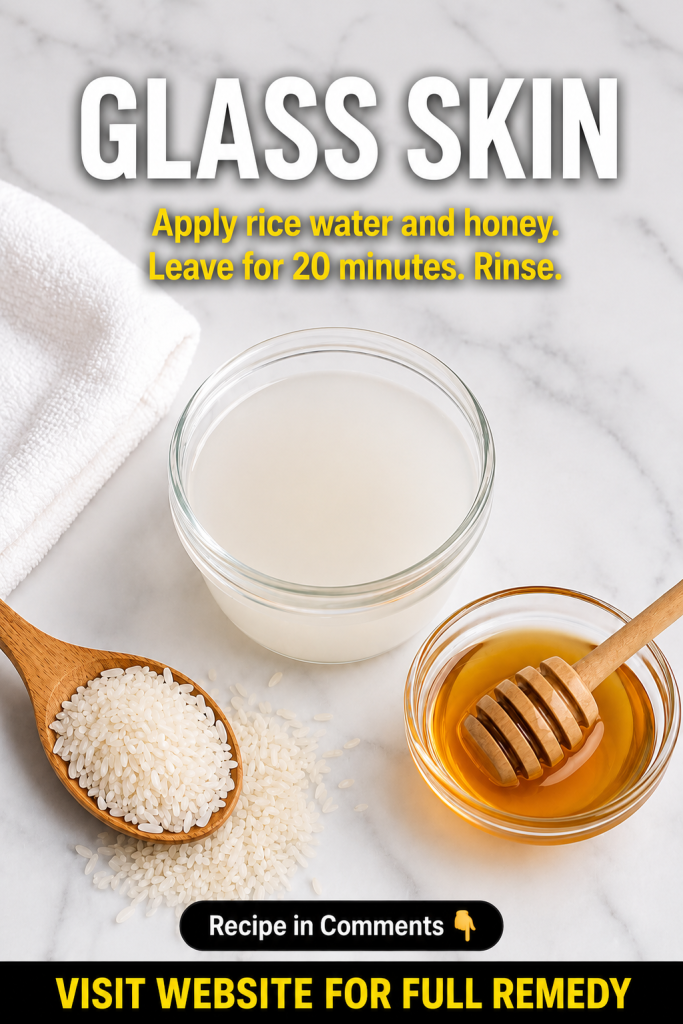
“Glass skin” describes skin that looks smooth, evenly hydrated, soft, and naturally luminous. Dullness, dehydration, excess oil, rough texture, sun exposure, lack of sleep, and an unsuitable skincare routine can reduce this healthy appearance and affect confidence. Natural ingredients such as rice water, honey, aloe vera, green tea, and finely ground oats may support skin hydration and comfort when they are selected according to skin type and used carefully.
Rice-derived ingredients have shown moisturizing, soothing, and skin-barrier-supporting potential, while honey contains humectant, antioxidant, anti-inflammatory, and antimicrobial compounds. However, the exact homemade mixtures below have not been tested as finished clinical formulas. Scientific evidence mainly supports the individual ingredients, and results vary from person to person. (PubMed)
Before applying any remedy, perform a patch test behind the ear or on the inner arm for 24 hours. Prepare a fresh batch each time, use clean utensils, and never apply a homemade mask to infected, wounded, severely inflamed, or actively irritated skin.
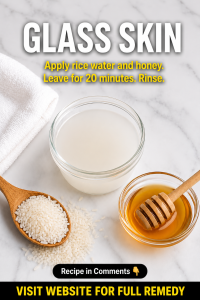
How to Prepare Fresh Rice Water
Rinse two tablespoons of white rice once to remove surface dust. Add half a cup of previously boiled and cooled water, soak for 30 minutes, gently stir, and strain. Use the fresh liquid immediately or refrigerate it in a clean covered container for no more than 24 hours. Do not use strongly fermented or foul-smelling rice water on the face.
Remedy 1: Rice Water and Honey Glow Mask for Normal Skin
Ingredients and Scientific Benefits
- 2 tablespoons fresh rice water: Rice starch and rice-derived compounds may help support moisture retention and the skin barrier. (PubMed)
- 1 teaspoon pure honey: Acts as a natural humectant and may help support a softer, more hydrated skin surface. (PMC)
- 1 teaspoon pure inner-leaf aloe vera gel: Aloe-containing preparations have demonstrated skin-hydrating effects through a humectant action. (PubMed)
- 1 teaspoon very finely ground oats: Oats contain compounds that support moisture, reduce roughness, and calm mild irritation. (PubMed)
- 1 teaspoon cooled green tea: Green tea provides polyphenols with antioxidant and anti-inflammatory activity. (PubMed)
Scientific Working of the Ingredients
Rice water provides a lightweight base, while honey and aloe attract and hold moisture near the skin surface. Finely ground oats create a soothing layer that may reduce temporary dryness and roughness. Green tea adds antioxidant compounds that can help calm the appearance of stressed skin. Together, these ingredients may create a smoother and more luminous appearance without physical scrubbing.
Procedure
Mix all ingredients until a thin, smooth paste forms. Cleanse the face gently and pat it slightly damp. Apply a thin layer with clean fingertips, avoiding the eyes and lips. Leave it on for 15–20 minutes. Rinse with cool to lukewarm water without rubbing, then pat dry.
How Often to Apply
Apply once daily for three days. After that, reduce use to two or three times weekly if the skin remains comfortable.
Initial Results
Within one to three days, the skin may feel softer, less tight, and temporarily more hydrated. Deep pigmentation, enlarged pores, scars, and wrinkles will not disappear within this period.
Remedy 2: Zone-Balancing Green Tea Mask for Combination Skin
Ingredients and Scientific Benefits
- 1 tablespoon cooled green tea: May help reduce the appearance of excess oil in the T-zone over continued use. (PubMed)
- 1 tablespoon fresh rice water: Provides a light, non-oily moisturizing base.
- 1½ teaspoons finely ground oats: Help absorb some surface oil while supporting dry areas.
- 1 teaspoon aloe vera gel: Adds lightweight hydration without a heavy oily texture. (PubMed)
- ½ teaspoon honey: Helps reduce moisture loss from drier areas.
- 1 drop food-grade sunflower seed oil: Supplies barrier-supporting fatty acids and should be used only on dry cheek areas. (PubMed)
Scientific Working of the Ingredients
Combination skin needs different care in different facial zones. Green tea and oats provide a lighter treatment for the oily forehead, nose, and chin, while honey and aloe support hydration. A very small amount of sunflower oil may reduce dryness on the cheeks, but it should not be placed on oily or breakout-prone areas.
Procedure
Mix the green tea, rice water, oats, aloe vera, and honey. Apply a thin layer over the face, using slightly less on the oily T-zone. Leave for 10–12 minutes and rinse gently. While the cheeks are still slightly damp, press one drop of sunflower oil between the fingertips and apply only to dry areas.
How Often to Apply
Use every other day for five days, giving a total of three applications.
Initial Results
The cheeks may feel more comfortable within one to three days, while the T-zone may appear temporarily fresher and less greasy. Long-term oil regulation requires consistent skincare rather than a single mask.
Remedy 3: Green Tea, Aloe, and Turmeric Mask for Oily Skin
Ingredients and Scientific Benefits
- 2 tablespoons strong cooled green tea: Topical green tea has been studied for excess sebum and inflammatory acne. (PubMed)
- 1 teaspoon aloe vera gel: Provides hydration without adding heavy oil.
- 1 teaspoon honey: Offers humectant and antimicrobial properties, although it is not a replacement for acne treatment. (PMC)
- 1 teaspoon finely ground oats: Helps create a gentle, non-scrubbing mask and may soothe irritation.
- 1 teaspoon rice starch or ultra-fine rice flour: Adds a soft, oil-absorbing texture; do not scrub it into the skin.
- A very small pinch of turmeric, approximately 1/16 teaspoon: Curcumin has antioxidant and anti-inflammatory properties, although culinary turmeric may stain and can irritate some people. (PubMed)
Scientific Working of the Ingredients
Green tea contains catechins, including EGCG, that have been studied for their effects on inflammation, sebum activity, and acne-related processes. Oats and aloe help prevent the mask from becoming excessively drying. Honey supports moisture balance, while the tiny amount of turmeric adds antioxidant activity. (PubMed)
Procedure
Mix all ingredients into a smooth liquid paste. Apply a very thin layer and leave it on for only 8–10 minutes. Do not massage or scrub. Rinse thoroughly and use a clean towel. Stop immediately if burning or intense itching occurs.
How Often to Apply
Apply on alternate days for five days. Continue no more than two times weekly if it suits the skin.
Initial Results
The face may appear less shiny and feel cleaner within one to three days. Inflamed acne usually requires several weeks of appropriate treatment, and this mask should not be expected to remove blackheads, acne scars, or severe breakouts.
Remedy 4: Oat, Honey, and Sunflower Barrier Mask for Dry Skin
Ingredients and Scientific Benefits
- 1 tablespoon colloidal oatmeal or finely powdered plain oats: Supports hydration and reduces the appearance of scaling and roughness. (PubMed)
- 1 teaspoon honey: Helps draw water toward the outer skin layer.
- 1 teaspoon aloe vera gel: Supports surface hydration.
- ¼ teaspoon sunflower seed oil: Helps soften the skin and support its protective lipid barrier. (PubMed)
- 1 tablespoon fresh rice water: Helps create a smooth, lightweight mask and provides rice starch compounds.
Scientific Working of the Ingredients
Dry skin commonly appears rough and dull when the protective barrier loses water. Oatmeal forms a soothing layer, honey and aloe attract moisture, and sunflower seed oil slows moisture loss by adding skin-softening lipids. Rice water makes the mixture easier to spread and may provide additional barrier support. (PubMed)
Procedure
Blend the ingredients until creamy. Apply to clean, slightly damp skin. Leave for 10–15 minutes. Before the mask becomes completely dry, rinse with lukewarm water. Pat gently and avoid rubbing with a towel.
How Often to Apply
Apply once daily for three days, then use two or three times weekly as needed.
Initial Results
Dry skin may feel softer and less tight after the first application. Within two or three days, temporary flakiness may appear reduced. Persistent cracking, severe itching, or eczema requires medical assessment.
Remedy 5: Minimal Oat and Aloe Comfort Mask for Sensitive Skin
Ingredients and Scientific Benefits
- 2 teaspoons finely ground colloidal oatmeal: Helps soothe dryness and support the skin barrier. (PubMed)
- 1 tablespoon diluted fresh rice water: Provides a mild liquid base; dilute equal parts rice water and cooled boiled water.
- 1 teaspoon pure inner-leaf aloe vera gel: May provide lightweight hydration but must be patch-tested.
- 1 teaspoon weak, cooled green tea: Supplies antioxidant compounds in a low-strength preparation.
- ⅛ teaspoon sunflower seed oil: Helps soften dry, sensitive skin and reduce moisture loss.
Scientific Working of the Ingredients
Sensitive skin benefits from shorter contact time and fewer strong ingredients. Oats are the main soothing component, while diluted rice water and aloe provide gentle hydration. Weak green tea contributes antioxidant compounds, and a very small amount of sunflower oil supports the skin barrier. Even natural ingredients can cause allergy or irritation, so patch testing is essential.
Procedure
Combine the ingredients into a soft paste. Apply a thin layer without rubbing. Leave it on for only five to seven minutes, then rinse with cool to lukewarm water. Do not use during an eczema, rosacea, or allergy flare unless advised by a dermatologist.
How Often to Apply
Use every other day for five days, for a maximum of three applications.
Initial Results
If the ingredients are well tolerated, the skin may feel calmer, softer, and less tight within one to three days. Redness caused by rosacea, dermatitis, allergy, or infection may not improve and should not be repeatedly treated with homemade masks.
Final Tips for a Clear, Healthy Glass-Skin Appearance
Drink fluids regularly according to thirst and activity level, sleep for approximately seven to nine hours, and keep towels, makeup brushes, pillowcases, and skincare tools clean. Avoid harsh soap, rough facial scrubs, undiluted lemon juice, baking soda, toothpaste, and repeated use of strong homemade acids.
Use only one remedy suited to your skin type rather than applying several masks together. Always patch-test new ingredients and stop use if you notice burning, swelling, hives, worsening redness, or persistent itching.
Daily sun protection is essential because ultraviolet exposure can contribute to uneven pigmentation, premature skin aging, and loss of smoothness. Use broad-spectrum, water-resistant SPF 30 or higher when exposed to daylight and reapply as directed. (American Academy of Dermatology)
Surface softness, hydration, and a temporary glow may begin within two to three days. Continued gentle care can make dehydration lines look less noticeable, but true wrinkle reduction, fading of pigmentation, and acne improvement generally require more time and cannot be guaranteed by home remedies.
How Long Should You Continue?
Follow the selected remedy for approximately two weeks if there is no irritation. After the initial three-to-five-day period, reduce use to two or three times per week. Do not keep increasing the frequency to obtain faster results.
If persistent acne, dark patches, severe dryness, itching, redness, pain, pus-filled spots, or an unexplained rash continues for two to four weeks, consult a dermatologist. Seek medical care sooner if symptoms are painful, rapidly spreading, swollen, infected, or affecting the eyes.
Diet Plan for Healthy, Glowing Skin
A balanced diet cannot create glass skin overnight, but it supplies protein, essential fats, vitamins, minerals, antioxidants, and fluids needed for normal skin function. Diets high in refined carbohydrates may worsen acne in some people, while a lower-glycemic eating pattern may be helpful. (PubMed)
Breakfast: Eat plain oats with berries, apple, or guava. Add a small portion of walnuts, almonds, chia seeds, or pumpkin seeds. Include an egg or another protein source.
Mid-Morning: Choose one seasonal fruit and drink water according to thirst.
Lunch: Fill half the plate with vegetables or salad. Add lentils, beans, chicken, fish, eggs, or another protein source. Choose whole-wheat roti, brown rice, or another minimally processed carbohydrate.
Evening Snack: Have unsweetened green tea with fruit, roasted chickpeas, or a small handful of nuts.
Dinner: Choose vegetables with fish, chicken, lentils, or beans. Keep sugary drinks, sweets, and highly refined snacks occasional rather than daily.
Continue this balanced eating pattern as a long-term lifestyle rather than a short three-day treatment. People with diabetes, kidney disease, food allergies, pregnancy-related dietary needs, or other medical conditions should follow advice from their healthcare professional.
References for the above remedy
- Zamil DH, et al. Dermatological Uses of Rice Products: Trend or True?
https://pubmed.ncbi.nlm.nih.gov/35587098/ - De Paepe K, et al. Effect of Rice Starch as a Bath Additive on the Barrier Function of Healthy but SLS-Damaged Skin.
https://pubmed.ncbi.nlm.nih.gov/12353708/ - McLoone P, et al. Honey: A Therapeutic Agent for Disorders of the Skin.
https://pmc.ncbi.nlm.nih.gov/articles/PMC5661189/ - Ilnytska O, et al. Colloidal Oatmeal Improves Skin Barrier Through Multi-Therapy Activity.
https://pubmed.ncbi.nlm.nih.gov/27272074/ - Dal’Belo SE, et al. Moisturizing Effect of Cosmetic Formulations Containing Aloe Vera Extract.
https://pubmed.ncbi.nlm.nih.gov/17026654/ - Kim S, et al. The Effects of Green Tea on Acne Vulgaris: A Systematic Review and Meta-Analysis.
https://pubmed.ncbi.nlm.nih.gov/32812270/ - Mahmood T, et al. Outcomes of 3% Green Tea Emulsion on Skin Sebum Production.
https://pubmed.ncbi.nlm.nih.gov/20846135/ - Danby SG, et al. Effect of Olive and Sunflower Seed Oil on the Adult Skin Barrier.
https://pubmed.ncbi.nlm.nih.gov/22995032/ - American Academy of Dermatology. Sunscreen Frequently Asked Questions.
https://www.aad.org/media/stats-sunscreen - Meixiong J, et al. Diet and Acne: A Systematic Review.
https://pubmed.ncbi.nlm.nih.gov/35373155/