Collagen gives skin much of its firmness, strength and flexibility, but its production gradually declines with age and can be damaged by ultraviolet radiation, smoking, poor nutrition and repeated irritation. Natural skincare cannot rebuild large amounts of collagen within three days. However, carefully selected ingredients can improve hydration, strengthen the skin barrier and reduce oxidative stress, making the face appear smoother and more supple. Genuine collagen remodelling normally requires consistent care for several weeks or months. Clinical studies supporting topical vitamin C also use stable, measured formulations rather than lemon juice or homemade acidic mixtures. (PubMed)
The following collagen-supporting home remedies are designed according to skin type. They use gentle ingredients with evidence for moisturising, soothing, barrier-supporting or antioxidant effects. Always perform a patch test for 24 hours and never apply a mask to broken, sunburned or actively inflamed skin.
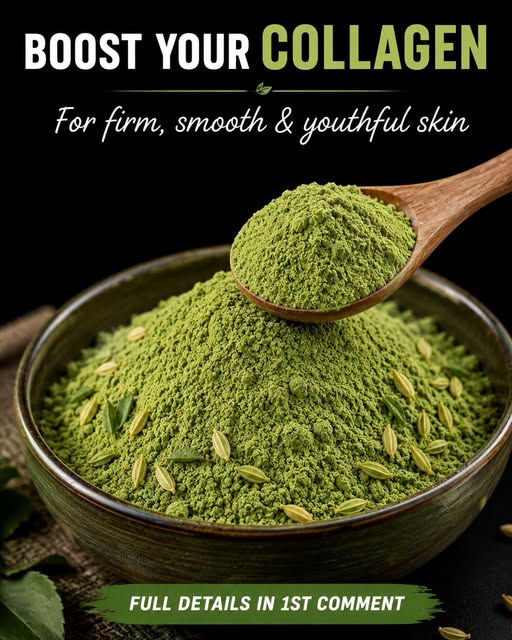
Remedy 1: Collagen-Supporting Green Tea Mask for Normal Skin
Ingredients and Their Scientific Benefits
- 1 tablespoon plain aloe vera gel: Functions as a humectant, helping the outer skin layers retain water and appear plumper.
- 1 teaspoon finely ground oatmeal: Contains soothing beta-glucans and antioxidant avenanthramides that support the skin barrier.
- 1 teaspoon cooled green tea: Provides catechins that help reduce oxidative stress caused by environmental exposure.
- 1 teaspoon cucumber puree: Supplies water and creates a cooling, refreshing base.
- ½ teaspoon honey: Works as a humectant and emollient, helping reduce temporary roughness.
How This Remedy Works Scientifically
Aloe, cucumber and honey increase surface hydration, which can temporarily soften fine dehydration lines. Oatmeal supports the protective stratum corneum, while green tea provides antioxidant polyphenols. Research suggests green-tea polyphenols may help protect skin against ultraviolet-related inflammation, although a homemade mask cannot replace sunscreen. (PubMed)
Procedure
Mix all ingredients into a smooth paste. Apply a thin layer to a clean face, avoiding the eyes and lips. Leave it on for 10 minutes, then rinse with lukewarm water without scrubbing. Pat the skin dry.
How Often to Apply
Use once daily for three days, followed by three applications per week for four to six weeks.
Initial Results
Within one to three days, the skin may feel softer and look fresher because of improved hydration. Structural collagen changes should not be expected this quickly.
Remedy 2: Balancing Cucumber and Yogurt Mask for Combination Skin
Ingredients and Their Scientific Benefits
- 1 tablespoon cucumber puree: Hydrates dry areas without adding heavy oil.
- 1 teaspoon plain aloe vera gel: Helps calm tight or mildly irritated areas.
- 1 teaspoon colloidal oatmeal or very finely ground oats: Supports barrier recovery and reduces dryness.
- ½ teaspoon plain unsweetened yogurt: Contains lactic acid, which can gently loosen dull surface cells.
- 1 teaspoon cooled green tea: Supplies antioxidant catechins.
- ¼ teaspoon honey: Helps prevent the mask from becoming overly drying.
How This Remedy Works Scientifically
Combination skin requires hydration without excessive oil. Oatmeal and aloe comfort dry areas, while the small amount of yogurt provides gentle surface exfoliation. Green tea supports antioxidant protection. Colloidal oatmeal has demonstrated improvements in hydration, skin pH and barrier function in clinical research. (PubMed)
Procedure
Combine the ingredients and apply an even layer. Use a slightly thinner layer over the oily T-zone and a slightly thicker layer over the cheeks. Leave it on for eight minutes. Rinse thoroughly and apply a simple moisturiser.
How Often to Apply
Apply on alternate days for five days, then reduce to twice weekly.
Initial Results
The dry areas may feel less tight within two or three applications, while the T-zone should feel refreshed rather than heavily coated.
Remedy 3: Green Tea and Kaolin Mask for Oily Skin
Ingredients and Their Scientific Benefits
- 1 tablespoon cooled green tea: Provides antioxidant and soothing polyphenols.
- 1 tablespoon aloe vera gel: Adds water-based hydration without a greasy feel.
- 1 teaspoon kaolin clay: Absorbs excess surface oil and temporarily reduces shine.
- 1 teaspoon finely ground oatmeal: Reduces the harsh, over-drying effect of clay.
- ¼ teaspoon honey: Helps retain moisture and improves the spread of the mask.
How This Remedy Works Scientifically
Oily skin still needs hydration. Removing too much oil can irritate the barrier and make the face feel tight. Kaolin absorbs surface sebum, while aloe, oatmeal and honey help maintain comfort. Green tea has antioxidant and anti-inflammatory activity, but evidence does not show that a kitchen-strength green-tea mask directly produces new collagen. (PubMed)
Procedure
Mix into a soft paste. Apply mainly to shiny areas and avoid active, scratched or recently squeezed spots. Leave it on for only five to seven minutes; do not allow the clay to crack completely. Rinse gently.
How Often to Apply
Use every other day for three to five days, then once or twice weekly.
Initial Results
Excess shine may decrease after the first use. By day three, the surface may appear smoother, but acne lesions or enlarged pores will not permanently disappear.
Remedy 4: Avocado and Sunflower Oil Mask for Dry Skin
Ingredients and Their Scientific Benefits
- 1 tablespoon ripe mashed avocado: Supplies fatty acids that soften a rough surface.
- 1 tablespoon aloe vera gel: Helps increase water retention.
- 1 teaspoon finely ground oatmeal: Supports barrier comfort.
- 1 teaspoon honey: Acts as a humectant and emollient.
- Three drops sunflower seed oil: Contains linoleic acid and helps reduce moisture loss.
- ½ teaspoon plain yogurt: Provides mild lactic-acid exfoliation for flaky skin.
How This Remedy Works Scientifically
Dry skin often exaggerates fine lines because its surface lacks water and lipids. Aloe and honey attract moisture, while avocado and sunflower oil provide emollient lipids. In a study comparing plant oils, sunflower seed oil preserved skin-barrier integrity better than olive oil. (PubMed)
Procedure
Mash the avocado completely before adding the other ingredients. Apply to clean, damp skin for 10–12 minutes. Rinse without using soap and immediately apply moisturiser while the skin remains slightly damp.
How Often to Apply
Apply daily for three days, then three times weekly for four weeks.
Initial Results
Dryness and tightness may improve within one to three days. Better hydration can make fine lines look temporarily softer, although it does not permanently remove wrinkles.
Remedy 5: Minimal Oat and Aloe Mask for Sensitive Skin
Ingredients and Their Scientific Benefits
- 1 tablespoon colloidal oatmeal: Helps soothe itching, roughness and barrier irritation.
- 1 tablespoon plain aloe vera gel: Provides light hydration and a cooling effect.
- 1 teaspoon cucumber juice: Dilutes the mixture and supplies moisture.
- Two drops sunflower seed oil: Adds a small amount of barrier-supporting lipid.
- 1–2 teaspoons cooled boiled water: Creates a soft, non-abrasive consistency.
- ¼ teaspoon honey, optional: Adds humectant activity but should be omitted in anyone sensitive to bee products.
How This Remedy Works Scientifically
Sensitive skin benefits more from barrier protection than aggressive “collagen treatments.” Colloidal oatmeal has clinically documented anti-inflammatory, moisturising and barrier-supporting properties. Aloe may improve hydration, but any botanical can cause contact irritation, making patch testing essential. (PubMed)
Procedure
Mix without rubbing or grinding the skin. Apply for five minutes during the first use. When no redness develops, later applications may remain on for up to eight minutes. Rinse with cool-to-lukewarm water.
How Often to Apply
Use every other day for three to five days, then once or twice weekly.
Initial Results
The skin may feel calmer and less tight within one to three days. Stop immediately if burning, swelling, persistent itching or increased redness occurs.
Final Tips for Protecting Natural Collagen
Apply broad-spectrum, water-resistant sunscreen with SPF 30 or higher every morning. Sun protection is more dependable for slowing premature collagen damage than any facial mask. Reapply during prolonged outdoor exposure and combine it with shade, protective clothing and a hat. (American Academy of Dermatology)
Drink according to thirst, sleep approximately seven to nine hours, avoid smoking, limit excessive alcohol and clean bowls, brushes and reusable skincare tools after every use. Do not use lemon juice, undiluted vinegar, baking soda, toothpaste, raw egg or harsh scrubs on the face.
Make each mask fresh and discard leftovers. A visible glow or temporary plumping may begin within two to three days because hydrated skin reflects light more evenly. Continued smoothness may develop over several weeks, but meaningful wrinkle reduction requires long-term sun protection, balanced nutrition and, when necessary, dermatologist-guided treatment.
Collagen-Supporting Diet Plan
Dietary protein supplies amino acids needed to build structural proteins, while vitamin C is required for normal collagen biosynthesis. Zinc and copper also contribute to normal tissue repair and connective-tissue function. (Office of Dietary Supplements)
Breakfast: Eat eggs, plain yogurt, milk, chickpeas or lentils for protein. Add guava, orange, kiwi, strawberries or papaya as a vitamin-C source.
Mid-morning: Choose cucumber, seasonal fruit or a small handful of pumpkin seeds and almonds.
Lunch: Include fish, chicken, beans, lentils or tofu with vegetables such as bell peppers, tomatoes, spinach, cabbage or broccoli. Add whole grains rather than relying mainly on refined bread or sugary foods.
Evening snack: Drink unsweetened green tea and eat fruit or roasted chickpeas.
Dinner: Choose a moderate portion of protein with cooked vegetables and brown rice, whole-wheat bread or another whole grain.
Continue the home routine and balanced diet for at least four to six weeks. Hydration may improve sooner, but assess firmness and fine lines after eight to twelve weeks. See a dermatologist or doctor when the concern persists, rapidly worsens, causes pain or itching, or is accompanied by severe acne, eczema, pigmentation changes, wounds or unexplained hair and weight changes.
References for the above remedy
- Humbert P, et al. Topical ascorbic acid on photoaged skin: clinical, topographical and ultrastructural evaluation. Experimental Dermatology.
https://pubmed.ncbi.nlm.nih.gov/12823436/ - Nusgens BV, et al. Topically applied vitamin C enhances collagen I and III expression in the human dermis. Journal of Investigative Dermatology.
https://pubmed.ncbi.nlm.nih.gov/11407971/ - Elmets CA, et al. Cutaneous photoprotection from ultraviolet injury by green tea. Journal of the American Academy of Dermatology.
https://pubmed.ncbi.nlm.nih.gov/11209110/ - Capone K, et al. Effects of colloidal oatmeal topical treatment on skin barrier and hydration. Clinical, Cosmetic and Investigational Dermatology.
https://pubmed.ncbi.nlm.nih.gov/32484623/ - Dal’Belo SE, et al. Moisturizing effect of cosmetic formulations containing Aloe vera extract. Skin Research and Technology.
https://pubmed.ncbi.nlm.nih.gov/17026654/ - Danby SG, et al. Effect of olive and sunflower seed oil on the adult skin barrier. Pediatric Dermatology.
https://pubmed.ncbi.nlm.nih.gov/22995032/ - Burlando B, Cornara L. Honey in dermatology and skin care: a review. Journal of Cosmetic Dermatology.
https://pubmed.ncbi.nlm.nih.gov/24305429/ - National Institutes of Health, Office of Dietary Supplements. Vitamin C: Health Professional Fact Sheet.
https://ods.od.nih.gov/factsheets/VitaminC-HealthProfessional/ - American Academy of Dermatology. How to reduce premature skin aging.
https://www.aad.org/public/everyday-care/skin-care-secrets/anti-aging/reduce-premature-aging-skin