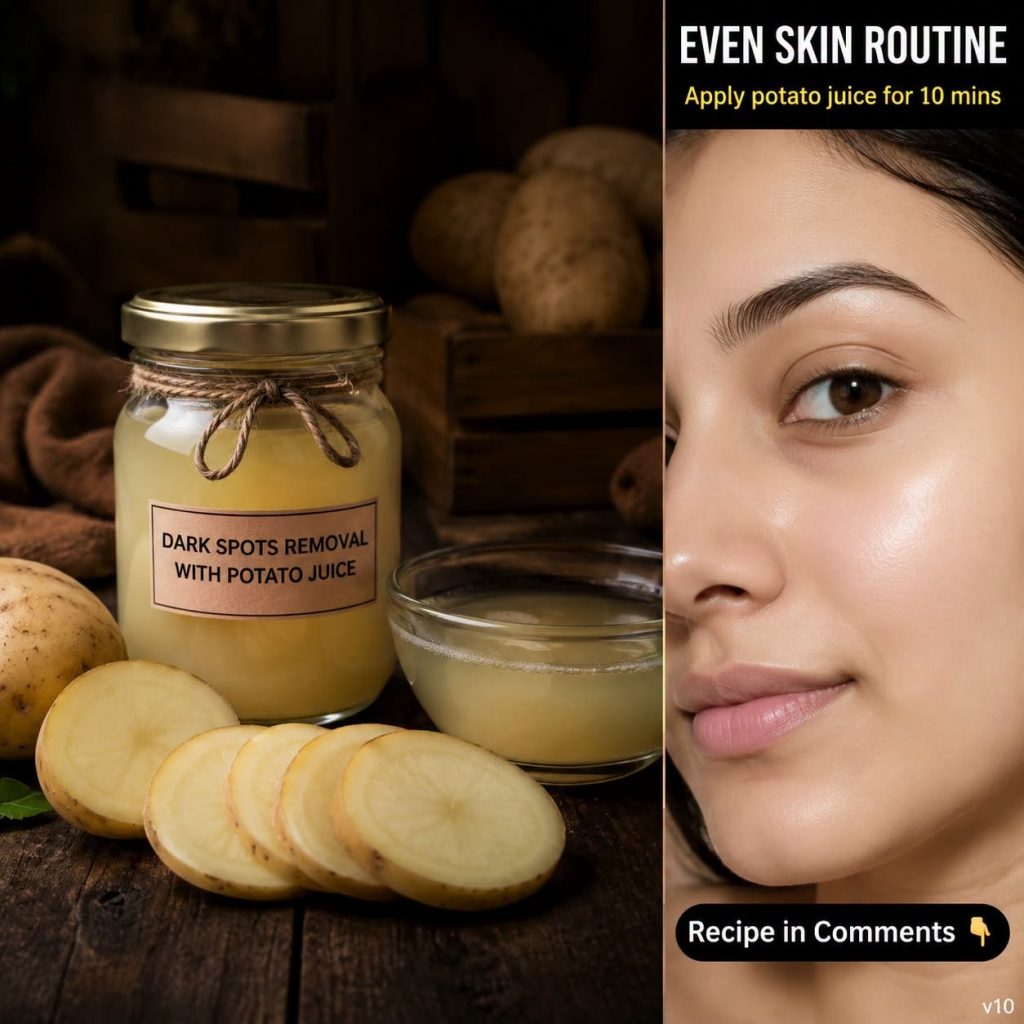
Dark spots, uneven skin tone, and post-acne marks are common skin concerns that can affect confidence. While many commercial treatments promise fast results, several natural ingredients have been scientifically studied for their ability to support brighter, healthier-looking skin. Potato juice is one of the most popular home remedies because it contains vitamin C, polyphenols, starches, and natural antioxidants that may help improve skin appearance and reduce dullness with regular use. When combined with other evidence-supported natural ingredients according to your skin type, it can become a gentle addition to your skincare routine.
This guide explains five unique potato juice remedies designed for different skin types. Each remedy includes the scientific reason behind every ingredient, proper preparation, frequency of use, expected results, and supportive dietary recommendations.
Remedy 1: Normal Skin
Ingredients
- Fresh potato juice – 2 tablespoons
- Aloe vera gel – 1 tablespoon
- Raw honey – 1 teaspoon
- Plain yogurt – 1 teaspoon
- Oat flour – 1 teaspoon
- Rose water – 1 teaspoon
Scientific Working of the Ingredients
Potato juice supplies vitamin C and antioxidant polyphenols that help reduce oxidative stress caused by UV exposure.
Aloe vera contains polysaccharides and glucomannan that improve hydration while supporting skin repair.
Raw honey has natural antibacterial compounds and humectants that maintain moisture and encourage healthy skin healing.
Yogurt contains lactic acid, a gentle alpha hydroxy acid (AHA), which promotes mild exfoliation and improves skin texture.
Oat flour provides beta-glucans that soothe the skin barrier while reducing irritation.
Rose water contains antioxidant compounds that calm redness and refresh the skin.
Procedure
- Extract fresh potato juice.
- Mix all ingredients until smooth.
- Cleanse your face thoroughly.
- Apply a thin layer evenly.
- Leave for 15 minutes.
- Rinse with cool water.
- Apply a light moisturizer.
How Often to Apply
Apply every alternate day for 5 days.
Initial Results
Within 2–3 days the skin may feel softer, appear fresher, and show a slightly brighter complexion. Continued use for several weeks may gradually improve the appearance of mild pigmentation.
Remedy 2: Combination Skin
Ingredients
- Potato juice – 2 tablespoons
- Cucumber juice – 1 tablespoon
- Green tea – 1 tablespoon
- Honey – 1 teaspoon
- Rice flour – 1 teaspoon
- Aloe vera gel – 1 teaspoon
Scientific Working of the Ingredients
Potato juice contributes antioxidants and vitamin C that support skin brightness.
Cucumber contains water, silica, and vitamin K that hydrate while reducing puffiness.
Green tea is rich in epigallocatechin gallate (EGCG), a polyphenol that helps reduce inflammation and oxidative damage.
Rice flour provides gentle physical exfoliation while rice compounds have antioxidant activity.
Honey maintains hydration without making oily areas excessively greasy.
Aloe vera helps restore moisture balance across dry and oily zones.
Procedure
- Combine all ingredients into a smooth paste.
- Apply over clean skin.
- Massage gently for one minute.
- Leave on for 15 minutes.
- Wash with lukewarm water.
How Often to Apply
Use 3–4 times weekly.
Initial Results
Skin often feels smoother within a few applications, with improved balance between oily and dry areas.
Remedy 3: Oily Skin
Ingredients
- Potato juice – 2 tablespoons
- Multani mitti (Fuller’s earth) – 1 tablespoon
- Neem powder – 1 teaspoon
- Green tea – 1 tablespoon
- Aloe vera gel – 1 teaspoon
- Witch hazel distillate – ½ teaspoon
Scientific Working of the Ingredients
Potato juice provides antioxidants that help protect skin from free radical damage.
Multani mitti absorbs excess oil and impurities from the skin surface.
Neem contains bioactive compounds with antibacterial and anti-inflammatory properties.
Green tea polyphenols may help reduce sebum production.
Aloe vera hydrates without clogging pores.
Witch hazel contains tannins that provide a temporary astringent effect.
Procedure
- Mix all ingredients thoroughly.
- Apply evenly over oily areas.
- Leave for 12–15 minutes.
- Rinse gently with cool water.
How Often to Apply
Use every other day for one week.
Initial Results
The skin generally appears less oily with a fresher appearance after several applications.
Remedy 4: Dry Skin
Ingredients
- Potato juice – 2 tablespoons
- Mashed avocado – 1 tablespoon
- Fresh milk cream – 1 teaspoon
- Honey – 1 teaspoon
- Ground flaxseed – 1 teaspoon
- Aloe vera gel – 1 teaspoon
Scientific Working of the Ingredients
Potato juice supplies antioxidants that support skin renewal.
Avocado contains vitamin E, oleic acid, and healthy fats that nourish the skin barrier.
Milk cream provides lipids that soften dry skin.
Honey attracts moisture into the outer skin layers.
Flaxseed contains omega-3 fatty acids that support barrier function.
Aloe vera improves hydration and promotes soothing.
Procedure
- Blend all ingredients.
- Apply generously.
- Leave on for 20 minutes.
- Wash with lukewarm water.
- Apply moisturizer immediately afterward.
How Often to Apply
Apply three times each week.
Initial Results
Skin typically feels softer, smoother, and more comfortable after several uses.
Remedy 5: Sensitive Skin
Ingredients
- Potato juice – 2 tablespoons
- Colloidal oatmeal – 1 tablespoon
- Aloe vera gel – 1 tablespoon
- Chamomile tea – 1 tablespoon
- Cucumber juice – 1 tablespoon
- Honey – ½ teaspoon
Scientific Working of the Ingredients
Potato juice provides antioxidant protection while being relatively gentle.
Colloidal oatmeal is clinically recognized for supporting the skin barrier and reducing irritation.
Aloe vera helps calm inflammation.
Chamomile contains flavonoids such as apigenin that exhibit soothing properties.
Cucumber provides cooling hydration.
Honey supports moisture retention while offering mild antimicrobial activity.
Procedure
- Mix ingredients until creamy.
- Perform a patch test first.
- Apply gently without rubbing.
- Leave for 10–12 minutes.
- Rinse with cool water.
How Often to Apply
Use twice weekly.
Initial Results
Most users notice improved comfort, reduced dryness, and smoother skin within several applications.
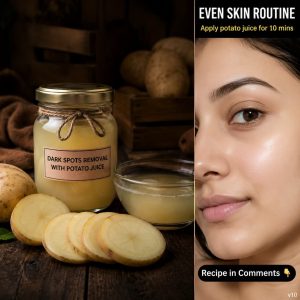
General Evening Potato Juice Routine
- Wash your face with a gentle cleanser.
- Apply freshly prepared potato juice using a cotton pad.
- Leave it on for 10 minutes.
- Rinse with cool water.
- Apply a moisturizer suitable for your skin type.
- Always use sunscreen the following morning, as UV exposure can worsen pigmentation.
Final Tips
- Always prepare fresh potato juice before use.
- Perform a patch test before trying any new remedy.
- Wear SPF 30 or higher sunscreen every day.
- Stay hydrated by drinking enough water.
- Sleep for 7–9 hours every night.
- Avoid picking acne or scratching dark spots.
- Eat antioxidant-rich fruits and vegetables.
- Keep makeup brushes and towels clean.
- Be patient, as natural remedies usually require several weeks of consistent use for noticeable pigmentation improvement.
Diet Plan for Brighter, Even-Toned Skin
Breakfast
- Oatmeal with berries
- One boiled egg or Greek yogurt
- Green tea
Mid-Morning
- Orange, kiwi, or guava
Lunch
- Grilled fish or lentils
- Brown rice or whole wheat roti
- Spinach, cucumber, and tomato salad
Evening Snack
- Handful of almonds or walnuts
- Coconut water
Dinner
- Vegetable soup
- Grilled chicken, tofu, or beans
- Steamed broccoli and carrots
Before Bed
- A glass of warm turmeric milk (if tolerated)
Maintain this skincare routine and healthy diet consistently for 6–8 weeks. If dark spots persist, worsen, rapidly change in appearance, or are associated with pain, bleeding, or other concerning symptoms, consult a dermatologist for proper evaluation and treatment.
References for the above remedy
- National Center for Complementary and Integrative Health. Aloe Vera. URL: https://www.nccih.nih.gov/health/aloe-vera
- American Academy of Dermatology. How to treat dark spots. URL: https://www.aad.org/public/everyday-care/skin-care-secrets/routine/fade-dark-spots
- National Eczema Association. Colloidal Oatmeal Benefits. URL: https://nationaleczema.org/eczema/treatment/colloidal-oatmeal/
- Lin TK, Zhong L, Santiago JL. Anti-inflammatory and skin barrier repair effects of plant oils. URL: https://www.ncbi.nlm.nih.gov/pmc/articles/PMC5796020/
- Burlando B, Cornara L. Honey in Dermatology and Skin Care. URL: https://www.ncbi.nlm.nih.gov/pmc/articles/PMC5661189/
- National Institutes of Health Office of Dietary Supplements. Vitamin C Fact Sheet. URL: https://ods.od.nih.gov/factsheets/VitaminC-Consumer/
- Katiyar SK. Green Tea and Skin Protection. URL: https://www.ncbi.nlm.nih.gov/pmc/articles/PMC5384166/
- Mayo Clinic. Hyperpigmentation: Causes and Treatment. URL: https://www.mayoclinic.org/diseases-conditions/melasma/expert-answers/hyperpigmentation/faq-20058478