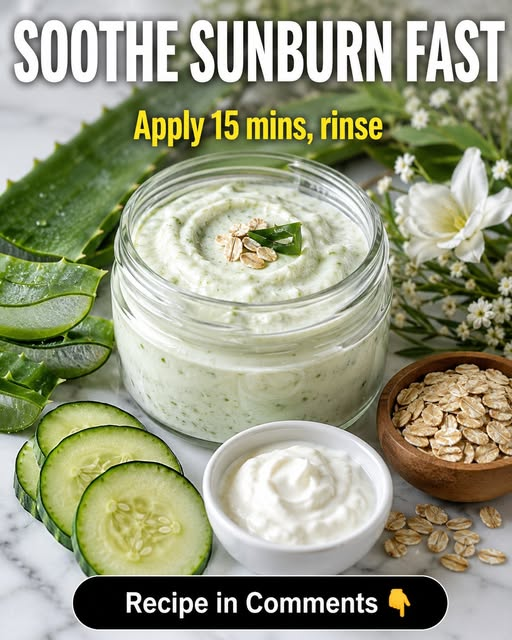
Sunburn is an inflammatory skin injury caused by excessive ultraviolet exposure. Mild cases may cause warmth, redness, tenderness and tightness, while more severe burns can produce swelling and blisters. Although a cooling mask may ease discomfort, it cannot reverse the ultraviolet damage that has already occurred. The safest immediate steps are to leave the sun, cool the skin with a damp cloth or cool shower, moisturise while the skin is still slightly damp and drink additional water. Blisters should not be broken because their intact surface helps protect the skin from infection. (American Academy of Dermatology)
The aloe, cucumber, oatmeal and yogurt mixture shown in the image may feel cool, but food-based masks are not the preferred treatment for blistered, broken or severely inflamed skin. The remedies below are intended only for mild, unblistered sunburn and use cosmetic-grade or carefully prepared ingredients. Aloe may provide cooling moisture, but evidence for treating sunburn is mixed; one controlled trial found no significant benefit over placebo. Colloidal oatmeal has stronger evidence for soothing inflammation, dryness, roughness and barrier damage. (PubMed)
Before applying any remedy, place a clean cloth soaked in cool—not icy—water on the area for about ten minutes. Never put ice directly against sunburned skin.
Remedy 1: For Normal Skin
Green Tea, Aloe and Oat Cooling Veil
Ingredients
- 2 tablespoons cooled green tea: provides antioxidant polyphenols and a cooling liquid base.
- 1 tablespoon pure inner-leaf aloe vera gel: supplies lightweight moisture and a soothing texture.
- 1 teaspoon colloidal oatmeal: supports the damaged skin barrier and helps calm itching.
- 1 teaspoon strained cucumber water: adds gentle cooling hydration.
- 2 drops vegetable glycerin: attracts water into the outer skin layer.
- 1 teaspoon cooled boiled water: dilutes the remedy for tender skin.
Procedure
- Brew plain green tea and allow it to cool completely.
- Mix the tea with the cooled boiled water and cucumber water.
- Stir in the aloe gel and glycerin.
- Add the colloidal oatmeal gradually to create a thin gel.
- Refrigerate the mixture for five minutes without freezing it.
- Apply a light layer without rubbing or massaging.
- Leave it on for eight to ten minutes, then rinse with cool water.
- Discard the remaining mixture immediately.
Scientific Working of the Ingredients
Standardised green-tea extracts have reduced ultraviolet-induced redness and inflammatory changes in human skin studies. Homemade brewed tea is much weaker and should be regarded as a cooling supportive ingredient rather than a proven sunburn medicine. Colloidal oatmeal contains antioxidant avenanthramides and barrier-supporting components that can reduce dryness, roughness and itching. Aloe and glycerin mainly improve surface hydration, helping tight skin feel more comfortable. (PubMed)
How Often to Apply
Apply once or twice daily for three to five days. Stop sooner if the skin develops itching, a rash or increased discomfort.
Initial Results
Cooling relief may begin during the first application. Tightness may improve within one day, while mild redness and tenderness commonly start settling over two to three days.
Remedy 2: For Combination Skin
Two-Zone Cucumber and Oat Sunburn Compress
Ingredients
- 2 tablespoons cooled boiled water: cools the complete affected area.
- 1 tablespoon strained cucumber water: provides a fresh, water-rich base.
- 2 teaspoons aloe vera gel: hydrates without coating oily areas heavily.
- 1 teaspoon colloidal oatmeal: calms dry, itchy or peeling sections.
- 1 drop vegetable glycerin: improves water retention.
- 2 drops high-linoleic sunflower-seed oil: conditions only dry areas after the skin no longer feels hot.
Procedure
- Combine the cooled water, cucumber water and aloe gel.
- Mix in the oatmeal and glycerin.
- Soak a clean soft cloth in the liquid and squeeze out the excess.
- Place it gently over the sunburn for five to eight minutes.
- Remove the cloth without wiping or rubbing.
- Once the burn has cooled and no longer feels hot, press the sunflower oil only onto dry or peeling zones.
- Do not use oil on blisters or broken skin.
Scientific Working of the Ingredients
The water-based portion cools the skin without adding a thick layer over naturally oily areas. Oatmeal supports barrier recovery, while aloe and glycerin reduce dehydration-related tightness. Sunflower oil preserved stratum-corneum integrity and improved hydration in a human skin study; however, it should be used only after the initial heat has subsided because early sunburn care should prioritise cooling. (PubMed)
How Often to Apply
Use the compress twice daily for three days. Continue once daily for up to five days if dryness remains.
Initial Results
Hotness and discomfort may ease temporarily after the first compress. Dry zones may become less tight within one to three days.
Remedy 3: For Oily Skin
Black Tea and Aloe Lightweight Compress
Ingredients
- 2 tablespoons cooled black tea: supplies tea polyphenols in a non-oily base.
- 1 tablespoon cooled boiled water: safely dilutes the tea.
- 1 teaspoon aloe vera gel: adds lightweight hydration.
- 1 teaspoon cucumber water: provides a cooling effect.
- ½ teaspoon colloidal oatmeal: helps prevent roughness and peeling.
- 1 drop vegetable glycerin: reduces a stripped or tight feeling.
Procedure
- Brew black tea without milk, sugar, lemon or flavouring.
- Cool it completely and dilute it with the boiled water.
- Add the cucumber water, aloe, oatmeal and glycerin.
- Soak clean cotton pads or a soft cloth in the liquid.
- Press gently against the affected skin for five minutes.
- Rinse only when the skin feels sticky.
- Prepare a fresh batch for each use.
Scientific Working of the Ingredients
Concentrated black-tea extracts have reduced ultraviolet-related erythema and early inflammatory changes in experimental human skin research. Ordinary brewed tea does not have a standardised concentration, so its main practical role is to provide a cool, oil-free compress. Aloe, oatmeal and diluted glycerin help prevent the surface from becoming dehydrated as the burn heals. (PubMed)
How Often to Apply
Apply once or twice daily for three to five days.
Initial Results
Oily skin may feel cooled without becoming greasy after the first use. Redness may begin decreasing after two or three days, depending on the burn’s severity.
Remedy 4: For Dry Skin
Aloe, Oat and Glycerin Recovery Mask
Ingredients
- 1 tablespoon pure aloe vera gel: supplies cooling water-based hydration.
- 2 teaspoons colloidal oatmeal: soothes rough, itchy and peeling skin.
- 1 tablespoon cooled boiled water: cools and thins the mixture.
- 3 drops vegetable glycerin: improves moisture retention.
- 3 drops high-linoleic sunflower-seed oil: supports the lipid barrier after the heat has gone.
- ½ teaspoon cucumber water: provides additional cooling moisture.
Procedure
- Mix the aloe, boiled water and cucumber water.
- Add the colloidal oatmeal and let it soften for two minutes.
- Stir in the glycerin.
- Apply the mixture gently for ten minutes.
- Rinse with cool water and pat dry.
- If the skin no longer feels hot and is not blistered, press the sunflower oil onto slightly damp skin.
- Do not peel off loose skin manually.
Scientific Working of the Ingredients
Sunburn disrupts barrier function and increases moisture loss, which can leave dry skin particularly tight and uncomfortable. Colloidal-oat formulations have improved hydration, barrier measurements, scaling and roughness in clinical studies. Glycerin increases stratum-corneum hydration, while sunflower oil supplies linoleic-acid-rich lipids that support barrier integrity. Aloe may improve comfort through hydration, although its direct sunburn-healing evidence remains inconsistent. (PubMed)
How Often to Apply
Apply once daily for five days. Use the oil only after the initial warmth and redness have started subsiding.
Initial Results
Tightness may ease after the first use. Dryness and roughness may improve over two to three days, although peeling can continue for a week or longer.
Remedy 5: For Sensitive Skin
Minimal Colloidal Oat Cooling Wrap
Ingredients
- 3 tablespoons cooled boiled water: cools without fragrance or botanical acids.
- 1 tablespoon colloidal oatmeal: offers soothing and barrier-supporting benefits.
- 1 teaspoon cucumber water: provides mild cooling when tolerated.
- ½ teaspoon pure aloe vera gel: adds moisture but should be omitted if it stings.
- 1 drop vegetable glycerin: prevents excessive tightness.
Procedure
- Mix the oatmeal with the cooled water.
- Allow it to stand for five minutes.
- Add cucumber water, aloe and glycerin.
- Patch-test the liquid on a small unburned area first.
- Soak a clean cloth in the mixture and squeeze it well.
- Place it on the sunburn for three to five minutes.
- Rinse gently and stop immediately if burning, swelling or itching develops.
Scientific Working of the Ingredients
A short formula reduces exposure to fragrances, spices and essential oils that can irritate sensitive skin. Colloidal oatmeal has demonstrated direct antioxidant and anti-inflammatory activity and has improved itching, scaling and barrier condition in clinical use. Aloe is optional because some people develop irritation or allergic reactions from botanical gels. (PubMed)
How Often to Apply
Use once daily for three days. Continue for up to five days only when the skin remains comfortable.
Initial Results
Sensitive skin may feel less hot after the first compress. Mild tightness and irritation may begin improving within one to three days.
Final Tips for Faster and Safer Sunburn Recovery
Take cool baths or showers, but avoid very cold water and direct ice. Pat the body dry rather than rubbing it, and wear loose, breathable clothing. Apply a simple fragrance-free moisturiser while the skin is slightly damp. Drink additional water because sunburn can draw fluid toward the skin and contribute to dehydration. (American Academy of Dermatology)
Do not use lemon juice, vinegar, toothpaste, baking soda, alcohol-based toners, perfume, essential oils, hot water or rough scrubs. Avoid numbing “-caine” preparations unless advised by a clinician because they can irritate the skin or trigger allergic reactions. Do not burst blisters or pull away peeling skin. (American Academy of Dermatology)
Stay completely out of direct sunlight while healing. When outdoor exposure is unavoidable, use shade, tightly woven clothing, a wide-brimmed hat and broad-spectrum SPF 30 or higher on unbroken skin. A sunburn is temporary, but the ultraviolet damage contributes to premature ageing and future skin-cancer risk. (American Academy of Dermatology)
Mild discomfort should begin improving within two or three days. Peeling can last approximately one week, and more extensive burns may take longer.
Diet Plan for Supporting Sunburn Recovery
Morning
Drink plain water after waking. Eat eggs, plain yogurt, lentils or tofu with a vitamin-C-rich fruit such as guava, kiwi, strawberries or an orange. Vitamin C is needed for collagen formation and normal wound repair. (Office of Dietary Supplements)
Lunch
Choose fish, chicken, beans, chickpeas or lentils with colourful vegetables and a moderate serving of whole grains. Protein supplies amino acids used in the maintenance and repair of body tissues.
Afternoon Snack
Select watermelon, cucumber, whole fruit, plain yogurt or a small portion of unsalted nuts. These foods support fluid and nutrient intake without claiming to cure the burn.
Dinner
Include vegetables, protein and healthy fats from fish, avocado, nuts or seeds. Avoid excessive alcohol because it can worsen dehydration and impair judgement about additional sun exposure.
Hydration
Drink regularly according to thirst, climate and activity. Water, milk and unsweetened fluids are preferable to high-sugar drinks. People with kidney disease, heart disease or medically prescribed fluid restrictions should follow their clinician’s advice.
Continue the topical remedy for three to five days and the balanced diet until the skin has fully healed. Seek medical care if the burn is not beginning to improve after several days.
Contact a doctor promptly for large or facial blisters, worsening pain, pus, spreading swelling, fever, chills, headache, nausea, eye pain or vision changes. Confusion, fainting, severe dehydration, extensive blistering or a fever above 39°C requires urgent medical care. (Mayo Clinic)
References for the above remedy
- American Academy of Dermatology. How to Treat Sunburn.
https://www.aad.org/public/everyday-care/injured-skin/burns/treat-sunburn - Mayo Clinic. Sunburn: First Aid.
https://www.mayoclinic.org/first-aid/first-aid-sunburn/basics/art-20056643 - Puvabanditsin P, Vongtongsri R. Efficacy of Aloe Vera Cream in Prevention and Treatment of Sunburn and Suntan.
https://pubmed.ncbi.nlm.nih.gov/16623024/ - Elmets CA, et al. Cutaneous Photoprotection from Ultraviolet Injury by Green Tea Polyphenols.
https://pubmed.ncbi.nlm.nih.gov/11209110/ - Zhao J, et al. Photoprotective Effect of Black Tea Extract Against UVB-Induced Phototoxicity in Skin.
https://pubmed.ncbi.nlm.nih.gov/10546558/ - Reynertson KA, et al. Anti-Inflammatory Activities of Colloidal Oatmeal.
https://pubmed.ncbi.nlm.nih.gov/25607907/ - Capone K, et al. Effects of Colloidal Oatmeal on Skin Barrier Function and Hydration.
https://pubmed.ncbi.nlm.nih.gov/32484623/ - Breternitz M, et al. Randomized Study of a Glycerol-Based Emollient on Skin Hydration and Barrier Function.
https://pubmed.ncbi.nlm.nih.gov/18025807/ - Danby SG, et al. Effect of Olive and Sunflower Seed Oil on the Adult Skin Barrier.
https://pubmed.ncbi.nlm.nih.gov/22995032/ - National Institutes of Health, Office of Dietary Supplements. Vitamin C: Health Professional Fact Sheet.
https://ods.od.nih.gov/factsheets/VitaminC-HealthProfessional/