A suntan develops when ultraviolet radiation stimulates the skin to produce additional melanin as a protective response to cellular damage. It cannot be safely “removed” in one application, and harsh scrubbing may cause inflammation that makes pigmentation darker. A consistent routine can prevent additional tanning, support natural skin-cell renewal and gradually make uneven colour less noticeable. Daily sun protection is more important than any homemade mask because repeated ultraviolet exposure continuously stimulates new pigmentation and accelerates visible ageing. (PubMed)
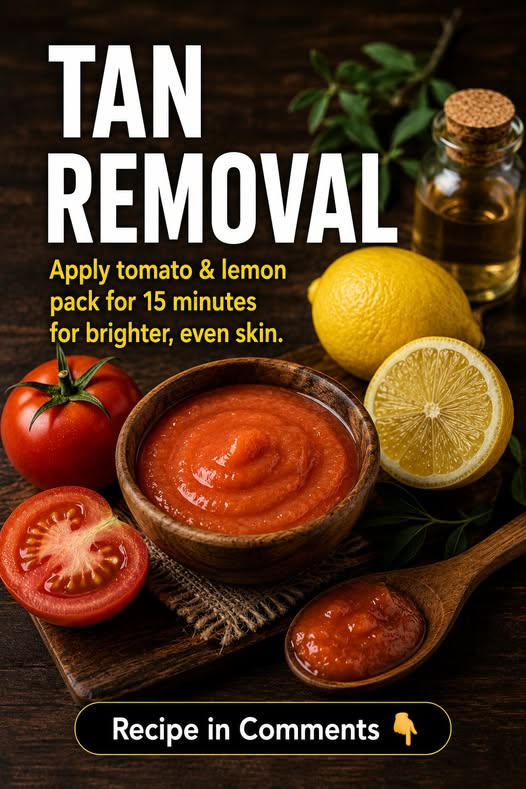
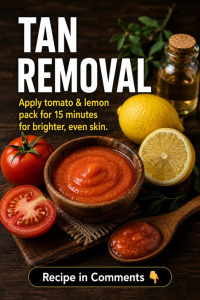
The tomato-and-lemon pack shown in the image is not recommended. Human studies support dietary tomato and lycopene for helping the skin resist some ultraviolet damage, but this does not prove that raw tomato paste removes an existing tan when applied to the face. Lemon juice is highly acidic, can irritate the skin and may cause phytophotodermatitis when citrus compounds are followed by ultraviolet exposure. This reaction can produce redness, blistering and persistent dark pigmentation—the opposite of the desired result. (PubMed)
The complete homemade formulas below have not been clinically tested as finished treatments. They use natural ingredients with evidence related to pigmentation control, hydration, inflammation or barrier recovery. Patch-test each remedy for 24–48 hours, prepare water-based masks fresh and select only one formula for your skin type.
Remedy 1: For Normal Skin
Soy, Licorice and Green Tea Brightening Mask
Ingredients
- 1 tablespoon plain unsweetened soy yogurt: supplies soy compounds associated with gradual improvement in uneven pigmentation.
- 1 teaspoon cooled green tea: provides antioxidant polyphenols that help calm ultraviolet-related inflammation.
- 1 teaspoon pure aloe vera gel: increases surface hydration and improves softness.
- ½ teaspoon rice starch: creates a gentle, smoothing base.
- ½ teaspoon colloidal oatmeal: supports the protective skin barrier.
- 2 drops of pre-diluted, cosmetic-grade licorice extract: contains pigment-regulating plant compounds.
Procedure
- Brew plain green tea and allow it to cool completely.
- Combine the soy yogurt, aloe gel and green tea.
- Mix in the rice starch and colloidal oatmeal.
- Add two drops of ready-to-use diluted licorice extract.
- Apply a thin layer to clean skin, avoiding the eyes, lips and broken areas.
- Leave the mask on for eight to ten minutes.
- Rinse with lukewarm water and discard the remaining mixture.
Do not use concentrated licorice essential oil or undiluted botanical extracts.
Scientific Working of Each Ingredient
Soy contains serine protease inhibitors that may reduce the transfer of melanin-containing structures into visible skin cells. Reviews and controlled studies support properly formulated soy products for modest improvement in hyperpigmentation, although kitchen soy yogurt is not equivalent to a standardized clinical formula. Licorice contains compounds such as glabridin that may influence tyrosinase activity and inflammation. Green tea provides antioxidant support, while aloe, rice starch and oatmeal improve hydration and barrier recovery so the surface looks smoother and more luminous. (PubMed)
How Often to Apply
Apply once daily for the first three days. Continue four evenings weekly for six to eight weeks if no irritation occurs.
Initial Results
Within one to three days, normal skin may feel softer and appear fresher. A genuine reduction in tanning generally needs several weeks of strict sun protection and consistent care.
Remedy 2: For Combination Skin
Turmeric, Soy and Two-Zone Oat Mask
Ingredients
- 1 tablespoon unsweetened soy yogurt: provides a moisturising base with pigment-supporting soy compounds.
- A tiny pinch of turmeric, no more than 1/16 teaspoon: supplies antioxidant curcuminoids.
- ½ teaspoon cosmetic-grade kaolin clay: absorbs excess oil from the forehead, nose and chin.
- 1 teaspoon colloidal oatmeal: reduces the drying effect of clay.
- 1 teaspoon aloe vera gel: hydrates without excessive heaviness.
- 2 drops high-linoleic sunflower-seed oil: conditions dry cheek areas.
Procedure
- Combine the soy yogurt, aloe and oatmeal.
- Add the tiny pinch of turmeric and mix thoroughly.
- Divide the mixture into two portions.
- Add kaolin clay to the portion intended for the oily T-zone.
- Add sunflower oil to the second portion intended for dry cheeks.
- Apply each formula to its appropriate area.
- Leave the mask on for five to seven minutes and rinse before the clay dries completely.
Turmeric can stain pale fabrics and may temporarily tint the skin when too much is used.
Scientific Working of Each Ingredient
Soy has some of the strongest clinical evidence among natural pigmentation ingredients. Turmeric extracts have shown potential for reducing the appearance of facial hyperpigmentation, but studies generally involve standardized topical formulations rather than raw culinary powder. Kaolin controls temporary shine, while aloe and oatmeal protect dehydrated zones. Sunflower oil supplies linoleic acid and has been shown to preserve barrier integrity and improve hydration. (PubMed)
How Often to Apply
Use once during the first three days. Continue once or twice weekly for six weeks.
Initial Results
The T-zone may look less oily after one treatment, while the cheeks may feel smoother within two or three applications. Pigment fading will be gradual rather than immediate.
Remedy 3: For Oily Skin
Green Tea, Rice and Licorice Clarifying Mask
Ingredients
- 1 tablespoon strongly brewed, cooled green tea: supplies catechin antioxidants.
- 1 teaspoon pure rice starch: absorbs a small amount of surface oil and supports a smoother texture.
- ½ teaspoon cosmetic-grade kaolin clay: reduces temporary shine.
- 1 teaspoon aloe vera gel: provides non-greasy hydration.
- ½ teaspoon colloidal oatmeal: helps prevent excessive dryness.
- 2 drops of pre-diluted cosmetic-grade licorice extract: supports gradual improvement in uneven pigmentation.
Procedure
- Combine the rice starch, kaolin and oatmeal.
- Add the green tea gradually until a thin paste forms.
- Mix in the aloe gel and diluted licorice extract.
- Spread a very light layer across the tanned areas.
- Leave it on for only three to five minutes.
- Rinse while the mask is still slightly damp.
- Follow with a lightweight, fragrance-free moisturiser.
Scientific Working of Each Ingredient
Green-tea polyphenols have demonstrated antioxidant and photoprotective activity, although brewed tea is weaker than the standardized extracts used in research. Licorice-derived compounds may help regulate melanin production. Rice starch supports barrier recovery, and clay temporarily removes excess surface sebum that can make texture look uneven. Aloe and oatmeal minimise the irritation that could otherwise lead to more pigmentation. (PubMed)
How Often to Apply
Apply once during the first three days. Continue once weekly for six to eight weeks.
Initial Results
Oiliness may appear reduced immediately after rinsing. Skin may look cleaner and smoother within one to three days, but an established tan will require longer.
Remedy 4: For Dry Skin
Pomegranate, Aloe and Sunflower Moisture Mask
Ingredients
- 1 tablespoon pure aloe vera gel: supplies water-based hydration.
- 1 teaspoon unsweetened soy yogurt: adds moisture and soy compounds.
- 1 teaspoon colloidal oatmeal: reduces scaling and barrier discomfort.
- ½ teaspoon cosmetic-grade pomegranate-seed oil: provides emollient fatty acids and antioxidant compounds.
- ½ teaspoon high-linoleic sunflower-seed oil: helps limit moisture loss.
- 2 drops vegetable glycerin: attracts water into the outer skin layer.
Procedure
- Mix the aloe, soy yogurt and glycerin.
- Add the oatmeal and allow it to soften for two minutes.
- Combine the pomegranate-seed and sunflower oils separately.
- Stir the oil blend into the aloe mixture.
- Apply a thin layer to slightly damp skin.
- Leave it on for eight to ten minutes.
- Rinse lightly without using a scrub or rough cloth.
Scientific Working of Each Ingredient
Dryness makes uneven pigmentation and surface shadows appear more obvious. Aloe and glycerin increase water content, while oatmeal and sunflower oil strengthen the barrier. Soy provides the ingredient most directly associated with pigmentation improvement in this formula. Pomegranate is rich in polyphenols and has been studied mainly through oral juice or extract consumption for ultraviolet protection; topical pomegranate-seed oil should therefore be viewed as an emollient rather than a proven tan remover. (PubMed)
How Often to Apply
Apply nightly for the first three days. Continue three evenings weekly for six weeks.
Initial Results
Tightness and dullness may improve after one or two applications. Better hydration can make the complexion look brighter, but it does not mean that melanin has already disappeared.
Remedy 5: For Sensitive Skin
Minimal Rice and Oat Barrier Compress
Ingredients
- 2 tablespoons cooled boiled water: creates a simple fragrance-free base.
- 1 teaspoon pure rice starch: supports recovery of an irritated barrier.
- 1 teaspoon colloidal oatmeal: helps calm dryness and inflammation.
- 1 teaspoon pure aloe vera gel: adds hydration when tolerated.
- 1 drop vegetable glycerin: reduces tightness.
- 2 drops high-linoleic sunflower-seed oil: forms a light protective layer.
Procedure
- Combine the rice starch and colloidal oatmeal.
- Gradually mix in the cooled boiled water.
- Add the aloe and glycerin.
- Patch-test the formula beside the jaw for 24–48 hours.
- Apply a thin layer for three minutes only.
- Rinse gently and press the sunflower oil over damp skin.
- Omit aloe if it causes burning or redness.
Scientific Working of Each Ingredient
Sensitive skin can become darker after irritation, so preventing inflammation is more important than aggressive exfoliation. Colloidal oatmeal contains antioxidant avenanthramides and barrier-supporting components. Rice-starch exposure improved recovery of experimentally damaged skin in a human study. Aloe and glycerin add hydration, while sunflower oil supports barrier integrity. This remedy does not bleach the skin; it creates a calmer environment in which natural pigment turnover can occur without repeated irritation. (PubMed)
How Often to Apply
Use on alternate evenings for the first five days. Continue twice weekly only when the skin remains completely comfortable.
Initial Results
Sensitive skin may feel calmer and less rough within one to three applications. Stop immediately if itching, heat, swelling or worsening pigmentation develops.
Final Tips
Apply broad-spectrum SPF 30 or higher every morning, including on cloudy days. Use enough to cover the face, neck, ears and other exposed areas, and reapply after swimming, heavy sweating or extended outdoor exposure. Daily sunscreen has been shown to slow visible photoageing and is essential for preventing the tan from becoming deeper. (PubMed)
Avoid raw lemon, lime, undiluted vinegar, baking soda, toothpaste, rough sugar scrubs and aggressive facial brushes. These can irritate or injure the barrier. Citrus exposure followed by ultraviolet light may produce phytophotodermatitis and long-lasting pigmentation. (DermNet®)
Use lukewarm water, moisturise slightly damp skin, keep facial towels and tools clean, and patch-test new ingredients. Wear a wide-brimmed hat and seek shade during strong sunlight.
Visible softness and freshness may begin within two to three days. Dehydration lines may also look temporarily softer. Noticeable tan fading usually requires four to twelve weeks, depending on the depth of pigmentation, skin tone and continued ultraviolet exposure.
Diet Plan for Supporting Even, Healthy-Looking Skin
Breakfast
Choose eggs, plain yogurt, chickpeas or oats with vitamin-C-rich fruit such as guava, kiwi, berries or an orange. Vitamin C is required for normal collagen production and antioxidant protection.
Lunch
Eat fish, chicken, tofu, beans or lentils with colourful vegetables and whole grains. Include cooked tomato several times weekly. Human dietary studies suggest that tomato-derived lycopene may gradually help protect the skin against some ultraviolet-related changes, but it does not replace sunscreen. (PubMed)
Afternoon Snack
Select whole fruit, roasted chickpeas, plain yogurt, walnuts or pumpkin seeds instead of sugary drinks and refined snacks.
Dinner
Include vegetables, protein and unsaturated fats from fish, avocado, nuts or seeds.
Hydration
Drink according to thirst, physical activity and climate. Adequate hydration supports normal skin function, but excessive water cannot directly remove melanin.
Continue one selected home remedy for six to eight weeks and maintain the diet and sunscreen plan for at least twelve weeks. Consult a dermatologist if pigmentation does not improve, repeatedly returns or becomes patchy despite consistent protection. Medical assessment is especially important for sudden colour changes, rapidly enlarging dark areas, itching, pain, bleeding, facial swelling or pigmentation associated with pregnancy, medication, hormonal symptoms or an existing skin condition.
References for the above remedy
- Hughes MCB, et al. Sunscreen and Prevention of Skin Aging: A Randomized Trial.
https://pubmed.ncbi.nlm.nih.gov/23732711/ - Leyden J, et al. The Mechanism of Action and Clinical Benefits of Soy for the Treatment of Hyperpigmentation.
https://pubmed.ncbi.nlm.nih.gov/21332714/ - Leyden JJ, et al. Natural Options for the Management of Hyperpigmentation.
https://pubmed.ncbi.nlm.nih.gov/21623927/ - Hollinger JC, et al. Are Natural Ingredients Effective in the Management of Hyperpigmentation?
https://pmc.ncbi.nlm.nih.gov/articles/PMC5843359/ - Vaughn AR, et al. Effects of Turmeric on Skin Health: A Systematic Review.
https://pubmed.ncbi.nlm.nih.gov/27213821/ - De Paepe K, et al. Effect of Rice Starch on the Barrier Function of Experimentally Damaged Skin.
https://pubmed.ncbi.nlm.nih.gov/12353708/ - Dal’Belo SE, et al. Moisturizing Effect of Cosmetic Formulations Containing Aloe Vera Extract.
https://pubmed.ncbi.nlm.nih.gov/17026654/ - Danby SG, et al. Effect of Olive and Sunflower Seed Oil on the Adult Skin Barrier.
https://pubmed.ncbi.nlm.nih.gov/22995032/ - Zhang X, et al. The Effect of Tomato and Lycopene on Clinical Characteristics of Skin Photo-Damage.
https://pubmed.ncbi.nlm.nih.gov/36606553/ - Hankinson A, et al. Lime-Induced Phytophotodermatitis.
https://pmc.ncbi.nlm.nih.gov/articles/PMC4185147/