White or grey hair develops when pigment-producing cells in the hair follicle stop supplying enough melanin to the growing strand. Genetics and normal ageing are the most common causes, although premature greying can sometimes be associated with vitamin B12 deficiency, thyroid dysfunction, low iron or copper levels, smoking and oxidative stress. Natural ingredients cannot reliably restart melanin production once pigment-producing cells have been permanently lost. However, plant colourants can temporarily cover white strands, while nutrition and gentle scalp care may help when greying is connected to a correctable deficiency. (PMC)
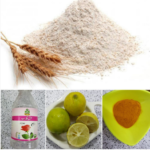
The image shows black sesame, amla and curry leaves. These ingredients provide nutrients and antioxidants, but strong human clinical evidence proving that their paste permanently turns white hair black is unavailable. The most dependable natural method is cosmetic colouring with pure henna and indigo. Henna contains lawsone, which binds to hair keratin and creates a copper-red base, while indigo deposits blue pigment over it to produce brown or black tones. This covers grey hair; it does not reverse the biological greying process. (PMC)

Remedy 1: Two-Step Henna and Indigo Treatment for Normal Hair
Ingredients and Scientific Working
- Pure henna powder, 50 grams: Lawsone molecules bind to keratin in the hair shaft, creating the warm base required for darker indigo coverage.
- Warm water, approximately 120 millilitres: Hydrates the powder and releases the colouring compounds.
- Amla powder, 1 teaspoon: Adds acidity and tannins that may produce a cooler, less orange henna result. It should be considered a colour modifier, not a proven grey-hair cure.
- Pure indigo powder, 50 grams: Indigo pigments coat and interact with the henna-coloured strand, creating dark brown to black colour.
- Aloe vera gel, 1 tablespoon: Helps reduce the dry feeling that plant powders can leave on the hair.
- Fine salt, ¼ teaspoon: May improve the performance of some indigo preparations, although results differ between products.
Studies of natural plant colourants show that henna and indigo colour hair through direct pigment deposition. Clinical evaluation of herbal hair-colour formulations has also demonstrated measurable coverage of grey strands, although the final tone varies with hair porosity, original colour and processing time. (PMC)
Procedure
Mix henna, amla and enough warm water to make a yogurt-like paste. Cover it and allow it to rest according to the henna supplier’s instructions. Apply it to clean, dry hair from roots to ends. Leave it for two hours, then rinse thoroughly without shampoo.
Prepare the indigo immediately before use by mixing it with warm water and salt. Apply it over the henna-treated hair for 45–90 minutes. Rinse with water and wait approximately 24–48 hours before shampooing, allowing the colour to oxidize and deepen.
How Often to Apply
Repeat every four to six weeks as new white roots appear. Colouring twice weekly is unnecessary and may leave the hair dry.
Initial Results
White strands should become copper-coloured after henna and dark brown or black after indigo. The colour usually becomes deeper during the following one to two days.
Remedy 2: One-Step Dark-Brown Herbal Pack for Combination Hair
Ingredients and Scientific Working
- Henna powder, 2 tablespoons: Provides the keratin-binding red-orange pigment base.
- Indigo powder, 4 tablespoons: Creates the dominant darker tone when used in a higher proportion.
- Strong black tea, ½ cup: Tea contains tannins that may temporarily deepen the appearance of hair, although it cannot restore follicular pigment.
- Amla powder, 1 teaspoon: Helps reduce excessive warm-red tones.
- Aloe vera gel, 1 tablespoon: Adds moisture to dry ends without coating an oily scalp heavily.
- Colloidal oatmeal, 1 teaspoon: Helps calm a tight or mildly irritated scalp.
This one-step method commonly produces dark brown rather than jet black because the two pigments develop together. Natural-dye research supports the ability of henna and indigo to colour hair, but household tea and amla additions have not been clinically proven to reverse greying. (PMC)
Procedure
Brew strong unsweetened black tea and let it become lukewarm. Mix the henna, amla, aloe and oatmeal with enough tea to form a smooth paste. Add the indigo immediately before application.
Apply mainly to white and grey areas, then distribute the remaining mixture through the lengths. Leave it on for 60–90 minutes and rinse thoroughly.
How Often to Apply
Use once every three to five weeks. Apply only to new roots during later treatments to prevent excessive buildup on the lengths.
Initial Results
Grey strands may appear medium to dark brown after the first application. The result can deepen during the next 24 hours but may not become completely black.
Remedy 3: Oil-Free Indigo Gloss for Oily Scalp
Ingredients and Scientific Working
- Pure indigo powder, 3 tablespoons: Deposits dark botanical pigment.
- Previously henna-treated hair: Supplies the warm base that allows indigo to appear brown-black instead of blue-green.
- Warm water, approximately ½ cup: Activates and spreads the indigo.
- Amla powder, ½ teaspoon: Helps produce a cooler visual tone.
- Rice starch, 1 teaspoon: Thickens the mixture without adding heavy oil.
- Aloe vera gel, 1 teaspoon: Provides lightweight hydration.
An oily scalp does not need coconut oil, butter or thick conditioners mixed into the colour paste. Oils may interfere with colour deposition and leave the roots greasy. The blackening effect in this routine comes from pigment covering the strand rather than from stimulation of melanin inside the follicle.
Procedure
Apply henna first using the method in Remedy 1. After rinsing, mix fresh indigo with warm water, amla, rice starch and aloe. Apply immediately to the grey roots.
Leave the mixture on for 45–75 minutes, then rinse with lukewarm water. Avoid shampoo for the first day.
How Often to Apply
Apply when the white roots become visible, generally every three to four weeks. Wash an oily scalp regularly between treatments to prevent sebum and product buildup.
Initial Results
The treated strands should darken after the first session. Final colour generally develops over one or two days.
Remedy 4: Moisture-Protective Colour Treatment for Dry Hair
Ingredients and Scientific Working
- Henna powder, 2 tablespoons: Creates the initial colour base.
- Indigo powder, 3 tablespoons: Darkens the henna-covered white strands.
- Aloe vera gel, 1 tablespoon: Adds water-based moisture during application.
- Fenugreek powder, 1 teaspoon: Contains mucilage that improves slip and reduces tangling.
- Warm water, as required: Produces a spreadable consistency.
- Virgin coconut oil, ½ teaspoon: Applied after colouring, it helps reduce protein loss and improves flexibility.
- Sunflower seed oil, ¼ teaspoon: Supports softness through its linoleic-acid content.
Scientific Working of the Remedy
Henna and indigo supply the visible colour, while aloe and fenugreek make the paste easier to distribute through dry hair. Coconut oil has evidence for penetrating the hair shaft and reducing protein loss, but it should be used after colour development rather than heavily mixed into the dye paste. These conditioning ingredients improve texture and shine; they do not restore melanin.
Procedure
Combine henna, aloe and fenugreek with warm water. Apply for 90 minutes and rinse. Prepare the indigo separately, apply it for 45–60 minutes and rinse again.
After 24 hours, blend the coconut and sunflower oils. Apply two or three drops to damp lengths and ends, avoiding excessive application to the scalp.
How Often to Apply
Colour the roots every four to six weeks. Use the light oil treatment once or twice weekly for dry lengths.
Initial Results
The white strands should darken after the colour treatment. Dryness, roughness and tangling may feel reduced within one to three conditioning applications.
Remedy 5: Minimal Botanical Colour Routine for Sensitive Scalp
Ingredients and Scientific Working
- Body-art-quality pure henna, 2 tablespoons: Provides predictable copper-brown colour without requiring synthetic black dye.
- Pure indigo, 1 tablespoon: Adds a darker brown tone when individually tolerated.
- Boiled and cooled water, as required: Creates a simple fragrance-free base.
- Colloidal oatmeal, 1 teaspoon: Supports comfort on a dryness-prone scalp.
- Aloe vera gel, 1 teaspoon: Provides lightweight soothing moisture.
- Sunflower seed oil, 2 drops: Applied around the hairline to reduce accidental staining and dryness.
Scientific Working of the Remedy
A sensitive scalp requires the simplest possible formula. Pure red henna is generally better tolerated than products sold as “black henna,” but allergic reactions are still possible. Products marketed as black henna may contain para-phenylenediamine, or PPD, which can cause severe dermatitis, blistering and swelling. Every botanical dye should therefore be patch-tested and strand-tested before complete application. (PubMed)
Procedure
Perform a patch test with each powder at least 48 hours before colouring. Apply two drops of sunflower oil around the hairline, not through the hair.
Mix henna, oatmeal and aloe with water. Apply it for 45–60 minutes and rinse. When the patch test for indigo is negative, apply a weak indigo paste for only 20–30 minutes to create a darker brown result. Stop immediately if burning, intense itching or swelling develops.
How Often to Apply
Repeat no more than once monthly. Sensitive or eczema-prone scalps should consult a dermatologist before repeated colouring.
Initial Results
Henna creates a warm copper-brown tone after one use. Adding a small amount of indigo can produce medium brown, although complete black coverage may require a stronger treatment that is unsuitable for highly reactive skin.
Final Tips for Managing White Hair Safely
Always purchase pure, clearly labelled plant powders from a reliable source. Avoid products containing PPD, metallic salts, sodium picramate or undisclosed “colour boosters.” Complete both a skin patch test and a hidden-strand test before every new batch because allergies can develop even after previous safe use. The FDA recommends wearing gloves, following the stated processing time, rinsing thoroughly and never using hair dye on the eyebrows or eyelashes. (U.S. Food and Drug Administration)
Do not expect curry-leaf oil, black sesame paste, onion juice, coffee, tea or amla oil to permanently blacken established white strands. They may improve shine, scalp comfort or temporary tone, but consistently effective biological treatments for grey-hair reversal remain limited. Rare spontaneous repigmentation has been observed, including changes linked with reduced psychological stress, but this does not establish a predictable home treatment. (PMC)
Diet Plan to Support Normal Hair Pigmentation
Follow the diet plan for at least eight to twelve weeks while investigating unusually early or rapidly progressing greying.
Breakfast: Eat eggs, milk, yogurt, fish or a vitamin-B12-fortified cereal. Vitamin B12 occurs naturally mainly in animal-derived foods, so vegans may require fortified foods or medically advised supplementation. (Office of Dietary Supplements)
Lunch: Include lentils, chickpeas, chicken, fish or lean meat with spinach, broccoli and whole grains.
Snack: Choose sesame seeds, sunflower seeds, cashews, almonds or chickpeas. Nuts, seeds, tofu, mushrooms and whole grains provide dietary copper. Do not take high-dose copper supplements without laboratory confirmation because excessive copper can be harmful. (Office of Dietary Supplements)
Dinner: Combine protein with leafy vegetables and a vitamin-C-rich food to support iron absorption.
Weekly foods: Include fish, eggs, dairy foods or fortified alternatives for B12; beans and leafy vegetables for folate and iron; and seeds, nuts and legumes for copper.
Continue balanced nutrition for two to three months. Consult a doctor or dermatologist if greying begins suddenly, progresses rapidly, develops in childhood or early adulthood, or occurs with fatigue, weight changes, numbness, hair loss or pale skin. Blood tests may be needed for vitamin B12, ferritin, thyroid function and other deficiencies. Supplements should correct a confirmed deficiency rather than be taken as untested grey-hair treatments. (PMC)
References for the above remedy
- Kumar AB, Shamim H, Nagaraju U. Premature Graying of Hair: Review with Updates.
https://pmc.ncbi.nlm.nih.gov/articles/PMC6290285/ - Poonia K, et al. Premature Graying of Hair: A Comprehensive Review and Recent Insights.
https://pmc.ncbi.nlm.nih.gov/articles/PMC11444426/ - Sonthalia S, et al. Association of Vitamin B12 Deficiency and Thyroid Dysfunction with Premature Hair Graying.
https://pmc.ncbi.nlm.nih.gov/articles/PMC5448266/ - El-Sheikh AM, et al. Relationship Between Trace Elements and Premature Hair Graying.
https://pmc.ncbi.nlm.nih.gov/articles/PMC6369637/ - Rosenberg AM, et al. Quantitative Mapping of Human Hair Greying and Reversal in Relation to Life Stress.
https://pmc.ncbi.nlm.nih.gov/articles/PMC8219384/ - Cui H, et al. Recent Advancements in Natural Plant Colorants Used for Hair Dye Applications.
https://pmc.ncbi.nlm.nih.gov/articles/PMC9692289/ - Singh V, et al. Study of Colouring Effect of Herbal Hair Formulations on Graying Hair.
https://pmc.ncbi.nlm.nih.gov/articles/PMC4471652/ - U.S. Food and Drug Administration. Hair Dyes: Safety Precautions and Approved Colour Additives.
https://www.fda.gov/cosmetics/cosmetic-products/hair-dyes - de Groot AC. Side Effects of Henna and Semi-Permanent Black Henna.
https://pubmed.ncbi.nlm.nih.gov/23782354/ - National Institutes of Health, Office of Dietary Supplements. Vitamin B12 and Copper Fact Sheets.
https://ods.od.nih.gov/factsheets/VitaminB12-HealthProfessional/
https://ods.od.nih.gov/factsheets/Copper-Consumer/