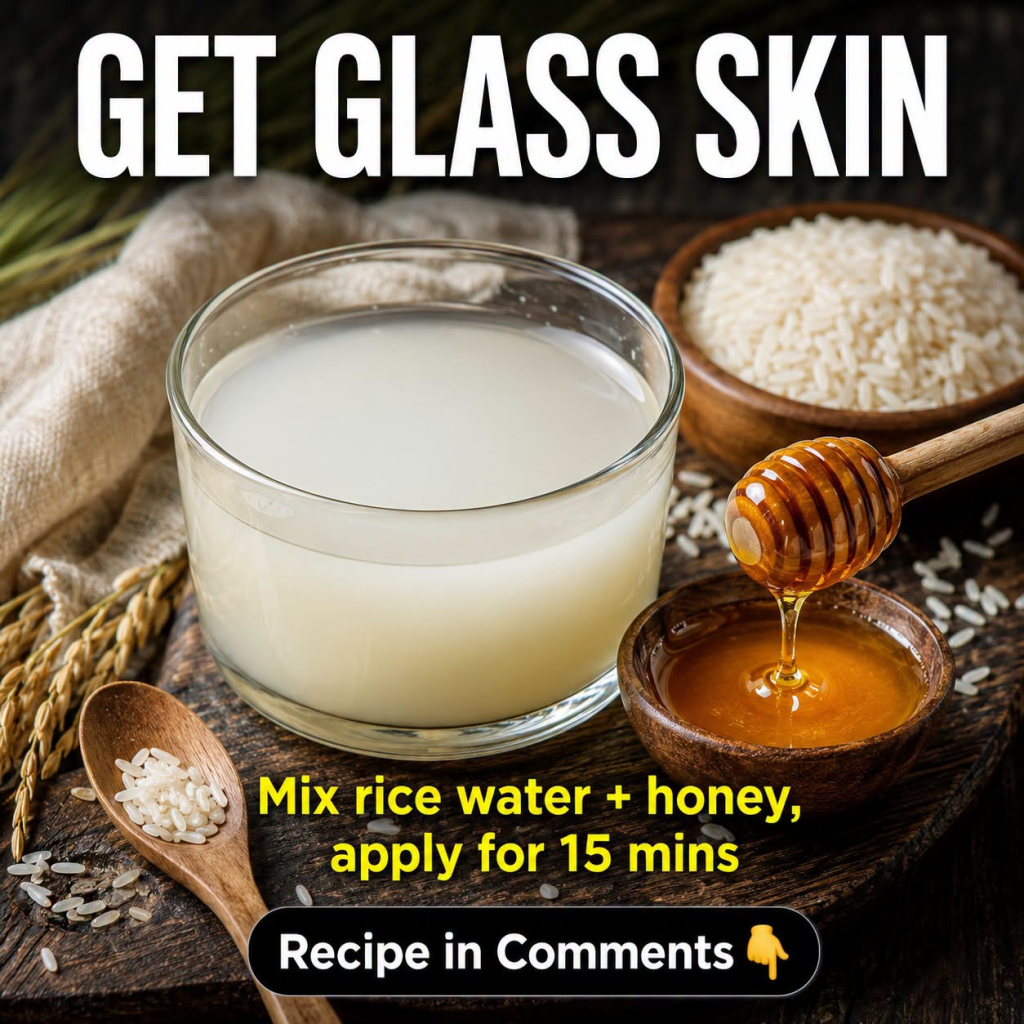
Glass skin means skin that looks smooth, hydrated, clear, soft, and naturally reflective without looking oily. The image topic focuses on a simple rice water and honey face remedy, which is popular because rice water gives a light brightening and softening effect, while honey helps the skin hold moisture. However, real glass skin does not come from one mask alone. It comes from gentle cleansing, barrier repair, hydration, mild exfoliation, and daily sun protection. The exact homemade rice water and honey mixture is not a medical cure, but the ingredients used in the remedies below are selected because research supports their role in hydration, soothing, antioxidant care, and skin-barrier support. These recipes are tailored by skin type so the skin gets glow without becoming greasy, irritated, or dry.

Remedy 1: For Normal Skin
Ingredients
Rice water: 3 tablespoons, helps soften dull skin and gives a smooth glow.
Raw honey: 1 teaspoon, attracts moisture and supports a healthy-looking skin surface.
Aloe vera gel: 1 teaspoon, adds cooling hydration.
Cucumber juice: 1 teaspoon, refreshes and lightly soothes the skin.
Finely ground oatmeal: 1 teaspoon, gently smooths rough texture.
Rose water: 1 teaspoon, gives a fresh and calming feel.
Scientific Working of Each Ingredient
Rice water contains starches and rice-derived compounds that help the skin feel smoother and more conditioned. Honey works as a humectant, meaning it pulls moisture toward the upper skin layer. Aloe vera contains water-rich polysaccharides that help hydrate and calm the skin. Cucumber juice gives a cooling effect and supports temporary freshness. Oatmeal contains soothing compounds that help improve barrier comfort, while rose water adds a gentle refreshing effect.
Procedure
Mix rice water, honey, aloe vera gel, cucumber juice, oatmeal, and rose water into a thin creamy paste. Apply it on clean skin and leave it for 15 minutes. Rinse with cool water and pat dry. Do not rub harshly. Finish with a light moisturizer.
How Often to Apply
Apply once daily at night for 5 days.
Initial Results
Within 1–3 days, the skin may feel softer, smoother, and more hydrated. A mild natural glow may appear faster on cheeks and forehead.
Remedy 2: For Combination Skin
Ingredients
Rice water: 2 tablespoons, gives lightweight softness.
Honey: ½ teaspoon, hydrates dry areas without making the face heavy.
Green tea: 2 tablespoons cooled, helps reduce excess shine on the T-zone.
Aloe vera gel: 1 teaspoon, gives oil-free hydration.
Oat flour: 1 teaspoon, calms rough patches.
Jojoba oil: 1–2 drops, adds glow only on dry areas.
Scientific Working of Each Ingredient
Combination skin has oily and dry zones, so the remedy must balance both. Rice water works like a light essence for smoothness. Honey helps dry patches hold moisture. Green tea contains catechins that support antioxidant protection and may help reduce greasy-looking shine. Aloe vera hydrates without clogging. Oat flour supports the barrier and reduces discomfort. Jojoba oil feels light and can be used only on dry cheek areas.
Procedure
Mix rice water, honey, green tea, aloe vera, and oat flour. Apply a thin layer to the full face for 12–15 minutes. Rinse gently. After drying, tap 1–2 drops of jojoba oil only on cheekbones or dry patches. Avoid the nose, forehead, and chin if they get oily.
How Often to Apply
Use every other night for 5 days.
Initial Results
In 2–3 days, the cheeks may feel softer while the T-zone may look less shiny and more balanced.
Remedy 3: For Oily Skin
Ingredients
Rice water: 2 tablespoons, gives glow without oiliness.
Raw honey: ¼ teaspoon, prevents tightness after masking.
Green tea: 2 tablespoons cooled, supports oil balance.
Aloe vera gel: 1 teaspoon, hydrates lightly.
Kaolin clay or multani mitti: 1 teaspoon, absorbs excess surface oil.
Cucumber juice: 1 teaspoon, cools and refreshes the skin.
Scientific Working of Each Ingredient
Oily skin often loses glow because excess sebum mixes with dead cells and makes the face look dull. Rice water gives a smooth finish without adding oil. Green tea is useful for oily skin because it has antioxidant and sebum-balancing properties. Clay absorbs extra oil from the surface, but honey and aloe vera stop the mask from making the skin too dry. Cucumber juice keeps the remedy cooling and fresh.
Procedure
Mix all ingredients into a smooth paste. Apply a thin layer to the face, especially on oily areas. Leave it for 8–10 minutes only. Do not let the clay fully crack. Rinse with cool water and apply plain aloe vera gel as a light finishing layer.
How Often to Apply
Use 3 times in 5 days.
Initial Results
Within 1–3 days, the face may look cleaner, less greasy, and more fresh. Pores may look slightly less noticeable because surface oil is reduced.
Remedy 4: For Dry Skin
Ingredients
Rice water: 3 tablespoons, softens and refreshes dull skin.
Honey: 1 teaspoon, helps hold moisture.
Aloe vera gel: 1 teaspoon, adds water-based hydration.
Colloidal oatmeal or fine oat powder: 1 teaspoon, supports the skin barrier.
Mashed avocado: 1 teaspoon, gives natural fatty softness.
Rosehip oil: 2–3 drops, seals moisture and improves glow.
Scientific Working of Each Ingredient
Dry skin needs both hydration and barrier support. Rice water gives a soft watery layer, while honey helps the skin retain moisture. Aloe vera adds cooling hydration. Oatmeal is strongly supported for improving skin comfort, hydration, and barrier function. Avocado gives a creamy emollient effect, and rosehip oil adds fatty acids that help the skin look smoother and less rough.
Procedure
Mix rice water, honey, aloe vera, oatmeal, and avocado into a creamy mask. Apply on clean, slightly damp skin. Leave for 15 minutes. Rinse gently with cool water. While the face is still slightly damp, tap 2–3 drops of rosehip oil on cheeks, forehead, and chin.
How Often to Apply
Use nightly for 3–5 days.
Initial Results
In 1–2 days, dry patches may feel softer, and the skin may look more plump and luminous.
Remedy 5: For Sensitive Skin
Ingredients
Rice water: 2 tablespoons, gives mild hydration and softness.
Honey: ¼ teaspoon, adds gentle moisture.
Aloe vera gel: 1 teaspoon, cools and soothes the skin.
Colloidal oatmeal: 1 teaspoon, supports sensitive barrier repair.
Chamomile tea: 1 tablespoon cooled, gives a calming effect.
Cucumber juice: 1 teaspoon, helps reduce the feeling of heat.
Scientific Working of Each Ingredient
Sensitive skin needs a simple and calming glass-skin routine. Rice water gives a light softening effect, but it should always be patch-tested. Honey moisturizes, but people allergic to bee products should avoid it. Aloe vera gives cooling hydration. Colloidal oatmeal is one of the best natural ingredients for barrier comfort. Chamomile and cucumber add a soothing feel, especially when the skin looks tired or warm.
Procedure
First, patch-test the mixture on the jawline for 24 hours. If there is no burning, itching, or redness, apply a thin layer to the face for 8–10 minutes. Rinse with cool water. Do not scrub. Finish with a simple fragrance-free moisturizer.
How Often to Apply
Use every other night for 5 days.
Initial Results
Within 2–3 days, the skin may feel calmer, less tight, and more hydrated with a soft natural glow.
Final Tips
Use fresh rice water only, and do not keep homemade rice water for many days because it can spoil. Store it in the refrigerator and use it within 24–48 hours. Always wash rice properly before soaking. Do not use lemon juice, baking soda, toothpaste, or harsh scrubs on the face because they can damage the skin barrier. Apply sunscreen every morning because glass skin cannot improve properly if sun exposure keeps causing dullness, tanning, and pigmentation. Keep towels, bowls, spoons, and hands clean before applying any remedy. Do a patch test every time you try a new ingredient. Visible improvements usually begin within 2–3 days, but smoother texture, better glow, and softer fine lines usually need 3–4 weeks of regular care.
Diet Plan
Continue the home remedy routine and diet plan for 3–4 weeks. In the morning, drink water and eat a vitamin C-rich fruit such as orange, guava, kiwi, strawberries, or amla. For breakfast, choose oats, yogurt, eggs, nuts, chia seeds, or whole-grain toast. At lunch, include vegetables, lentils, beans, fish, chicken, tofu, or paneer with whole grains. In the evening, drink green tea or take a small handful of almonds, walnuts, pumpkin seeds, or sunflower seeds. At dinner, eat a light meal with vegetables, protein, and healthy fats. Add omega-3 foods such as fish, walnuts, flaxseeds, or chia seeds several times weekly. Reduce excess sugar, fried foods, and highly processed snacks because they can make the skin look dull. If dullness, acne, itching, redness, pigmentation, swelling, burning, or dryness persists, stop the remedy and see a doctor or dermatologist.
References for the above remedy
- Zamil DH, et al. “Dermatological uses of rice products: Trend or true?” PubMed. URL: https://pubmed.ncbi.nlm.nih.gov/35587098/ (PubMed)
- Manosroi A, et al. “Antioxidant activities and skin hydration effects of rice bran bioactive compounds.” PubMed. URL: https://pubmed.ncbi.nlm.nih.gov/21449379/ (PubMed)
- Yaghoobi R, et al. “Evidence for Clinical Use of Honey in Wound Healing as an Anti-bacterial, Anti-inflammatory Anti-oxidant and Anti-viral Agent.” PMC. URL: https://pmc.ncbi.nlm.nih.gov/articles/PMC3941901/ (PMC)
- Capone K, et al. “Effects of Colloidal Oatmeal Topical Atopic Dermatitis Cream on Skin Microbiome and Skin Barrier Properties.” PubMed. URL: https://pubmed.ncbi.nlm.nih.gov/32484623/ (PubMed)
- Mahmood T, et al. “Outcomes of 3% Green Tea Emulsion on Skin Sebum Production in Male Volunteers.” PMC. URL: https://pmc.ncbi.nlm.nih.gov/articles/PMC5504505/ (PMC)
- NCCIH. “Aloe Vera: Usefulness and Safety.” URL: https://www.nccih.nih.gov/health/aloe-vera (NCCIH)
- Park KS. “Pharmacological Effects of Centella asiatica on Skin Diseases.” PMC. URL: https://pmc.ncbi.nlm.nih.gov/articles/PMC8627341/ (PMC)
- Pullar JM, et al. “The Roles of Vitamin C in Skin Health.” PMC. URL: https://pmc.ncbi.nlm.nih.gov/articles/PMC5579659/
- World Health Organization. “Healthy diet.” URL: https://www.who.int/news-room/fact-sheets/detail/healthy-diet (World Health Organization)