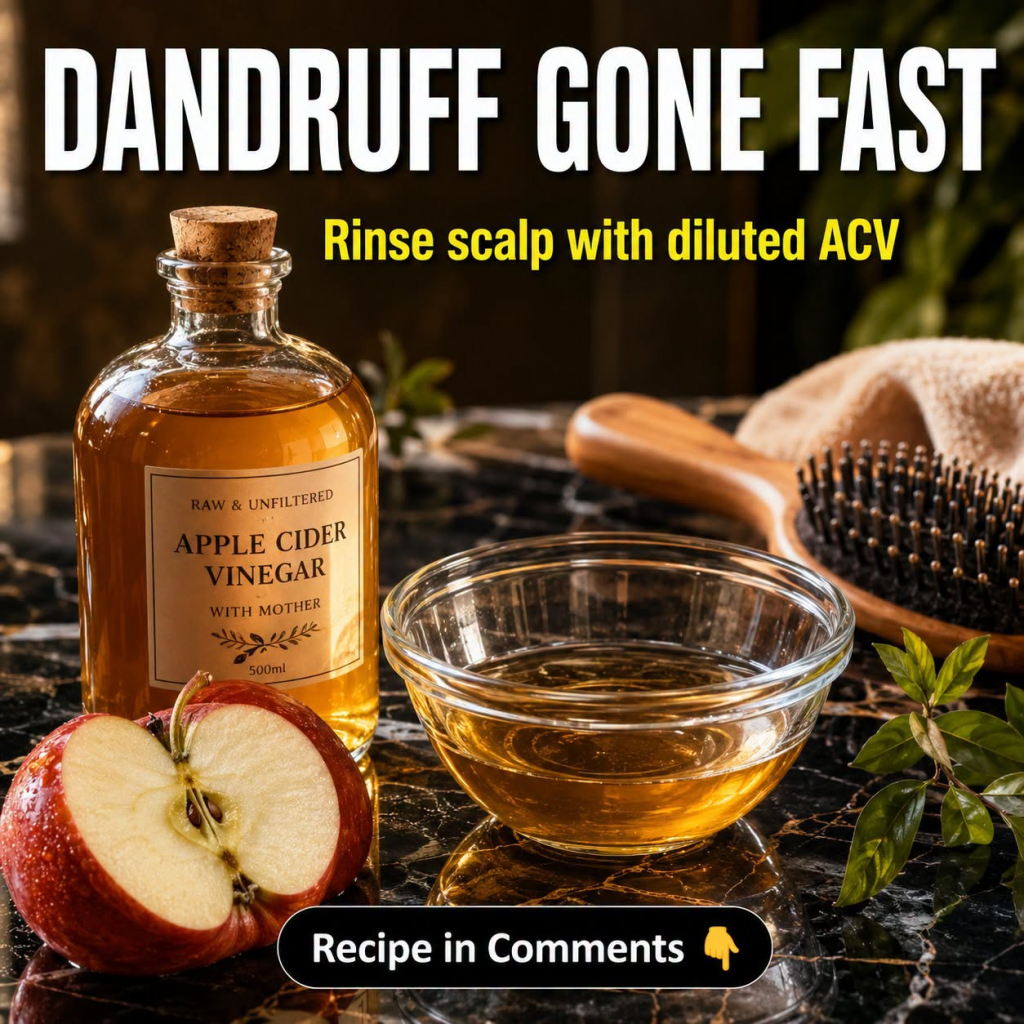
Dandruff can make the scalp look flaky, itchy, greasy, dry, or unclean even when hair is washed regularly. It often affects confidence because white flakes become visible on the hairline, shoulders, and dark clothes. Dandruff is closely related to mild seborrheic dermatitis and is linked with scalp oil, barrier weakness, and the yeast Malassezia in many people. Research supports some natural ingredients for dandruff and seborrheic dermatitis, especially tea tree oil, lemongrass oil, honey, and aloe vera. Diluted apple cider vinegar can be used carefully as a clarifying rinse, but it should never be used undiluted because vinegar can irritate or burn skin when misused. (PMC)
Remedy 1: For Normal Scalp
Ingredients
Apple cider vinegar: 1 tablespoon, diluted to help remove buildup and refresh the scalp.
Water: 6 tablespoons, reduces ACV strength and protects the scalp barrier.
Raw honey: 1 teaspoon, supports moisture and scalp comfort.
Aloe vera gel: 1 teaspoon, soothes mild itching and dryness.
Green tea: 2 tablespoons cooled, provides antioxidant support.
Tea tree oil: 1 drop only, supports anti-dandruff action when properly diluted.
Scientific Working of Each Ingredient
Apple cider vinegar contains acetic acid, which may help reduce buildup and create an acidic rinse environment, but it is not strongly proven alone for dandruff. Water is necessary because strong vinegar can irritate the scalp. Honey has clinical support in seborrheic dermatitis when used in diluted form. Aloe vera has shown benefit in seborrheic dermatitis, helping with scaling and irritation. Green tea supports scalp comfort through antioxidants. Tea tree oil has one of the strongest natural dandruff studies, where 5% tea tree oil shampoo improved dandruff severity compared with placebo. (PubMed)
Procedure
Mix ACV with water first. Add honey, aloe vera, cooled green tea, and 1 drop of tea tree oil. After shampooing, apply the mixture to the scalp with cotton or a spray bottle. Massage gently for 2 minutes. Leave for 5–7 minutes, then rinse thoroughly with cool water.
How Often to Apply
Use 2 times per week for 3–5 days initially, then continue once weekly for 4 weeks if the scalp feels comfortable.
Initial Results
In 1–3 days, flakes may loosen, itching may feel reduced, and the scalp may feel cleaner. Heavy dandruff usually needs 2–4 weeks of steady care.
Remedy 2: For Combination Scalp
Ingredients
Apple cider vinegar: 1 tablespoon, diluted for oily buildup areas.
Water: 7 tablespoons, keeps the rinse gentle.
Aloe vera gel: 1 tablespoon, hydrates dry patches without greasiness.
Lemongrass tea: 2 tablespoons cooled, supports freshness.
Honey: ½ teaspoon, helps dry areas feel less tight.
Jojoba oil: 2 drops, used only on dry scalp patches.
Scientific Working of Each Ingredient
Combination scalp may be oily near the crown but dry around the hairline. Diluted ACV can help remove product buildup from oily areas, while aloe vera supports dry, itchy patches. Lemongrass oil hair tonic has clinical evidence for reducing dandruff, with 10% lemongrass oil showing strong results in one study; at home, use mild lemongrass tea instead of strong essential oil for safety. Honey helps calm scaling and dryness. Jojoba oil is used only in tiny amounts because too much oil may worsen greasy dandruff.
Procedure
Mix ACV, water, aloe vera, lemongrass tea, and honey. Apply mostly to oily scalp areas. Leave for 5 minutes, then rinse well. After drying, tap 1–2 drops of jojoba oil only on dry patches, not the oily crown.
How Often to Apply
Use every 3 days for 2 weeks, then once weekly.
Initial Results
Within 2–3 days, oily buildup may feel lighter while dry patches may feel calmer.
Remedy 3: For Oily Scalp
Ingredients
Apple cider vinegar: 1 tablespoon, diluted to refresh greasy roots.
Water: 8 tablespoons, prevents irritation.
Green tea: 3 tablespoons cooled, supports oil balance.
Tea tree oil: 1–2 drops, diluted properly for dandruff control.
Aloe vera gel: 1 teaspoon, gives light hydration.
Lemon peel water: 1 tablespoon, optional for fresh smell, not lemon juice.
Scientific Working of Each Ingredient
Oily dandruff is often linked with excess sebum and Malassezia activity. Diluted ACV may help remove greasy buildup, but it should not replace proven dandruff treatments if flakes are severe. Green tea may support oil balance and antioxidant protection. Tea tree oil has clinical support for dandruff when used at safe dilution. Aloe vera prevents the scalp from feeling stripped. Lemon peel water gives a fresh scent, but direct lemon juice should be avoided because it can sting and irritate.
Procedure
Mix all ingredients well. Apply to the scalp after shampooing. Massage lightly with fingertips, not nails. Leave for 5 minutes only. Rinse thoroughly. Do not apply hair oil after this remedy on the same day.
How Often to Apply
Use 2–3 times weekly for 3–5 days, then reduce to once or twice weekly.
Initial Results
In 1–3 days, the scalp may feel less greasy and flakes may appear easier to wash away.
Remedy 4: For Dry Scalp with Flakes
Ingredients
Apple cider vinegar: 1 teaspoon only, highly diluted for dryness-prone scalp.
Water: 8 tablespoons, makes the rinse mild.
Aloe vera gel: 1 tablespoon, soothes dryness and itch.
Raw honey: 1 teaspoon, supports moisture.
Colloidal oatmeal water: 2 tablespoons, calms dryness and barrier discomfort.
Coconut milk: 1 tablespoon, softens dry scalp and hair lengths.
Scientific Working of Each Ingredient
Dry scalp flakes can look like dandruff but may come from irritation, harsh shampooing, or barrier weakness. A very weak ACV rinse may help remove buildup, but stronger vinegar can worsen dryness. Aloe vera and honey support comfort and moisture. Oatmeal is well known for soothing dry, irritated skin barriers. Coconut milk softens hair and reduces the dry feeling, but it should be rinsed well so it does not create buildup.
Procedure
Soak 1 teaspoon fine oatmeal in warm water for 10 minutes, then strain to get oatmeal water. Mix with water, ACV, aloe vera, honey, and coconut milk. Apply to the scalp for 7–10 minutes. Rinse gently and shampoo lightly if needed.
How Often to Apply
Use once or twice weekly for 2 weeks.
Initial Results
Within 2–3 days, dryness may feel reduced and flakes may look softer rather than powdery.
Remedy 5: For Sensitive Scalp
Ingredients
Apple cider vinegar: ½ teaspoon only, optional and highly diluted.
Water: 1 cup, keeps the rinse very gentle.
Aloe vera gel: 1 tablespoon, calms the scalp.
Chamomile tea: 2 tablespoons cooled, gives soothing comfort.
Colloidal oatmeal water: 2 tablespoons, supports the scalp barrier.
Honey: ½ teaspoon, adds mild moisture.
Scientific Working of Each Ingredient
Sensitive scalp needs the lowest-risk routine. Vinegar can irritate sensitive skin, so it must be optional and extremely diluted. Studies on diluted ACV in skin conditions show irritation can occur in some people, so patch testing is important. Aloe vera, oatmeal, chamomile, and honey are gentler options for comfort and dryness. This remedy is best for mild flaking, not severe redness, wounds, or painful scalp.
Procedure
Patch-test behind the ear for 24 hours before using. If there is no burning, itching, or redness, apply the mixture to the scalp for 3–5 minutes only. Rinse completely. Do not use this remedy on scratched, bleeding, infected, or inflamed scalp.
How Often to Apply
Use once weekly for 2 weeks. Stop immediately if burning or redness appears.
Initial Results
In 2–3 days, itching may feel calmer and flakes may reduce slightly if irritation was the main cause.
Final Tips
Always dilute apple cider vinegar before applying it to the scalp. Never sleep with ACV on the scalp, never apply it to broken skin, and never use it daily. Avoid scratching because it can worsen inflammation and create wounds. Wash combs, pillow covers, scarves, caps, and hair towels regularly. Reduce heavy hair oils if they make flakes greasy, because some dandruff-prone scalps worsen with excess oil. Use a mild shampoo regularly, especially if your scalp is oily. Visible improvement may begin within 2–3 days, but true dandruff control usually needs 2–4 weeks. If flakes are thick, yellow, painful, spreading to eyebrows or ears, causing hair loss, or not improving, see a dermatologist. A board-certified dermatologist can confirm whether it is dandruff, seborrheic dermatitis, psoriasis, eczema, lice, or fungal infection. (American Academy of Dermatology)
Diet Plan
Continue the scalp remedy and diet plan for at least 4 weeks. Start the morning with water and a protein-rich breakfast such as eggs, yogurt, oats, lentils, or nuts. At lunch, include vegetables, whole grains, and protein such as fish, chicken, beans, lentils, tofu, or paneer. Add omega-3 foods like fish, walnuts, flaxseeds, or chia seeds 3–4 times weekly because they support inflammatory balance. Eat zinc-rich foods such as pumpkin seeds, chickpeas, eggs, and seafood if suitable. Add vitamin B-rich foods such as whole grains, yogurt, eggs, and leafy greens. Reduce excess sugar, fried foods, and highly processed snacks because poor diet may worsen inflammation and oil imbalance in some people. Drink enough water and sleep 7–8 hours because stress and poor sleep may trigger flare-ups. If dandruff persists after 4 weeks, becomes painful, or keeps returning quickly, see a doctor or dermatologist.
References for the above remedy
- Borda LJ, Wikramanayake TC. “Seborrheic Dermatitis and Dandruff: A Comprehensive Review.” PMC. URL: https://pmc.ncbi.nlm.nih.gov/articles/PMC4852869/
- Turner GA, Hoptroff M, Harding CR. “Stratum corneum dysfunction in dandruff.” PMC. URL: https://pmc.ncbi.nlm.nih.gov/articles/PMC3494381/
- Satchell AC, Saurajen A, Bell C, Barnetson RS. “Treatment of dandruff with 5% tea tree oil shampoo.” PubMed. URL: https://pubmed.ncbi.nlm.nih.gov/12451368/
- Chaisripipat W, et al. “Anti-dandruff Hair Tonic Containing Lemongrass Oil.” PubMed. URL: https://pubmed.ncbi.nlm.nih.gov/26566122/
- Al-Waili NS. “Therapeutic and prophylactic effects of crude honey on chronic seborrheic dermatitis and dandruff.” PubMed. URL: https://pubmed.ncbi.nlm.nih.gov/11485891/
- Barak-Shinar D, Green LJ. “Treatment of Seborrheic Dermatitis Using a Novel Herbal-based Cream.” PMC. URL: https://pmc.ncbi.nlm.nih.gov/articles/PMC5404776/
- Elhage KG, et al. “Acetic acid and the skin: a review of vinegar in dermatology.” PubMed. URL: https://pubmed.ncbi.nlm.nih.gov/34350993/
- Luu LA, et al. “Apple cider vinegar soaks do not alter the skin bacterial microbiome in atopic dermatitis.” PubMed. URL: https://pubmed.ncbi.nlm.nih.gov/34077434/
- American Academy of Dermatology. “Seborrheic dermatitis: Diagnosis and treatment.” URL: https://www.aad.org/public/diseases/a-z/seborrheic-dermatitis-treatment