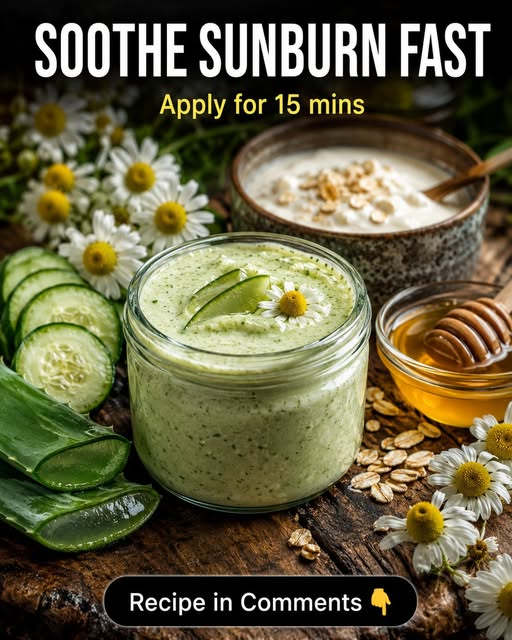
Sunburn is an inflammatory skin injury caused by excessive ultraviolet exposure. The affected area may feel hot, painful, tight, itchy, swollen, or unusually sensitive. A mild sunburn often improves within about one week, but no homemade mask can reverse UV damage in 15 minutes. The safest goal is to cool the skin, reduce discomfort, support hydration, and protect the damaged barrier while natural healing takes place. (American Academy of Dermatology)
The cucumber, aloe, oats, honey, and chamomile shown in the image are commonly associated with soothing skincare. However, evidence is strongest for cool water, colloidal oatmeal, gentle moisturization, and symptom-relieving aloe products. Aloe may feel cooling, but research specifically evaluating aloe cream for sunburn has produced mixed results. (Mayo Clinic)
These remedies are intended only for mild sunburn on intact, unblistered skin. Do not apply homemade food mixtures to open, weeping, infected, or severely blistered areas.
First Step Before Applying Any Remedy
Move indoors or into complete shade. Place a clean cloth soaked in cool—not freezing—water on the affected area for approximately 10 minutes. A cool shower or bath can also reduce heat and discomfort. Do not place ice directly on sunburn because extreme cold may further injure the skin. (Mayo Clinic News Network)
Remedy 1: For Normal Skin — Cooling Aloe, Oat and Green Tea Gel
Ingredients
- 2 tablespoons chilled pure aloe vera inner-leaf gel
- 1 tablespoon boiled and completely cooled water
- 1 teaspoon finely powdered colloidal oatmeal
- 1 teaspoon freshly prepared and cooled green tea
- ¼ teaspoon vegetable glycerin
Scientific Working of Each Ingredient
Aloe vera: Aloe gel contains water-rich polysaccharides and can create a cooling, moisturizing layer. Dermatology guidance commonly recommends aloe-containing moisturizers for symptom relief, although aloe has not been conclusively proven to shorten the duration of sunburn. (American Academy of Dermatology)
Colloidal oatmeal: Oat compounds demonstrate anti-inflammatory and antioxidant activity. Clinical research has shown improvements in dryness, itching, roughness, and skin-barrier comfort. (PubMed)
Green tea: Green tea contains antioxidant catechins. Controlled studies using standardized green-tea extracts have reported reductions in UV-related redness and inflammatory activity. Homemade tea is much weaker and should be viewed only as a gentle supportive ingredient. (PubMed)
Vegetable glycerin: Glycerin is a humectant that attracts water to the outer skin layer and helps reduce dryness and tightness. (PubMed)
Cooled water: Cool water provides immediate temperature relief without exposing damaged skin to extreme cold.
Procedure
Mix the oatmeal with cooled water until smooth. Add aloe, green tea, and glycerin. Refrigerate the mixture for approximately 10 minutes, but do not freeze it.
Apply a thin layer without rubbing. Leave it on for 10–15 minutes, rinse gently with cool water, and pat dry using a soft towel.
How Often to Apply
Apply once or twice daily for 3–5 days. Discontinue when redness, itching, or discomfort increases.
Initial Results
The skin may feel cooler within 15–30 minutes. Tightness and surface dryness may begin improving within 1–3 days, but the burn still needs time to heal.
Remedy 2: For Combination Skin — Soy, Aloe and Oat Cooling Lotion
Ingredients
- 1 tablespoon plain, unsweetened refrigerated soy milk
- 1 tablespoon pure aloe vera gel
- 1 teaspoon colloidal oatmeal
- 1 tablespoon boiled and cooled water
- ¼ teaspoon vegetable glycerin
Scientific Working of Each Ingredient
Soy: Dermatologists recommend moisturizers containing soy as one option for soothing sunburned skin. Clinical evidence relates mainly to properly formulated soy skincare rather than kitchen soy milk, so this fresh mixture should be considered supportive and must be patch-tested. (American Academy of Dermatology)
Aloe vera: Aloe provides lightweight moisture without creating a heavy or oily coating.
Colloidal oatmeal: Oatmeal supports dry cheek areas while helping reduce discomfort and roughness. (PubMed)
Glycerin: Glycerin helps water remain in the outer skin layer and may reduce the tight sensation that often follows sun exposure.
Cool water: Water thins the mixture so it can be applied without pulling or rubbing the skin.
Procedure
Blend all ingredients until no dry oat particles remain. Apply a slightly thicker layer over dry cheek areas and a very thin layer over the forehead, nose, and chin.
Leave it on for 8–10 minutes. Rinse before the mixture becomes dry. Prepare a fresh batch for every use and discard all leftovers.
How Often to Apply
Apply once daily for 3 days. Continue for up to 5 days only when the skin remains comfortable.
Initial Results
Dry areas may feel softer within the first few applications, while oily areas should remain light rather than heavily coated. The remedy will not remove UV damage or prevent peeling completely.
Remedy 3: For Oily Skin — Lightweight Green Tea and Rice Cooling Gel
Ingredients
- 2 tablespoons cooled green tea
- 1 tablespoon pure aloe vera gel
- 1 teaspoon fine rice starch
- 1 teaspoon colloidal oatmeal
- ¼ teaspoon vegetable glycerin
Scientific Working of Each Ingredient
Green tea: Green-tea polyphenols possess antioxidant and anti-inflammatory properties. Human studies involving concentrated extracts found reduced UV-induced redness, although a homemade infusion is not equivalent to a clinical extract. (PubMed)
Aloe vera: Aloe supplies water-based hydration without adding heavy oil.
Rice starch: Fine rice starch thickens the remedy and creates a smoother texture. It should not be rubbed or used as a scrub.
Colloidal oatmeal: Oatmeal provides barrier-supporting and soothing activity without requiring oily ingredients. (PubMed)
Glycerin: Oily skin can still become dehydrated after sun exposure. A small amount of glycerin supports moisture retention without increasing surface oil.
Procedure
Mix rice starch and oatmeal first. Slowly add green tea until smooth, then blend in aloe and glycerin.
Apply with clean fingertips using light pressure. Do not massage. Leave for 8 minutes and rinse gently.
How Often to Apply
Use once daily for 3–5 days. Avoid applying acne treatments, alcohol-based toners, strong acids, or exfoliating products over freshly sunburned skin.
Initial Results
The skin may feel cooler after the first application. Dry tightness may improve within 1–3 days without leaving a heavy oily layer.
Remedy 4: For Dry Skin — Colloidal Oat and Sunflower Recovery Mask
Ingredients
- 2 tablespoons colloidal oatmeal
- 2 tablespoons boiled and cooled water
- 1 tablespoon pure aloe vera gel
- ½ teaspoon vegetable glycerin
- ¼ teaspoon high-linoleic sunflower seed oil
Scientific Working of Each Ingredient
Colloidal oatmeal: Oatmeal functions as a moisturizer, soothing skin protectant, and anti-inflammatory ingredient. It may help reduce dryness, itching, scaling, and rough texture. (PubMed)
Aloe vera: Aloe provides a cooling, water-rich base and may help reduce the uncomfortable feeling of dry, tight skin.
Vegetable glycerin: Glycerin helps improve moisture retention in a damaged or dehydrated outer skin barrier. (PubMed)
Sunflower seed oil: Sunflower oil contains barrier-supporting fatty acids. Research in adult skin found that it improved hydration and preserved outer-barrier integrity. (PubMed)
Cooled water: Water cools the area and prevents the mask from becoming thick or difficult to remove.
Procedure
First cool the sunburn with a damp cloth. Mix the oatmeal, water, aloe, and glycerin. Add sunflower oil only when the area no longer feels intensely hot.
Apply a soft layer and leave it on for approximately 10 minutes. Add cool water before removal and rinse without scrubbing.
How Often to Apply
Use once daily for 3–5 days. When the skin remains very hot, omit the oil during the first application and concentrate on cooling.
Initial Results
Dryness and tightness may improve within 1–3 days. Peeling can still occur because it is part of the skin’s response to UV injury. Do not pull away peeling skin.
Remedy 5: For Sensitive Skin — Minimal Oat and Aloe Comfort Compress
Ingredients
- 2 tablespoons boiled and completely cooled water
- 1 tablespoon finely powdered colloidal oatmeal
- 1 teaspoon pure aloe vera inner-leaf gel
- ¼ teaspoon vegetable glycerin
- 2 drops of high-linoleic sunflower seed oil
Scientific Working of Each Ingredient
Colloidal oatmeal: Oatmeal has antioxidant, anti-inflammatory, moisturizing, and barrier-supporting properties that can be useful for dry, reactive skin. (PubMed)
Aloe vera: Aloe may provide a cooling sensation, but sensitive individuals can react to botanical ingredients. Omit it when you have previously experienced itching or a rash from aloe.
Glycerin: A very small quantity supports hydration without fragrance or exfoliation.
Sunflower oil: Two drops reduce friction and provide light emollient support after the skin has cooled. (PubMed)
Cool water: Cool water remains the most important part of this remedy because it helps reduce heat without exposing reactive skin to unnecessary ingredients.
Procedure
Mix the oatmeal and water. Add aloe, glycerin, and sunflower oil.
Soak a clean, soft cotton cloth in the liquid and place it gently over the affected area. Do not rub. Remove after 5–10 minutes and rinse only when residue remains.
How Often to Apply
Use once daily for the first 3 days. Continue for up to 5 days only when there is no burning, swelling, rash, or increasing redness.
Initial Results
Sensitive skin may feel cooler during the application. Tightness may decrease within 1–3 days, but persistent burning or worsening redness requires medical advice.
Final Tips for Faster and Safer Sunburn Recovery
Stay out of direct sunlight until the burn has healed. Wear loose, soft clothing to minimize friction. Apply a gentle moisturizer while the skin is slightly damp because this helps trap water in the outer layer. (American Academy of Dermatology)
Do not apply lemon juice, vinegar, toothpaste, perfume, essential oils, harsh scrubs, or alcohol-based products. Avoid placing ice directly on the skin. Do not use butter or thick kitchen oils immediately after sun exposure because the first priority is cooling.
Do not pop blisters. Blisters protect the healing tissue underneath and breaking them may increase infection risk. (American Academy of Dermatology)
Avoid scratching or peeling loose skin. Keep towels, bowls, hands, and cloths clean. Prepare every homemade remedy fresh because food-based mixtures do not contain tested preservation systems.
Once the skin is comfortable enough to tolerate sunscreen, use broad-spectrum, water-resistant SPF 30 or higher on exposed areas. Protective clothing, shade, and regular reapplication help prevent another burn. (American Academy of Dermatology)
Diet Plan to Support Recovery and Hydration
Food cannot cure a sunburn, but regular fluids and balanced meals support normal healing.
After waking: Drink one glass of water. Continue drinking regularly throughout the day rather than consuming a very large quantity at once.
Breakfast: Choose oatmeal with fruit and plain yogurt, or eggs with vegetables and whole-grain bread.
Mid-morning: Eat water-rich fruit such as watermelon, orange, strawberries, melon, or cucumber.
Lunch: Include whole-grain roti or brown rice with lentils, beans, fish, chicken, or eggs. Add vegetables or salad.
Evening snack: Choose fruit, plain yogurt, unsalted nuts, or roasted chickpeas.
Dinner: Eat vegetables with lentils, beans, fish, chicken, or another protein source.
Drink additional water after extensive heat exposure because sunburn can contribute to fluid loss. (Mayo Clinic)
Avoid relying on sugary “detox” drinks. No juice, tea, or supplement reverses sunburn damage. A balanced diet supports general health but does not replace cooling care or sun protection.
How Long to Continue the Home Remedy and Diet Plan
Use only one remedy suitable for your skin type for approximately 3–5 days. Mild sunburn commonly improves within seven days, although deeper burns and lingering discoloration may take longer. (Mayo Clinic)
Continue regular hydration and balanced meals throughout recovery. Stop every homemade application immediately when it causes more burning, itching, swelling, pain, or redness.
Consult a doctor when the burn covers a large area, develops extensive blisters, becomes increasingly swollen, or shows pus or other signs of infection. Seek medical care for fever, chills, severe headache, nausea, dizziness, confusion, weakness, fainting, dehydration, or worsening symptoms. (American Academy of Dermatology)
References for the above remedy
- American Academy of Dermatology Association. How to Treat Sunburn.
https://www.aad.org/public/everyday-care/injured-skin/burns/treat-sunburn - Mayo Clinic. Sunburn: First Aid.
https://www.mayoclinic.org/first-aid/first-aid-sunburn/basics/art-20056643 - National Health Service. Sunburn.
https://www.nhs.uk/conditions/sunburn/ - Puvabanditsin P, Vongtongsri R. Efficacy of Aloe Vera Cream in Prevention and Treatment of Sunburn and Suntan.
https://pubmed.ncbi.nlm.nih.gov/16623024/ - Reynertson KA, et al. Anti-Inflammatory Activities of Colloidal Oatmeal.
https://pubmed.ncbi.nlm.nih.gov/25607907/ - Kurtz ES, Wallo W. Colloidal Oatmeal: History, Chemistry and Clinical Properties.
https://pubmed.ncbi.nlm.nih.gov/17373175/ - Fluhr JW, Darlenski R, Surber C. Glycerol and the Skin: Holistic Approach to Its Origin and Functions.
https://pubmed.ncbi.nlm.nih.gov/18510666/ - Danby SG, et al. Effect of Olive and Sunflower Seed Oil on the Adult Skin Barrier.
https://pubmed.ncbi.nlm.nih.gov/22995032/ - Elmets CA, et al. Cutaneous Photoprotection from Ultraviolet Injury by Green Tea Polyphenols.
https://pubmed.ncbi.nlm.nih.gov/11209110/ - Sharma S, et al. Second-Degree Burns and Aloe Vera: A Meta-Analysis and Systematic Review.
https://pubmed.ncbi.nlm.nih.gov/36264753/