Dull skin is one of the most common skincare concerns caused by dead skin cell buildup, dehydration, sun exposure, pollution, stress, and natural aging. When the skin loses moisture and healthy cell turnover slows down, the complexion appears tired, uneven, and lifeless. Fortunately, natural ingredients rich in antioxidants, vitamins, enzymes, and skin-soothing compounds can help restore radiance without relying on harsh chemicals.
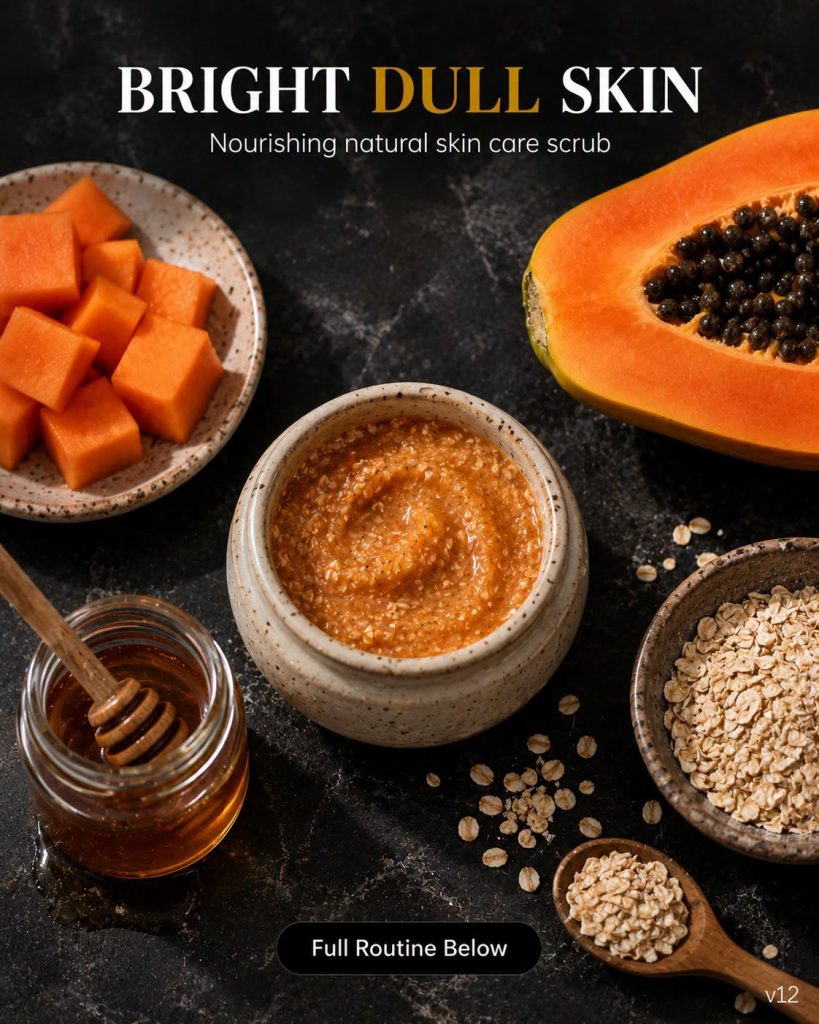
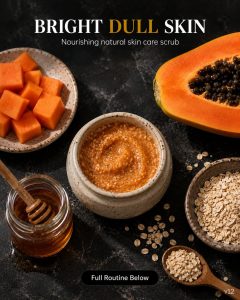
The ingredients shown in this remedy—papaya, oats, and honey—are supported by scientific research for their ability to gently exfoliate, hydrate, and improve skin texture. Papaya contains natural enzymes that promote smoother skin, oats calm irritation while providing gentle exfoliation, and honey helps retain moisture and supports the skin barrier. The following remedies are customized for different skin types while using these scientifically supported ingredients.
Remedy 1: For Normal Skin
Ingredients
- Fresh ripe papaya – 4 tablespoons
- Finely ground oats – 2 tablespoons
- Raw honey – 1 tablespoon
- Plain yogurt – 1 tablespoon
- Aloe vera gel – 1 tablespoon
- Rose water – 1 teaspoon
Why These Ingredients Work Scientifically
Papaya contains the enzyme papain, which helps dissolve dead skin cells and encourages smoother skin. Oats contain beta-glucans and avenanthramides, which hydrate and calm the skin while providing gentle exfoliation. Honey acts as a natural humectant, attracting moisture and supporting healthy skin. Yogurt contains lactic acid, which promotes gentle exfoliation and brighter skin. Aloe vera provides polysaccharides that hydrate and soothe, while rose water helps refresh the skin.
Procedure
Mash the papaya into a smooth paste. Add oats, honey, yogurt, aloe vera gel, and rose water. Mix until creamy. Apply evenly over clean skin and massage gently for two minutes. Leave it on for another 15 minutes before rinsing with lukewarm water.
How Often to Apply
Apply three times a week for at least one week.
Initial Results
Within 2–3 days, the skin often feels softer, smoother, and more hydrated, while dullness begins to reduce.
Remedy 2: For Combination Skin
Ingredients
- Papaya – 3 tablespoons
- Ground oats – 2 tablespoons
- Honey – 1 teaspoon
- Cucumber juice – 2 tablespoons
- Green tea (cooled) – 1 tablespoon
- Aloe vera gel – 1 tablespoon
Why These Ingredients Work Scientifically
Papaya gently removes dead cells, improving skin brightness. Cucumber supplies water and antioxidants that help reduce dryness without making oily areas greasy. Green tea is rich in catechins, antioxidants known to reduce oxidative stress on the skin. Aloe vera hydrates without clogging pores, while oats help balance both dry and oily areas.
Procedure
Blend papaya with cucumber juice. Mix in oats, honey, green tea, and aloe vera until smooth. Massage gently over the face for two minutes, then leave on for 15 minutes before rinsing.
How Often to Apply
Use every alternate day for one week.
Initial Results
The complexion usually appears fresher and more balanced after several applications, with improved hydration and smoother texture.
Remedy 3: For Oily Skin
Ingredients
- Papaya – 4 tablespoons
- Oats – 2 tablespoons
- Honey – 1 teaspoon
- Fresh lemon juice – ½ teaspoon
- Multani mitti (Fuller’s earth) – 1 tablespoon
- Fresh tomato pulp – 1 tablespoon
Why These Ingredients Work Scientifically
Papaya removes dead skin cells through enzymatic exfoliation. Oats absorb excess oil while maintaining skin comfort. Multani mitti helps remove excess sebum from the skin surface. Tomato provides antioxidants including lycopene, while a small amount of lemon juice supplies citric acid that may brighten skin when used carefully. Honey helps prevent excessive dryness after cleansing.
Procedure
Mix all ingredients into a thick paste. Apply evenly and allow it to dry for about 15 minutes. Wet your fingertips and gently massage before rinsing thoroughly.
How Often to Apply
Use twice weekly.
Initial Results
The skin generally feels cleaner, less oily, and appears brighter after several applications.
Remedy 4: For Dry Skin
Ingredients
- Papaya – 4 tablespoons
- Ground oats – 2 tablespoons
- Honey – 1 tablespoon
- Mashed ripe avocado – 2 tablespoons
- Milk cream – 1 tablespoon
- Sweet almond oil – 1 teaspoon
Why These Ingredients Work Scientifically
Papaya gently exfoliates without harsh scrubbing. Oats help restore the skin barrier through beta-glucans. Honey locks in moisture. Avocado supplies healthy fatty acids and vitamin E, supporting skin nourishment. Milk cream contains fats and lactic acid for hydration and mild exfoliation. Almond oil provides emollients that soften dry skin.
Procedure
Combine all ingredients until smooth. Apply generously and leave on for 20 minutes. Massage gently before rinsing with lukewarm water.
How Often to Apply
Use three times weekly.
Initial Results
Dryness begins improving within a few days, leaving skin softer, more comfortable, and naturally radiant.
Remedy 5: For Sensitive Skin
Ingredients
- Papaya – 2 tablespoons
- Finely ground oats – 2 tablespoons
- Honey – 1 teaspoon
- Aloe vera gel – 2 tablespoons
- Chamomile tea – 1 tablespoon
- Cucumber pulp – 1 tablespoon
Why These Ingredients Work Scientifically
Oats are widely recognized for calming irritated skin because of avenanthramides. Aloe vera reduces skin discomfort while improving hydration. Chamomile contains natural flavonoids with soothing properties. Cucumber cools and hydrates the skin. Honey supports moisture retention. A smaller amount of papaya provides gentle exfoliation suitable for many sensitive skin types, though a patch test is essential.
Procedure
Mix all ingredients into a smooth paste. Apply gently without rubbing. Leave for 15 minutes and rinse with cool water.
How Often to Apply
Apply twice weekly after performing a patch test.
Initial Results
Skin usually feels calmer, more hydrated, and smoother after several applications.
Final Tips
- Wash your face with a gentle cleanser before applying any remedy.
- Always perform a patch test before using natural ingredients, especially if you have sensitive skin.
- Drink 2–3 liters of water daily.
- Eat antioxidant-rich fruits and vegetables.
- Sleep for 7–8 hours every night.
- Apply sunscreen every morning to prevent further dullness.
- Avoid smoking and excessive sugar intake.
- Clean makeup brushes and towels regularly.
- Avoid over-exfoliating, as it can damage the skin barrier.
Most people begin noticing healthier-looking skin within 2–3 days, while more visible improvements in brightness and texture usually develop over 3–6 weeks with consistent care.
Diet Plan for Naturally Brighter Skin
Early Morning
- One glass of warm water with lemon.
- A handful of soaked almonds or walnuts.
Breakfast
- Oatmeal topped with papaya, berries, and chia seeds.
- Unsweetened yogurt.
Mid-Morning Snack
- Orange, kiwi, or guava.
Lunch
- Grilled fish or lentils.
- Brown rice or whole wheat chapati.
- Mixed vegetables.
- Fresh cucumber salad.
Evening Snack
- Green tea.
- Pumpkin or sunflower seeds.
Dinner
- Vegetable soup.
- Grilled chicken, tofu, or beans.
- Steamed vegetables.
Before Bed
- One cup of plain yogurt or warm turmeric milk if tolerated.
Continue both the skincare routine and healthy diet for 4–6 weeks. If persistent dullness, pigmentation, itching, redness, or other skin concerns continue despite regular care, consult a qualified dermatologist for evaluation and appropriate treatment.
References for the above remedy
- American Academy of Dermatology. Skin care recommendations. URL: https://www.aad.org
- National Center for Complementary and Integrative Health. Aloe Vera. URL: https://www.nccih.nih.gov/health/aloe-vera
- National Center for Biotechnology Information. Colloidal Oatmeal in Dermatology. URL: https://www.ncbi.nlm.nih.gov/pmc/articles/PMC4626582/
- National Center for Biotechnology Information. Honey in Dermatology and Skin Care. URL: https://www.ncbi.nlm.nih.gov/pmc/articles/PMC5661189/
- U.S. Department of Agriculture, FoodData Central. Papaya Nutrition. URL: https://fdc.nal.usda.gov
- National Center for Biotechnology Information. Green Tea Polyphenols and Skin Protection. URL: https://www.ncbi.nlm.nih.gov/pmc/articles/PMC3390139/
- National Center for Biotechnology Information. Aloe Vera: A Short Review. URL: https://www.ncbi.nlm.nih.gov/pmc/articles/PMC2763764/
- National Center for Biotechnology Information. Lactic Acid and Skin Renewal. URL: https://www.ncbi.nlm.nih.gov/books/NBK557474/
- Mayo Clinic. Skin Care Basics. URL: https://www.mayoclinic.org/healthy-lifestyle/adult-health/in-depth/skin-care/art-20048237
- Harvard T.H. Chan School of Public Health. Healthy Eating Plate. URL: https://www.hsph.harvard.edu/nutritionsource/healthy-eating-plate/