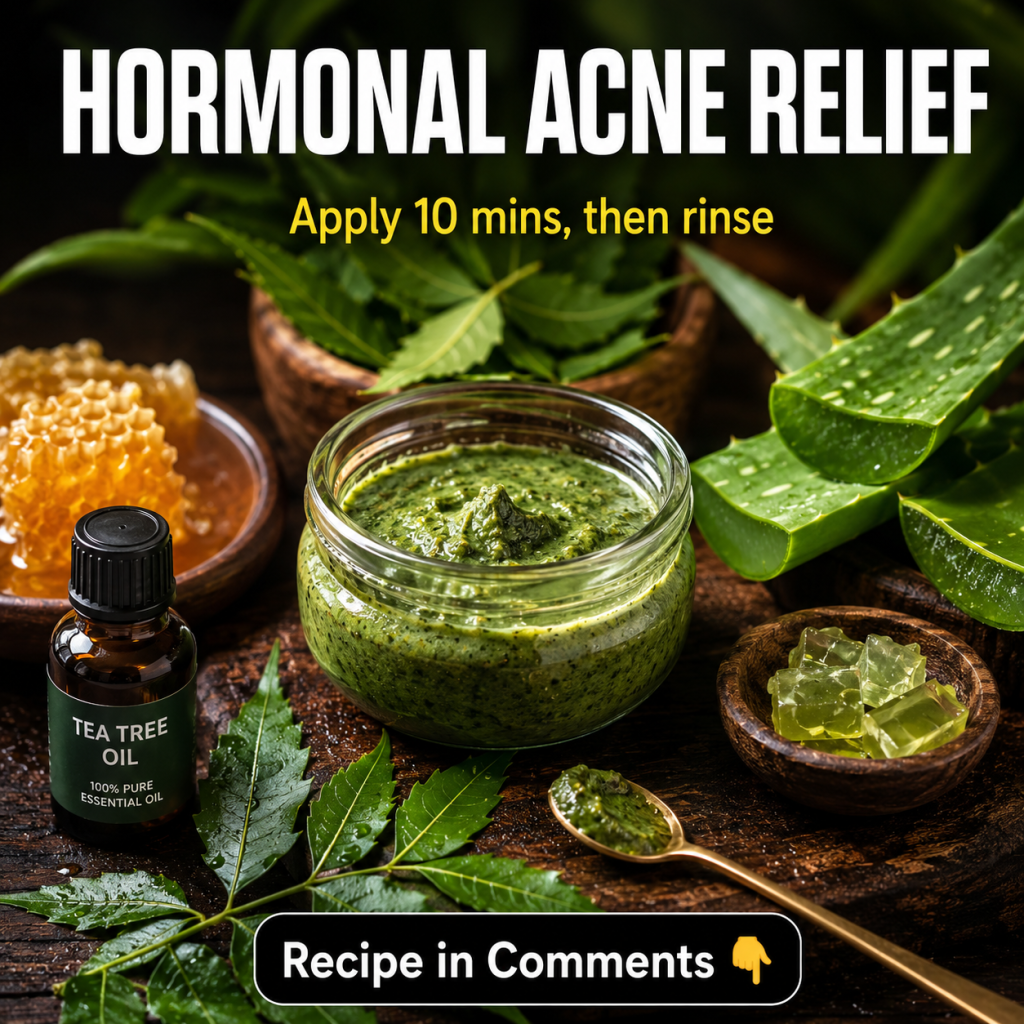
Hormonal acne often appears as stubborn, tender pimples around the chin, jawline, lower cheeks and neck. Breakouts may worsen before menstruation, during pregnancy, after stopping hormonal contraception or alongside conditions such as polycystic ovary syndrome. These recurring spots can affect confidence and may leave dark marks or permanent scars when repeatedly squeezed. Hormonal acne is driven partly by androgen activity, which increases oil production and pore blockage, so a ten-minute homemade mask cannot correct the underlying hormonal cause. Evidence-based hormonal treatments may include combined oral contraceptives or spironolactone under medical supervision. (American Academy of Dermatology)
Natural ingredients can still provide supportive benefits by calming visible inflammation, reducing surface oil and protecting the skin barrier. However, clinical studies generally use standardized gels, extracts and controlled concentrations rather than raw kitchen mixtures. The American Academy of Dermatology states that evidence remains insufficient to recommend plant-based alternatives as replacements for established acne treatments. The remedies below are therefore gentle supportive routines for mild breakouts, not hormonal cures. (American Academy of Dermatology)
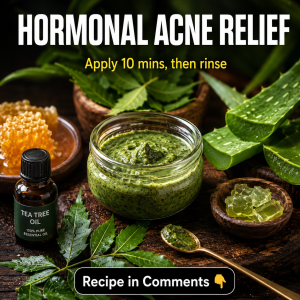
Remedy 1: Green Tea and Aloe Calming Mask for Normal Skin
Ingredients and Their Scientific Working
- Strong cooled green tea – 1 tablespoon: Green tea contains epigallocatechin gallate, or EGCG. A randomized split-face trial found that standardized topical EGCG improved inflammatory and non-inflammatory acne after eight weeks by influencing sebum, inflammation and acne-associated bacteria. Ordinary brewed tea is weaker but may provide a gentle antioxidant base. (PubMed)
- Pure inner-leaf aloe vera gel – 1 tablespoon: Aloe supplies water and soothing polysaccharides. In an eight-week randomized trial, a standardized aloe gel improved the effectiveness and tolerability of topical tretinoin, although aloe was not tested as a hormonal treatment. (PubMed)
- Colloidal oatmeal – 1 teaspoon: Finely ground oatmeal contains beta-glucans and avenanthramides that support hydration and calm barrier irritation. Clinical studies have shown improvements in barrier function with oatmeal-containing preparations. (PubMed)
- Plain unsweetened yogurt – 1 teaspoon: Yogurt gives the mask a soft texture and contains small amounts of naturally occurring lactic acid, which may loosen dull surface cells. It should not be used on broken or freshly picked pimples.
- Vegetable glycerin – 2 drops: Glycerin attracts water into the outer skin layer, helping prevent the tightness that can follow cleansing.
Procedure
Combine the ingredients in a clean bowl. Apply a thin layer to freshly washed skin without rubbing the pimples. Leave it on for eight to ten minutes, rinse with lukewarm water and pat dry. Follow with a non-comedogenic moisturizer.
How Often to Apply
Apply once daily for three days. If the skin remains comfortable, continue three times weekly for six weeks.
Initial Results
Within one to three days, the skin may feel calmer, softer and less dehydrated. Established hormonal pimples will not disappear immediately; clinically studied green-tea preparations required several weeks to improve lesion counts.
Remedy 2: Black Seed and Oat Two-Zone Routine for Combination Skin
Ingredients and Their Scientific Working
- Standardized black-seed hydrogel – a thin layer: A randomized double-blind trial found that a hydrogel made with Nigella sativa and standardized for thymoquinone reduced comedones, papules and pustules over 60 days. This evidence applies to the tested hydrogel, not undiluted kitchen black-seed oil. (PubMed)
- Cooled green tea – 1 tablespoon: Provides lightweight antioxidant support without adding heavy oil to the forehead and nose.
- Colloidal oatmeal – 1 teaspoon: Helps protect dry cheek areas and reduces irritation caused by over-cleansing.
- Pure aloe vera gel – 1 teaspoon: Provides water-based hydration suitable for both oily and dry facial zones.
- Kaolin clay – ½ teaspoon: Kaolin absorbs some surface oil and temporarily reduces shine. It does not correct hormone production or permanently shrink pores.
Procedure
Mix the green tea, oatmeal, aloe and kaolin. Apply a thin layer over the oily T-zone and a lighter layer over the cheeks. Rinse after seven minutes before the clay becomes hard. After drying the face, apply the standardized black-seed hydrogel as directed, without mixing it into the homemade mask.
How Often to Apply
Use the mask on alternate days for five days and then twice weekly. Use the standardized hydrogel according to its instructions; the clinical trial applied it twice daily for two months.
Initial Results
The T-zone may appear less greasy after one or two applications, while the cheeks may feel less tight. Black-seed hydrogel should be assessed over approximately eight weeks rather than after several days.
Remedy 3: Tea Tree and Green Tea Routine for Oily Skin
Ingredients and Their Scientific Working
- Properly prepared 5% tea-tree gel – a thin layer: Randomized trials found that 5% tea-tree gel improved mild-to-moderate acne over approximately six weeks. Pure tea-tree essential oil should never be applied directly because it may cause burning or allergic dermatitis. (PubMed)
- Strong cooled green tea – 1 tablespoon: Green-tea catechins may help moderate excess sebum and inflammatory activity.
- Kaolin clay – 1 teaspoon: Absorbs excess oil from the skin surface and helps reduce temporary shine.
- Pure aloe vera gel – 1 teaspoon: Prevents the clay mixture from becoming excessively drying.
- Colloidal oatmeal – ½ teaspoon: Supports the barrier and reduces the roughness caused by aggressive oil-control routines.
Procedure
Mix the tea, clay, aloe and oatmeal. Apply a thin layer to clean skin, avoiding open pimples. Leave it on for five to seven minutes and rinse. Once the face is dry, apply a small amount of 5% tea-tree gel to acne-prone areas. Do not add bottled essential oil to the mask.
How Often to Apply
Use the mask every other day for the first five days and then twice weekly. Begin the tea-tree gel once daily, increasing only when its instructions allow and the skin remains comfortable.
Initial Results
Surface oil may decrease within one to three days. Inflamed spots may look slightly calmer, but the randomized tea-tree trial followed participants for 45 days before judging effectiveness.
Remedy 4: Aloe and Oat Barrier Mask for Dry Acne-Prone Skin
Ingredients and Their Scientific Working
- Pure aloe vera gel – 1 tablespoon: Provides hydration and may reduce irritation associated with acne treatment.
- Colloidal oatmeal – 1 tablespoon: Forms a protective film that supports moisture retention and reduces visible flaking.
- Vegetable glycerin – 3 drops: Draws water into dehydrated surface cells and can soften fine dryness lines.
- Cold-pressed sunflower seed oil – 1 drop: Sunflower oil is rich in linoleic acid. A controlled adult study found that it preserved barrier integrity and improved hydration, unlike olive oil, which impaired the barrier. (PubMed)
- Cooled green tea – 1 teaspoon: Adds antioxidant liquid without requiring a heavy oil base.
Procedure
Mix all ingredients thoroughly. Apply a light layer for eight to ten minutes and rinse gently. Apply a fragrance-free, non-comedogenic moisturizer while the skin remains slightly damp.
How Often to Apply
Use daily for three days, followed by two or three applications weekly. Avoid using it immediately before or after strong exfoliating acids.
Initial Results
Dryness, tightness and flaking may begin improving within two or three days. Better hydration can make redness appear less intense, but the mask cannot clear deep hormonal cysts.
Remedy 5: Minimal Oatmeal Compress for Sensitive Skin
Ingredients and Their Scientific Working
- Colloidal oatmeal – 1 tablespoon: Clinically studied oatmeal preparations can improve hydration and barrier function in dry, reactive skin. (PubMed)
- Cooled boiled water – 1 tablespoon: Creates a simple base without fragrance, acids or essential oils.
- Weak cooled green tea – 1 teaspoon: Provides a low-strength antioxidant liquid, although it should be omitted when tea sensitivity is suspected.
- Pure aloe vera gel – ½ teaspoon: Adds light hydration but should be avoided by anyone with a previous aloe reaction.
- Vegetable glycerin – 1 drop: Helps retain moisture while keeping the formula minimal.
Procedure
Mix the ingredients into a loose paste. Patch-test it on the inner arm for 24 hours. During the first facial application, leave it on for five minutes only. Rinse with cool or lukewarm water without scrubbing.
How Often to Apply
Apply every other day for three to five days. Continue no more than two or three times weekly if the skin remains calm.
Initial Results
Sensitive skin may feel less tight within one to three days. Stop immediately if burning, swelling, hives or prolonged redness occurs.
Final Tips for Controlling Hormonal Acne
Wash the face gently no more than twice daily and after heavy sweating. Keep pillowcases, phones, makeup brushes and towels clean. Avoid squeezing deep spots because this increases inflammation, dark marks and scarring.
Do not apply lemon juice, toothpaste, baking soda, undiluted apple-cider vinegar, pure tea-tree oil or harsh neem pastes. These ingredients may irritate the barrier and worsen post-inflammatory pigmentation. Use broad-spectrum, non-comedogenic SPF 30 or higher every morning because sunlight can darken marks left by acne.
Hydration and a temporary glow may begin within two to three days. Continued barrier care may soften fine dehydration lines, but natural masks do not remove true wrinkles or correct excessive androgen activity.
Seek medical assessment when hormonal acne is accompanied by irregular or absent periods, unwanted facial hair, scalp hair thinning, weight changes, fertility problems or dark velvety patches around the neck. These may be associated with PCOS or another endocrine condition. (ACOG)
Diet Plan for Hormonal Acne Support
Diet cannot replace acne medication, but a lower-glycemic eating pattern may support treatment. Randomized trials lasting 10 to 12 weeks found greater reductions in acne lesions among participants following low-glycemic-load diets. (PubMed)
Breakfast: Choose eggs, plain yogurt or unsweetened oats with berries, guava or another whole fruit. Avoid sugary cereals, sweetened drinks and refined bakery foods.
Mid-morning: Eat a small serving of almonds, walnuts, pumpkin seeds or roasted chickpeas.
Lunch: Combine lentils, beans, fish or chicken with vegetables and a moderate serving of brown rice, barley or whole-grain flatbread.
Evening: Choose unsweetened green tea, fruit or yogurt instead of biscuits, sweets and soft drinks.
Dinner: Include vegetables, protein and a smaller serving of slow-digesting carbohydrates. Eat oily fish such as sardines or salmon when available. A controlled trial found that omega-3 supplementation improved acne over ten weeks, but supplements should be discussed with a healthcare professional, especially when taking medicines that affect bleeding. (PubMed)
Continue the selected supportive remedy for six to eight weeks and the dietary pattern for at least ten to twelve weeks. Consult a dermatologist if acne remains unchanged, repeatedly leaves scars or includes deep, painful nodules. A doctor should also be consulted promptly when breakouts begin suddenly or are accompanied by menstrual or hormonal symptoms.
References for the above remedy
- American Academy of Dermatology. Acne clinical guideline.
https://www.aad.org/member/clinical-quality/guidelines/acne - American Academy of Dermatology. Stubborn acne? Hormonal therapy may help.
https://www.aad.org/public/diseases/acne/derm-treat/hormonal-therapy - Reynolds RV, et al. Guidelines of care for the management of acne vulgaris.
https://pubmed.ncbi.nlm.nih.gov/38300170/ - Yoon JY, et al. Epigallocatechin-3-gallate improves acne in humans by modulating molecular targets and inhibiting acne-associated bacteria.
https://pubmed.ncbi.nlm.nih.gov/23096708/ - Enshaieh S, et al. The efficacy of 5% topical tea-tree oil gel in mild-to-moderate acne vulgaris.
https://pubmed.ncbi.nlm.nih.gov/17314442/ - Hajheydari Z, et al. Aloe vera topical gel combined with tretinoin for mild and moderate acne vulgaris.
https://pubmed.ncbi.nlm.nih.gov/23336746/ - Soleymani S, et al. The effect of a hydrogel made with Nigella sativa on acne vulgaris.
https://pubmed.ncbi.nlm.nih.gov/32548864/ - Capone K, et al. Effects of colloidal oatmeal cream on skin-barrier properties.
https://pubmed.ncbi.nlm.nih.gov/32484623/ - Smith RN, et al. A low-glycemic-load diet improves symptoms in acne vulgaris patients.
https://pubmed.ncbi.nlm.nih.gov/17616769/ - Jung JY, et al. Dietary omega-3 fatty acid and gamma-linolenic acid supplementation in acne vulgaris.
https://pubmed.ncbi.nlm.nih.gov/24553997/